
 Rock
Rock Aggregate
 Cement
 Concrete
 Soil
Soil Steel
Steel Bitumen/Asphalt
 Security Survey Equipment
 General Items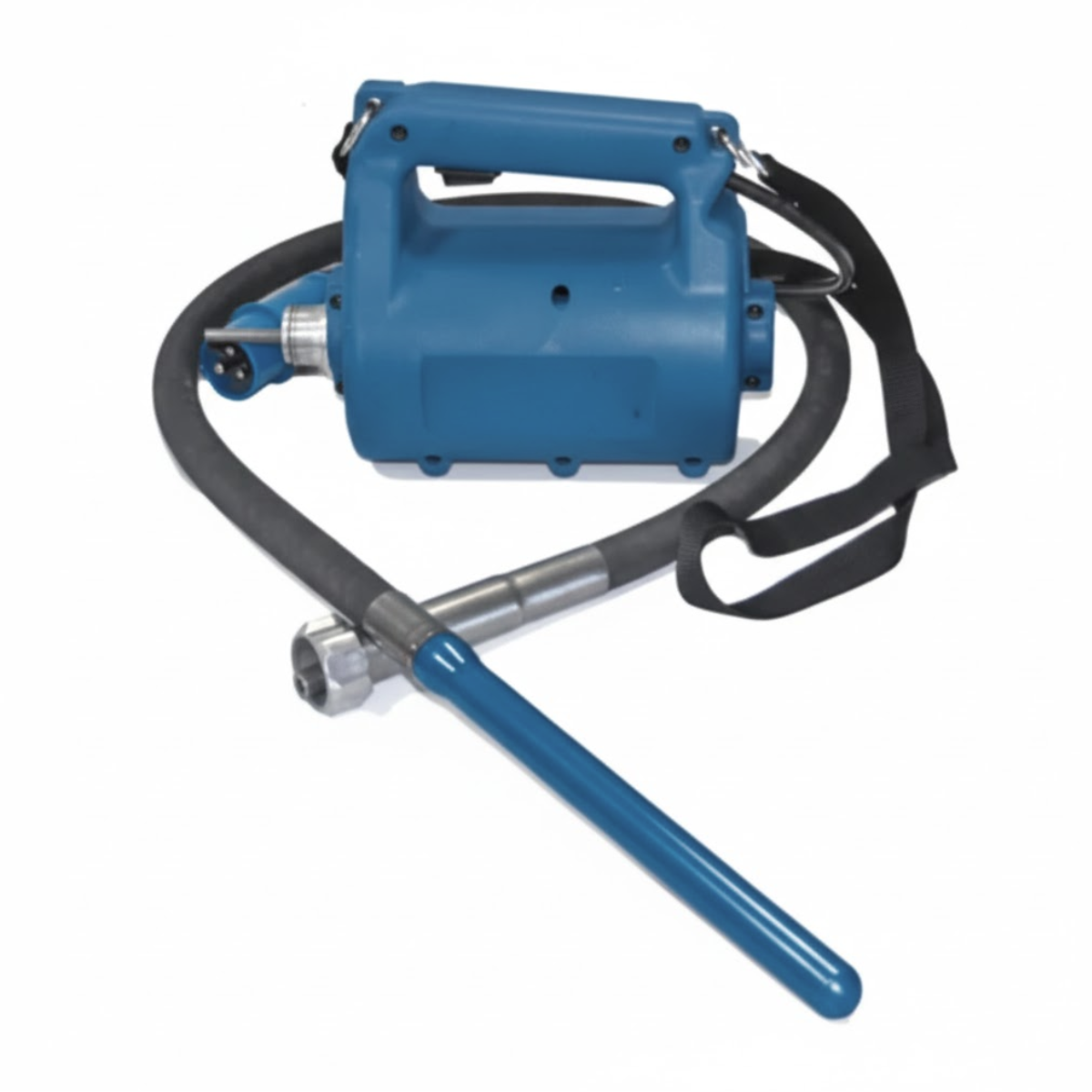
POKER VIBRATOR (WITH VIBRATING TABLE) AZA1167
The AZA1167 Poker Vibrator with Vibrating Table is a dual-function concrete compaction system designed for laboratory applications where high precision, uniformity, and compliance with testing standards are essential. This integrated setup combines internal (needle) vibration with surface/table vibration, enabling superior compaction for concrete cubes, cylinders, beams, and specialty moulds.
Concrete compaction is a critical step in laboratory sample preparation. Improperly compacted concrete contains air voids that significantly reduce compressive strength and compromise test reliability. The AZA1167 system resolves these challenges by offering both internal and external vibration methods in a single platform, streamlining workflows and producing consistent, repeatable results.
The Poker Vibrator uses a high-frequency needle (25 mm) to penetrate fresh concrete and eliminate trapped air. Meanwhile, the Vibrating Table provides uniform surface vibrations ideal for cube moulds, cylinder moulds, and specimens that require gentle but effective compaction. Both units can be operated independently or simultaneously, depending on the testing requirement.
Built with a sturdy powder-coated steel frame, rubber-mounted vibration isolation, and corrosion-resistant components, the AZA1167 is engineered for long-term durability in high-throughput concrete laboratories. It conforms to ASTM C31/C31M and IS 1199 standards for concrete sampling and compaction, ensuring suitability for accredited testing facilities.
Description
Key Features & Benefits
Dual Compaction System
• Integrated poker vibrator + high-stability vibrating table
• Ideal for cube, cylinder, and beam specimen preparation
• Both units can operate independently or simultaneously
High-Frequency Compaction
• Poker vibrator delivers approx. 12,000 VPM
• Table motor produces approx. 3,600 VPM
• Ensures uniform density and removal of entrapped air
Rugged & Lab-Ready Construction
• Powder-coated steel housing
• Rubber vibration-dampening mounts
• Anti-slip table surface
• Stainless steel needle for longer service life
Compliance & Reliability
• Meets ASTM C31/C31M and IS 1199 compaction standards
• Suitable for quality assurance labs, construction R&D, academic labs, and field QC stations
Specifications
| Parameter | Details |
|---|---|
| Vibrating Table Size | 500 mm × 500 mm |
| Vibrating Table Motor | 1/2 HP, 230V AC |
| Poker Vibrator Needle | 25 mm diameter |
| Poker Vibrator Frequency | ~12,000 VPM |
| Table Vibration Frequency | ~3,600 VPM |
| Operating Voltage | 230V ±10%, 50 Hz |
| Construction | Powder-coated steel with vibration-dampening rubber mounts |
| Standard Compliance | ASTM C31/C31M, IS 1199 |
Applications
• Compaction of concrete cube, cylinder, and beam specimens
• Cement and concrete testing laboratories
• QA/QC divisions in construction and infrastructure projects
• Educational institutions and research centers
• Precast and ready-mix concrete quality control
Frequently Asked Questions (FAQ)
Q1: What is the primary function of the poker vibrator?
It removes air from freshly poured concrete by internal vibration, ensuring uniform compaction and density.
Q2: Can the vibrating table be used without the poker vibrator?
Yes. Both systems can operate independently depending on the specimen and compaction requirement.
Q3: Does the equipment comply with international standards?
Yes. It conforms to ASTM C31/C31M and IS 1199, suitable for accredited and certified labs.
Q4: What types of moulds can be compacted?
Cube moulds, cylinder moulds, beam moulds, and a wide range of custom laboratory moulds.
Q5: What is the typical compaction duration?
Usually 30 seconds to 2 minutes, depending on the concrete mix, workability, and mould size.
Additional information
| Model |
AZA-LAB Poker Vibrator with Vibrating Table |
|---|---|
| Standard Compliance |
ASTM C31, IS 516 |
| Vibrator Type |
Handheld poker vibrator with flexible shaft |
| Needle Diameter |
25 mm (other sizes optional) |
You may also like…
AUTOMATED CLEVELAND OPEN CUP FLASH POINT ANALYZER AZA1279
Standards Compliance
- ASTM D92 (Cleveland Open Cup)


PARTICLE DENSITY BY GAS JAR METHOD (END-OVER-END SHAKER) AZA0885
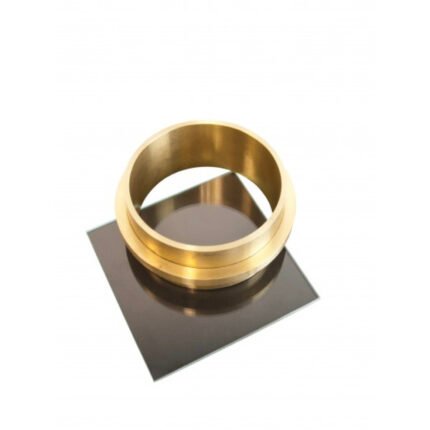
The AZA0885 Particle Density Test Set from Azalab is a precision laboratory apparatus designed for determining the specific gravity (particle density) of fine-grained soils, particularly silts and clays. This method is especially effective where conventional pycnometer techniques may suffer from air entrapment or handling difficulties with cohesive soils.
The apparatus operates on the Gas Jar Method with an End-Over-End Shaker, a standardized and highly reliable procedure specified in IS 2720 (Part 3 / Section 1) and BS 1377. The controlled mechanical rotation ensures uniform suspension of soil particles, leading to accurate, repeatable, and operator-independent results.
Related products
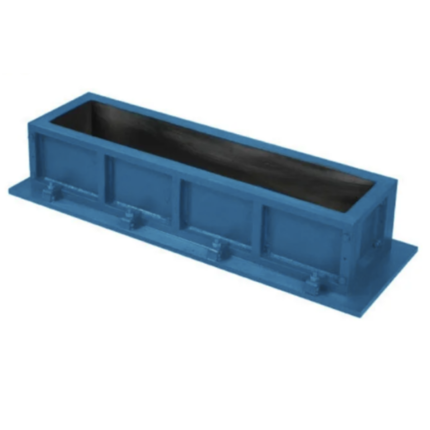
BEAM MOULD AZA1124
Purpose & Importance
Flexural strength testing evaluates a concrete beam’s ability to resist bending stress. Standards such as IS 516, ASTM C78, and BS EN 12390-5 specify strict guidelines for specimen dimensions and surface finish. The AZA1124 Beam Mould enables users to produce uniform, high-quality concrete beams with precise cross-sections, ensuring reliability and compliance during flexural strength evaluation.Beams cast from AZA1124 are used for:
- Flexural tensile strength testing
- Load-bearing capacity studies
- Structural behavior simulations
- R&D on mix designs and reinforcement additives
Ideal for:
- Civil engineering research laboratories
- Cement product quality assurance departments
- Construction material testing centers
- Technical universities and engineering institutions
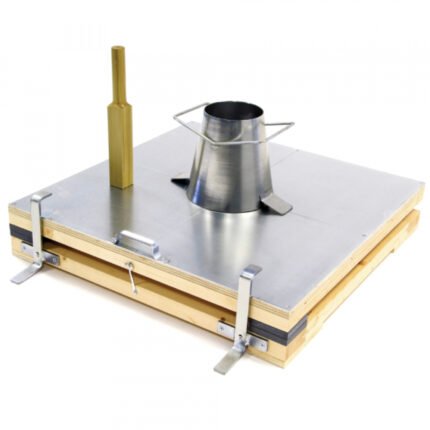
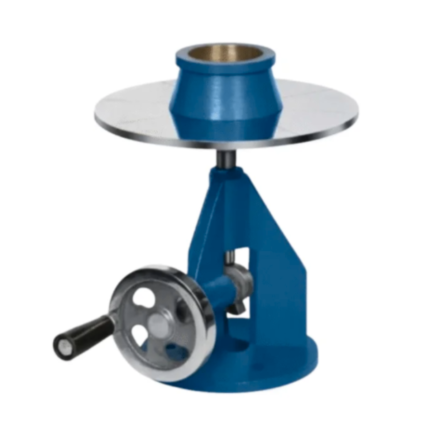
CONCRETE FLOW TABLE TEST SET AZA1110
AZA1110 Concrete Flow Table Test Set is a precision-engineered laboratory apparatus designed to determine the workability, consistency, and flow characteristics of fresh concrete. It is especially suitable for Self-Compacting Concrete (SCC), precast concrete, and high-consistency mixes where the traditional slump test is not effective.
This test set works by allowing a freshly mixed concrete sample to spread under controlled, repeated vertical jolts of a mechanically calibrated table. The final spread diameter of the concrete is measured to assess its flowability and uniformity.
Built with a rigid, precisely machined table surface, the AZA1110 ensures repeatable and reliable results. Its heavy-duty construction allows long-term use in demanding laboratory environments while remaining easy to clean, store, and maintain.
The apparatus complies with major international standards including IS 1199, ASTM C1437, and BS EN 12350-5, making it suitable for both domestic and international testing requirements.

INITIAL SURFACE ABSORPTION TEST (ISAT) APPARATUS AZA1108
AZA1108 ISAT Apparatus is a precision-engineered testing instrument designed to measure the Initial Surface Absorption of hardened concrete. This test is essential for evaluating the durability of concrete by determining how quickly water penetrates the surface under controlled conditions. The apparatus is widely used in civil engineering laboratories and quality control departments to assess permeability and long-term performance of concrete structures exposed to moisture.
Built with a high-accuracy capillary tube system, the AZA1108 maintains a constant water head over a defined test area and records the volume of water absorbed over specific time intervals — typically at 10, 30, and 60 minutes. The readings obtained help engineers understand the surface porosity of concrete, which is a critical indicator of resistance against weathering, chloride ingress, corrosion of reinforcement, and environmental deterioration.
Designed in compliance with BS 1881-208, this apparatus ensures reliable, repeatable, and standard-compliant results. Its sturdy, rust-proof construction and easy-to-use configuration make it ideal for both routine testing and advanced durability studies in construction material laboratories.

J-RING, NARROW GAP AZA1109
AZA1109 J-Ring – Narrow Gap is a precision testing apparatus designed to evaluate the passing ability of Self-Compacting Concrete (SCC) under highly restrictive conditions. This device simulates densely congested reinforcement zones by creating artificial obstructions that the fresh SCC must flow through without blocking or segregating. It is an essential tool for determining whether SCC mixes are suitable for heavily reinforced structural elements such as beams, columns, and shear walls.
The narrow gap design offers a more stringent test compared to standard J-Rings, allowing engineers and quality control professionals to accurately observe flow diameter, T50 flow time, and blocking behavior. When used in combination with a standard slump flow cone, AZA1109 provides reliable, repeatable results that help optimize mix designs and ensure consistent on-site performance.
Manufactured from durable, corrosion-resistant steel, the AZA1109 is built for repeated use in laboratory and field testing environments. The apparatus is fully compliant with ASTM C1621 and EFNARC guidelines, ensuring internationally accepted testing procedures.

L SHAPE BOX APPARATUS AZA1112
AZA1112 L Shape Box Apparatus is a precision testing device designed to evaluate the passing ability and flow performance of Self-Compacting Concrete (SCC) in congested reinforcement conditions. This apparatus simulates real-world scenarios such as densely reinforced beams, columns, tunnels, and bridge segments, where concrete must flow freely without segregation or blockage.
The distinctive L-shaped design creates a controlled flow path where freshly mixed SCC moves from a vertical chamber into a horizontal channel containing reinforcement bars. By measuring the concrete heights at both ends (H1 and H2), the H2/H1 ratio is calculated, providing a direct, quantitative assessment of the concrete’s ability to pass through obstructions.
Manufactured from durable, corrosion-resistant steel, AZA1112 is built for long-term laboratory and site use. It conforms to EN 12350-10 and EFNARC guidelines, ensuring global acceptance of test results.
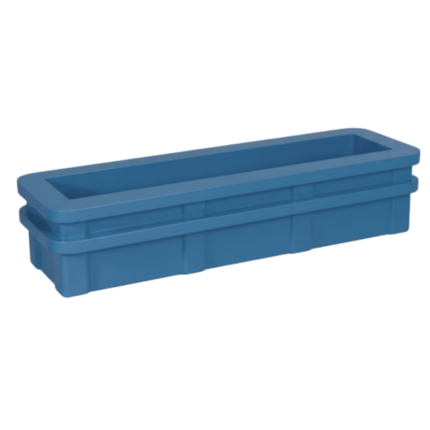
PLASTIC BEAM MOULD AZA1128
The Azalab AZA1128 Polyurethane Beam Mould Series is engineered for casting concrete beam specimens used in flexural strength tests. Built from high-impact, shock-absorbing polyurethane, these moulds deliver exceptional durability, dimensional accuracy, and ease of handling. Their lightweight yet robust design makes them suitable for both laboratory and field applications.
Polyurethane offers superior resilience compared to traditional metal or rigid plastic alternatives, enabling these moulds to withstand vibration, repeated use, and environmental exposure. The smooth internal finish ensures clean, damage-free demoulding, while the mould structure maintains consistency across multiple cycles.
Each AZA1128 mould complies with IS 516, ASTM C78, and BS 1881, ensuring reliable and standardized test preparation.
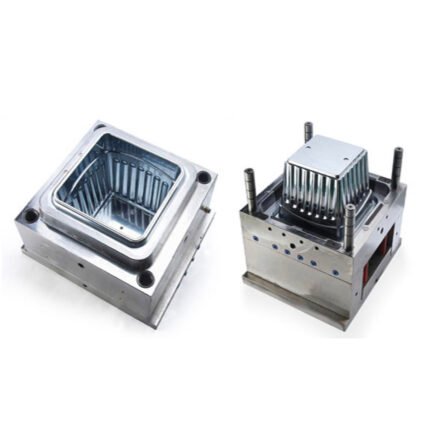
PLASTIC MOULDS AZA1125
The AZA1125 One-Piece Plastic Cube Mould (150 mm) from Azalab is a next-generation alternative to traditional metal cube moulds. Built from high-strength, non-deformable engineering plastic, this mould is designed to offer superior ease of use, long service life, and consistent dimensional accuracy for concrete compressive strength testing.
Its seamless, single-piece construction eliminates the need for bolts, screws, or external frames. Users simply apply demoulding oil, cast the concrete, and after curing, eject the cube using compressed air or water pressure, achieving clean and damage-free removal every time.
Compared to heavy metal moulds, the AZA1125 weighs nearly 90% less, providing clear advantages in portability, handling, and storage—making it ideal for both laboratory and on-site testing environments. Manufactured using an eco-friendly, non-polluting process, this mould supports sustainability goals in modern construction testing.
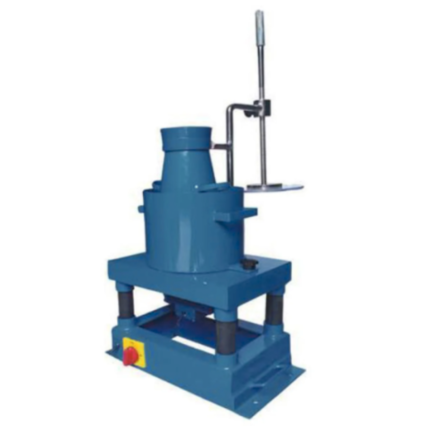
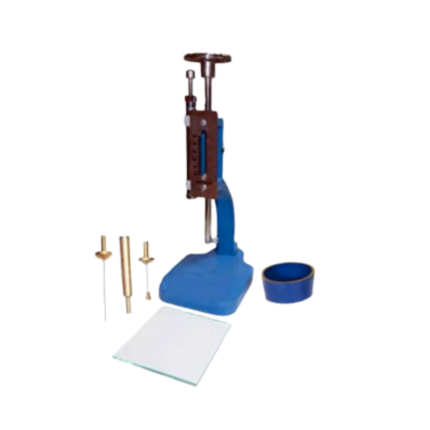
VEE BEE CONSISTOMETER AZA1101
AZA1101 Vee Bee Consistometer is a laboratory-grade concrete testing instrument designed for measuring the workability of stiff and low-slump concrete mixes with high accuracy. It is widely used in construction material testing laboratories, civil engineering institutes, infrastructure projects, and quality control departments.
This equipment performs both slump test and Vee Bee time test, providing dual accuracy in concrete consistency evaluation. It is especially ideal for testing dry, roller-compacted concrete and pavement concrete mixes, where traditional slump tests alone are not sufficient.
The unit is equipped with a precision vibrating table that ensures uniform vibration and repeatable testing results. It comes as a complete set including a standard slump cone, transparent cylindrical container, graduated rod with metal disc, and a powerful vibration unit.
Manufactured from heavy-duty, powder-coated steel, the AZA1101 offers excellent durability and stable performance even under continuous laboratory use. The apparatus is designed and built in compliance with IS 1199 and ASTM C1170 standards, ensuring reliable, repeatable, and internationally accepted test results.
Its easy-to-use design, low maintenance requirement, and robust construction make the AZA1101 a dependable solution for professionals involved in construction material testing and concrete quality control.