
 Rock
Rock Aggregate
 Cement
 Concrete
 Soil
Soil Steel
Steel Bitumen/Asphalt
 Security Survey Equipment
 General Items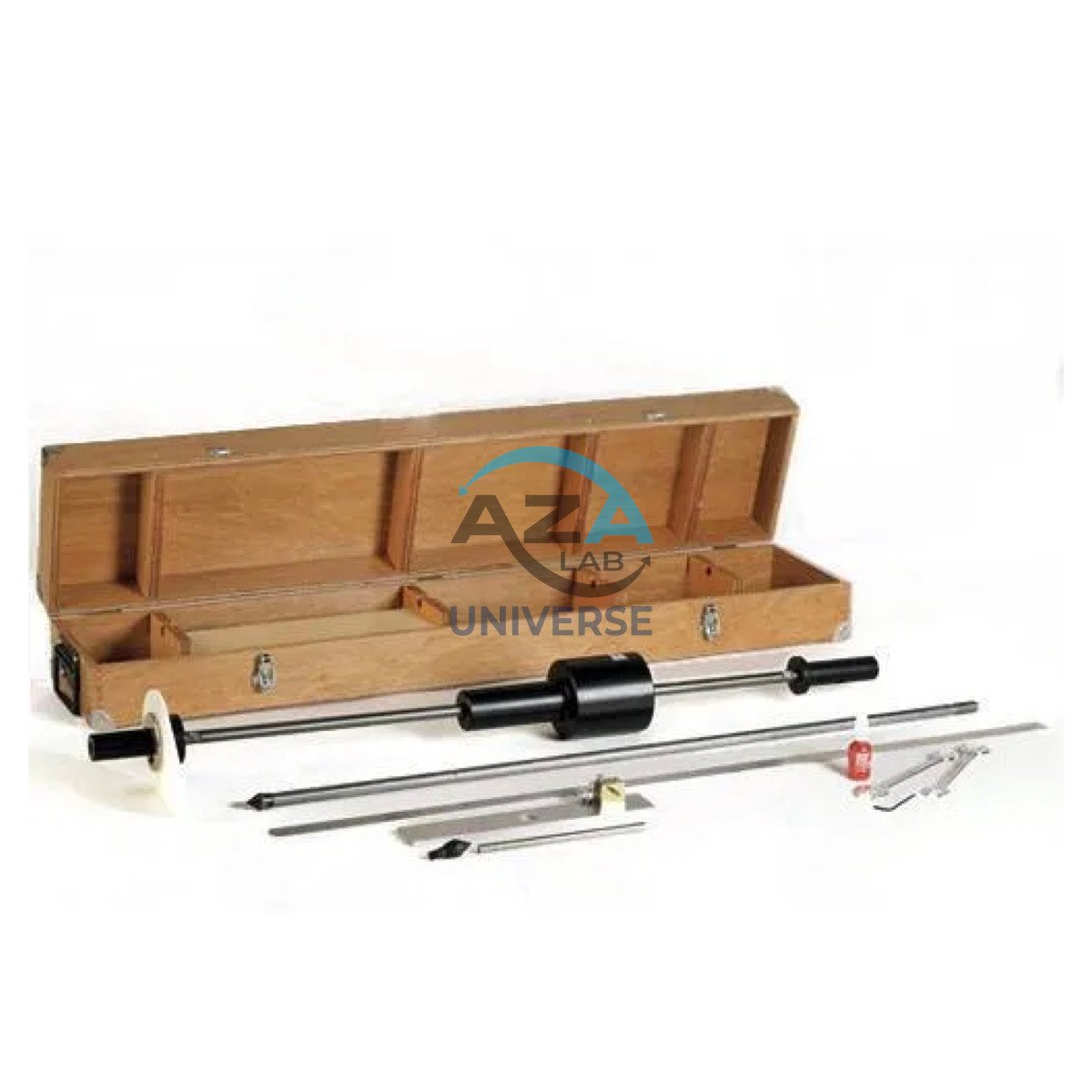
DYNAMIC CONE PENETROMETER AZA0872
The AZA0872 Dynamic Cone Penetrometer (DCP) from Azalab is a robust, field-proven instrument designed for rapid in-situ evaluation of soil strength, stiffness, and compaction. It is extensively used by civil engineers, geotechnical consultants, and construction teams for pavement design, quality control, and site investigation works.
The DCP test provides a fast and economical method to assess the strength of subgrades, sub-bases, and granular base course layers, with results that can be directly correlated to California Bearing Ratio (CBR) values. This eliminates the need for time-consuming laboratory testing or undisturbed soil sampling, enabling immediate decision-making at site.
Description
Principle of Operation
The AZA0872 operates on a simple and well-established impact penetration principle. A hardened steel cone attached to a drive rod is driven into the ground by repeatedly dropping a standard weight hammer from a fixed height. The penetration per blow is measured and recorded, providing a direct indication of soil resistance.
By plotting penetration versus depth, a continuous strength profile of the pavement or soil layer is obtained, clearly identifying weak zones, variability, or insufficient compaction.
Key Features
-
Rapid in-situ evaluation of soil and pavement layers
-
Direct correlation of penetration data to CBR values
-
No power supply or boreholes required
-
Portable and suitable for single-operator field use
-
Immediate results for on-site quality control
-
Heavy-duty steel construction for long service life
Applications
-
Pavement evaluation (subgrade, sub-base, base course)
-
Compaction quality control during road construction
-
Shallow foundation investigations
-
Identification of weak or soft soil zones
-
General geotechnical site reconnaissance
Technical Specifications
Model Number: AZA0872
Apparatus Type: Dynamic Cone Penetrometer (DCP)
Purpose: In-situ soil strength, stiffness, and compaction evaluation
Hammer
-
Weight: Typically 8 kg (17.6 lbs)
-
Drop Height: 575 mm (22.6 in), standardized free fall
Cone Tip
-
Material: Hardened steel
-
Cone Angle: 60° (standard)
-
Base Diameter: 20 mm (standard)
Drive Rod
-
Material: High-strength steel
-
Design: Sectional / quick-connect rods
Measuring Scale
-
Graduated rod, 1000 mm or 1500 mm length
-
Clear millimeter divisions
Anvil
-
Hardened steel impact anvil
Maximum Penetration Depth
-
Typically up to 2–3 meters (depending on soil conditions and rod length)
Components Supplied
-
Hammer
-
Anvil
-
Guide rod assembly
-
Drive rods
-
Hardened cone tip
-
Measuring scale
-
Rod puller (optional, recommended)
-
Carrying case
Compliance
-
Designed in accordance with ASTM D6951
-
AASHTO T 252 (principles)
Construction
-
Heavy-duty steel components
-
Designed for repetitive impact and harsh field use
Advantages
-
Fast, economical alternative to laboratory CBR testing
-
Continuous strength profiling with depth
-
Ideal for construction quality assurance
-
Minimal training required
-
Highly portable and field-ready
Frequently Asked Questions (FAQ)
Q1: What is the AZA0872 used for?
It is used for rapid in-situ testing of soil strength and compaction, especially in pavement layers such as subgrade, sub-base, and base course.
Q2: How does the DCP test indicate soil strength?
By measuring the penetration depth of a cone per hammer blow, which reflects soil resistance and density.
Q3: Can AZA0872 results be correlated to CBR values?
Yes. One of the main benefits of the DCP test is its established correlation with CBR values used in pavement design.
Q4: What soil types can be tested?
The AZA0872 is suitable for most granular and cohesive soils commonly encountered in road and pavement construction.
Q5: Is external power required?
No. The instrument is fully mechanical and ideal for remote field locations.
Q6: What standards does AZA0872 follow?
It is designed to meet the principles of ASTM D6951 and AASHTO T 252.
Q7: What is the typical depth of testing?
Depending on soil conditions and rod configuration, effective penetration is usually up to 2–3 meters.
Additional information
| Model Number |
AZA 0872 |
|---|---|
| Apparatus Type |
Dynamic Cone Penetrometer (DCP) |
| Anvil |
Hardened steel. |
| Portability |
Designed for high portability and ease of field use. |
| Construction |
Robust, heavy-duty steel components for durability. |
Related products
GRAIN SIZE ANALYSIS (PIPETTE METHOD) AZA0856
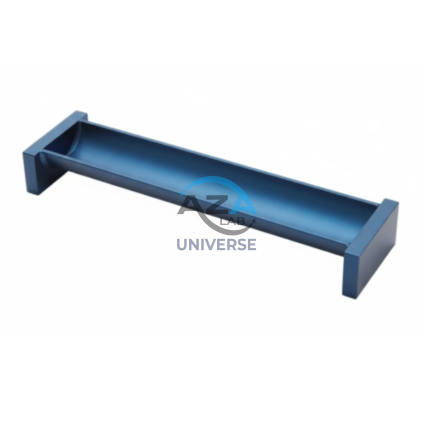
LINEAR SHRINKAGE MOULD AZA0850
The AZA0850 Precision Linear Shrinkage Mould from AZALAB is a compact and highly accurate laboratory instrument designed for determining the linear shrinkage of fine-grained cohesive soils in accordance with BS 1377-2. This test is a key component of soil classification and is especially important in identifying shrink–swell behavior of clays and expansive soils.
Linear shrinkage testing measures the reduction in length of a soil specimen upon drying, expressed as a percentage of its original length. The results provide valuable insight into soil expansiveness, volume stability, and suitability for foundations, pavements, and earthworks.
Manufactured from high-quality brass or stainless steel, the AZA0850 mould offers precise internal dimensions, excellent corrosion resistance, and a smooth polished finish for easy sample preparation and removal. Its robust construction ensures repeatable, reliable results even under high-frequency laboratory use.
METHYLENE BLUE TEST SET AZA0860
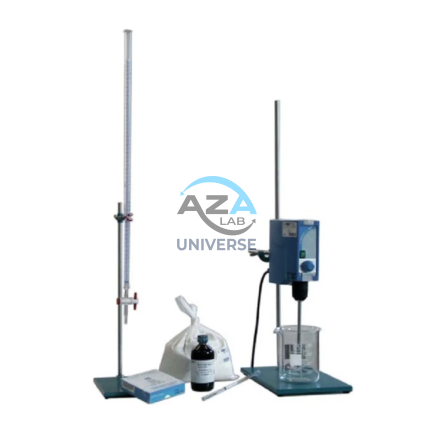
- EN 933-9 – Tests for geometrical properties of aggregates (Methylene Blue Test)
- NF P94-068
- UNE 83 180
- UNI 8520-15
- ASTM C837 – Methylene Blue Index of Clay in Fine Aggregate
PARTICLE SIZE SEDIMENTATION (HYDROMETER METHOD) AZA0857
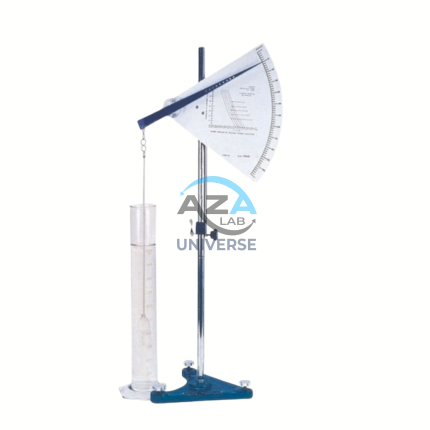
PLUMMET BALANCE AZA0862
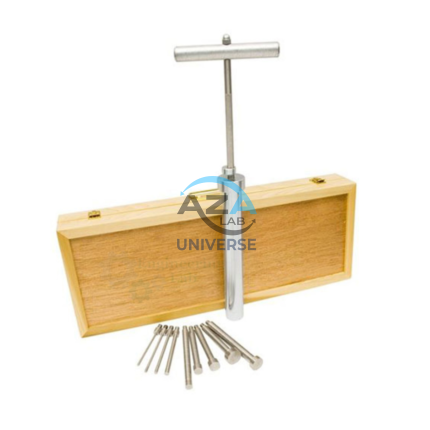
PROCTOR NEEDLES (SPRING TYPE) AZA0868
- Field assessment of soil compaction
- Estimation of optimum moisture condition
- Subgrade, fill, and trench inspection
- Construction quality control checks
- Geotechnical and educational field investigations
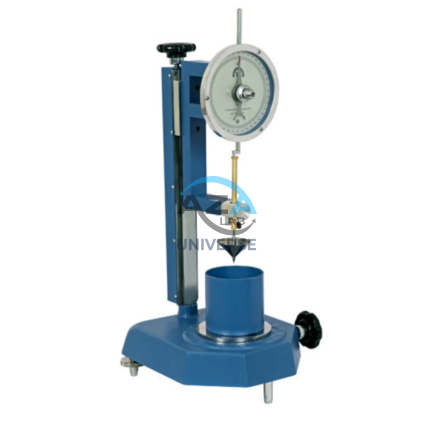
SEMI AUTOMATIC CONE PENETROMETER AZA0852
Principle of Operation
A soil paste prepared at known moisture content is placed in the sample cup. The standardized cone, attached to a calibrated weight, is released using the semi-automatic clutch mechanism, allowing free fall penetration into the soil. After the specified time (typically 5 seconds), the penetration depth is measured using a high-precision dial gauge. The moisture content corresponding to a penetration of 20 mm is considered the liquid limit of the soil, as defined in IS and BS standards.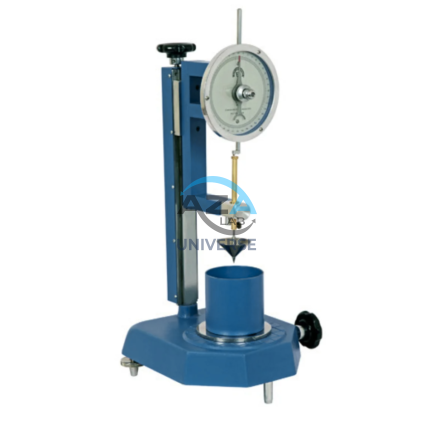
SOIL CONE PENETROMETER AZA0851
Principle of Operation
A soil paste prepared at a known moisture content is placed in the sample cup. The stainless steel cone, of specified mass and angle, is allowed to penetrate the soil freely for 5 seconds. The depth of penetration (up to 20 mm) is measured using a precision depth gauge. The moisture content corresponding to 20 mm penetration is defined as the liquid limit of the soil.Standards Compliance
- IS 2720 (Part 5) – Determination of liquid and plastic limits
- ASTM D4318 – Liquid Limit, Plastic Limit, and Plasticity Index of Soils