
 Rock
Rock Aggregate
 Cement
 Concrete
 Soil
Soil Steel
Steel Bitumen/Asphalt
 Security Survey Equipment
 General Items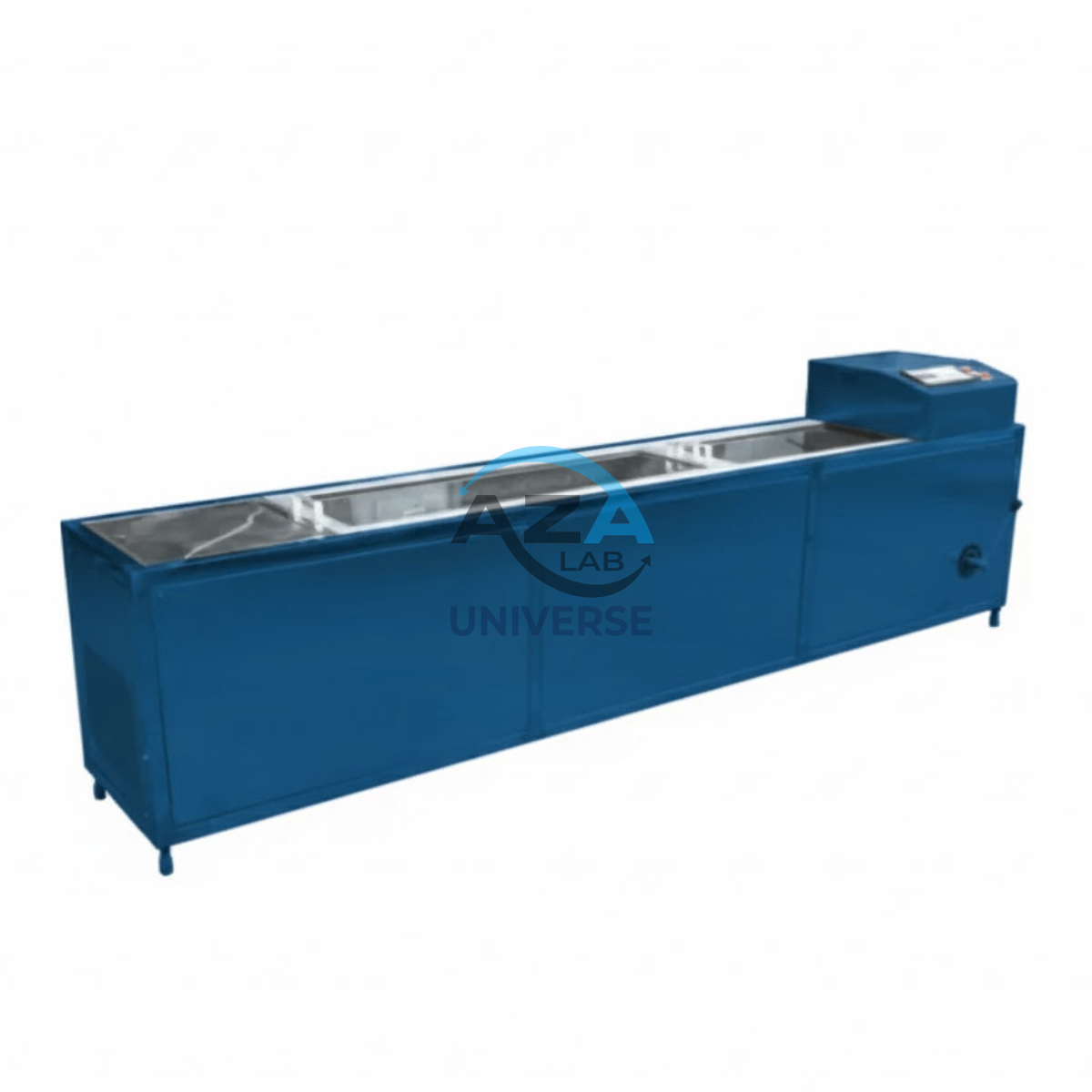
REFRIGERATED DUCTILITY TEST AZA0957
The AZA0957 Refrigerated Ductility Testing Apparatus from AZALAB is a specialized laboratory instrument designed to determine the ductility of asphalt binders and bituminous materials at low temperatures. This test is critically important for evaluating the performance of asphalt pavements in cold and variable climatic conditions, where thermal contraction can lead to cracking and premature pavement failure.
Ductility, defined as the distance a bituminous binder can be stretched under tensile stress before rupture, is a key indicator of binder flexibility. At low temperatures, asphalt binders become increasingly stiff and brittle. The AZA0957 enables engineers and material technologists to accurately assess a binder’s resistance to thermal cracking, ensuring the selection of materials suitable for cold climates and long-term pavement durability.
Description
Principle of Operation
The AZA0957 operates on the principle of controlled low-temperature tensile elongation. Standard asphalt binder samples are first molded into briquette specimens using approved ductility molds. These specimens are then conditioned in a refrigerated liquid bath maintained at a precisely controlled low temperature, typically down to –20 °C or lower, depending on test requirements.
Once thermal equilibrium is achieved, the briquette is mounted between two clips in the pulling carriage. One clip remains stationary while the other is pulled away at a constant, controlled speed by a motorized drive mechanism. The elongation continues until the specimen ruptures. The total distance stretched before breaking is measured digitally and reported as the low-temperature ductility value, usually expressed in centimeters.
This method follows internationally recognized procedures outlined in ASTM D113 and AASHTO T51, adapted for low-temperature performance evaluation.
Design and Construction Features
The AZA0957 Refrigerated Ductility Tester is engineered for accuracy, stability, and continuous laboratory use:
-
Integrated Refrigeration System
Capable of achieving and maintaining low test temperatures (typically down to –20 °C or below) with high stability. -
Thermostatically Controlled Bath
Ensures uniform and consistent temperature distribution throughout the bath during specimen conditioning and testing. -
Digital Temperature Controller
Allows precise temperature setting and real-time monitoring with high accuracy. -
Motorized Pulling Mechanism
Provides smooth, jerk-free elongation at a constant rate, ensuring repeatable and reliable ductility measurements. -
Digital Elongation Measurement
Displays elongation distance clearly, minimizing human error in result interpretation. -
Rigid Structural Frame
Designed to maintain alignment and prevent vibration during testing.
Importance in Pavement Engineering
Low-temperature ductility testing using the AZA0957 is essential for modern asphalt pavement design, particularly in regions subject to cold climates or large temperature variations:
Cold Climate Performance Evaluation
Determines the ability of asphalt binders to withstand thermal stresses without cracking at low temperatures.
Binder Selection & Specification
Supports informed selection of paving-grade bitumen, polymer-modified binders (PMB), and specialty binders suitable for specific climatic zones.
Mix Design Optimization
Provides critical data for optimizing binder content and modifier selection to improve low-temperature performance of asphalt mixtures.
Pavement Life Prediction
Low-temperature ductility values are often used in pavement performance models to estimate crack resistance and long-term durability.
In India and internationally, guidelines published by the Indian Roads Congress (IRC) and other standards bodies emphasize the importance of evaluating binder behavior under temperature extremes.
Key Features & Benefits
-
Accurate determination of ductility at low temperatures
-
Stable and uniform refrigerated bath environment
-
Smooth, automated pulling mechanism
-
Digital temperature and elongation display
-
High repeatability and reproducibility of results
-
Suitable for research, quality control, and specification compliance
Technical Specifications
Model Number: AZA0957
Test Type:
-
Refrigerated (Low-Temperature) Ductility Test
Temperature Range:
-
Typically down to –20 °C or lower (model dependent)
Temperature Control:
-
Integrated refrigeration system with digital controller
Temperature Accuracy:
-
±0.5 °C or better
Pulling Speed:
-
Constant and adjustable (commonly around 5 cm/min, as per standards)
Maximum Elongation:
-
Typically 100 cm or 150 cm
Elongation Measurement:
-
Digital display (cm)
Specimen Type:
-
Standard asphalt binder briquette molds
Standards Compliance:
-
ASTM D113
-
AASHTO T51
-
Relevant Indian Standards (as applicable)
Power Supply:
-
230 V AC, 50 Hz, Single Phase
Dimensions & Weight:
-
Varies depending on refrigeration capacity and configuration
Operating Procedure (Summary)
-
Prepare standard briquette specimens using approved molds.
-
Condition specimens in the refrigerated bath at the specified temperature.
-
Mount the specimen in the pulling clips.
-
Set the required pulling speed and temperature.
-
Initiate the test and allow elongation until rupture.
-
Record the elongation value displayed as the ductility result.
Routine maintenance includes cleaning the bath, checking refrigerant performance, and periodic calibration of temperature sensors and drive mechanisms.
Frequently Asked Questions (FAQ)
Q1. What is the main purpose of the AZA0957?
It measures the ductility of asphalt binders at low temperatures to assess their resistance to thermal cracking.
Q2. Why is low-temperature ductility important?
At low temperatures, binders become brittle. Adequate ductility ensures flexibility and reduces the risk of pavement cracking.
Q3. Which standards does the AZA0957 comply with?
The apparatus meets or exceeds ASTM D113, AASHTO T51, and applicable Indian standards.
Q4. How does the AZA0957 achieve low temperatures?
It uses an integrated refrigeration system to cool and maintain the bath at the required test temperature.
Q5. Is the pulling process manual or automatic?
The pulling mechanism is motorized and automated, ensuring consistent elongation speed and repeatable results.
Q6. Who typically uses the AZA0957?
Civil engineering laboratories, highway authorities, asphalt producers, research institutions, and quality control departments.
Additional information
| Model Number |
AZA 0957 |
|---|---|
| Test Type |
Refrigerated Ductility Test (Low Temperature Ductility) |
| Temperature Range |
Typically down to -20°C or lower (depending on model). |
| Temperature Accuracy |
Typically $\\pm 0.5^\\circ\\text{C}$ or better. |
| Pulling Speed |
Constant and adjustable pulling speed (e.g., 5 cm/min). |
| Elongation Measurement |
Digital display of elongation distance (cm). |
Related products
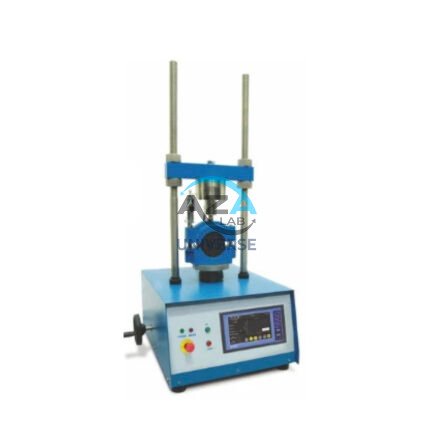
AUTOMATIC MARSHALL STABILITY TEST MACHINE AZA0954
The AZA0954 Automatic Marshall Stability Test Machine from AZALAB is a cornerstone instrument for modern civil engineering, highway material, and asphalt testing laboratories. Designed for fully automated determination of Marshall Stability and Marshall Flow, the AZA0954 plays a critical role in asphalt mix design, quality control, and performance evaluation of bituminous pavements.
Compared to conventional manual Marshall testers, the AZA0954 represents a significant technological advancement, offering superior accuracy, repeatability, operational efficiency, and digital data management. It is ideally suited for laboratories handling high sample volumes, regulatory testing, and advanced pavement research.
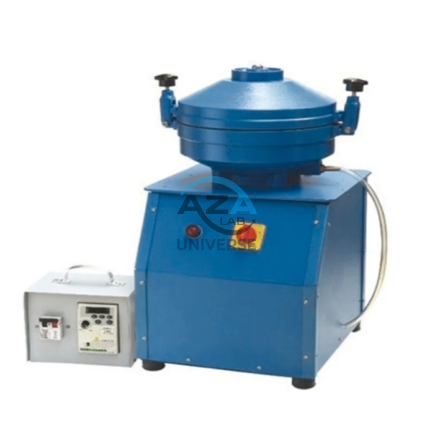
CENTRIFUGE EXTRACTOR (MOTORISED) AZA0946
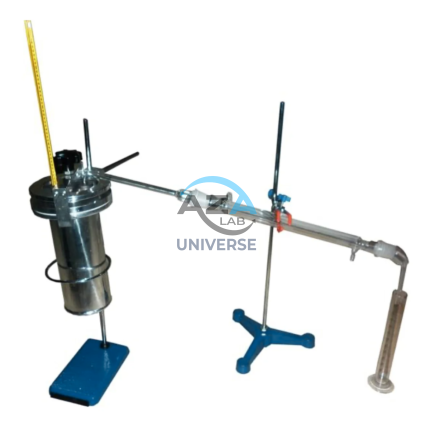
DISTILLATION FOR CUT BACK BITUMEN AZA0937
The AZA0937 Distillation for Cut-Back Bitumen from Azalab is a precision laboratory apparatus designed for the quantitative determination of volatile diluents (fluxing agents or solvents) present in cut-back asphaltic materials. This test is essential for evaluating the curing behavior, workability, and final performance of cut-back bitumen used in road construction and pavement maintenance applications.
Cut-back bitumen relies on volatile solvents to temporarily reduce viscosity for ease of handling and application. The controlled distillation performed using the AZA0937 accurately measures these volatile components, enabling engineers and laboratory technicians to classify cut-back bitumen grades and verify compliance with project and regulatory specifications.
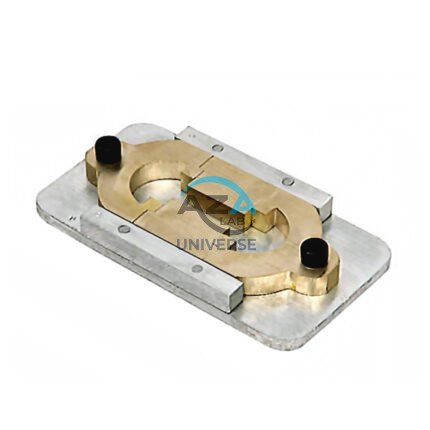
ELASTIC RECOVERY MOULD AZA0958
The AZA0958 Elastic Recovery Mould is a precision-engineered testing accessory used in bitumen ductility and elastic recovery tests, particularly for evaluating polymer-modified bitumen (PMB) and elastomer-modified binders. It plays a critical role in determining the elastic behavior of bituminous binders after elongation, which directly influences pavement performance under traffic loads and temperature variations.
Elastic recovery is a key parameter for modern road construction materials, especially where enhanced flexibility, crack resistance, and rutting resistance are required. The AZA0958 mould ensures the formation of standardized, dimensionally accurate specimens, enabling reliable and repeatable elastic recovery measurements in accordance with international standards.
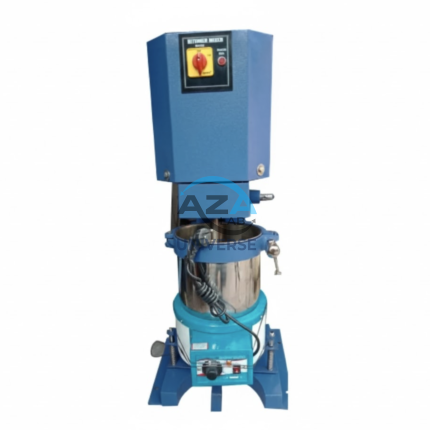
MIXER WITH HEATING JACKET AZA0955
The AZA0955 Mixer with Heating Jacket from AZALAB is a specialized laboratory apparatus engineered for the precise, uniform, and temperature-controlled mixing of materials that require elevated temperatures during blending. It is an essential instrument in civil engineering and highway material laboratories, particularly for the preparation of bituminous and asphalt mixes such as Hot Mix Asphalt (HMA).
By maintaining materials at a controlled and uniform temperature throughout the mixing process, the AZA0955 ensures optimal binder viscosity, thorough aggregate coating, and homogeneous sample preparation. This level of control is critical for producing accurate, repeatable, and representative laboratory specimens, which directly influence the reliability of asphalt mix design, quality control, and performance testing.
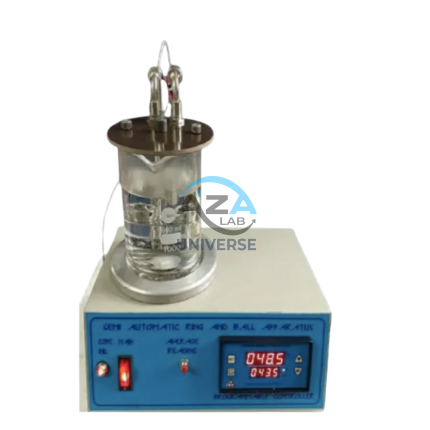
RING & BALL APPARATUS(SEMI AUTOMATIC) AZA0934
The AZA0934 Ring & Ball Apparatus (Semi-Automatic) from Azalab is an advanced laboratory instrument designed for the precise determination of the softening point of bitumen, asphalt binders, and related bituminous materials. This critical test evaluates the temperature susceptibility and high-temperature performance of asphalt binders, directly influencing pavement resistance to rutting and permanent deformation under hot service conditions.
By integrating the standard Ring & Ball method with semi-automatic control and detection features, the AZA0934 significantly improves accuracy, repeatability, and operational efficiency, making it ideal for modern quality control, research, and specification laboratories.
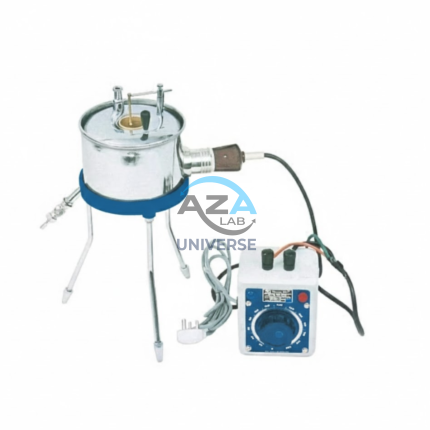
STANDARD TAR VISCOMETER AZA0952
The AZA0952 Standard Tar Viscometer from AZALAB is a robust and widely used laboratory instrument designed for the empirical determination of viscosity of cut-back bitumen, road oils, and other fluid bituminous materials. Viscosity is one of the most critical properties governing the handling, application, and performance of bituminous binders in road construction and maintenance works.
In pavement engineering, the viscosity of cut-back bitumen and road oils directly influences their sprayability, penetration into aggregates, coating efficiency, and workability under field conditions. The AZA0952 provides a simple, reliable, and standardized efflux-time method for assessing these flow characteristics at controlled temperatures, making it an essential instrument for civil engineering laboratories, asphalt plants, and quality control departments.
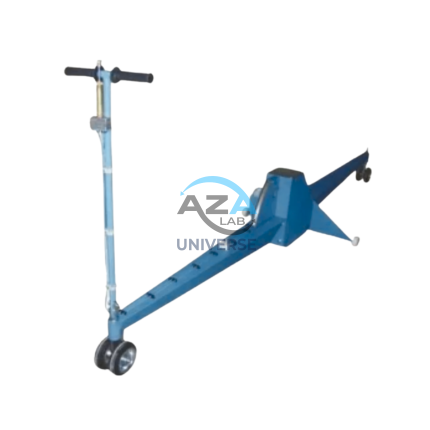
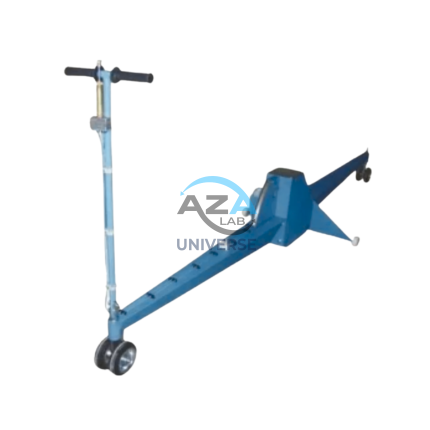
TRAVELLING BEAM DEVICE AZA0960
The AZA0960 Travelling Beam Device from AZALAB is a fundamental and widely accepted instrument for measuring longitudinal surface unevenness (roughness) of road pavements. It is extensively used by highway engineers, road contractors, consultants, and quality control laboratories across India for evaluating the riding quality and service condition of both newly constructed and existing roads.
Surface unevenness directly influences vehicle operating costs, passenger comfort, road safety, drainage performance, and pavement service life. The AZA0960 provides a reliable and cost-effective method for quantifying pavement roughness, enabling engineers to ensure compliance with specifications laid down by the Ministry of Road Transport & Highways (MoRTH) and the Indian Roads Congress (IRC).