
 Rock
Rock Aggregate
 Cement
 Concrete
 Soil
Soil Steel
Steel Bitumen/Asphalt
 Security Survey Equipment
 General Items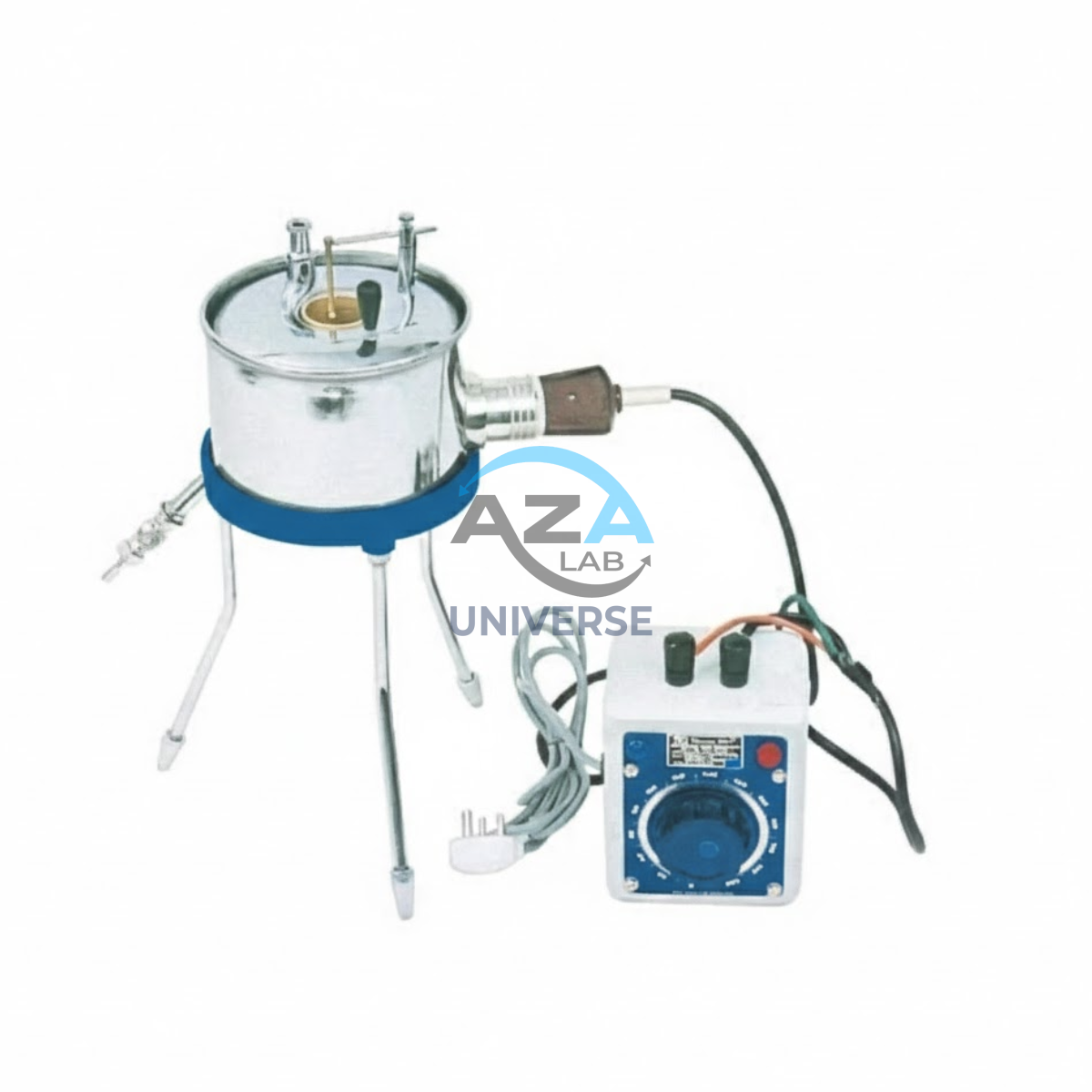
STANDARD TAR VISCOMETER AZA0952
The AZA0952 Standard Tar Viscometer from AZALAB is a robust and widely used laboratory instrument designed for the empirical determination of viscosity of cut-back bitumen, road oils, and other fluid bituminous materials. Viscosity is one of the most critical properties governing the handling, application, and performance of bituminous binders in road construction and maintenance works.
In pavement engineering, the viscosity of cut-back bitumen and road oils directly influences their sprayability, penetration into aggregates, coating efficiency, and workability under field conditions. The AZA0952 provides a simple, reliable, and standardized efflux-time method for assessing these flow characteristics at controlled temperatures, making it an essential instrument for civil engineering laboratories, asphalt plants, and quality control departments.
Description
Principle of Operation – AZA0952
The AZA0952 operates on the efflux time principle, where viscosity is expressed as the time (in seconds) required for a fixed volume of material to flow through a calibrated orifice under gravity at a specified temperature.
Construction and Working Mechanism
-
The instrument consists of a chrome-plated copper bath, which acts as a temperature-controlled jacket.
-
The bath is heated using electric immersion heating elements and controlled via a dimmer stat or digital temperature controller, allowing precise temperature regulation at standard test points such as:
-
25 °C
-
40 °C
-
55 °C
-
-
A central sleeve houses the test cup, manufactured from brass or stainless steel, fitted with a precision-machined orifice (commonly 4 mm or 10 mm diameter).
-
The orifice is closed using a ball valve assembly, ensuring sharp start and stop of flow.
Test Procedure Overview
-
The bituminous sample is pre-heated and thoroughly stirred to ensure homogeneity.
-
The sample is poured into the test cup and placed inside the temperature-controlled bath.
-
The sample is allowed to equilibrate until it reaches the specified test temperature.
-
The ball valve is released, allowing the material to flow into a receiving flask.
-
A stopwatch is used to record the time taken for a specified volume (typically 50 mL) to discharge.
-
The recorded time, in seconds, represents the empirical viscosity of the material.
This method is well established and referenced in BIS practices, IP methods, and pavement engineering specifications, particularly for cut-back bitumen and road oils used in Indian road projects.
Key Features of AZA0952 Standard Tar Viscometer
Durable and Thermally Efficient Bath
-
Chrome-plated copper construction ensures:
-
Rapid and uniform heat transfer
-
Corrosion resistance
-
Long service life under laboratory conditions
-
Precision-Orifice Test Cups
-
Accurately machined orifices ensure repeatable flow characteristics.
-
Multiple cup sizes allow testing across different viscosity ranges.
Stable Temperature Control
-
Electric heating with dimmer stat or digital controller
-
Suitable for all standard bitumen viscosity test temperatures
Uniform Temperature Distribution
-
Supplied with a stirrer featuring an insulated handle, ensuring consistent bath temperature during testing.
Simple and Reliable Operation
-
Minimal operator dependency
-
Ideal for routine quality control and compliance testing
Importance in Road Construction and Bitumen Testing
The AZA0952 plays a critical role in road construction and maintenance by supporting:
Binder Suitability Assessment
Determines whether a cut-back bitumen or road oil has the correct fluidity for:
-
Prime coats
-
Tack coats
-
Surface dressing applications
Application Temperature Guidance
Viscosity values help establish correct spraying and handling temperatures, preventing poor coating or excessive runoff.
Quality Assurance & Compliance
Used by contractors, consultants, and government laboratories to:
-
Verify incoming material quality
-
Ensure consistency between batches
-
Meet MoRTH and project specifications
Performance Prediction
Correct viscosity ensures:
-
Effective aggregate coating
-
Proper penetration into base layers
-
Reduced risk of binder drainage
-
Improved long-term pavement durability
Maintenance and Best Practices
-
Thoroughly clean test cups and orifices after each test using suitable solvents.
-
Avoid air entrapment during sample preparation.
-
Periodically verify thermometer accuracy.
-
Ensure the ball valve operates smoothly for precise flow initiation.
Technical Specifications – AZA0952
| Parameter | Specification |
|---|---|
| Model | AZA0952 |
| Test Type | Empirical viscosity by efflux time |
| Applications | Cut-back bitumen, road oil, fluid bituminous materials |
| Bath Material | Chrome-plated copper (SS optional) |
| Heating Method | Electric immersion heater |
| Temperature Control | Dimmer stat / Digital controller |
| Temperature Range | 25 °C, 40 °C, 55 °C (up to ~100 °C) |
| Test Cups Supplied | Brass / Stainless steel |
| Orifice Sizes | 10 mm (standard), 4 mm (optional) |
| Valve Type | Ball valve assembly |
| Stirrer | Insulated handle with curved shield |
| Test Volume | Typically 50 mL |
| Power Supply | 230 V AC, 50 Hz, Single Phase |
| Timing Device | External stopwatch (not included) |
Standards and Compliance
The AZA0952 is designed in accordance with:
-
Indian BIS practices for empirical viscosity testing
-
IP 72 / BS 2000 series
-
Widely accepted pavement engineering and MoRTH practices
Supplied Components
-
Viscometer bath with heater and temperature control
-
10 mm test cup
-
10 mm ball valve
-
Stirrer with insulated handle
Optional Accessories
-
AZA0952A – Cup, 10 mm (Spare)
-
AZA0952B – Ball Valve, 10 mm (Spare)
-
AZA0952C – Cup, 4 mm
-
AZA0952D – Ball Valve, 4 mm
-
AZA0952E – Thermometer IP 8C (0 °C to 45 °C)
-
AZA0952F – Thermometer IP 9C (40 °C to 85 °C)
-
AZA0952G – Thermometer IP 10C (76 °C to 122 °C)
Frequently Asked Questions (FAQ)
Q1. What does AZA0952 measure?
It measures the empirical viscosity of cut-back bitumen and road oils by efflux time.
Q2. What materials are suitable?
Fluid bituminous materials such as cut-back bitumen, road oils, and similar tars.
Q3. How is viscosity expressed?
As the time in seconds required for a fixed volume to flow through a calibrated orifice.
Q4. Why is this test important for roads?
Viscosity determines sprayability, penetration, and coating quality, directly affecting pavement performance.
Q5. What accessories are included?
The bath, heater, stirrer, 10 mm cup, and ball valve. Other items are optional.
Q6. What maintenance is required?
Routine cleaning, proper solvent use, and periodic temperature verification.
Additional information
| Model Number |
AZA 0952 |
|---|---|
| Test Type |
Empirical Viscosity by Efflux Time |
| Application |
Determination of viscosity of cut-back bitumen, road oil, and similar bituminous materials. |
| Ball Valve |
Ball valve assembly to close/open the orifice. |
| Stirrer |
Stirrer with curved shield and insulated handle for temperature uniformity. |
| Receiver Flask |
(Typically an accessory) for collecting 50 ml of flowed material. |
Related products
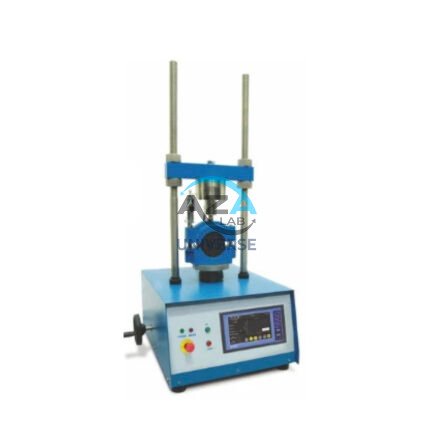
AUTOMATIC MARSHALL STABILITY TEST MACHINE AZA0954
The AZA0954 Automatic Marshall Stability Test Machine from AZALAB is a cornerstone instrument for modern civil engineering, highway material, and asphalt testing laboratories. Designed for fully automated determination of Marshall Stability and Marshall Flow, the AZA0954 plays a critical role in asphalt mix design, quality control, and performance evaluation of bituminous pavements.
Compared to conventional manual Marshall testers, the AZA0954 represents a significant technological advancement, offering superior accuracy, repeatability, operational efficiency, and digital data management. It is ideally suited for laboratories handling high sample volumes, regulatory testing, and advanced pavement research.
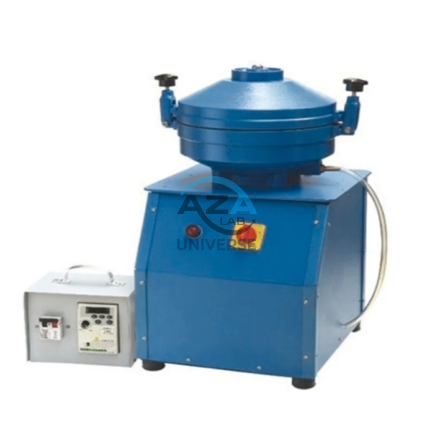
CENTRIFUGE EXTRACTOR (MOTORISED) AZA0946
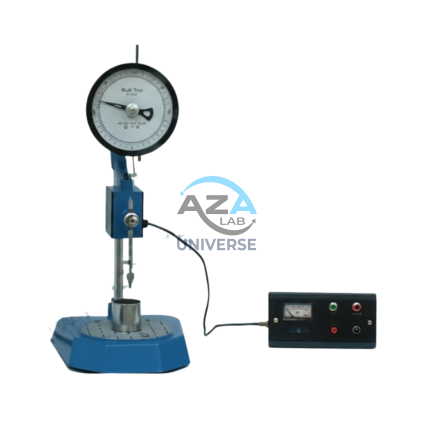
DIGITAL PENETROMETER AZA0939
The AZA0939 Digital Penetrometer from Azalab is an advanced, high-precision laboratory instrument designed for the accurate determination of the consistency of bituminous materials, including bitumen, asphalt, greases, waxes, petroleum jelly, and other semi-solid substances. Engineered for laboratories that demand maximum accuracy, repeatability, and ease of operation, the AZA0939 combines classical penetration testing principles with modern digital measurement and automated timing.
This instrument is widely used in civil engineering laboratories, road construction authorities, asphalt plants, petroleum laboratories, research institutions, and quality control departments, where strict compliance with international standards such as ASTM D5, EN 1426, AASHTO T49, IP 49, and IS 1203 is required.
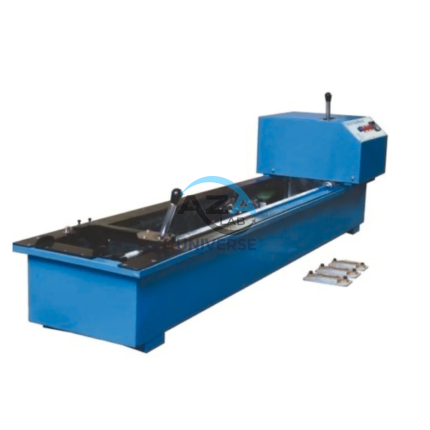
DUCTILITY TESTING APPARATUS AZA0956
The AZA0956 Ductility Testing Apparatus from AZALAB is a precision-engineered laboratory instrument designed to determine the ductility of bituminous materials, including paving grade bitumen, asphalt binders, and similar viscoelastic materials. Ductility is defined as the ability of a bituminous material to undergo tensile deformation before rupture and is a critical parameter for evaluating binder performance in flexible pavements.
In road construction, ductility testing plays a vital role in assessing how well bitumen will perform under temperature variations, repeated traffic loading, and long-term aging. A binder with adequate ductility is less prone to cracking and brittle failure, thereby contributing to durable, flexible, and high-performing pavements. The AZA0956 accurately measures the elongation distance (in centimeters) that a standard bitumen specimen can be stretched at a specified temperature and rate of pull before breaking.
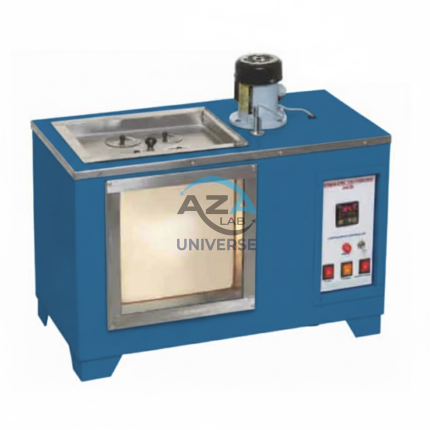
KINEMATIC VISCOMETER BATH AZA0948
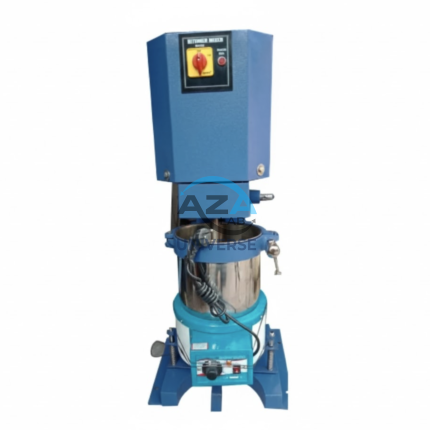
MIXER WITH HEATING JACKET AZA0955
The AZA0955 Mixer with Heating Jacket from AZALAB is a specialized laboratory apparatus engineered for the precise, uniform, and temperature-controlled mixing of materials that require elevated temperatures during blending. It is an essential instrument in civil engineering and highway material laboratories, particularly for the preparation of bituminous and asphalt mixes such as Hot Mix Asphalt (HMA).
By maintaining materials at a controlled and uniform temperature throughout the mixing process, the AZA0955 ensures optimal binder viscosity, thorough aggregate coating, and homogeneous sample preparation. This level of control is critical for producing accurate, repeatable, and representative laboratory specimens, which directly influence the reliability of asphalt mix design, quality control, and performance testing.
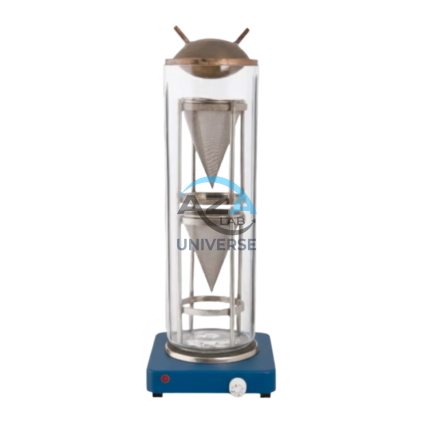
REFLUX EXTRACTOR 4000 GMS AZA0941
The AZA0941 Reflux Extractor 4000 GMS from Azalab is a high-efficiency laboratory apparatus designed for the quantitative determination of bitumen content in asphalt paving mixtures using the reflux extraction method. Engineered for large sample capacities up to 4000 grams, the AZA0941 is an essential instrument for civil engineering laboratories, road construction quality control, and materials testing facilities.
By ensuring accurate separation of bitumen binder from aggregates, the AZA0941 helps verify compliance with asphalt mix design specifications, directly contributing to durable, high-performance pavement construction.
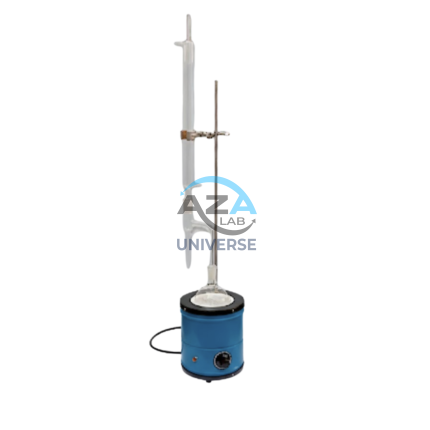
WATER IN BITUMINOUS MATERIAL (DEAN-STARK) AZA0936
The AZA0936 Water in Bituminous Material (Dean–Stark) Apparatus from Azalab is a precision laboratory system designed for the accurate determination of water content in bituminous materials, including asphalt, road oils, cut-back asphalts, and related petroleum-based binders.
Water contamination in bitumen can significantly degrade material performance by causing poor adhesion to aggregates, stripping, foaming during mixing, and reduced pavement durability. Using the internationally accepted Dean–Stark azeotropic distillation method, the AZA0936 provides reliable, repeatable, and standard-compliant moisture determination, making it essential for quality control in road construction, civil engineering laboratories, and bitumen production facilities.