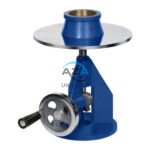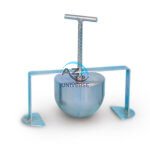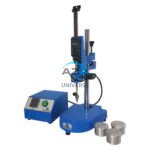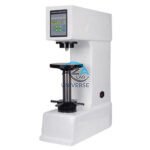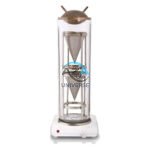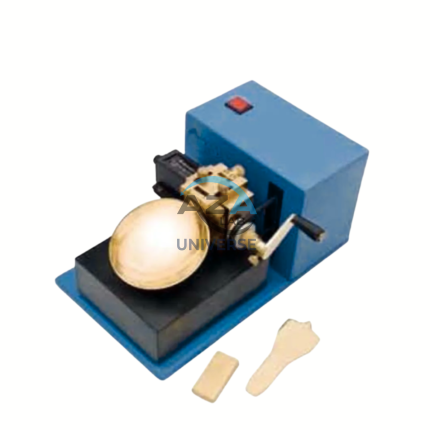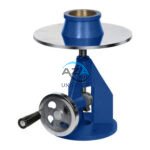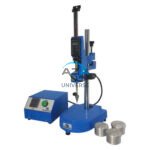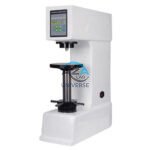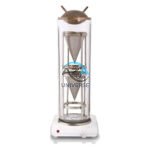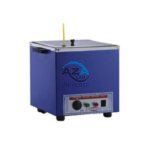
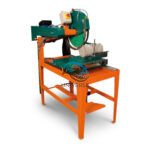
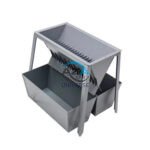
LIQUID LIMIT DEVICE (MOTORISED) AZA0854
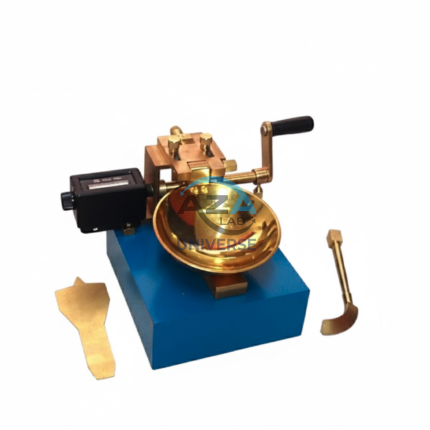
The Motorised Liquid Limit Device – AZA0854 from AZA Lab is a precision-engineered instrument designed for accurate and repeatable determination of the liquid limit of soils. Equipped with a geared-down motor delivering a consistent 120 RPM, the device automates the drop mechanism, eliminating manual effort and ensuring uniform compaction blows for reliable test results. The AZA0854 is fully compliant with IS 2720 (Part 5) and ASTM D4318, making it suitable for soil classification, road and pavement design, foundation investigations, and routine geotechnical laboratory testing. The unit operates on 230V AC, 50 Hz, single-phase, ensuring compatibility with standard laboratory power supplies. The system is supplied complete with Casagrande and ASTM grooving tools and a 1 cm height calibration block, enabling immediate setup, verification, and testing.

LIQUID LIMIT DEVICE WITH COUNTER AZA0853

The AZA0853 Liquid Limit Device with Counter from AZALAB is a precision-engineered instrument used for determining the liquid limit of soils in accordance with the Casagrande method. This test is a fundamental component of soil classification and geotechnical investigation, providing critical insight into the plasticity, compressibility, and shear strength of fine-grained soils.

Designed for reliable, repeatable, and standardized testing, the AZA0853 is widely used in geotechnical laboratories, civil engineering departments, construction quality control labs, and academic institutions.


Principle of Liquid Limit Test (Casagrande Method)

The liquid limit is defined as the water content at which soil transitions from a plastic state to a liquid state. In practice, it is determined as the moisture content at which a standard groove cut in the soil sample closes over a length of 12.5 mm under 25 blows of the liquid limit apparatus.

The AZA0853 consists of a polished brass cup mounted on an adjustable bracket. The cup is repeatedly raised and dropped from a fixed height of 1 cm onto a hard rubber base by means of a manually operated cam mechanism. A built-in mechanical counter accurately records the number of blows, ensuring compliance with testing standards and reducing operator error.
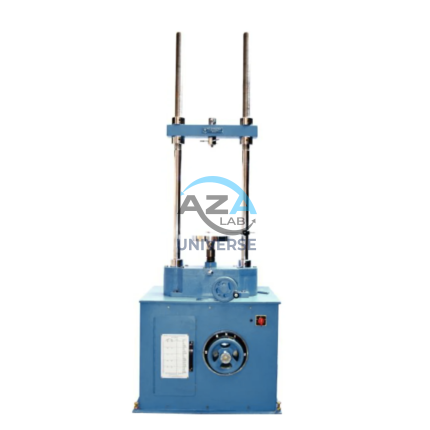
LOAD FRAME, MOTORISED, 30 SPEEDS AZA0909

The AZA0909 Motorised Load Frame (30 Speeds) from Azalab is a versatile, high-precision loading system designed for applying controlled vertical loads in a wide range of geotechnical soil tests. Engineered for accuracy, stability, and long-term laboratory use, the AZA0909 supports critical tests such as CBR, UCS, Triaxial (UU, CU, CD), and Consolidation (Oedometer).

Equipped with a 30-speed gearbox and motorised screw drive, the load frame allows precise control of displacement rates, enabling compliance with multiple national and international testing standards. Its smooth, vibration-free operation ensures repeatable and reliable test results across varied loading requirements.
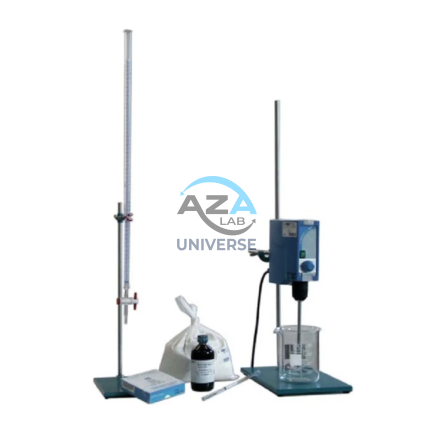
METHYLENE BLUE TEST SET AZA0860

The AZA0860 Methylene Blue Test Set from AZA Lab is a comprehensive laboratory system designed to determine the clay content and clay activity in fine aggregates and soils through measurement of the Methylene Blue Value (MBV). The test is highly sensitive to active clay minerals—particularly montmorillonite—that can adversely affect the performance of concrete, asphalt, and other construction materials. This method is widely adopted in aggregate quality control, concrete mix design, asphalt technology, and geotechnical investigations, providing a reliable indicator of fines reactivity and cation exchange capacity.

Standards Compliance

  • EN 933-9 – Tests for geometrical properties of aggregates (Methylene Blue Test)
  • NF P94-068
  • UNE 83 180
  • UNI 8520-15
  • ASTM C837 – Methylene Blue Index of Clay in Fine Aggregate
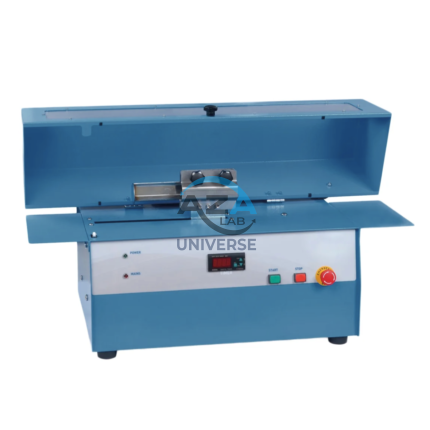
MOTORISED SAND EQUIVALENT SHAKER AZA0861
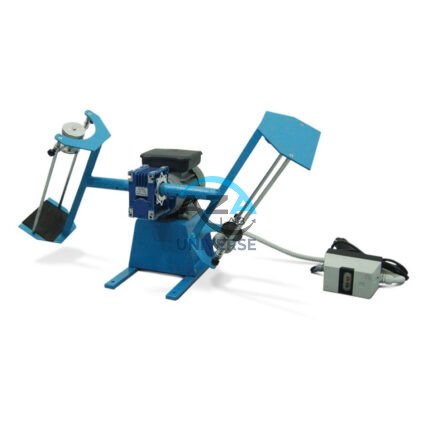
The AZA0861 Motorised Sand Equivalent Shaker is a precision-engineered laboratory instrument designed to automate the agitation phase of the Sand Equivalent Test. It ensures uniform, repeatable shaking in full compliance with ASTM D2419, AASHTO T176, and IS 2720 (Part 37), eliminating operator variability associated with manual shaking. This shaker is an essential accessory for soil, aggregate, and construction material testing laboratories where accurate assessment of sand cleanliness and clay-like fines is critical.

Purpose & Function The Sand Equivalent Test evaluates the relative proportion of sand versus clay-sized or plastic fines in fine aggregates. During testing, the sample and calcium chloride solution must be agitated for a defined stroke length and rate. The AZA0861 automates this process using a controlled reciprocating motion, delivering consistent agitation that improves repeatability, reduces operator fatigue, and enhances overall test reliability.

PARTICLE DENSITY BY GAS JAR METHOD (END-OVER-END SHAKER) AZA0885

The AZA0885 Particle Density Test Set from Azalab is a precision laboratory apparatus designed for determining the specific gravity (particle density) of fine-grained soils, particularly silts and clays. This method is especially effective where conventional pycnometer techniques may suffer from air entrapment or handling difficulties with cohesive soils.

The apparatus operates on the Gas Jar Method with an End-Over-End Shaker, a standardized and highly reliable procedure specified in IS 2720 (Part 3 / Section 1) and BS 1377. The controlled mechanical rotation ensures uniform suspension of soil particles, leading to accurate, repeatable, and operator-independent results.
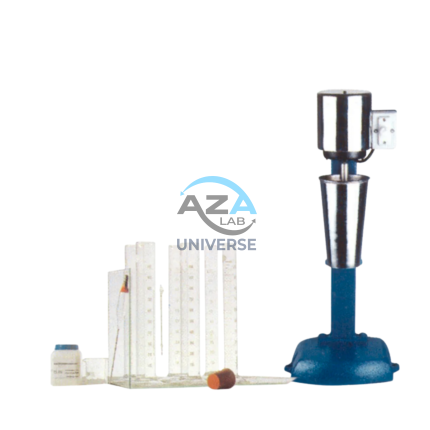
PARTICLE SIZE SEDIMENTATION (HYDROMETER METHOD) AZA0857
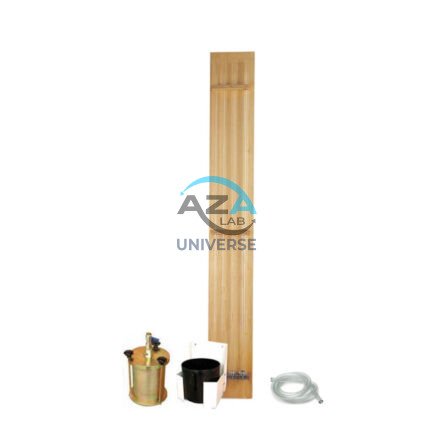
AZA0857 – Particle Size Sedimentation Apparatus (Hydrometer Method) The AZA0857 Particle Size Sedimentation Apparatus (Hydrometer Method) from AZA Lab is designed for determining the particle size distribution of fine-grained soils, particularly silts and clays smaller than 75 microns. This method is widely adopted in soil mechanics, geotechnical engineering, civil construction quality control, and academic laboratories where accurate characterization of cohesive soils is essential. The hydrometer method is based on the sedimentation principle governed by Stokes’ Law, measuring changes in the density of a soil–water suspension over time. By recording hydrometer readings at defined intervals, the percentage of soil particles remaining in suspension is calculated, enabling precise determination of grain size distribution for fine soils beyond the practical limits of sieve analysis.

PERMEABILITY APPARATUS (FALLING HEAD PERMEABILITY) AZA0876

The AZA0876 Falling Head Permeability Apparatus from Azalab is a precision-engineered laboratory instrument designed for the determination of permeability (hydraulic conductivity) of fine-grained soils, such as silts and clays. It is specifically intended for the falling head test method, which is the most suitable and widely accepted technique for soils with low permeability.

Accurate assessment of soil permeability is critical in geotechnical engineering applications including foundation design, earth dams, embankments, drainage systems, seepage analysis, and groundwater flow studies. The AZA0876 provides reliable, repeatable, and standard-compliant results for professional laboratories.
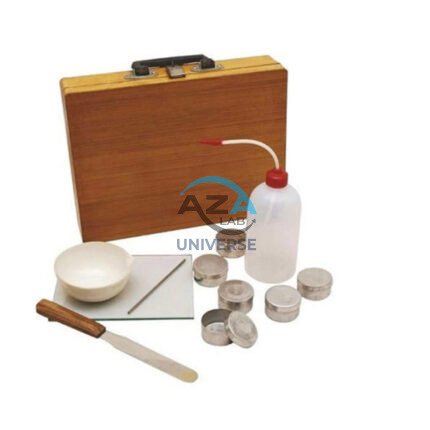
PLASTIC LIMIT SET AZA0848

The AZA0848 Plastic Limit Set is a standardized soil testing kit designed for the accurate determination of the plastic limit of fine-grained soils, in accordance with IS: 2720 (Part 5) and ASTM D4318. The plastic limit is a fundamental soil index property used in soil classification and in evaluating soil behavior under varying moisture conditions. This test kit is an essential component of geotechnical investigations, civil engineering projects, and soil mechanics laboratories, providing reliable and repeatable results in both laboratory and field environments. Purpose & Importance The plastic limit represents the lowest moisture content at which soil remains plastic and can be rolled into threads of 3 mm diameter without crumbling. Determination of this limit is critical for:
  • Soil classification (Atterberg limits)
  • Assessing workability and consistency
  • Evaluating shrink–swell characteristics
  • Supporting foundation, pavement, and earthwork design
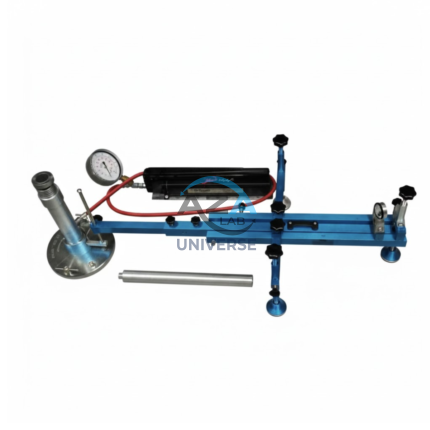
The AZA0848 set provides all required accessories to conduct the test accurately, efficiently, and in full compliance with applicable standards.

PLATE BEARING TEST AZA0929

The Azalab AZA0929 Plate Bearing Test Equipment is a complete, field-proven system designed to conduct Plate Bearing Tests (Plate Load Tests) for direct determination of soil bearing capacity and foundation settlement characteristics. This test is one of the most reliable in-situ methods for evaluating soil behavior under actual loading conditions and is essential for the design and validation of foundations, pavements, and heavy civil structures.

The AZA0929 system is widely used by geotechnical engineers, consultants, contractors, and infrastructure developers across India for critical construction projects where accurate soil performance data is mandatory
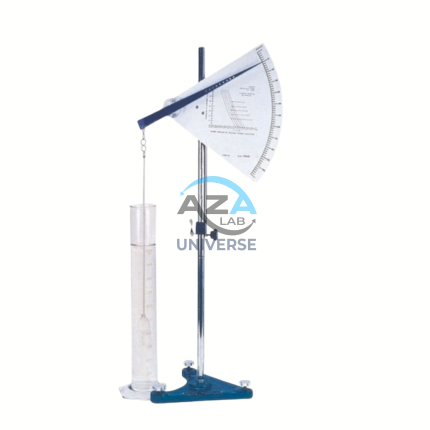
PLUMMET BALANCE AZA0862
The AZA0862 Plummet Balance is a specialized laboratory apparatus designed for determining the specific gravity of fine-grained soils, particularly clays and silts that are difficult to test using conventional pycnometer methods. It is widely used in geotechnical engineering, soil mechanics laboratories, and construction quality control applications. Manufactured by Azalab, the instrument complies with ASTM D854 and IS 2720 (Part 3 / Sec 1) standards and provides rapid, repeatable, and reliable results for dispersed soil samples commonly used in sedimentation, pipette, and hydrometer analyses.

Working Principle The plummet balance method determines the specific gravity of soil solids by measuring the apparent weight of a suspended plummet immersed in a soil–water suspension. The balance pointer directly indicates the percentage of soil in suspension via a calibrated scale, eliminating lengthy calculations. A rack-and-pinion height adjustment allows the plummet to be positioned at the required depth. The percentage of soil in suspension is read directly from the graduated scale, making this method faster and more user-friendly than traditional sedimentation calculations. The set is supplied with a temperature correction chart relating the constant K to suspension temperature for soils with specific gravity ranging from 2.4 to 2.8, facilitating accurate application of Stokes’ law.

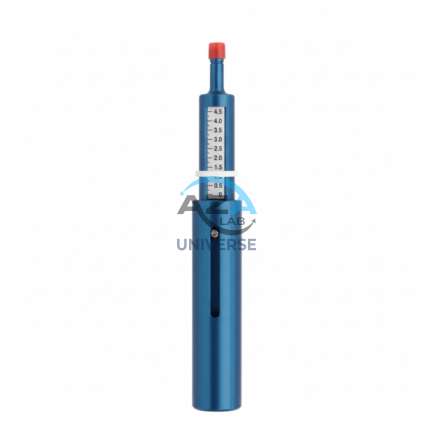
POCKET PENTROMETER AZA0869

The AZA0869 Compact Pocket Penetrometer from Azalab is a field-ready instrument designed for rapid estimation of unconfined compressive strength (UCS) and shear strength of cohesive soils. Fully compliant with ASTM D1558 and ASTM D2573, it enables engineers, geologists, and site inspectors to quickly assess soil consistency and short-term stability without the need for laboratory equipment. Widely used in foundation evaluation, trench wall inspection, and field soil classification, the AZA0869 delivers immediate, reliable results for clays and silts during preliminary geotechnical assessments.

Applications
  • Estimation of UCS and shear strength of soft to stiff cohesive soils
  • Field classification of soil consistency
  • Pre-construction soil stability checks
  • Trench safety and shallow foundation planning
  • Geotechnical education and field research