
 Rock
Rock Aggregate
 Cement
 Concrete
 Soil
Soil Steel
Steel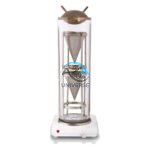 Bitumen/Asphalt
 Security Survey Equipment
 General Items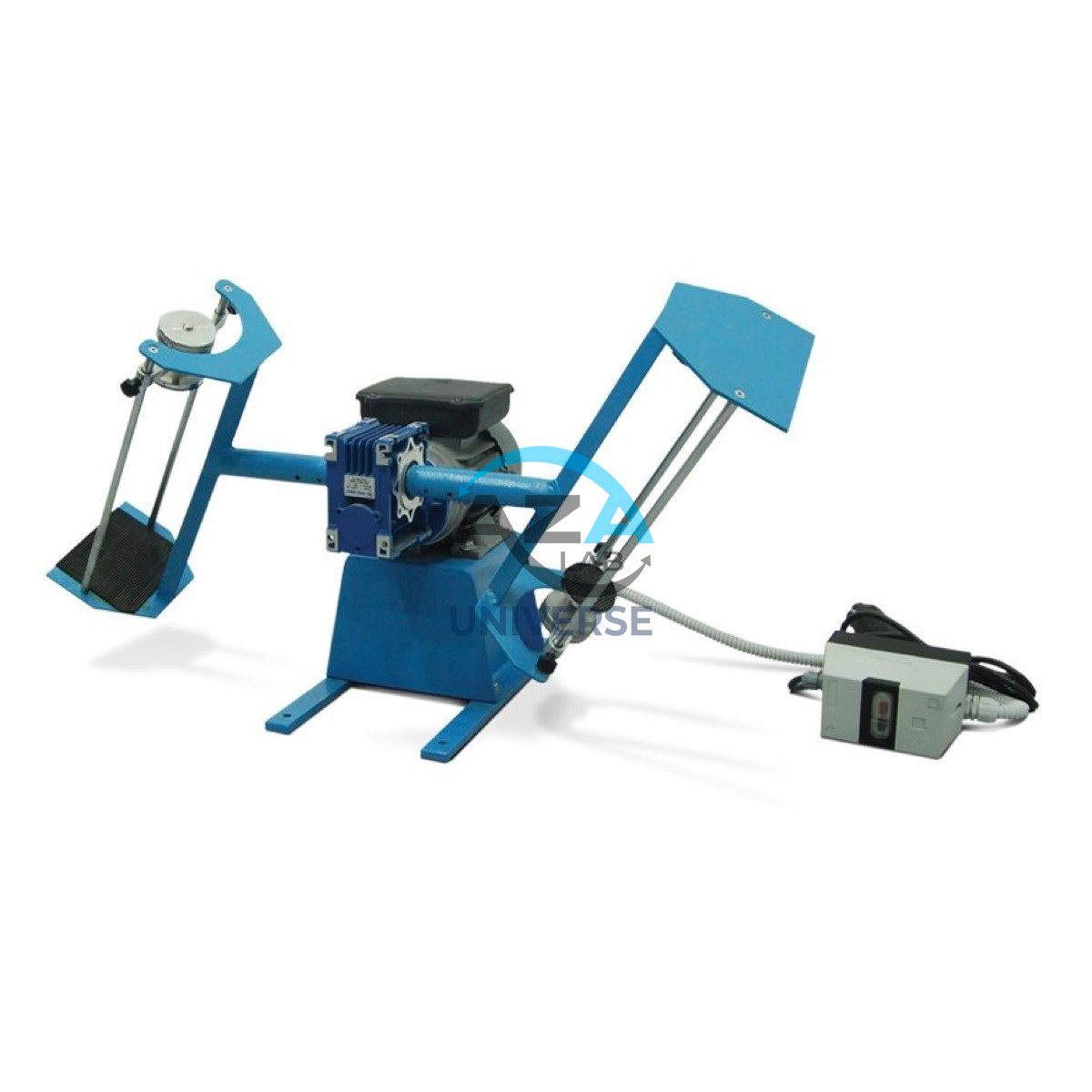
PARTICLE DENSITY BY GAS JAR METHOD (END-OVER-END SHAKER) AZA0885
The AZA0885 Particle Density Test Set from Azalab is a precision laboratory apparatus designed for determining the specific gravity (particle density) of fine-grained soils, particularly silts and clays. This method is especially effective where conventional pycnometer techniques may suffer from air entrapment or handling difficulties with cohesive soils.
The apparatus operates on the Gas Jar Method with an End-Over-End Shaker, a standardized and highly reliable procedure specified in IS 2720 (Part 3 / Section 1) and BS 1377. The controlled mechanical rotation ensures uniform suspension of soil particles, leading to accurate, repeatable, and operator-independent results.
Description
Particle density is a fundamental soil property used in geotechnical design, soil classification, compaction analysis, and evaluation of mineral composition. The AZA0885 test set is engineered to deliver consistent results with minimal human error, making it ideal for professional laboratories, academic institutions, and quality control facilities.
Key Features and Benefits
- Standard-Compliant Testing
Conforms fully to IS 2720 (Part 3) and BS 1377 requirements. - End-Over-End Mechanical Shaker
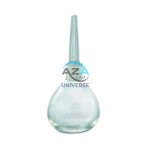
Ensures uniform mixing and suspension of soil particles, improving repeatability. - Clear Gas Jar
Transparent jar allows visual inspection and accurate volumetric observation. - Reduced Air Entrapment
Particularly effective for fine-grained and cohesive soils. - Robust Construction
Designed for long-term laboratory use with corrosion-resistant components.
Typical Components of AZA0885 Set
- Gas Jar with Airtight Lid
Graduated borosilicate glass or polycarbonate jar - End-Over-End Shaker
Motor-driven unit for uniform rotation - Measuring Cylinder
For accurate measurement of distilled water - Weighing Accessories
For soil sample preparation - Plastic Funnel and Stirrer
For easy soil–water mixing - Thermometer (optional)
For monitoring water temperature during testing
Technical Specifications
| Feature | Description |
|---|---|
| Model Number | AZA0885 |
| Test Method | Gas Jar Method with End-Over-End Shaker |
| Standards | IS 2720 (Part 3 / Section 1), BS 1377 |
| Shaker Type | End-over-end, motor driven |
| Jar Capacity | 1 litre (custom sizes available) |
| Power Supply | 230 V, 50 Hz (110 V optional) |
| Materials | Borosilicate glass / Polycarbonate jar, powder-coated steel shaker |
| Application | Particle density / specific gravity of soils |
Applications
- Geotechnical Engineering – Soil characterization for foundations, embankments, and retaining structures
- Soil Classification – Determination of index properties for laboratory reporting
- Construction Quality Control – Validation of compaction and stability parameters
- Academic & Research Laboratories – Teaching, training, and advanced soil mechanics studies
Test Principle (Overview)
- A dry soil sample is placed into the gas jar with water
- The jar is sealed and mounted on the end-over-end shaker
- Mechanical rotation ensures uniform mixing and air removal
- After settling, volume displacement and soil mass are used to calculate particle density
This method provides a reliable measure of the ratio of soil solid mass to its true volume, excluding voids.
Frequently Asked Questions (FAQ)
Q1: What is particle density of soil?
It is the mass of soil solids divided by their volume, excluding voids. Typical values range from 2.6 to 2.75 g/cm³.
Q2: Why use the gas jar method instead of a pycnometer?
The gas jar method minimizes air entrapment and offers better accuracy for fine-grained and cohesive soils.
Q3: Is AZA0885 suitable for all soil types?
It is particularly effective for fine-grained soils such as clays and silts.
Q4: Does the shaker require calibration?
Routine calibration is not required; periodic operational checks are sufficient.
Q5: How long does one test take?
Including preparation and settling, a typical test takes 1.5 to 2 hours.
Highlights
- AZA0885 – Particle Density Test Set for Fine Soils
- Gas Jar Method compliant with IS 2720 (Part 3) & BS 1377
- Includes End-Over-End Shaker for uniform mixing
- High accuracy for clayey and cohesive soils
- Ideal for geotechnical, research, and QC laboratories
Azalab – Precision Instruments for Reliable Soil Testing
Related products
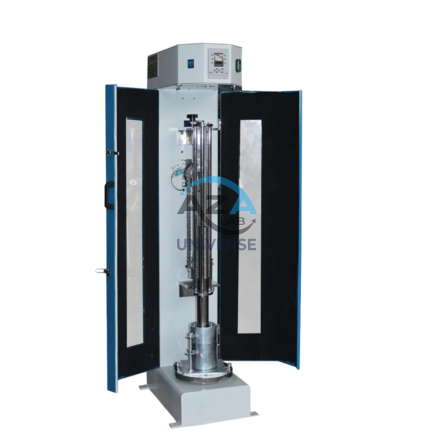
AUTOMATIC SOIL COMPACTOR AZA0867
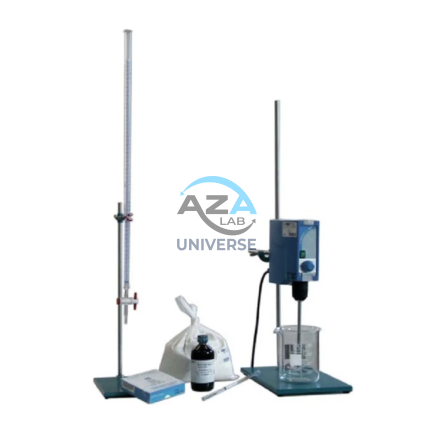
METHYLENE BLUE TEST SET AZA0860
- EN 933-9 – Tests for geometrical properties of aggregates (Methylene Blue Test)
- NF P94-068
- UNE 83 180
- UNI 8520-15
- ASTM C837 – Methylene Blue Index of Clay in Fine Aggregate
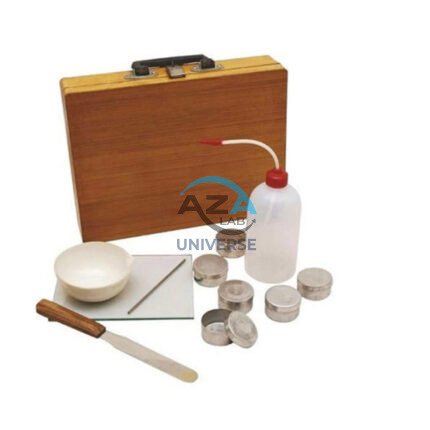
PLASTIC LIMIT SET AZA0848
- Soil classification (Atterberg limits)
- Assessing workability and consistency
- Evaluating shrink–swell characteristics
- Supporting foundation, pavement, and earthwork design
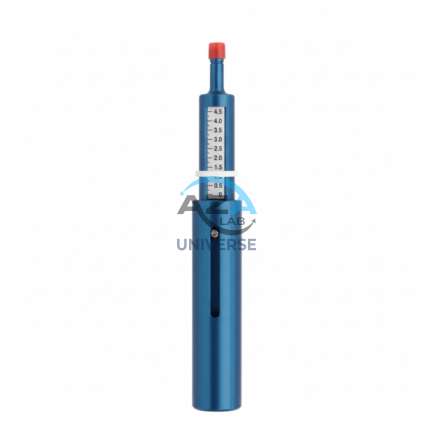
POCKET PENTROMETER AZA0869
- Estimation of UCS and shear strength of soft to stiff cohesive soils
- Field classification of soil consistency
- Pre-construction soil stability checks
- Trench safety and shallow foundation planning
- Geotechnical education and field research
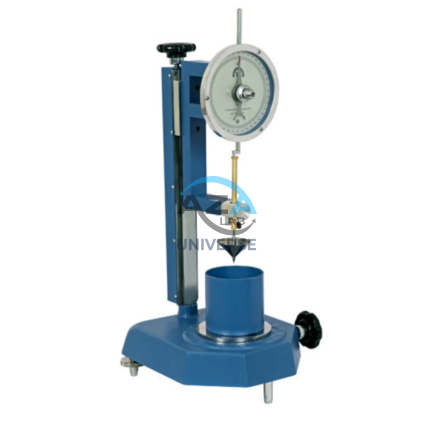
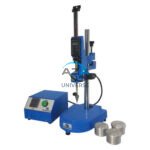
SEMI AUTOMATIC CONE PENETROMETER AZA0852
Principle of Operation
A soil paste prepared at known moisture content is placed in the sample cup. The standardized cone, attached to a calibrated weight, is released using the semi-automatic clutch mechanism, allowing free fall penetration into the soil. After the specified time (typically 5 seconds), the penetration depth is measured using a high-precision dial gauge. The moisture content corresponding to a penetration of 20 mm is considered the liquid limit of the soil, as defined in IS and BS standards.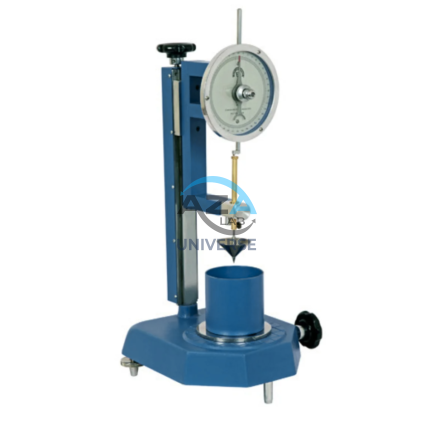
SOIL CONE PENETROMETER AZA0851
Principle of Operation
A soil paste prepared at a known moisture content is placed in the sample cup. The stainless steel cone, of specified mass and angle, is allowed to penetrate the soil freely for 5 seconds. The depth of penetration (up to 20 mm) is measured using a precision depth gauge. The moisture content corresponding to 20 mm penetration is defined as the liquid limit of the soil.Standards Compliance
- IS 2720 (Part 5) – Determination of liquid and plastic limits
- ASTM D4318 – Liquid Limit, Plastic Limit, and Plasticity Index of Soils
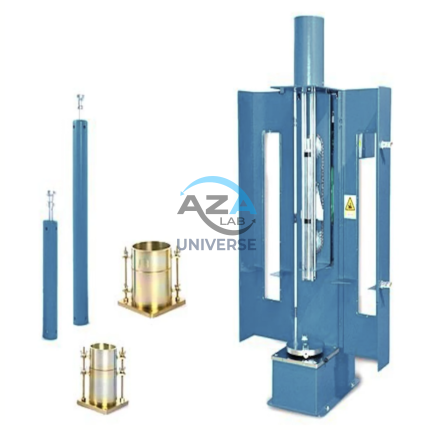
STANDARD COMPACTION TEST AZA0863
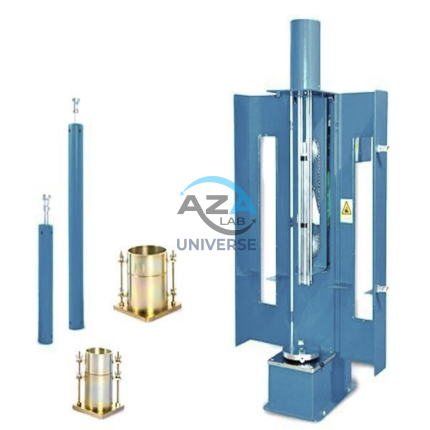
STANDARD COMPACTION TEST AZA0864
The AZA0864 Standard Compaction Test Apparatus from Azalab is precision-engineered to perform the British Standard Proctor (Light Compaction) Test, as specified in BS 1377-4 and BS 1924-2. This apparatus is used to determine the Maximum Dry Density (MDD) and Optimum Moisture Content (OMC) of soils subjected to light compactive effort.
The test simulates field compaction achieved by light rollers and rammers and is essential for quality control of subgrades, embankments, road bases, and foundation soils. The AZA0864 is widely used in geotechnical laboratories, site investigation works, and academic institutions following British Standards.