
 Rock
Rock Aggregate
 Cement
 Concrete
 Soil
Soil Steel
Steel Bitumen/Asphalt
 Security Survey Equipment
 General Items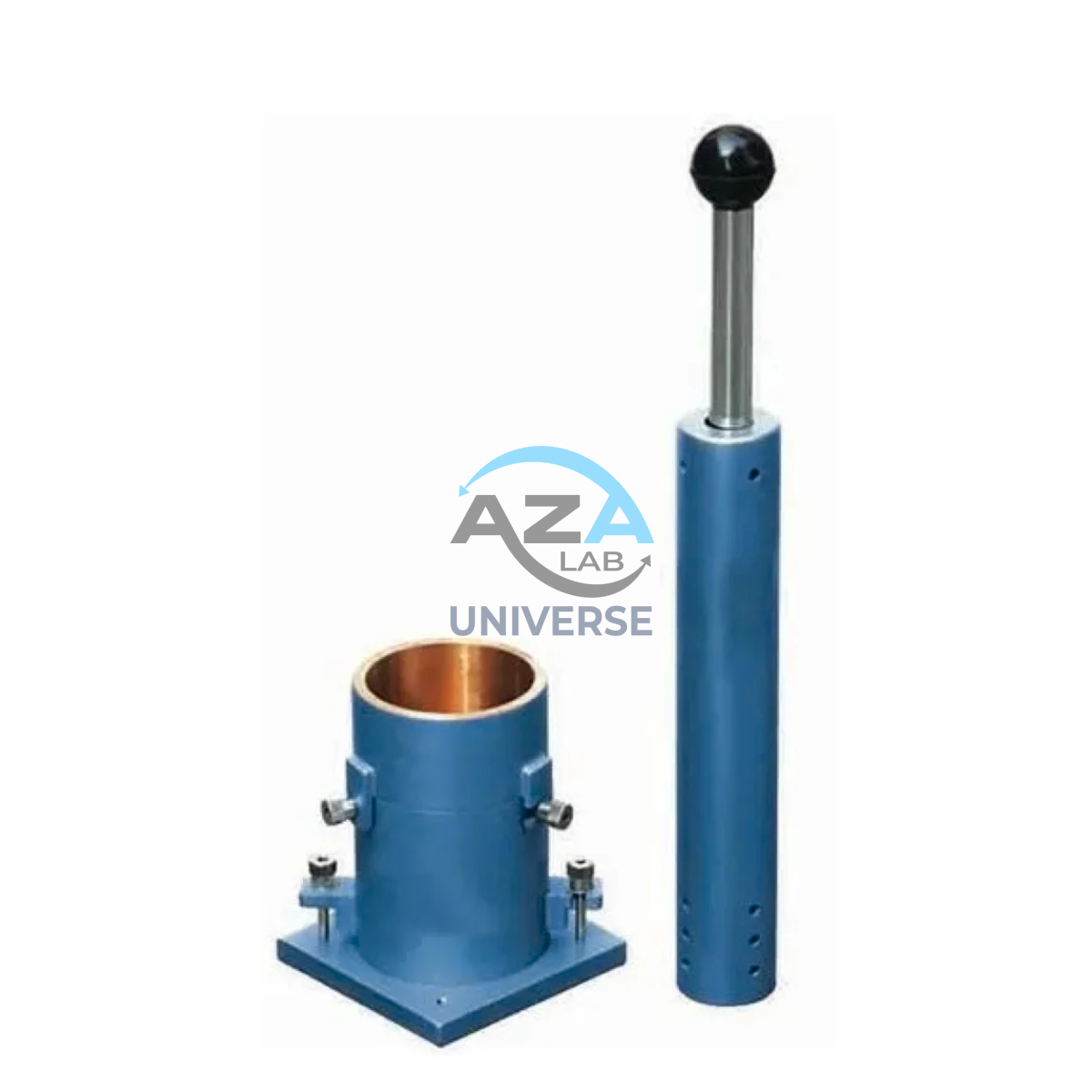
HEAVY COMPACTION TEST AZA0866
The AZA0866 Heavy Compaction Test Set from Azalab is designed for determining the Maximum Dry Density (MDD) and Optimum Moisture Content (OMC) of soils using the Heavy Compaction (Modified Proctor) Method, in accordance with IS 2720 (Part VIII).
This test is fundamental in geotechnical engineering, road and highway construction, foundation design, embankment works, and earthworks where soils are subjected to high compactive effort. The heavy compaction test realistically simulates field compaction achieved by modern construction equipment, enabling reliable prediction of soil behavior under service loads.
This configuration is supplied with a 150 mm diameter mould (2250 cc volume), making it particularly suitable for coarse-grained and granular soils.
Scope of Use
The AZA0866 Heavy Compaction Test Set is used to establish the relationship between moisture content and dry density of soil under heavy compaction energy. The resulting compaction curve is used to determine MDD and OMC, which are essential parameters for compaction control and quality assurance in field construction.
Description
Applications
- Heavy Proctor (Modified Proctor) compaction testing
- Construction compaction quality control
- Subgrade and embankment evaluation
- Foundation soil preparation
- Soil stabilization and research studies
Technical Specifications
| Component | Specification |
|---|---|
| Standard | IS 2720 (Part VIII) |
| Mould Internal Diameter | 150 mm |
| Mould Height | 127.3 mm |
| Mould Volume | 2250 cc |
| Rammer Weight | 4.89 kg |
| Drop Height | 450 mm |
| Blows per Layer | 56 blows in 5 layers (as per IS 2720 Part VIII) |
| Material Options | Steel (standard), Gunmetal (optional) |
| Operation | Manual |
| Usage | Laboratory and field testing |
Key Features
- Conforms fully to IS 2720 (Part VIII) – Heavy Compaction Test
- 150 mm diameter mould suitable for coarse and granular soils
- High compaction energy to simulate field conditions
- Rugged construction for repetitive laboratory and site use
- Accurate determination of Maximum Dry Density (MDD) and Optimum Moisture Content (OMC)
What’s Included
- Steel Compaction Mould – 150 mm internal diameter × 127.3 mm height (2250 cc volume)
- Detachable Collar – Precisely machined for accurate mould volume
- Base Plate – Threaded or clamp-lock type
- Heavy Compaction Rammer – 4.89 kg, manually operated, with 450 mm controlled drop
Note: Moulds can be supplied in steel (standard) or gunmetal (optional) on request.
Frequently Asked Questions (FAQ)
Q1: Why is a 150 mm mould used instead of a 100 mm mould?
Larger moulds are recommended for coarse-grained soils containing bigger particles to ensure representative sampling and accurate compaction results.
Q2: What is the difference between steel and gunmetal moulds?
Gunmetal moulds provide superior corrosion resistance and longer service life but are heavier and more expensive compared to steel moulds.
Q3: Is the AZA0866 suitable for field use?
Yes. The set is suitable for laboratory and field applications, commonly used in mobile or site testing laboratories.
Q4: Can this rammer be used with other mould sizes?
The 4.89 kg rammer supplied with AZA0866 is calibrated specifically for the 150 mm mould. Different mould sizes require different compaction energy arrangements.
Q5: Is the Heavy Compaction Test the same as the Modified Proctor Test?
Yes. Under IS standards it is referred to as the Heavy Compaction Test, and it is equivalent to the Modified Proctor Test defined in ASTM D1557.
Related products
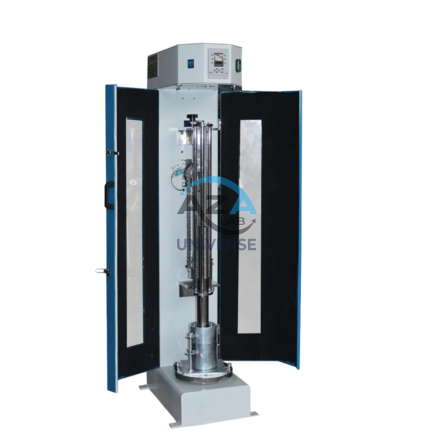
AUTOMATIC SOIL COMPACTOR AZA0867
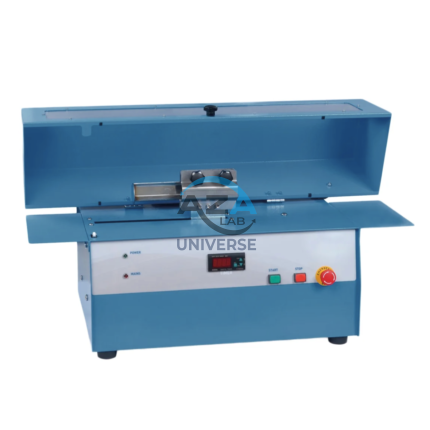
MOTORISED SAND EQUIVALENT SHAKER AZA0861
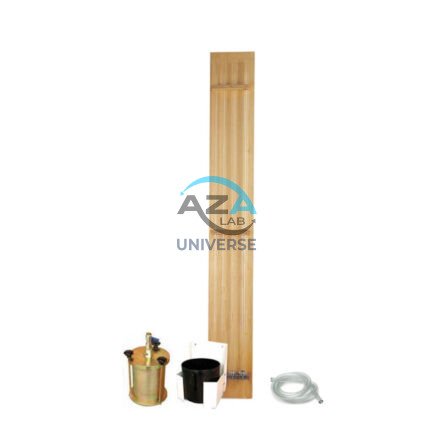
PERMEABILITY APPARATUS (FALLING HEAD PERMEABILITY) AZA0876
The AZA0876 Falling Head Permeability Apparatus from Azalab is a precision-engineered laboratory instrument designed for the determination of permeability (hydraulic conductivity) of fine-grained soils, such as silts and clays. It is specifically intended for the falling head test method, which is the most suitable and widely accepted technique for soils with low permeability.
Accurate assessment of soil permeability is critical in geotechnical engineering applications including foundation design, earth dams, embankments, drainage systems, seepage analysis, and groundwater flow studies. The AZA0876 provides reliable, repeatable, and standard-compliant results for professional laboratories.
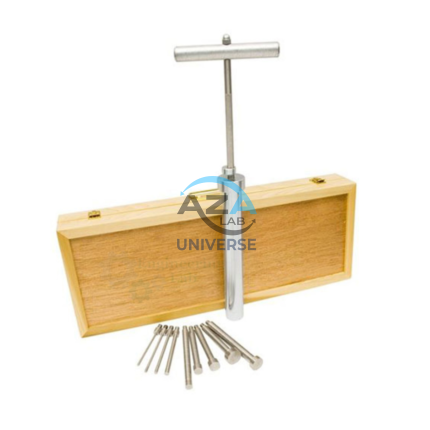
PROCTOR NEEDLES (SPRING TYPE) AZA0868
- Field assessment of soil compaction
- Estimation of optimum moisture condition
- Subgrade, fill, and trench inspection
- Construction quality control checks
- Geotechnical and educational field investigations
SEMI AUTOMATIC CONE PENETROMETER AZA0852
Principle of Operation
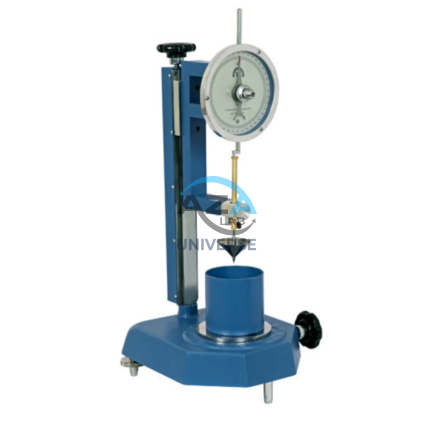
A soil paste prepared at known moisture content is placed in the sample cup. The standardized cone, attached to a calibrated weight, is released using the semi-automatic clutch mechanism, allowing free fall penetration into the soil. After the specified time (typically 5 seconds), the penetration depth is measured using a high-precision dial gauge. The moisture content corresponding to a penetration of 20 mm is considered the liquid limit of the soil, as defined in IS and BS standards.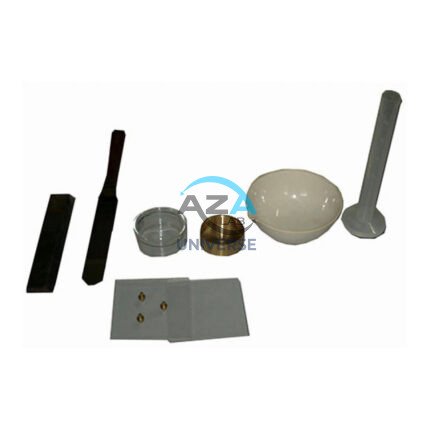
SHRINKAGE LIMIT SET AZA0849
Standards Compliance
The AZA0849 Shrinkage Limit Set conforms to major national and international testing standards, ensuring reliable and universally accepted test results:- IS 2720 (Part VII)
- ASTM D427
- BS 1377
- AASHTO T 92
STANDARD COMPACTION TEST AZA0864
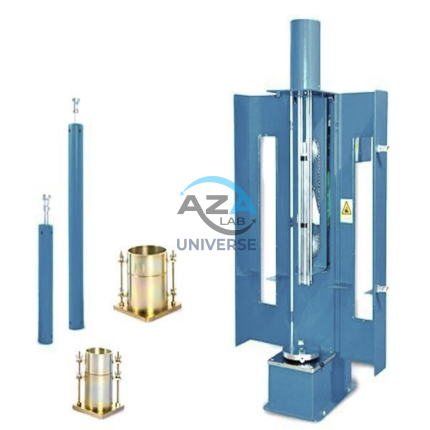
The AZA0864 Standard Compaction Test Apparatus from Azalab is precision-engineered to perform the British Standard Proctor (Light Compaction) Test, as specified in BS 1377-4 and BS 1924-2. This apparatus is used to determine the Maximum Dry Density (MDD) and Optimum Moisture Content (OMC) of soils subjected to light compactive effort.
The test simulates field compaction achieved by light rollers and rammers and is essential for quality control of subgrades, embankments, road bases, and foundation soils. The AZA0864 is widely used in geotechnical laboratories, site investigation works, and academic institutions following British Standards.
WATER LEVEL INDICATOR AZA0871
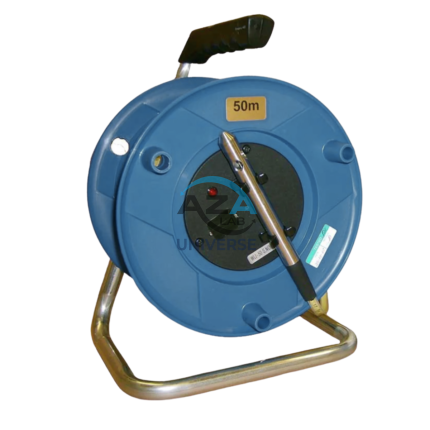
The AZA0871 Water Level Indicator from Azalab is a high-precision electronic instrument designed for accurate measurement of groundwater levels in boreholes, wells, standpipes, and observation tubes. It is an essential tool for professionals involved in groundwater monitoring, environmental site assessments, hydrological investigations, geotechnical projects, and dewatering operations.
Accurate water level measurement is fundamental for understanding aquifer behavior, monitoring seasonal or pumping-induced fluctuations, assessing contamination plumes, and supporting the design of foundations, irrigation systems, and water resource management plans. The AZA0871 provides a reliable, fast, and field-ready solution for both static and dynamic water level measurements.