
 Rock
 Aggregate
 Cement
 Concrete
 Soil
 Steel
 Bitumen/Asphalt
 Security Survey Equipment
 General Items


PROCTOR NEEDLES (SPRING TYPE) AZA0868
The AZA0868 Precision Proctor Needles (Spring Type) from Azalab are designed for rapid, on-site estimation of soil compaction and moisture condition. This portable instrument provides a practical alternative to full laboratory Proctor testing for preliminary assessment and quality control, particularly on cohesive and semi-cohesive soils encountered in embankments, subgrades, and trench backfills.
The instrument employs a calibrated, spring-loaded plunger to measure penetration resistance directly (0–40 kg range). Two graduated stems allow accurate tracking of penetration depth, while a comprehensive set of interchangeable needle tips enables testing across a range of soil densities and particle characteristics.
Applications
- Field assessment of soil compaction
- Estimation of optimum moisture condition
- Subgrade, fill, and trench inspection
- Construction quality control checks
- Geotechnical and educational field investigations
Description
Key Features
- Calibrated Spring Mechanism: Direct reading of penetration resistance up to 40 kg
- Dual Graduated Stems: Long and short stems with 12.5 mm graduation intervals for depth control
- Multiple Needle Tips: Seven interchangeable tips for varying soil conditions
- Portable Design: Compact construction with a protective wooden carrying case
- Rugged Build: Stainless steel / powder‑coated steel body suitable for site use
Specifications
| Component | Details |
|---|---|
| Load Range | 0–40 kg |
| Stem Graduations | Every 12.5 mm (long & short stems) |
| Long Stem Use | Larger needle areas, deeper penetration |
| Short Stem Use | Smaller needle areas, close‑range accuracy |
| Needle Points Included | 0.25, 0.5, 1.0, 1.5, 2.0, 3.5, 6.0 cm² |
| Tommy Pin | Included |
| Body Material | Stainless steel / powder‑coated steel |
| Carry Case | Wooden, foam‑lined interior |
What’s Included
- Spring‑loaded plunger with calibrated stem
- Long stem and short stem with 12.5 mm graduations
- Seven interchangeable needle points
- Tommy pin for assembly and disassembly
- Wooden storage and carrying case
Frequently Asked Questions (FAQ)
Q1: What is the load range of the AZA0868?
A: The instrument measures penetration resistance up to 40 kg.
Q2: Why are two stems provided?
A: The long stem is used with larger needle areas for deeper penetration, while the short stem is used with smaller needle tips for improved accuracy near the surface.
Q3: How is the instrument calibrated?
A: The unit is factory‑calibrated. Calibration certificates can be provided on request.
Q4: Is this suitable for sandy soils?
A: The AZA0868 is best suited for cohesive and semi‑cohesive soils. Results in clean, non‑cohesive sands may vary.
Q5: Is the instrument portable for site work?
A: Yes. It is compact and supplied in a durable wooden case for easy transport and field use.
AZA0868 – Precision Proctor Needles provide a fast, practical, and reliable method for estimating soil compaction and moisture condition directly at site, supporting efficient construction quality control and geotechnical decision‑making.
Related products
GRAIN SIZE ANALYSIS (PIPETTE METHOD) AZA0856
LIQUID LIMIT DEVICE (MOTORISED) AZA0854
LIQUID LIMIT DEVICE WITH COUNTER AZA0853
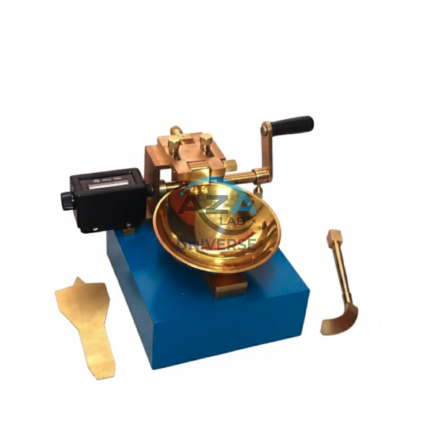
The AZA0853 Liquid Limit Device with Counter from AZALAB is a precision-engineered instrument used for determining the liquid limit of soils in accordance with the Casagrande method. This test is a fundamental component of soil classification and geotechnical investigation, providing critical insight into the plasticity, compressibility, and shear strength of fine-grained soils.
Designed for reliable, repeatable, and standardized testing, the AZA0853 is widely used in geotechnical laboratories, civil engineering departments, construction quality control labs, and academic institutions.
Principle of Liquid Limit Test (Casagrande Method)
The liquid limit is defined as the water content at which soil transitions from a plastic state to a liquid state. In practice, it is determined as the moisture content at which a standard groove cut in the soil sample closes over a length of 12.5 mm under 25 blows of the liquid limit apparatus.
The AZA0853 consists of a polished brass cup mounted on an adjustable bracket. The cup is repeatedly raised and dropped from a fixed height of 1 cm onto a hard rubber base by means of a manually operated cam mechanism. A built-in mechanical counter accurately records the number of blows, ensuring compliance with testing standards and reducing operator error.
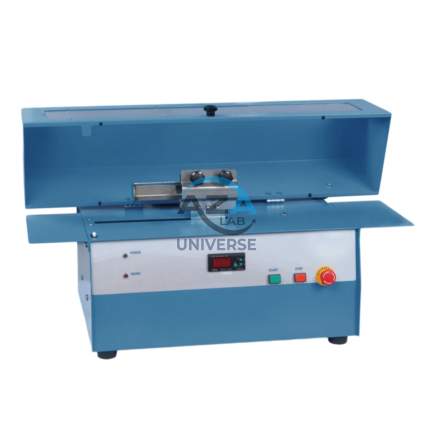
MOTORISED SAND EQUIVALENT SHAKER AZA0861
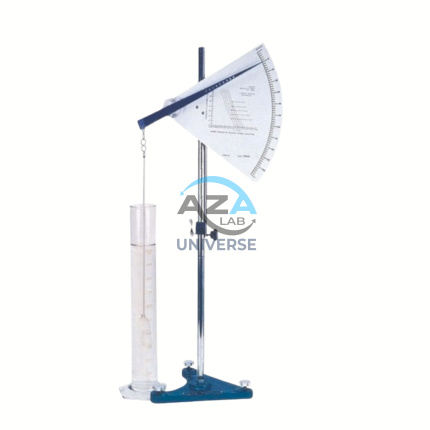
PLUMMET BALANCE AZA0862
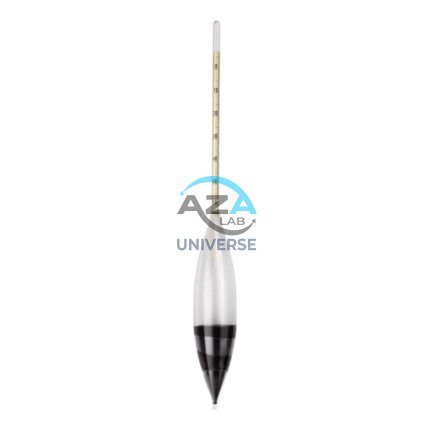
SOIL HYDROMETER AZA0858
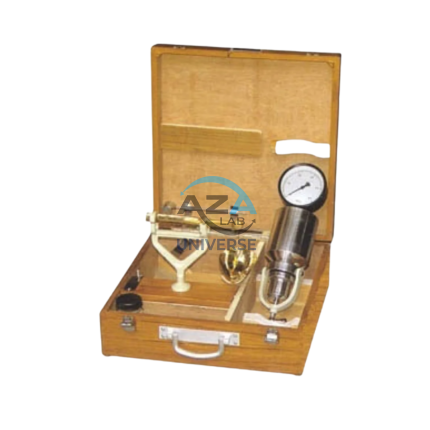
SPEEDY MOISTURE ZI 3027 METER (D2 LARGE) AZA0873
The AZA0873 Speedy Moisture ZI 3027 Meter (D2 Large) from Azalab is a high-performance field instrument designed for rapid and accurate determination of moisture content in soils, aggregates, sand, and similar materials. Based on the proven calcium carbide gas pressure method, this instrument is widely used in earthwork compaction control, road construction, geotechnical investigations, and concrete production, where immediate moisture data is critical for quality assurance.
The D2 Large configuration distinguishes the AZA0873 by allowing a larger sample size, providing more representative and reliable results, especially for heterogeneous materials and aggregates with larger particle sizes. Its rugged ZI 3027 construction ensures dependable performance under demanding site conditions.
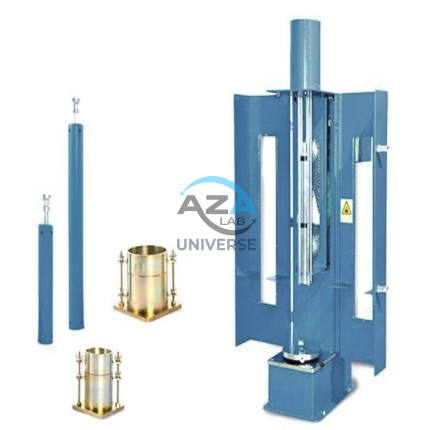
STANDARD COMPACTION TEST AZA0864
The AZA0864 Standard Compaction Test Apparatus from Azalab is precision-engineered to perform the British Standard Proctor (Light Compaction) Test, as specified in BS 1377-4 and BS 1924-2. This apparatus is used to determine the Maximum Dry Density (MDD) and Optimum Moisture Content (OMC) of soils subjected to light compactive effort.
The test simulates field compaction achieved by light rollers and rammers and is essential for quality control of subgrades, embankments, road bases, and foundation soils. The AZA0864 is widely used in geotechnical laboratories, site investigation works, and academic institutions following British Standards.