
 Rock
Rock Aggregate
 Cement
 Concrete
 Soil
Soil Steel
Steel Bitumen/Asphalt
 Security Survey Equipment
 General Items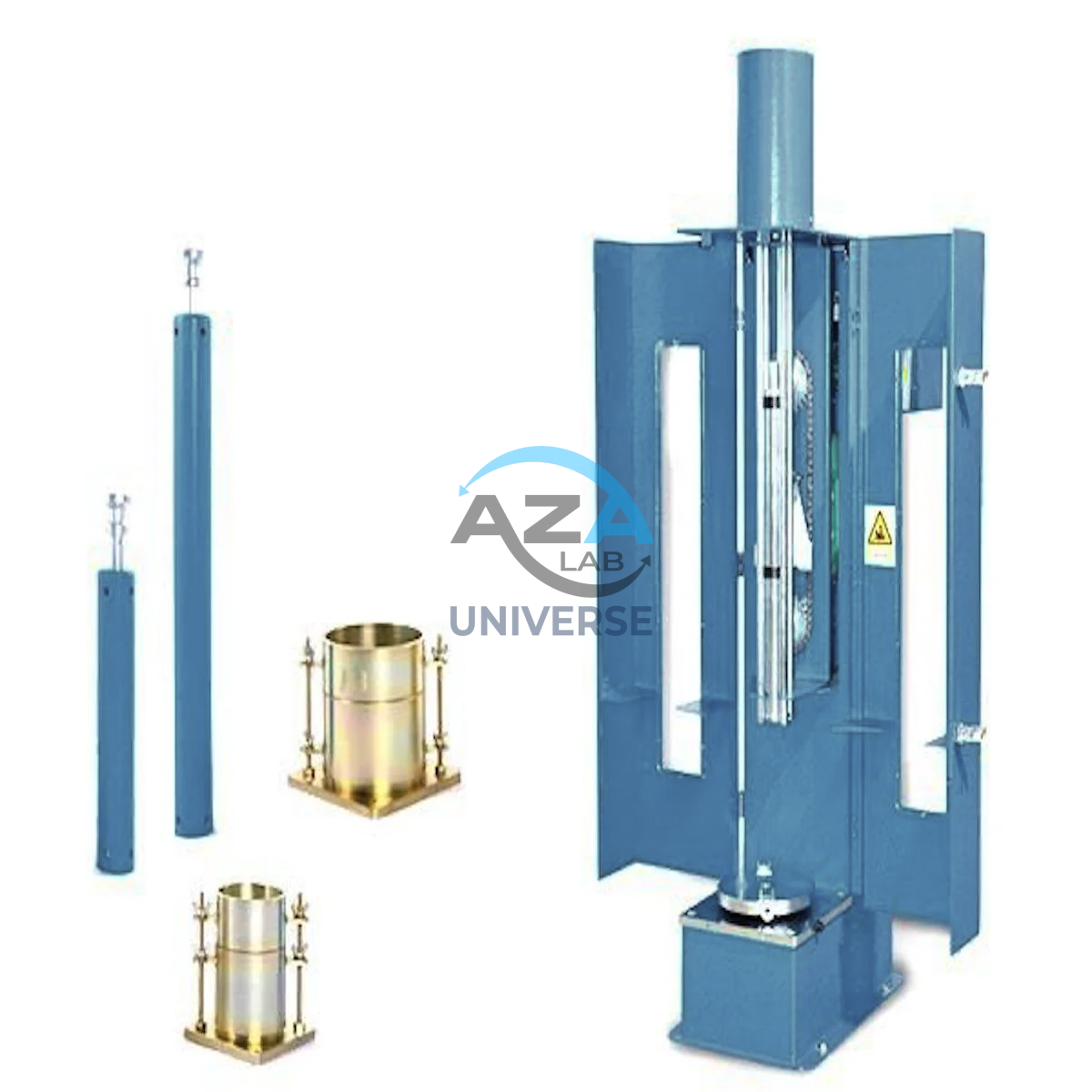

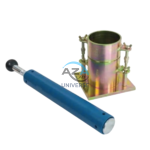
STANDARD COMPACTION TEST AZA0864
The AZA0864 Standard Compaction Test Apparatus from Azalab is precision-engineered to perform the British Standard Proctor (Light Compaction) Test, as specified in BS 1377-4 and BS 1924-2. This apparatus is used to determine the Maximum Dry Density (MDD) and Optimum Moisture Content (OMC) of soils subjected to light compactive effort.
The test simulates field compaction achieved by light rollers and rammers and is essential for quality control of subgrades, embankments, road bases, and foundation soils. The AZA0864 is widely used in geotechnical laboratories, site investigation works, and academic institutions following British Standards.
Description
Purpose & Significance
The Standard Compaction Test establishes the relationship between moisture content and dry density of soil under controlled compaction energy. Determination of MDD and OMC allows engineers to:
-
Specify target field compaction levels
-
Ensure soil stability and load-bearing capacity
-
Control moisture during construction
-
Prevent settlement and shear failure
What’s Included
-
Compaction Mould
-
Internal Diameter: 105 mm
-
Height: 115.5 mm
-
Volume: 1000 cc
-
Material: Powder-coated mild steel (gunmetal optional)
-
-
Extension Collar
-
Secure fit for controlled soil filling
-
-
Detachable Base Plate
-
Facilitates easy extrusion and cleaning
-
-
Standard Compaction Rammer
-
Weight: 2.5 kg
-
Drop Height: 300 mm
-
Face Diameter: 50 mm
-
Manually operated, controlled free fall
-
Test Procedure (BS Method)
-
Soil is compacted in 3 equal layers
-
Each layer receives 27 blows using the 2.5 kg rammer
-
Excess soil is trimmed and mould is weighed
-
Moisture content is determined by oven drying
-
Dry density vs moisture content curve is plotted
-
OMC and MDD are obtained from the curve
Applications
-
Standard Proctor compaction (BS method)
-
Subgrade and embankment evaluation
-
Soil stabilization studies
-
Pavement and foundation preparation
-
Geotechnical research & education
Technical Specifications
| Component | Specification |
|---|---|
| Standards | BS 1377-4, BS 1924-2 |
| Mould Size | 105 mm I.D. × 115.5 mm height |
| Mould Volume | 1000 cc |
| Rammer Weight | 2.5 kg |
| Drop Height | 300 mm |
| Rammer Face | 50 mm diameter |
| Construction | Powder-coated mild steel |
| Operation | Manual (Lab & Field use) |
| Optional Add-ons | Gunmetal mould, carrying case, blow counter |
Frequently Asked Questions (FAQ)
Q1: How does this differ from ASTM D698 apparatus?
BS standards use a 105 mm mould and 2.5 kg rammer, whereas ASTM uses a 100 mm mould and slightly different energy parameters.
Q2: What soil types is AZA0864 suitable for?
Best suited for fine-grained and medium plastic soils. Coarse soils require heavy compaction testing.
Q3: Is a gunmetal mould available?
Yes. Gunmetal moulds can be supplied on request for enhanced corrosion resistance.
Q4: Can this be used on site?
Yes. With an optional carrying case, it is suitable for both laboratory and field use.
Q5: Is this equivalent to the Standard Proctor Test?
Yes. It represents the British Standard equivalent of the light compaction (Standard Proctor) method.
Key Features
-
Conforms to BS 1377-4 & BS 1924-2
-
105 mm diameter, 1000 cc precision mould
-
2.5 kg rammer with controlled 300 mm drop
-
Reliable determination of MDD & OMC
-
Rugged construction for repeated laboratory use
-
Ideal for geotechnical, road, and foundation testing
Related products
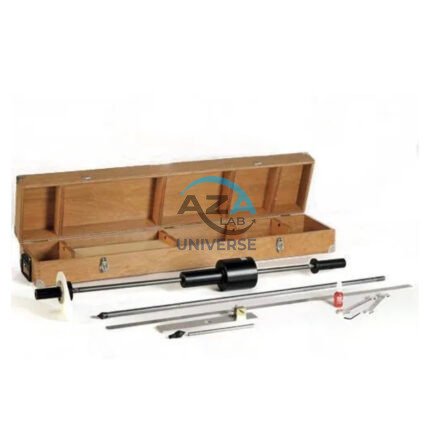
DYNAMIC CONE PENETROMETER AZA0872
The AZA0872 Dynamic Cone Penetrometer (DCP) from Azalab is a robust, field-proven instrument designed for rapid in-situ evaluation of soil strength, stiffness, and compaction. It is extensively used by civil engineers, geotechnical consultants, and construction teams for pavement design, quality control, and site investigation works.
The DCP test provides a fast and economical method to assess the strength of subgrades, sub-bases, and granular base course layers, with results that can be directly correlated to California Bearing Ratio (CBR) values. This eliminates the need for time-consuming laboratory testing or undisturbed soil sampling, enabling immediate decision-making at site.
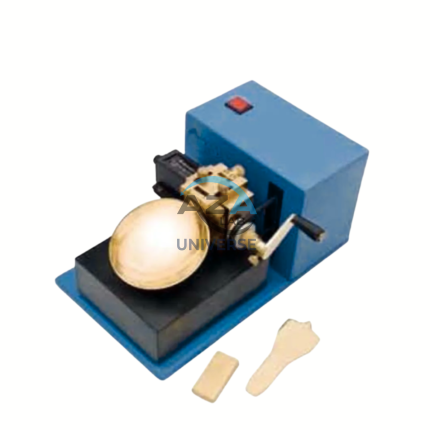
LIQUID LIMIT DEVICE (MOTORISED) AZA0854
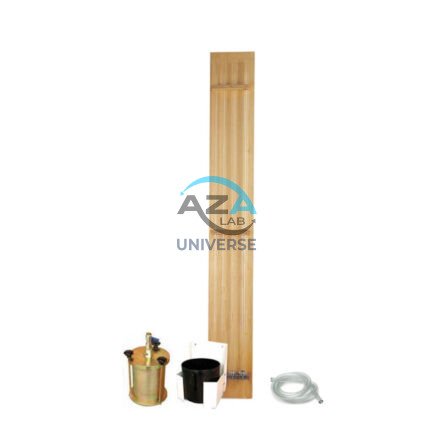
PERMEABILITY APPARATUS (FALLING HEAD PERMEABILITY) AZA0876
The AZA0876 Falling Head Permeability Apparatus from Azalab is a precision-engineered laboratory instrument designed for the determination of permeability (hydraulic conductivity) of fine-grained soils, such as silts and clays. It is specifically intended for the falling head test method, which is the most suitable and widely accepted technique for soils with low permeability.
Accurate assessment of soil permeability is critical in geotechnical engineering applications including foundation design, earth dams, embankments, drainage systems, seepage analysis, and groundwater flow studies. The AZA0876 provides reliable, repeatable, and standard-compliant results for professional laboratories.
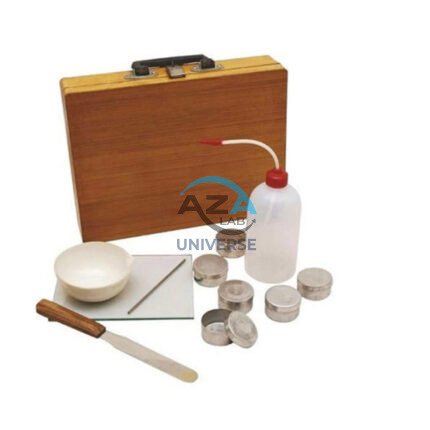
PLASTIC LIMIT SET AZA0848
- Soil classification (Atterberg limits)
- Assessing workability and consistency
- Evaluating shrink–swell characteristics
- Supporting foundation, pavement, and earthwork design
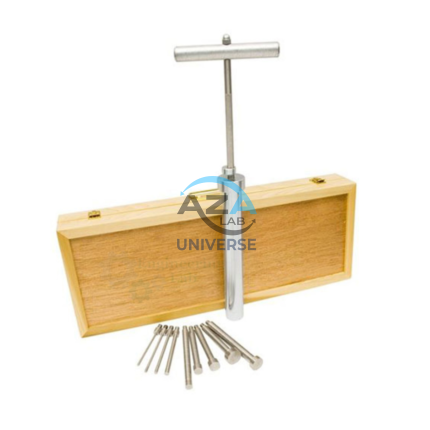
PROCTOR NEEDLES (SPRING TYPE) AZA0868
- Field assessment of soil compaction
- Estimation of optimum moisture condition
- Subgrade, fill, and trench inspection
- Construction quality control checks
- Geotechnical and educational field investigations
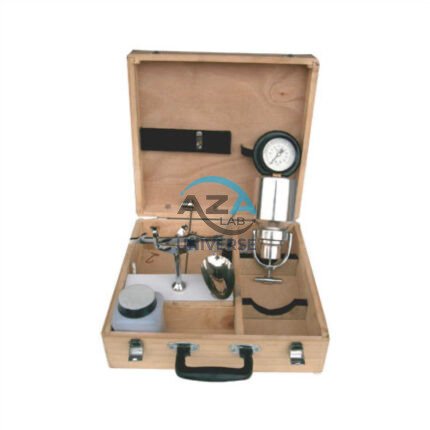
RAPID MOISTURE METER AZA0874
The AZA0874 Rapid Moisture Meter from Azalab is a compact, reliable, and field-proven instrument designed for quick determination of moisture content in soils, aggregates, sand, and other granular or fine materials. It is especially suited for on-site quality control in civil engineering, road construction, earthwork compaction, and geotechnical investigations, where timely moisture data is critical for effective decision-making.
Based on the well-established calcium carbide gas pressure method, the AZA0874 delivers accurate results within minutes, eliminating delays associated with laboratory oven-drying methods. Its portable, self-contained design makes it ideal for use at remote and demanding job sites.
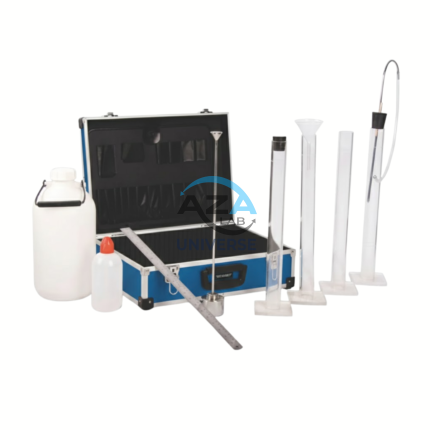
SAND EQUIVALENT TEST SET AZA0859
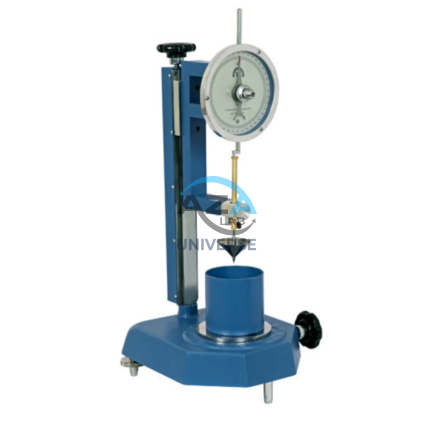
SEMI AUTOMATIC CONE PENETROMETER AZA0852
Principle of Operation
A soil paste prepared at known moisture content is placed in the sample cup. The standardized cone, attached to a calibrated weight, is released using the semi-automatic clutch mechanism, allowing free fall penetration into the soil. After the specified time (typically 5 seconds), the penetration depth is measured using a high-precision dial gauge. The moisture content corresponding to a penetration of 20 mm is considered the liquid limit of the soil, as defined in IS and BS standards.