
 Rock
Rock Aggregate
 Cement
 Concrete
 Soil
Soil Steel
Steel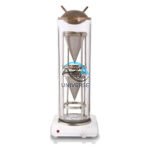 Bitumen/Asphalt
 Security Survey Equipment
 General Items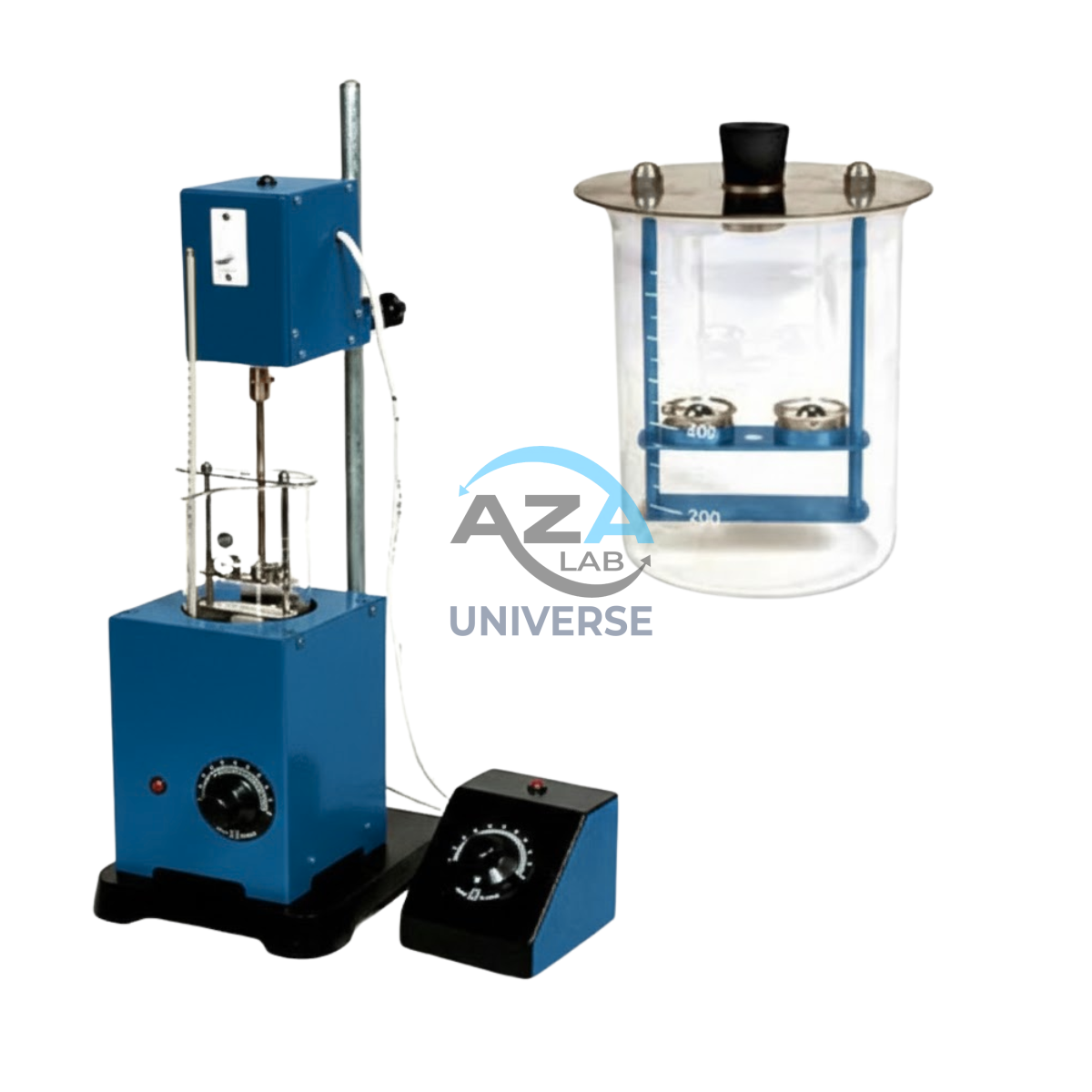
RING AND BALL APPARATUS (ELECTRICAL) AZA0933
The AZA0933 Ring & Ball Apparatus (Electrical) from Azalab is a precision laboratory instrument designed for the accurate and repeatable determination of the softening point of bitumen, asphalt binders, and other bituminous materials. This test is fundamental for evaluating the temperature susceptibility and high-temperature performance of asphalt binders, which directly influences pavement resistance to rutting and deformation.
By utilizing electrically controlled heating instead of open flame, the AZA0933 ensures consistent heating rates, improved safety, and superior test repeatability, making it an essential instrument for highway laboratories, civil engineering departments, and research institutions.
Description
Principle of Test – Ring & Ball Method
Bitumen does not exhibit a sharp melting point; instead, it softens progressively with temperature. The Ring & Ball method defines the softening point as the temperature at which a standard steel ball, placed on a bitumen specimen molded inside a brass ring, causes the softened material to drop 25 mm under standardized heating conditions.
In the AZA0933:
-
Two bitumen specimens are prepared in brass rings
-
Steel balls are placed on top of the specimens
-
The assembly is immersed in a liquid bath (water or glycerin)
-
The bath is heated at a controlled rate of 5°C/min
-
The temperature at which the ball and softened bitumen fall is recorded as the softening point
The electrical heating system ensures strict compliance with the specified heating rate, eliminating operator-dependent variations.
Electrical Heating – Accuracy, Uniformity & Safety
The AZA0933 offers significant advantages over manual or flame-heated systems:
Key Electrical Features
-
Precisely controlled heating rate (5.0 ± 0.5 °C/min)
-
Digital temperature controller and display for real-time monitoring
-
Integrated magnetic stirrer ensuring uniform bath temperature
-
Elimination of open flame, significantly improving laboratory safety
-
Improved repeatability and reproducibility of results
While heating is automated and controlled, ball drop observation remains manual, ensuring compliance with standard test procedures.
Standard Components Supplied
-
Heat-resistant glass beaker (approx. 800 ml)
-
Brass rings – 2 Nos. (standard dimensions)
-
Steel balls – 2 Nos. (9.53 mm dia, 3.50 ± 0.05 g)
-
Brass / metal ball guides
-
Ring support assembly (brass or stainless steel)
-
Integrated electrical heating unit
-
Digital temperature controller
-
Built-in magnetic stirrer with stirring bar
Standards Compliance
The AZA0933 Ring & Ball Apparatus (Electrical) is manufactured in accordance with major international standards:
-
ASTM D36 – Softening Point of Bitumen (Ring & Ball)
-
EN 1427 – Bitumen and bituminous binders
-
AASHTO T53 – Softening Point of Bituminous Materials
-
IP 58
-
IS 1205
This ensures globally accepted, comparable, and specification-compliant results.
Applications
-
Bitumen and asphalt quality control laboratories
-
Highway and pavement engineering
-
Asphalt mix design verification
-
Academic and R&D institutions
-
Government and contractor QC labs
Technical Specifications
| Parameter | Specification |
|---|---|
| Model | AZA0933 |
| Operation | Electrical |
| Test Method | Ring & Ball Softening Point |
| Application | Bitumen and bituminous binders |
| Temperature Range | Ambient to approx. 150°C |
| Heating Control | Electrical heating with digital controller |
| Heating Rate | 5.0 ± 0.5 °C/min |
| Temperature Display | Digital LED/LCD |
| Temperature Sensor | RTD (PT100 or equivalent) |
| Stirring System | Integrated magnetic stirrer |
| Observation | Manual ball drop observation |
| Power Supply | 230V AC, 50/60 Hz, Single Phase |
| Standards | ASTM D36, EN 1427, AASHTO T53, IS 1205 |
| Design | Compact benchtop |
| Country of Origin | India |
Why Choose AZA0933?
-
Accurate and standard-compliant softening point determination
-
Electrically controlled heating for repeatable results
-
Safer alternative to flame-based systems
-
Integrated stirring for uniform temperature distribution
-
Ideal for routine QC and research laboratories
Frequently Asked Questions (FAQ)
Q1: What is the main purpose of AZA0933?
To determine the softening point of bitumen and asphalt binders using electrically controlled heating.
Q2: How is AZA0933 better than a manual Ring & Ball apparatus?
It provides precise heating control, uniform temperature distribution, improved safety, and higher repeatability.
Q3: Is ball drop detection automatic?
No. Heating is automatic, but ball drop observation is manual as per standard methods.
Q4: What bath liquid is used?
-
Water for softening points up to 80°C
-
Glycerin for softening points above 80°C
Q5: Which industries use AZA0933?
Highway laboratories, asphalt plants, academic institutions, and civil engineering QC departments.
Additional information
| Model |
AZA 0933 |
|---|---|
| Operation |
Electrical Heating with Controlled Temperature Ramp |
| Test Method |
Ring and Ball Method |
| Heating Rate |
Electrically controlled 5.0 ± 0.5 °C/minute. |
| Temperature Display |
Digital LED/LCD display |
| Weight (Approx.) |
[Insert Weight, e.g., 7-10] kg. |
Related products
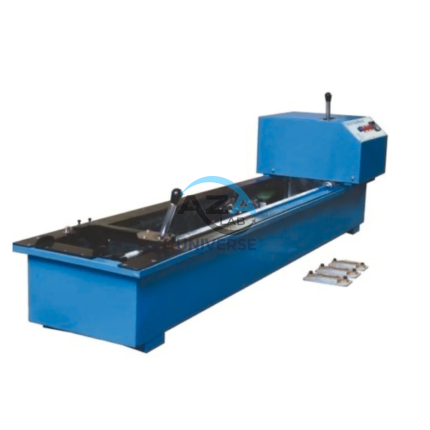
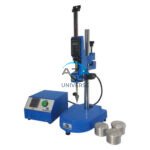
DUCTILITY TESTING APPARATUS AZA0956
The AZA0956 Ductility Testing Apparatus from AZALAB is a precision-engineered laboratory instrument designed to determine the ductility of bituminous materials, including paving grade bitumen, asphalt binders, and similar viscoelastic materials. Ductility is defined as the ability of a bituminous material to undergo tensile deformation before rupture and is a critical parameter for evaluating binder performance in flexible pavements.
In road construction, ductility testing plays a vital role in assessing how well bitumen will perform under temperature variations, repeated traffic loading, and long-term aging. A binder with adequate ductility is less prone to cracking and brittle failure, thereby contributing to durable, flexible, and high-performing pavements. The AZA0956 accurately measures the elongation distance (in centimeters) that a standard bitumen specimen can be stretched at a specified temperature and rate of pull before breaking.
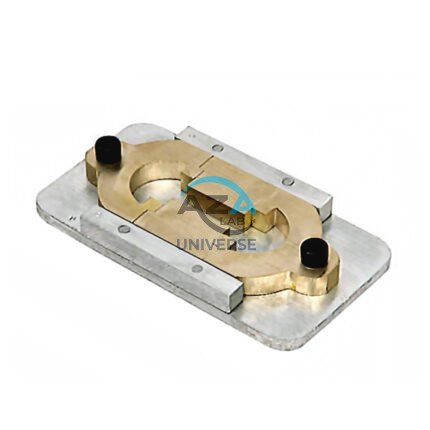
ELASTIC RECOVERY MOULD AZA0958
The AZA0958 Elastic Recovery Mould is a precision-engineered testing accessory used in bitumen ductility and elastic recovery tests, particularly for evaluating polymer-modified bitumen (PMB) and elastomer-modified binders. It plays a critical role in determining the elastic behavior of bituminous binders after elongation, which directly influences pavement performance under traffic loads and temperature variations.
Elastic recovery is a key parameter for modern road construction materials, especially where enhanced flexibility, crack resistance, and rutting resistance are required. The AZA0958 mould ensures the formation of standardized, dimensionally accurate specimens, enabling reliable and repeatable elastic recovery measurements in accordance with international standards.
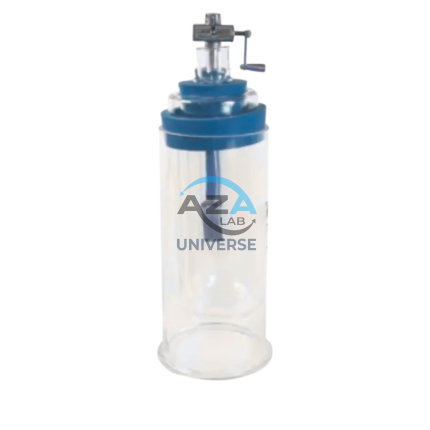
FRAASS BREAKING POINT APPARATUS AZA0935
The AZA0935 Fraass Breaking Point Apparatus from Azalab is a specialized laboratory instrument designed for the accurate determination of the Fraass Breaking Point of bitumen and bituminous binders. This test is essential for evaluating the low-temperature behavior and brittleness of asphalt materials, particularly for pavements exposed to cold climatic conditions.
The Fraass Breaking Point represents the temperature at which a thin film of bitumen loses flexibility and cracks when subjected to controlled cooling and repeated flexing. Determining this temperature is critical for selecting suitable binder grades and preventing thermal cracking in asphalt pavements, thereby ensuring long-term durability and serviceability.
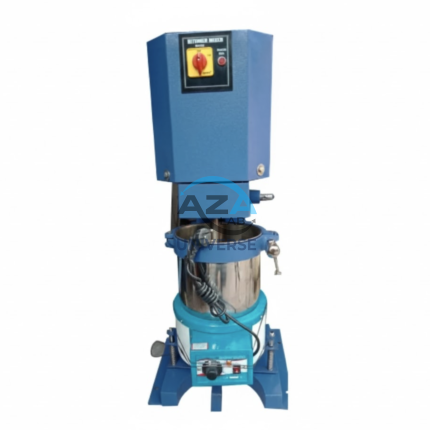
MIXER WITH HEATING JACKET AZA0955
The AZA0955 Mixer with Heating Jacket from AZALAB is a specialized laboratory apparatus engineered for the precise, uniform, and temperature-controlled mixing of materials that require elevated temperatures during blending. It is an essential instrument in civil engineering and highway material laboratories, particularly for the preparation of bituminous and asphalt mixes such as Hot Mix Asphalt (HMA).
By maintaining materials at a controlled and uniform temperature throughout the mixing process, the AZA0955 ensures optimal binder viscosity, thorough aggregate coating, and homogeneous sample preparation. This level of control is critical for producing accurate, repeatable, and representative laboratory specimens, which directly influence the reliability of asphalt mix design, quality control, and performance testing.
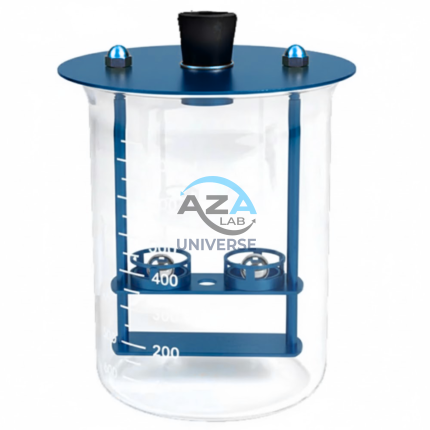
RING AND BALL APPARATUS AZA0932
The AZA0932 Ring & Ball Apparatus from Azalab is a fundamental laboratory instrument designed for the manual determination of the softening point of bitumen, road tars, and bituminous binders. The softening point test is a critical quality control parameter in civil engineering and road construction, particularly in regions with wide temperature variations.
The softening point represents the temperature at which a bituminous material changes from a semi-solid to a softened state under standardized conditions. The AZA0932 provides a robust, reliable, and cost-effective manual solution, fully compliant with Indian and international testing standards.
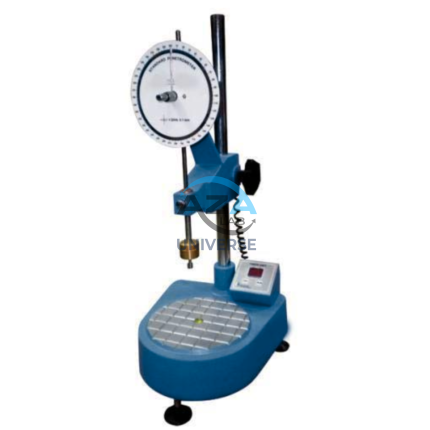
SEMI-AUTOMATIC PENETROMETER AZA0940
The AZA0940 Semi-Automatic Penetrometer from Azalab is a high-precision laboratory instrument designed for the accurate determination of the consistency of bituminous materials, including bitumen, asphalt, and other semi-solid products such as greases and waxes. Engineered to bridge the gap between manual and fully digital systems, the AZA0940 combines robust mechanical construction with digital timing and automated needle release, delivering excellent accuracy, repeatability, and ease of operation.
This instrument is widely used in civil engineering laboratories, highway authorities, asphalt plants, research institutions, and quality control laboratories, where dependable penetration testing in compliance with ASTM D5, EN 1426, and AASHTO T49 is required.
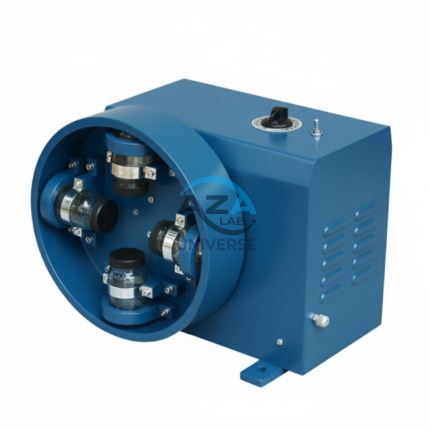
STRIPPING VALUE APPARATUS AZA0943
The AZA0943 Stripping Value Apparatus from Azalab is a precision laboratory instrument designed to evaluate the adhesion characteristics of bitumen-coated aggregates when subjected to water immersion. This test is critical in assessing the resistance of aggregates to stripping, a major cause of premature pavement failure due to moisture ingress.
The apparatus is widely used in road construction quality control laboratories, civil engineering departments, research institutions, and third-party testing facilities. It fully complies with ASTM D1664 and IS 6241, ensuring acceptance across both international and Indian testing frameworks.
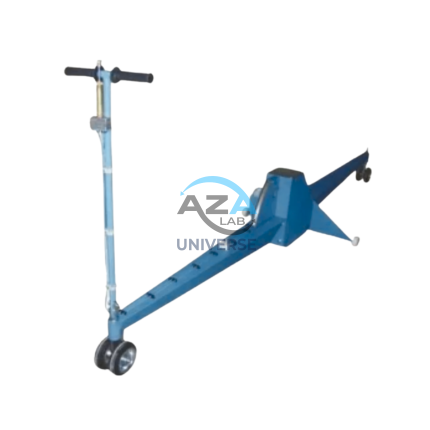
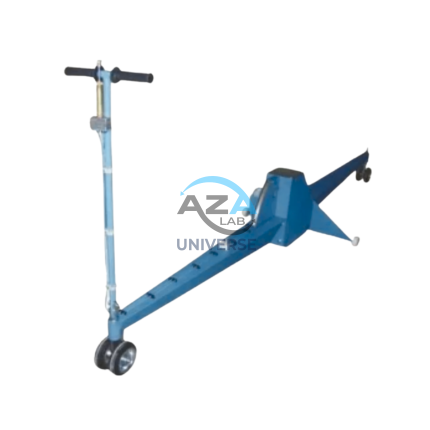
TRAVELLING BEAM DEVICE AZA0960
The AZA0960 Travelling Beam Device from AZALAB is a fundamental and widely accepted instrument for measuring longitudinal surface unevenness (roughness) of road pavements. It is extensively used by highway engineers, road contractors, consultants, and quality control laboratories across India for evaluating the riding quality and service condition of both newly constructed and existing roads.
Surface unevenness directly influences vehicle operating costs, passenger comfort, road safety, drainage performance, and pavement service life. The AZA0960 provides a reliable and cost-effective method for quantifying pavement roughness, enabling engineers to ensure compliance with specifications laid down by the Ministry of Road Transport & Highways (MoRTH) and the Indian Roads Congress (IRC).