 Rock
Rock Aggregate
 Cement
 Concrete
 Soil
Soil Steel
Steel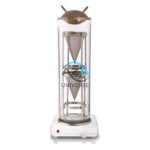 Bitumen/Asphalt
 Security Survey Equipment
 General Items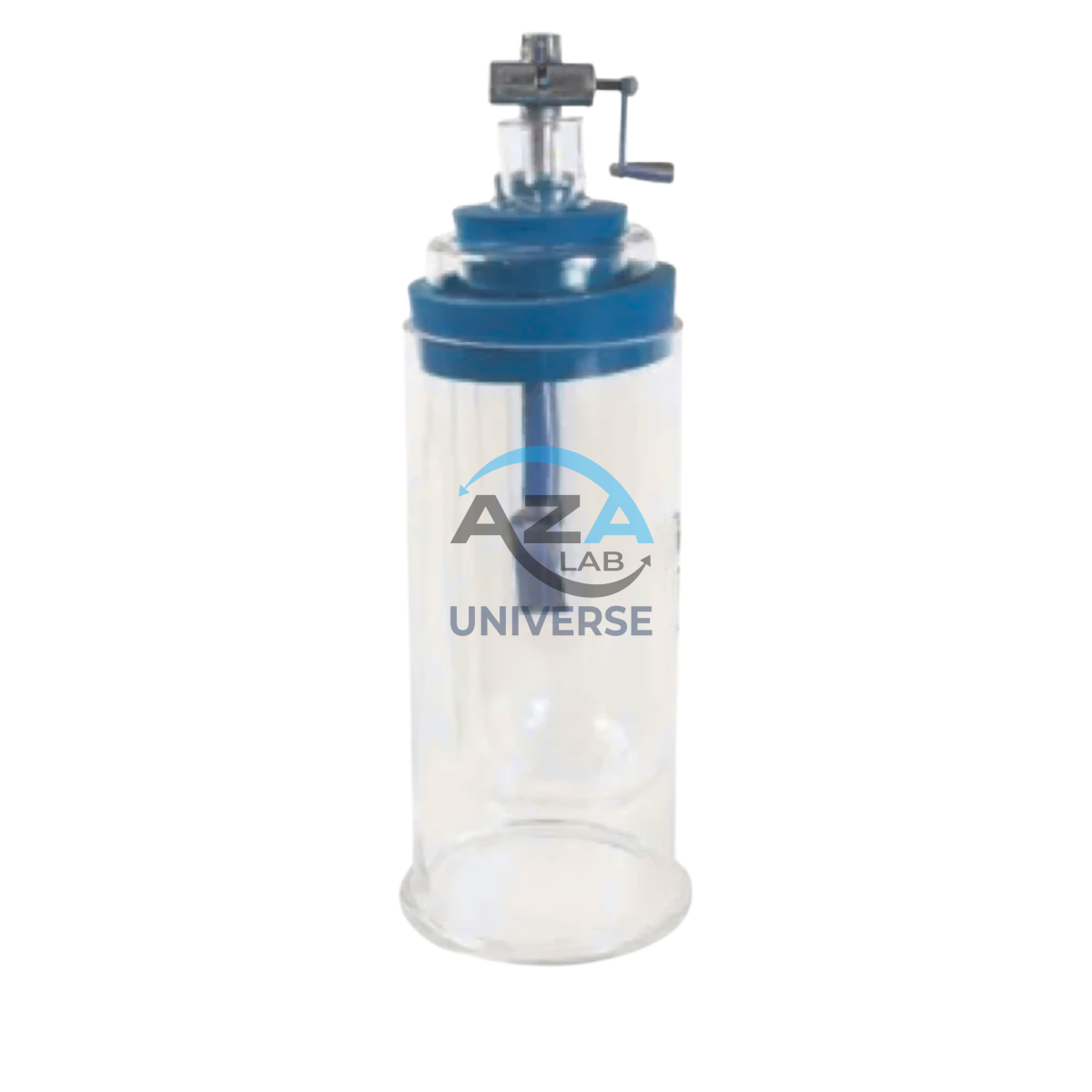
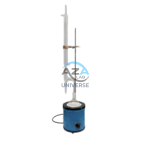
FRAASS BREAKING POINT APPARATUS AZA0935
The AZA0935 Fraass Breaking Point Apparatus from Azalab is a specialized laboratory instrument designed for the accurate determination of the Fraass Breaking Point of bitumen and bituminous binders. This test is essential for evaluating the low-temperature behavior and brittleness of asphalt materials, particularly for pavements exposed to cold climatic conditions.
The Fraass Breaking Point represents the temperature at which a thin film of bitumen loses flexibility and cracks when subjected to controlled cooling and repeated flexing. Determining this temperature is critical for selecting suitable binder grades and preventing thermal cracking in asphalt pavements, thereby ensuring long-term durability and serviceability.
Description
Importance of Fraass Breaking Point Testing
Bitumen exhibits viscoelastic behavior that is highly temperature dependent. At low temperatures, bitumen becomes increasingly stiff and brittle. If the binder cannot accommodate thermal contraction stresses, cracks develop in asphalt layers, leading to premature pavement failure.
The AZA0935 enables laboratories and engineers to:
-
Assess low-temperature flexibility of bitumen
-
Select appropriate binders for cold and extreme climates
-
Verify compliance with specification requirements
-
Improve pavement design by minimizing thermal cracking risk
Principle of Operation – Fraass Method
In the Fraass Breaking Point test:
-
A thin, uniform film of bitumen is applied to a standardized flexible steel plaque using a molding plate.
-
The plaque is mounted in a mechanical flexing frame and immersed in a cooling bath.
-
The bath temperature is reduced at a controlled rate of 1°C per minute.
-
During cooling, the plaque is flexed once per minute.
-
The temperature at which the first visible crack appears in the bitumen film is recorded as the Fraass Breaking Point.
The AZA0935 ensures precise control of cooling rate, flexing frequency, and temperature measurement, providing consistent and reproducible results.
Key Features
-
Precision Mechanical Flexing Device
Ensures uniform and repeatable bending of the steel plaque at a fixed rate. -
Controlled Low-Temperature Cooling System
Insulated cooling tube / Dewar flask ensures stable and uniform temperature reduction. -
Accurate Temperature Measurement
High-precision liquid-in-glass thermometer (ASTM equivalent) for direct temperature reading. -
Standardized Steel Plaques
Flexible steel strips manufactured to EN 12593 dimensions for reproducibility. -
Uniform Film Thickness Control
Supplied molding plate ensures consistent bitumen film application. -
Robust Construction
Designed to withstand repeated flexing and low-temperature operation.
Standards Compliance
The AZA0935 Fraass Breaking Point Apparatus is manufactured in accordance with:
-
EN 12593 – Bitumen and bituminous binders – Determination of the Fraass breaking point
Compliance ensures that results are internationally accepted, repeatable, and suitable for specification and quality control use.
Applications
-
Asphalt and bitumen testing laboratories
-
Highway and pavement engineering projects
-
Cold-region pavement design studies
-
Quality control for bitumen manufacturers
-
Academic and research institutions
Technical Specifications
| Parameter | Specification |
|---|---|
| Model | AZA0935 |
| Test Method | Fraass Breaking Point |
| Primary Application | Low-temperature behavior of bitumen |
| Cooling Rate | 1°C per minute |
| Flexing Rate | One flex per minute |
| Operating Temperature | Down to approx. –30°C to –40°C |
| Temperature Measurement | Liquid-in-glass thermometer (ASTM equivalent) |
| Cooling System | Insulated glass tube / Dewar flask |
| Steel Plaques | Standard EN 12593 dimensions |
| Film Thickness Control | Molding plate included |
| Construction | High-quality metal and glass |
| Standards | EN 12593 |
| Design | Benchtop |
| Country of Origin | India |
Standard Accessories Supplied
-
Mechanical flexing frame
-
Insulated cooling bath / glass tube
-
High-precision thermometer
-
Flexible steel plaques (standard size)
-
Molding plate for film preparation
-
Clamps, supports, and assembly hardware
Why Choose AZA0935?
-
Accurate determination of bitumen brittle point
-
Essential for cold-climate asphalt performance evaluation
-
Fully compliant with EN 12593
-
Robust, reliable, and easy to operate
-
Ideal for research, QC, and specification laboratories
Frequently Asked Questions (FAQ)
Q1: What does AZA0935 measure?
It measures the temperature at which bitumen becomes brittle and cracks under controlled cooling and flexing.
Q2: Why is the Fraass Breaking Point important?
It indicates a binder’s resistance to low-temperature cracking, critical for cold-region pavements.
Q3: Which standard does AZA0935 follow?
EN 12593.
Q4: What cooling medium is typically used?
Dry ice with alcohol (methanol or ethanol) is commonly used to achieve low temperatures.
Q5: Is the test manual or automatic?
The AZA0935 is a precision manual system with controlled mechanical flexing and temperature monitoring.
AZA0935 – Reliable Evaluation of Bitumen Brittleness for Cold Climate Performance
Additional information
| Model |
AZA 0935 |
|---|---|
| Test Method |
Fraass Breaking Point (Brittle Point) |
| Primary Application |
Low-temperature performance assessment of bitumen and bituminous binders. |
| Cooling Rate |
Controlled at 1°C per minute. |
| Flexing Rate |
One flex cycle per minute. |
| Weight (Approx.) |
[Insert Weight, e.g., 3-5] kg |
Related products
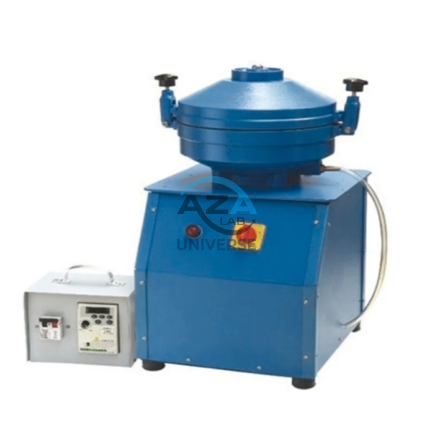
CENTRIFUGE EXTRACTOR (MOTORISED) AZA0946
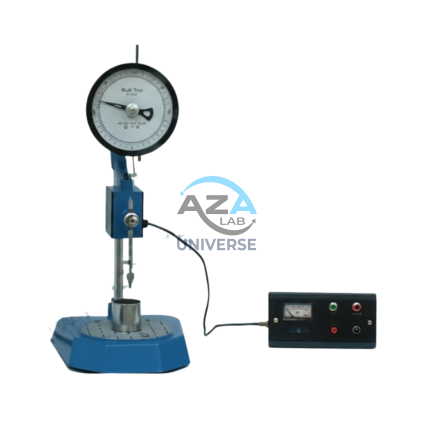
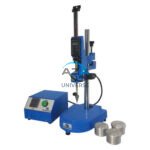
DIGITAL PENETROMETER AZA0939
The AZA0939 Digital Penetrometer from Azalab is an advanced, high-precision laboratory instrument designed for the accurate determination of the consistency of bituminous materials, including bitumen, asphalt, greases, waxes, petroleum jelly, and other semi-solid substances. Engineered for laboratories that demand maximum accuracy, repeatability, and ease of operation, the AZA0939 combines classical penetration testing principles with modern digital measurement and automated timing.
This instrument is widely used in civil engineering laboratories, road construction authorities, asphalt plants, petroleum laboratories, research institutions, and quality control departments, where strict compliance with international standards such as ASTM D5, EN 1426, AASHTO T49, IP 49, and IS 1203 is required.
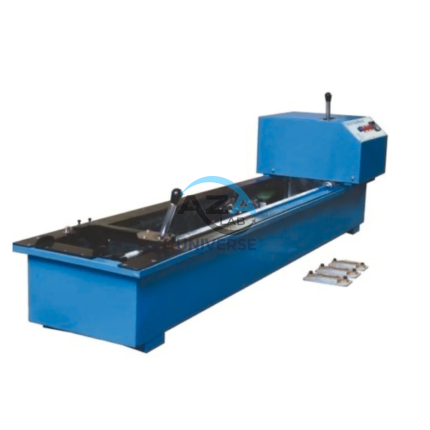
DUCTILITY TESTING APPARATUS AZA0956
The AZA0956 Ductility Testing Apparatus from AZALAB is a precision-engineered laboratory instrument designed to determine the ductility of bituminous materials, including paving grade bitumen, asphalt binders, and similar viscoelastic materials. Ductility is defined as the ability of a bituminous material to undergo tensile deformation before rupture and is a critical parameter for evaluating binder performance in flexible pavements.
In road construction, ductility testing plays a vital role in assessing how well bitumen will perform under temperature variations, repeated traffic loading, and long-term aging. A binder with adequate ductility is less prone to cracking and brittle failure, thereby contributing to durable, flexible, and high-performing pavements. The AZA0956 accurately measures the elongation distance (in centimeters) that a standard bitumen specimen can be stretched at a specified temperature and rate of pull before breaking.
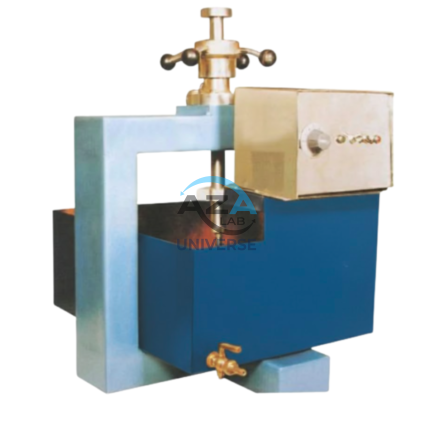
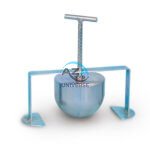
HARDNESS TESTER FOR MASTIC ASPHALT AZA0942
The AZA0942 Hardness Tester for Mastic Asphalt from Azalab is a precision-engineered instrument designed for the determination of penetration hardness of mastic asphalt. This essential testing device is widely used in civil engineering laboratories, road construction projects, and quality control departments to evaluate the consistency, stiffness, and workability of mastic asphalt mixtures.
Accurate hardness measurement ensures that mastic asphalt complies with project specifications and delivers long-term pavement durability, deformation resistance, and performance reliability.
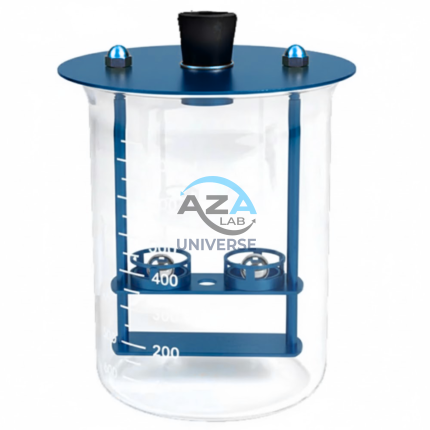
RING AND BALL APPARATUS AZA0932
The AZA0932 Ring & Ball Apparatus from Azalab is a fundamental laboratory instrument designed for the manual determination of the softening point of bitumen, road tars, and bituminous binders. The softening point test is a critical quality control parameter in civil engineering and road construction, particularly in regions with wide temperature variations.
The softening point represents the temperature at which a bituminous material changes from a semi-solid to a softened state under standardized conditions. The AZA0932 provides a robust, reliable, and cost-effective manual solution, fully compliant with Indian and international testing standards.
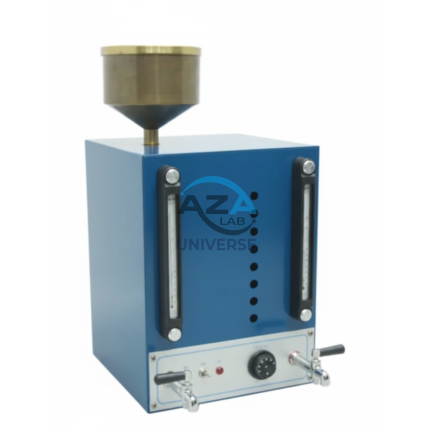
SOLVENT RECOVERY UNIT AZA0949
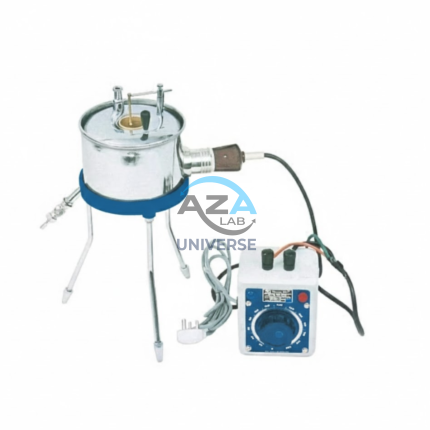
STANDARD TAR VISCOMETER AZA0952
The AZA0952 Standard Tar Viscometer from AZALAB is a robust and widely used laboratory instrument designed for the empirical determination of viscosity of cut-back bitumen, road oils, and other fluid bituminous materials. Viscosity is one of the most critical properties governing the handling, application, and performance of bituminous binders in road construction and maintenance works.
In pavement engineering, the viscosity of cut-back bitumen and road oils directly influences their sprayability, penetration into aggregates, coating efficiency, and workability under field conditions. The AZA0952 provides a simple, reliable, and standardized efflux-time method for assessing these flow characteristics at controlled temperatures, making it an essential instrument for civil engineering laboratories, asphalt plants, and quality control departments.