
 Rock
Rock Aggregate
 Cement
 Concrete
 Soil
Soil Steel
Steel Bitumen/Asphalt
 Security Survey Equipment
 General Items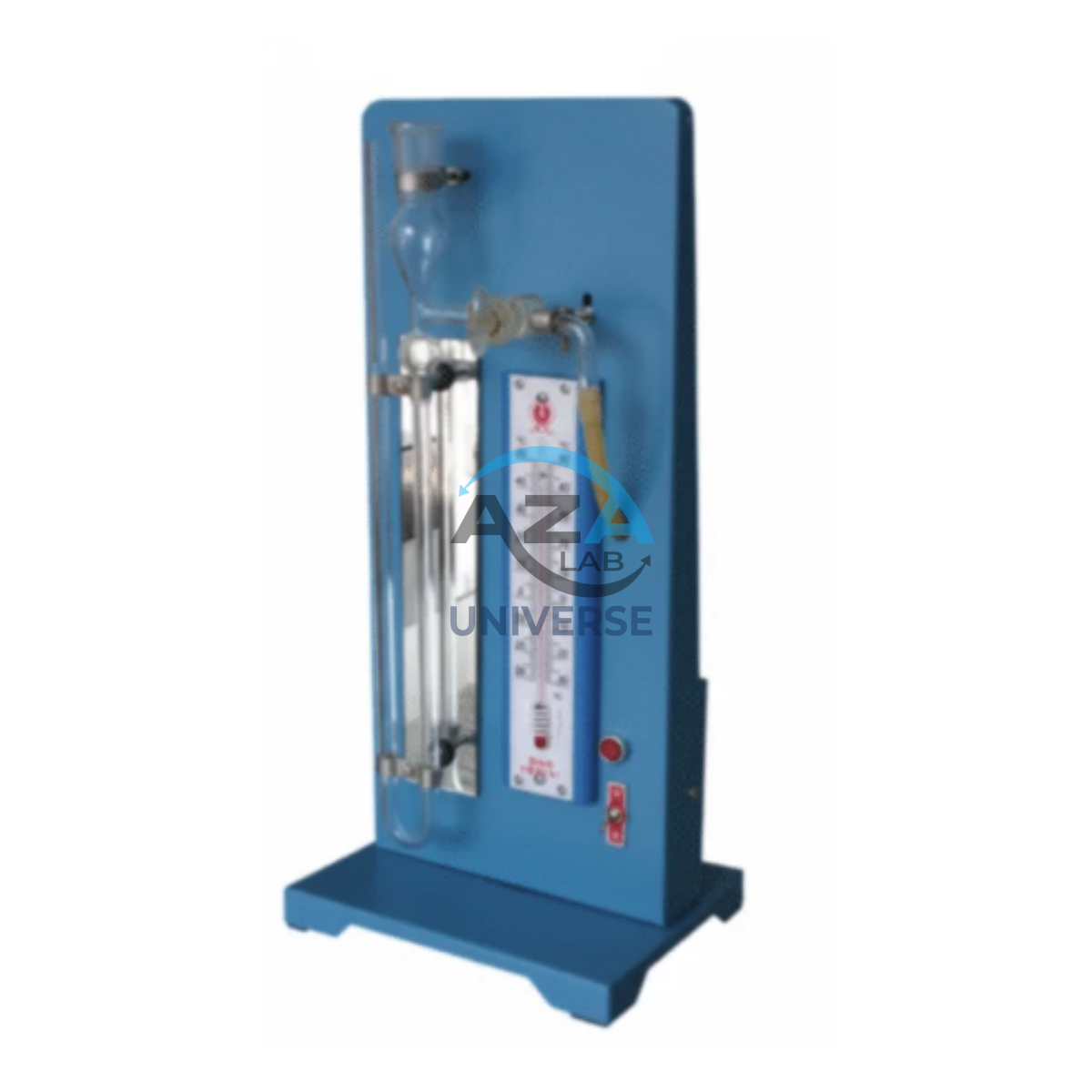
BLAINE’S AIR PERMEABILITY APPARATUS AZA0787
- Determines cement fineness via air permeability
- Conforms to IS 4031 and ASTM C204 standards
- Ideal for labs, QC departments, and cement plants
- Precision glass manometer and permeability cell
- Supplied with timer, filter paper, and plunger
Description
Blaine’s Air Permeability Apparatus is a precision laboratory instrument used to determine the specific surface area (fineness) of cement and other powdered materials by measuring their air permeability. This test helps assess how fine the cement particles are, which directly affects hydration rate, setting time, and overall strength of cement-based structures.Blaine’s Air Permeability Apparatus, Cement Fineness Tester, Air Permeability Lab Device.
Used globally in cement manufacturing plants, R&D labs, and third-party testing agencies, Blaine’s apparatus works by passing a known quantity of air through a compacted cement bed and measuring the flow resistance. The finer the cement particles, the more resistant the air flow becomes. This value is translated into specific surface area (cm²/g), a key quality indicator for cement.
The instrument is built to comply with both IS 4031 (Part 2):1988 – Methods of Physical Tests for Hydraulic Cement – Determination of Fineness by Air Permeability and ASTM C204 – Standard Test Method for Fineness of Hydraulic Cement by Air-Permeability Apparatus, ensuring standardized, reliable test results.Blaine’s Air Permeability Apparatus, Cement Fineness Tester, Air Permeability Lab Device.
Components of the Apparatus:
-
Permeability Cell: Holds the cement bed and provides the test environment.
-
Manometer: U-tube or inclined type filled with indicating fluid (dibutyl phthalate) to monitor pressure drop.
-
Reference Powder: Standard material with known specific surface area for calibration.
-
Plunger: For compressing the cement bed uniformly.
-
Stopwatch/Timer: Ensures accurate timing of air passage.
-
Filter Paper Discs: Prevents powder leakage and ensures accurate air flow.
Working Principle:
Air is drawn through a bed of cement powder that’s compacted to a specific porosity. The rate of air flow and the corresponding pressure drop are recorded. The specific surface area is then calculated using the Blaine equation, which relates air permeability to surface area.
This test is critical for maintaining consistency in cement properties. A higher surface area means faster hydration and strength gain, while low surface area may lead to delayed setting and poor bonding.
Use Cases:
-
Cement production plants for daily batch quality checks
-
Construction material testing labs
-
Civil engineering departments for research and academics
-
Third-party inspection and certification services
-
Comparative testing across different cement grades
Benefits of Blaine’s Apparatus:
-
Fast and accurate determination of cement fineness
-
Non-destructive and repeatable test method
-
Enables optimization of cement grinding operations
-
Helps ensure cement meets standard strength and durability benchmarks
-
Easy-to-use setup ideal for both lab technicians and students
This apparatus is especially useful when determining the performance potential of different cement types, such as Portland cement, pozzolanic cement, or blended mixes. Regular monitoring of cement fineness helps improve the grinding process and reduce energy costs in manufacturing plants.
Specifications:
| Parameter | Specification |
|---|---|
| Standard Compliance | IS 4031 (Part 2):1988, ASTM C204 |
| Specific Surface Range | 1000–5000 cm²/g |
| Manometer Type | U-tube or inclined, with dibutyl phthalate fluid |
| Cell Volume | 20 – 25 cm³ (typical) |
| Sample Mass | 2 – 5 g (varies by cement type) |
| Air Source | Built-in hand pump or external vacuum |
| Accessories Included | Filter paper discs, plunger, timer, reference powder |
| Material of Construction | Borosilicate glass and powder-coated metal base |
Frequently Asked Questions (FAQ):
Q1: What does Blaine’s Apparatus measure?
It measures the specific surface area (cm²/g) of cement, which indicates the fineness of the particles.
Q2: Why is cement fineness important?
Finer cement hydrates faster and contributes to early strength gain. It also affects workability and water demand.
Q3: Which standards does this apparatus meet?
It complies with IS 4031 (Part 2) and ASTM C204 for air permeability-based fineness testing.
Q4: Can it be used for materials other than cement?
Yes, with proper calibration, it can test fineness of fly ash, pozzolana, and similar powders.
Q5: Is calibration required?
Yes. Use a certified reference material with known surface area to calibrate the apparatus before testing.
Additional information
| Standard Compliance |
IS 4031 (Part 2):1988, ASTM C204 |
|---|---|
| Specific Surface Range |
1000–5000 cm²/g |
| Manometer Type |
U-tube or inclined, with dibutyl phthalate fluid |
| Cell Volume |
20 – 25 cm³ (typical) |
You may also like…
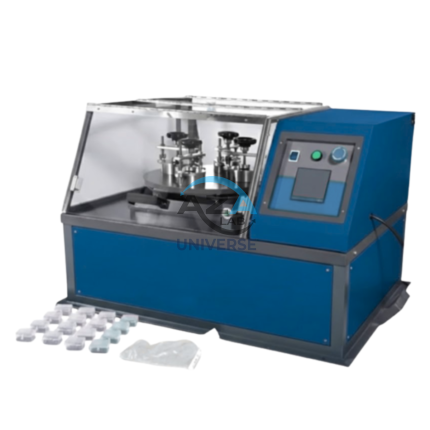
ABRASION TESTING MACHINE FOR GLAZED TILES AZA1262
The AZA LAB Abrasion Testing Machine for Glazed Tiles (AZA1262) is a robust, high-performance laboratory instrument engineered for precise and high-speed abrasion resistance testing of glazed ceramic tiles. Fully compliant with BIS 13630-11 and EN ISO 10545-7, this machine is designed to ensure reliable evaluation of tile durability under simulated real-world wear conditions.
With the capability to test up to four specimens simultaneously, the AZA1262 significantly improves testing efficiency while maintaining exceptional accuracy and repeatability—making it ideal for tile manufacturers, certification laboratories, and quality control departments
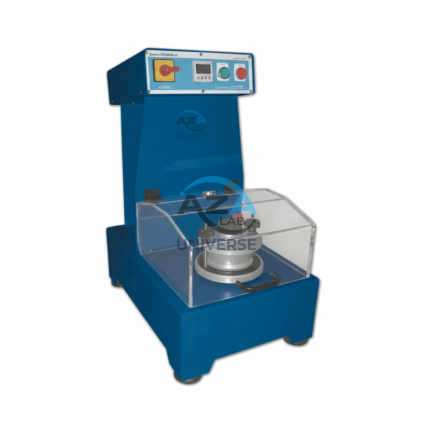
ABRASION TESTING MACHINE FOR GLAZED TILES AZA1261
The AZA LAB Abrasion Testing Machine for Glazed Tiles (AZA1261) is a precision-engineered laboratory instrument designed for the accurate determination of abrasion resistance in glazed ceramic tiles. Fully compliant with BIS 13630-11 and EN ISO 10545-7, this machine is essential for evaluating tile durability and surface wear performance in accordance with international quality standards.
The AZA1261 simulates real-world foot traffic and surface wear conditions, enabling manufacturers, testing laboratories, and quality control departments to verify that glazed tiles maintain their appearance, texture, and integrity even under high-traffic usage.
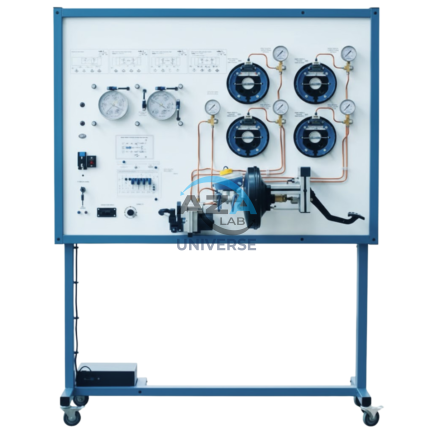
ABS BRAKING SYSTEM TRAINING BOARD SIMULATOR AZA1245
The AZA1245 AZALAB ABS Braking System Training Board Simulator is a fully functional automotive training platform designed to provide in-depth, hands-on understanding of Anti-lock Braking System (ABS) operation, diagnostics, and repair procedures. Built using real automobile components, this simulator enables students and technicians to study ABS structure, electronic control, hydraulic behavior, and fault diagnostics in a safe and controlled learning environment.
This training system is ideal for automotive training institutes, engineering colleges, technical schools, and service technician programs, supporting both instructional demonstrations and practical troubleshooting exercises.
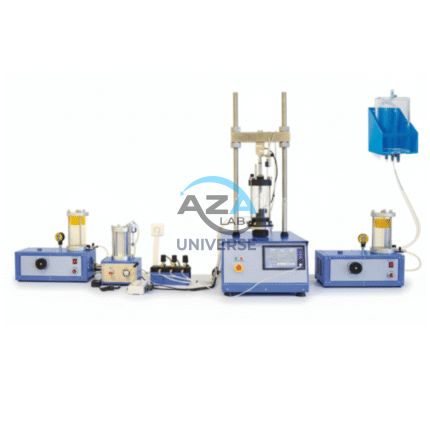
ADVANCED TRIAXIAL TEST SYSTEM (UU–CU–CD CAPABLE) AZA1296
The AZA LAB Advanced Triaxial Test System AZA1296 is a fully automated geotechnical laboratory testing system designed for accurate determination of soil shear strength and deformation characteristics under controlled stress and drainage conditions.
The system supports all major triaxial compression testing modes including:
- Unconsolidated Undrained (UU)
- Consolidated Undrained (CU)
- Consolidated Drained (CD)
Engineered for high-precision geotechnical analysis, the AZA1296 replicates in-situ soil stress conditions to evaluate soil stability, strength behavior, pore pressure response, and failure mechanisms under axial loading.
The system integrates servo-controlled loading, automatic pressure regulation, real-time pore pressure monitoring, automated data acquisition, and advanced software analysis, making it ideal for geotechnical laboratories, civil engineering projects, infrastructure development, research institutions, and academic applications.
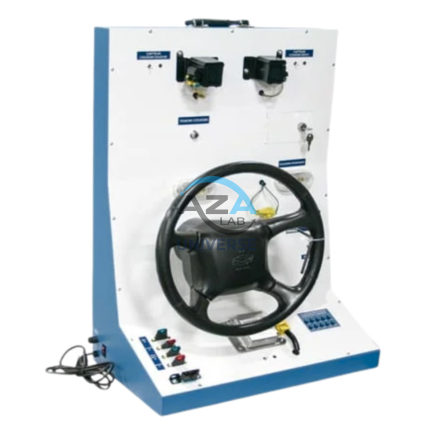
AIR BAG TRAINER AZA1246
The AZA1246 AZALAB Air Bag Trainer is a comprehensive educational training platform designed to demonstrate the structure, operation, diagnostics, and fault analysis of modern automotive airbag systems, also known as Supplemental Restraint Systems (SRS). Built using OEM automotive components, this trainer delivers a realistic learning experience while maintaining complete operational safety.
This system is ideally suited for automotive engineering colleges, ITIs, polytechnic institutes, vocational training centers, and service technician programs, enabling both theoretical instruction and hands-on diagnostics practice.
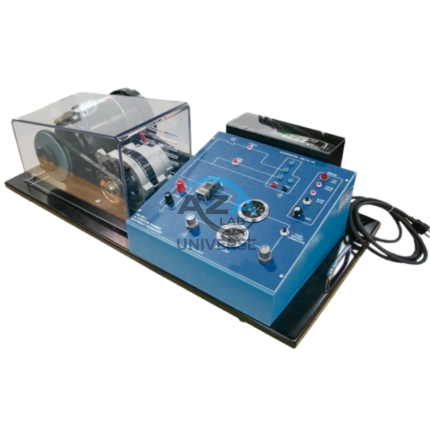
ALTERNATOR TRAINER AZA1247
The AZA1247 AZALAB Alternator Trainer is a hands-on automotive electrical training system designed to demonstrate the working principles, construction, and diagnostics of an automotive alternator with external voltage regulation. Built using OEM automotive components, this trainer provides a realistic and safe learning platform for students, technicians, and trainees to understand vehicle charging systems in depth.
This system is ideal for automotive engineering institutes, ITIs, polytechnics, vocational training centers, and service technician programs, supporting both theoretical instruction and practical experimentation.
Related products
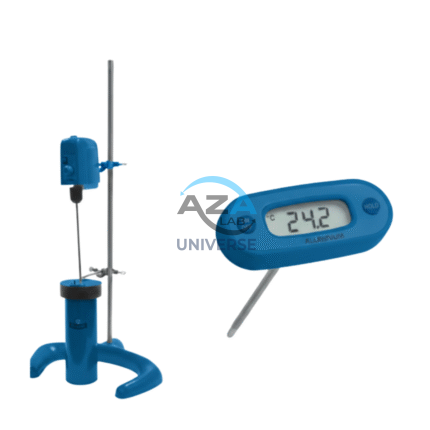
APPARATUS FOR REACTIVITY OF QUICKLIME AZA0809
The AZA0809 Quicklime Reactivity Apparatus is a precision laboratory instrument engineered to measure the thermal reactivity of quicklime (CaO) when it reacts with water—a process known as slaking. This exothermic reaction produces heat, and by recording the temperature rise over time, the apparatus helps determine the quality, fineness, and reactivity rate of quicklime.
Widely used in lime processing plants, cement industries, construction materials testing labs, and research institutions, this apparatus ensures accurate evaluation of quicklime performance for applications in soil stabilization, water treatment, chemical manufacturing, and cement additives.
The apparatus fully complies with IS 1514:1990 – Methods of Sampling and Test for Quicklime and Hydrated Lime and ASTM C110 – Standard Test Methods for Physical Testing of Quicklime, Hydrated Lime, and Limestone.

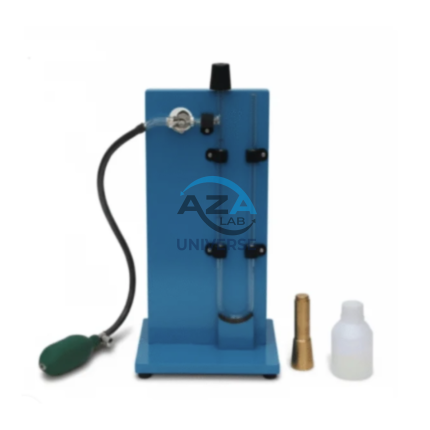
DIGITAL BLAINE AIR PERMEABILITY APPARATUS AZA0798
- Digital model for precise fineness testing
- Measures surface area in cm²/g (1500–6000 range)
- Complies with IS 4031 Part 2 and ASTM C204
- Built-in vacuum pump with digital timer
- Ideal for cement QC, R&D, and educational labs
- Includes calibration certificate & accessories
SLAKING VESSEL AZA0810
The AZA0810 Slaking Vessel is a specialized laboratory apparatus designed for conducting quicklime reactivity tests by monitoring the temperature rise during the slaking process. This evaluation is essential in cement, lime manufacturing, soil stabilization, and materials laboratories to determine the quality and performance of calcium oxide (CaO) when hydrated.
Constructed from corrosion-resistant stainless steel or anodized aluminum, the vessel features a single or double-walled insulated chamber, ensuring precise temperature measurement without external heat interference. It is engineered in accordance with ASTM C110 – Standard Test Methods for Physical Testing of Quicklime, Hydrated Lime, and Limestone.
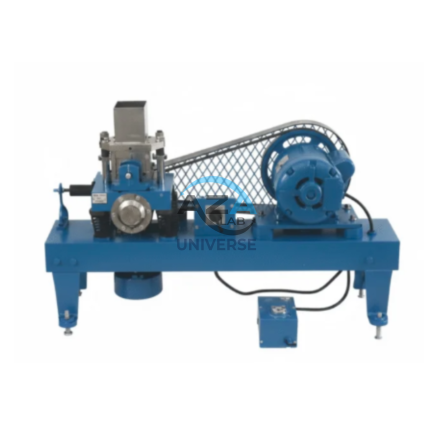
VIBRATING MACHINE AZA0806
- Powerful vibrating machine for concrete specimen compaction
- Adjustable vibration frequency and amplitude
- Suitable for cubes, cylinders, and beams
- Conforms to IS 516 and ASTM C192 standards
- Durable steel construction with corrosion resistance
- Compact design and user-friendly operation