
 Rock
Rock Aggregate
 Cement
 Concrete
 Soil
Soil Steel
Steel Bitumen/Asphalt
 Security Survey Equipment
 General Items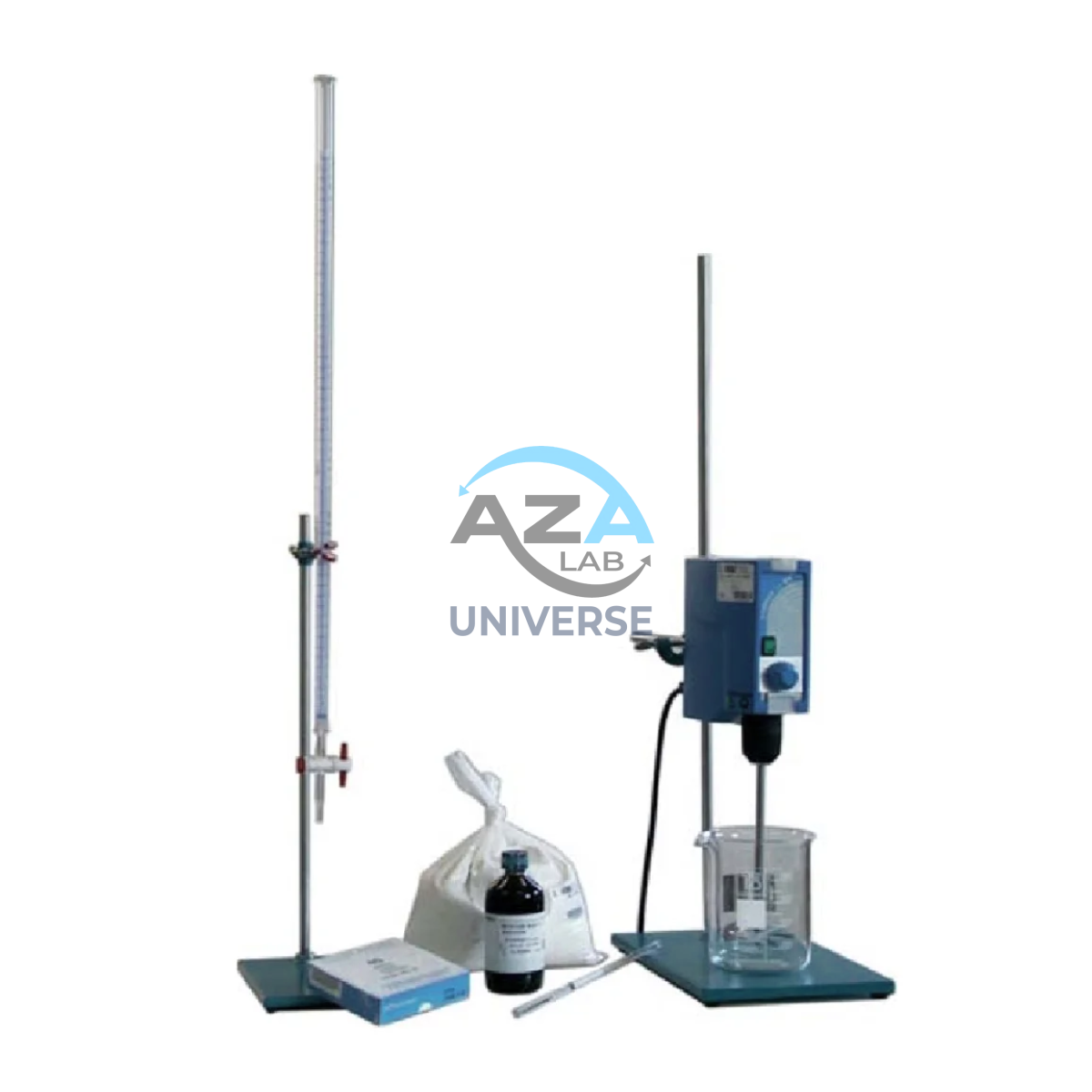

METHYLENE BLUE TEST SET AZA0860
The AZA0860 Methylene Blue Test Set from AZA Lab is a comprehensive laboratory system designed to determine the clay content and clay activity in fine aggregates and soils through measurement of the Methylene Blue Value (MBV). The test is highly sensitive to active clay minerals—particularly montmorillonite—that can adversely affect the performance of concrete, asphalt, and other construction materials.
This method is widely adopted in aggregate quality control, concrete mix design, asphalt technology, and geotechnical investigations, providing a reliable indicator of fines reactivity and cation exchange capacity.
Standards Compliance
- EN 933-9 – Tests for geometrical properties of aggregates (Methylene Blue Test)
- NF P94-068
- UNE 83 180
- UNI 8520-15
- ASTM C837 – Methylene Blue Index of Clay in Fine Aggregate
Description
Test Method Overview
In the Methylene Blue Test, a known mass of soil or fine aggregate (typically the 0–2 mm fraction) is dispersed in water and continuously agitated. A standardized methylene blue solution is gradually titrated into the suspension using a burette.
At regular intervals, a drop of the suspension is placed on filter paper. The test endpoint is reached when a persistent blue halo forms around the drop, indicating that all active clay surfaces have been saturated. The volume of methylene blue solution consumed is used to calculate the Methylene Blue Value (MBV), which is directly proportional to the clay content and activity of the sample.
This method is particularly effective for identifying swelling and highly reactive clays, helping prevent durability issues such as cracking, loss of strength, and volumetric instability.
Applications
- Fine aggregate quality control (sand cleanliness assessment)
- Concrete mix design and durability evaluation
- Asphalt and hot-mix design (control of filler and fines)
- Geotechnical investigation of clayey soils
- Soil classification and clay activity assessment
System Configuration (Standard Supply)
- High-speed agitator motor, 400–600 RPM, 210–240 V, 50–60 Hz
- Stirring propeller, Ø 70 mm, 4-flank design
- Glass burette, 50 ml × 0.1 ml
- Burette holder and support stand
- Filter paper, Ø 125 mm, 95 g/m², thickness 0.20 mm (1 pack / 100 pcs.)
- Glass rod, Ø 8 × 300 mm
- Plastic beaker, 1000 ml
- Methylene blue powder, 100 g
- Kaolinite reference material, 500 g
Technical Specifications
| Component | Specification |
|---|---|
| Model | AZA0860 |
| Test Method | Methylene Blue Value (MBV) |
| Applicable Fraction | 0 – 2 mm (fine aggregates / soils) |
| Burette | 25 ml or 50 ml, manual or digital |
| Stirrer | High-speed agitator / magnetic stirrer with speed control |
| Power Supply | 210–240 V AC, 50–60 Hz |
| Filter Paper | Ashless, Ø 125 mm |
| MB Reagent | Methylene blue powder / solution |
| Sensitivity | High sensitivity to montmorillonite and active clays |
| Compliance | ASTM C837, EN 933-9 and related standards |
What’s Included
- Complete Methylene Blue Test Set (AZA0860)
- Agitator motor with propeller
- Burette with stand
- Filter paper pack (100 pcs.)
- Methylene blue reagent (starter quantity)
- Kaolinite reference sample
- Accessories as listed above
- Instruction manual with MBV calculation guidance
Optional Items / Spares
- Replacement filter paper packs
- Additional methylene blue reagent
- Digital burette
- Precision balance and graduated cylinders
Frequently Asked Questions (FAQ)
Q1: What does the Methylene Blue Test measure?
It measures the clay content and clay activity (cation exchange capacity) of fine particles in aggregates and soils.
Q2: Why is the MBV test important for concrete and asphalt?
Active clays absorb water and interfere with bonding, leading to cracking and durability issues. The MBV test helps identify and control such materials.
Q3: Which clay minerals are detected by this test?
The test is particularly sensitive to montmorillonite, as well as other active clay minerals.
Q4: Is the endpoint determined visually or electronically?
The endpoint is determined visually using the filter paper spot test, indicated by a permanent blue halo.
Q5: Does the AZA0860 include reagents?
Yes. A starter quantity of methylene blue and kaolinite reference material is supplied. Consumables can be replenished as required.
You may also like…
Related products
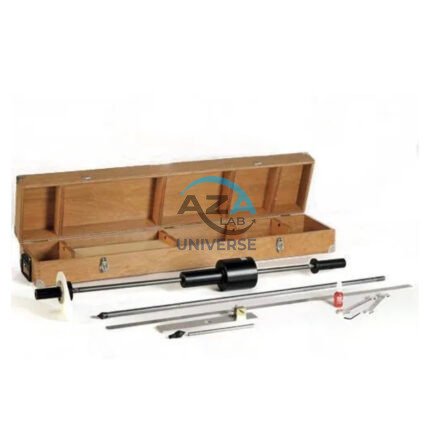
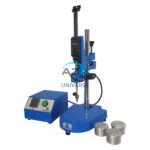
DYNAMIC CONE PENETROMETER AZA0872
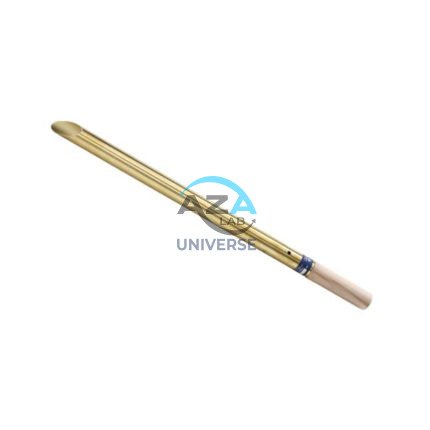
The AZA0872 Dynamic Cone Penetrometer (DCP) from Azalab is a robust, field-proven instrument designed for rapid in-situ evaluation of soil strength, stiffness, and compaction. It is extensively used by civil engineers, geotechnical consultants, and construction teams for pavement design, quality control, and site investigation works.
The DCP test provides a fast and economical method to assess the strength of subgrades, sub-bases, and granular base course layers, with results that can be directly correlated to California Bearing Ratio (CBR) values. This eliminates the need for time-consuming laboratory testing or undisturbed soil sampling, enabling immediate decision-making at site.
HIGH SPEED STIRRER AZA0855
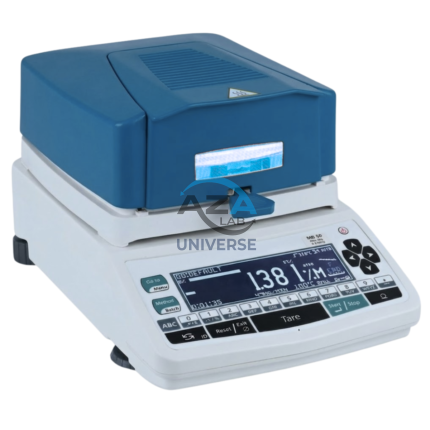
INFRARED MOISTURE METER AZA0875
The AZA0875 Infrared Moisture Meter from Azalab is a high-precision analytical instrument designed for fast, accurate moisture content determination across a wide range of materials. Utilizing advanced infrared (halogen) heating technology, the AZA0875 significantly reduces analysis time compared to conventional oven-drying methods, delivering reliable results within minutes.
This instrument is ideally suited for geotechnical laboratories, construction quality control, chemical and pharmaceutical industries, food processing, and material testing laboratories, where rapid and repeatable moisture data is essential for process control and compliance.
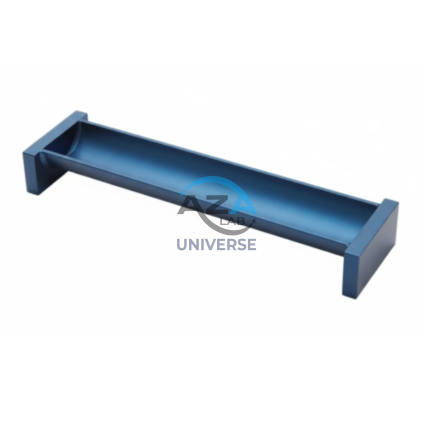
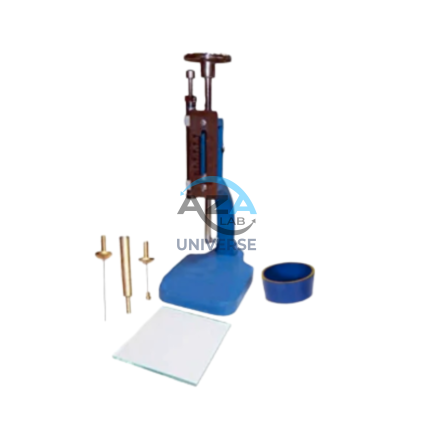
LINEAR SHRINKAGE MOULD AZA0850
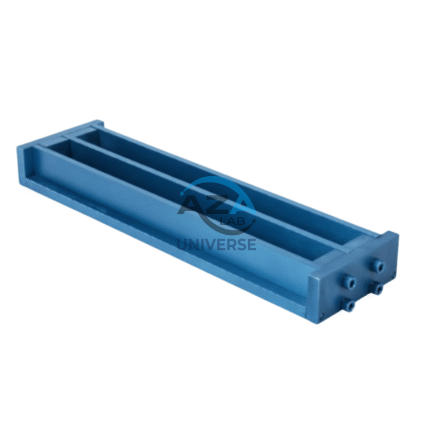
The AZA0850 Precision Linear Shrinkage Mould from AZALAB is a compact and highly accurate laboratory instrument designed for determining the linear shrinkage of fine-grained cohesive soils in accordance with BS 1377-2. This test is a key component of soil classification and is especially important in identifying shrink–swell behavior of clays and expansive soils.
Linear shrinkage testing measures the reduction in length of a soil specimen upon drying, expressed as a percentage of its original length. The results provide valuable insight into soil expansiveness, volume stability, and suitability for foundations, pavements, and earthworks.
Manufactured from high-quality brass or stainless steel, the AZA0850 mould offers precise internal dimensions, excellent corrosion resistance, and a smooth polished finish for easy sample preparation and removal. Its robust construction ensures repeatable, reliable results even under high-frequency laboratory use.
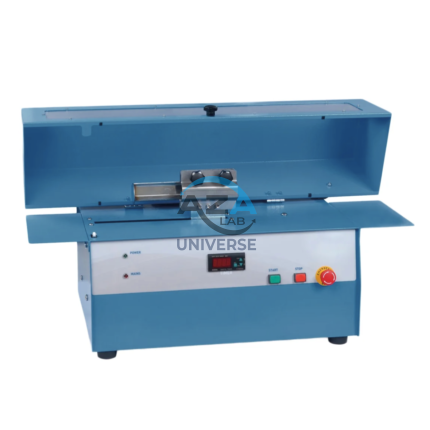
MOTORISED SAND EQUIVALENT SHAKER AZA0861
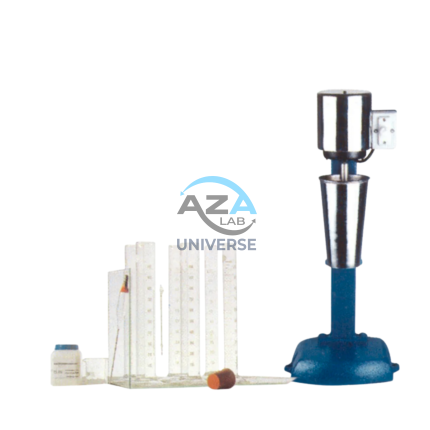
PARTICLE SIZE SEDIMENTATION (HYDROMETER METHOD) AZA0857
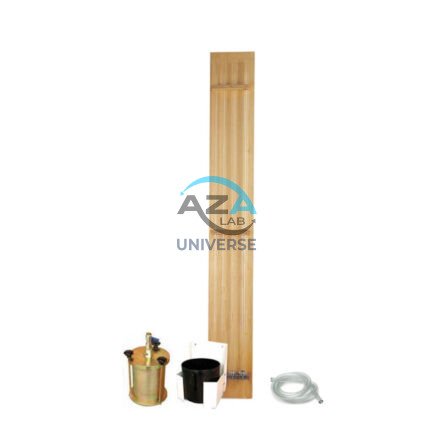
PERMEABILITY APPARATUS (FALLING HEAD PERMEABILITY) AZA0876
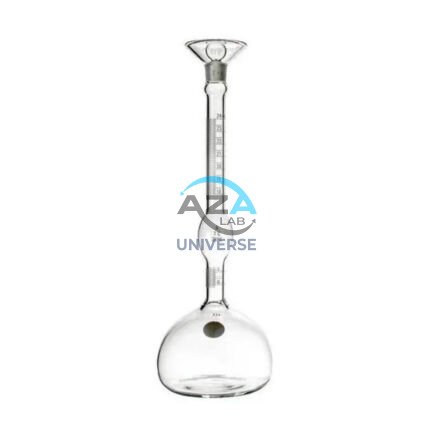
The AZA0876 Falling Head Permeability Apparatus from Azalab is a precision-engineered laboratory instrument designed for the determination of permeability (hydraulic conductivity) of fine-grained soils, such as silts and clays. It is specifically intended for the falling head test method, which is the most suitable and widely accepted technique for soils with low permeability.
Accurate assessment of soil permeability is critical in geotechnical engineering applications including foundation design, earth dams, embankments, drainage systems, seepage analysis, and groundwater flow studies. The AZA0876 provides reliable, repeatable, and standard-compliant results for professional laboratories.
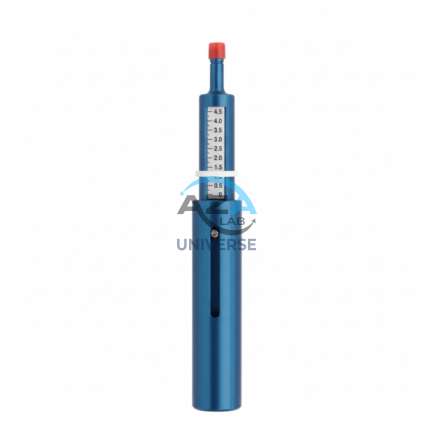
POCKET PENTROMETER AZA0869
- Estimation of UCS and shear strength of soft to stiff cohesive soils
- Field classification of soil consistency
- Pre-construction soil stability checks
- Trench safety and shallow foundation planning
- Geotechnical education and field research