 Rock
Rock Aggregate
 Cement
 Concrete
 Soil
Soil Steel
Steel Bitumen/Asphalt
 Security Survey Equipment
 General Items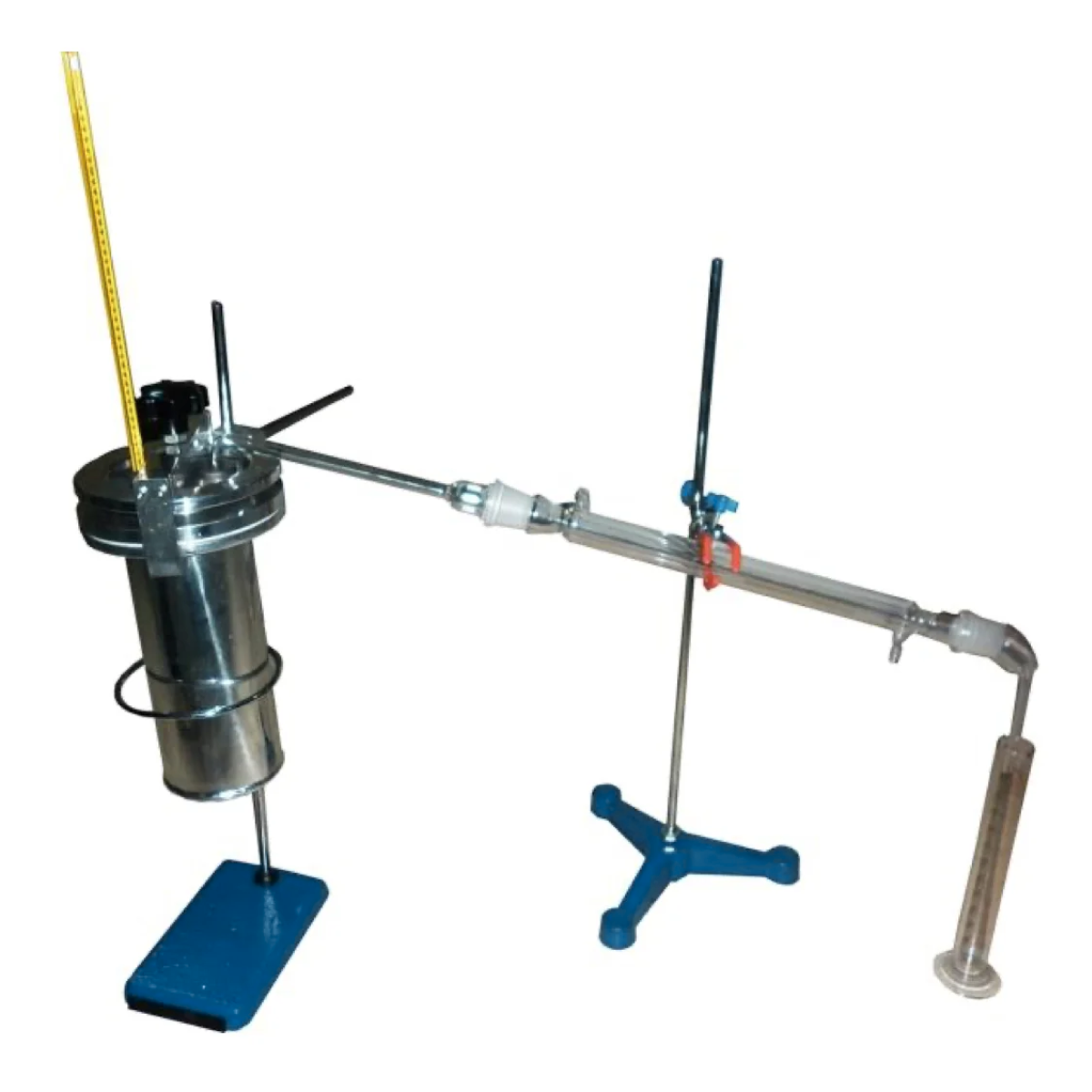
DISTILLATION FOR CUT BACK BITUMEN AZA0937
The AZA0937 Distillation for Cut-Back Bitumen from Azalab is a precision laboratory apparatus designed for the quantitative determination of volatile diluents (fluxing agents or solvents) present in cut-back asphaltic materials. This test is essential for evaluating the curing behavior, workability, and final performance of cut-back bitumen used in road construction and pavement maintenance applications.
Cut-back bitumen relies on volatile solvents to temporarily reduce viscosity for ease of handling and application. The controlled distillation performed using the AZA0937 accurately measures these volatile components, enabling engineers and laboratory technicians to classify cut-back bitumen grades and verify compliance with project and regulatory specifications.
Description
Importance of Distillation Testing for Cut-Back Bitumen
The volatile content of cut-back bitumen directly influences:
-
Curing rate after application
-
Penetration and viscosity recovery of the binder
-
Adhesion to aggregates
-
Overall pavement durability and service life
Excessive or insufficient volatile content can result in premature failures, delayed curing, or inadequate binder performance. The AZA0937 ensures accurate quality control, reducing field risks and ensuring material consistency.
Principle of Operation
The AZA0937 operates on a controlled distillation principle, as specified in international standards for cut-back asphalt testing.
Test Procedure Overview
-
Sample Charging
A measured quantity (typically 200 ml) of cut-back bitumen is placed into a standard distillation flask. -
Controlled Heating
The sample is heated at a regulated rate using an electric hot plate or heating mantle, with temperature monitoring via standard thermometers. -
Vaporization of Volatile Components
As temperature increases (up to approximately 360°C), volatile diluents vaporize. -
Condensation
Vapors pass through a water-cooled condenser where they condense into liquid form. -
Collection and Measurement
The condensed distillate is collected in a calibrated receiving cylinder (crow receiver), allowing precise measurement of the volume recovered at specified temperature intervals. -
Result Interpretation
The collected data is used to determine the percentage of volatile content and to classify the cut-back bitumen as rapid curing (RC), medium curing (MC), or slow curing (SC), as applicable.
Key Features
-
Accurate Determination of Volatile Content
Ensures reliable classification and performance prediction of cut-back bitumen. -
Heat-Resistant Borosilicate Glassware
Designed to withstand high temperatures and thermal shock. -
Efficient Condenser Assembly
Provides complete condensation with minimal vapor loss. -
Precision Graduated Receiver
Allows accurate volume measurement of recovered distillate. -
Uniform and Controlled Heating
Electric heating device with energy regulator or digital controller. -
Distillation Shield with Chimney
Minimizes heat loss and protects against air currents, ensuring stable test conditions. -
Robust and Stable Laboratory Setup
Supplied with appropriate stands and clamps for safe operation.
Standards Compliance
The AZA0937 is designed and manufactured to comply with major international standards, including:
-
ASTM D402 – Distillation of Cutback Asphalt
-
AASHTO T78 – Distillation of Cutback Asphaltic Products
-
EN 13303 – Determination of volatile components in cut-back and fluxed bituminous binders
Compliance ensures globally accepted, reproducible, and specification-compliant results.
Applications
-
Road construction and pavement QA/QC laboratories
-
Bitumen and asphalt production plants
-
Civil engineering and materials testing laboratories
-
Research and academic institutions
-
Government and regulatory testing facilities
Technical Specifications
| Parameter | Specification |
|---|---|
| Model | AZA0937 |
| Test Method | Distillation of volatile diluents |
| Typical Sample Volume | 200 ml |
| Distillation Flask | 500 ml, borosilicate glass, side-arm type |
| Condenser | Water-cooled glass condenser |
| Receiving Cylinder | 100 ml capacity, graduated (Crow Receiver) |
| Heating Device | Electric hot plate or heating mantle with regulator / digital controller |
| Distillation Shield | Heavy-gauge metal, insulated, with cover and chimney |
| Thermometers | ASTM 7C (-2 to 300°C), ASTM 8C (-2 to 400°C) |
| Support Hardware | Stand, clamps, corks/adapters |
| Power Supply | 230V, 50/60 Hz, single phase |
| Standards | ASTM D402, AASHTO T78, EN 13303 |
| Approx. Dimensions | 300 × 300 × 600 mm (assembled) |
| Approx. Weight | 5–8 kg |
| Country of Origin | India |
Standard Accessories Supplied
-
500 ml borosilicate distillation flask
-
Water-cooled condenser assembly
-
100 ml graduated receiving cylinder
-
Electric heating device
-
Distillation shield with chimney
-
Laboratory stand and clamps
Why Choose AZA0937?
-
Precise evaluation of cut-back bitumen curing characteristics
-
Full compliance with ASTM, AASHTO, and EN standards
-
Essential for preventing application and performance failures
-
Durable construction for long-term laboratory use
-
Trusted Azalab quality with reliable technical support
Frequently Asked Questions (FAQ)
Q1: What is the main purpose of AZA0937?
It determines the percentage of volatile diluents in cut-back bitumen through controlled distillation.
Q2: Why is this test important?
It helps predict curing behavior and ensures suitability for specific pavement applications.
Q3: What standards does AZA0937 comply with?
ASTM D402, AASHTO T78, and EN 13303.
Q4: What is the typical sample volume?
Approximately 200 ml, as specified in standard test methods.
Q5: Is the apparatus manual or automatic?
The AZA0937 is a precision manual distillation system with controlled heating.
AZA0937 – Accurate Determination of Volatile Content for Reliable Cut-Back Bitumen Performance
Additional information
| Model |
AZA 0937 |
|---|---|
| Test Method |
Distillation of volatile diluents |
| Sample Volume (Typical) |
200 ml |
| Support Hardware |
Stand, clamps, corks/adapters. |
| Power Supply |
Typically 230V, 50/60 Hz, Single Phase |
| Weight (Approx.) |
[Insert Weight, e.g., 5-8] kg. |
Related products
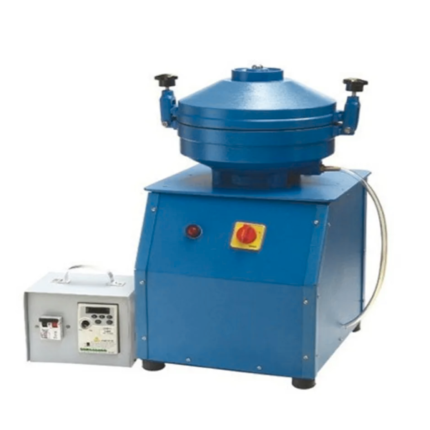
CENTRIFUGE EXTRACTOR (MOTORISED) AZA0946

DIGITAL PENETROMETER AZA0939
The AZA0939 Digital Penetrometer from Azalab is an advanced, high-precision laboratory instrument designed for the accurate determination of the consistency of bituminous materials, including bitumen, asphalt, greases, waxes, petroleum jelly, and other semi-solid substances. Engineered for laboratories that demand maximum accuracy, repeatability, and ease of operation, the AZA0939 combines classical penetration testing principles with modern digital measurement and automated timing.
This instrument is widely used in civil engineering laboratories, road construction authorities, asphalt plants, petroleum laboratories, research institutions, and quality control departments, where strict compliance with international standards such as ASTM D5, EN 1426, AASHTO T49, IP 49, and IS 1203 is required.
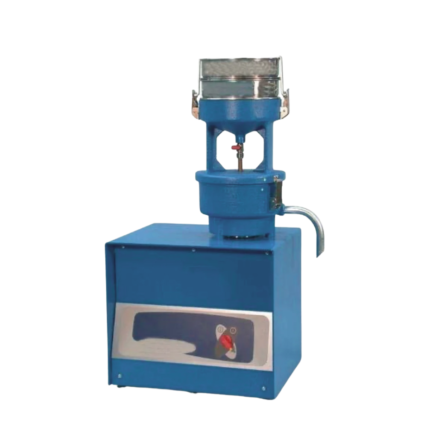
FILTERLESS CENTIFUGE EXTRACTOR AZA0947
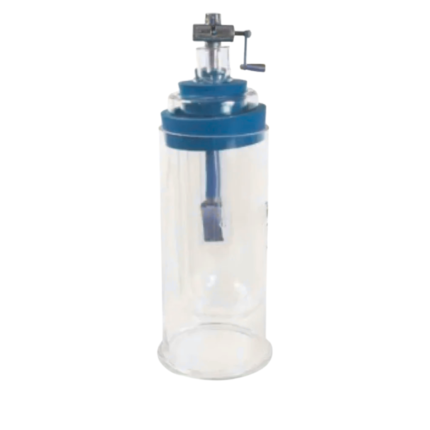
FRAASS BREAKING POINT APPARATUS AZA0935
The AZA0935 Fraass Breaking Point Apparatus from Azalab is a specialized laboratory instrument designed for the accurate determination of the Fraass Breaking Point of bitumen and bituminous binders. This test is essential for evaluating the low-temperature behavior and brittleness of asphalt materials, particularly for pavements exposed to cold climatic conditions.
The Fraass Breaking Point represents the temperature at which a thin film of bitumen loses flexibility and cracks when subjected to controlled cooling and repeated flexing. Determining this temperature is critical for selecting suitable binder grades and preventing thermal cracking in asphalt pavements, thereby ensuring long-term durability and serviceability.
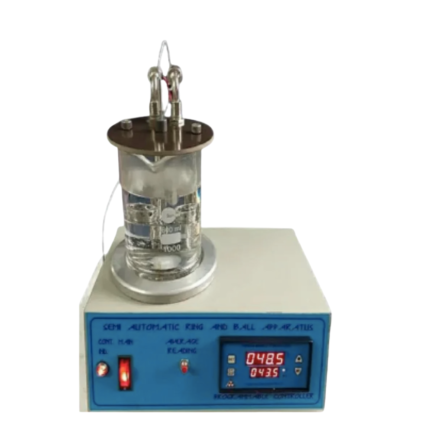
RING & BALL APPARATUS(SEMI AUTOMATIC) AZA0934
The AZA0934 Ring & Ball Apparatus (Semi-Automatic) from Azalab is an advanced laboratory instrument designed for the precise determination of the softening point of bitumen, asphalt binders, and related bituminous materials. This critical test evaluates the temperature susceptibility and high-temperature performance of asphalt binders, directly influencing pavement resistance to rutting and permanent deformation under hot service conditions.
By integrating the standard Ring & Ball method with semi-automatic control and detection features, the AZA0934 significantly improves accuracy, repeatability, and operational efficiency, making it ideal for modern quality control, research, and specification laboratories.
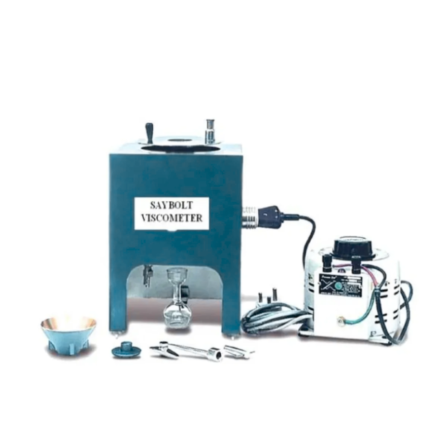
SAY BOLT VISCOMETER AZA0950
The AZA0950 Saybolt Viscometer from AZALAB is a fundamental laboratory instrument designed to determine the empirical viscosity of petroleum products, lubricants, and bituminous materials. Viscosity—defined as a fluid’s resistance to flow—is a critical performance parameter influencing lubrication efficiency, fuel handling, and asphalt workability.
The Saybolt method measures efflux time, providing a standardized and widely accepted indication of flow behavior at controlled temperatures.
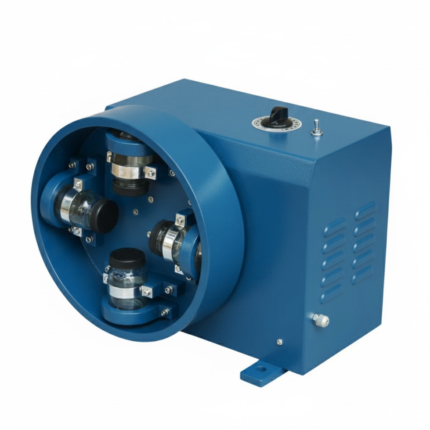
STRIPPING VALUE APPARATUS AZA0943
The AZA0943 Stripping Value Apparatus from Azalab is a precision laboratory instrument designed to evaluate the adhesion characteristics of bitumen-coated aggregates when subjected to water immersion. This test is critical in assessing the resistance of aggregates to stripping, a major cause of premature pavement failure due to moisture ingress.
The apparatus is widely used in road construction quality control laboratories, civil engineering departments, research institutions, and third-party testing facilities. It fully complies with ASTM D1664 and IS 6241, ensuring acceptance across both international and Indian testing frameworks.