
 Rock
Rock Aggregate
 Cement
 Concrete
 Soil
Soil Steel
Steel Bitumen/Asphalt
 Security Survey Equipment
 General Items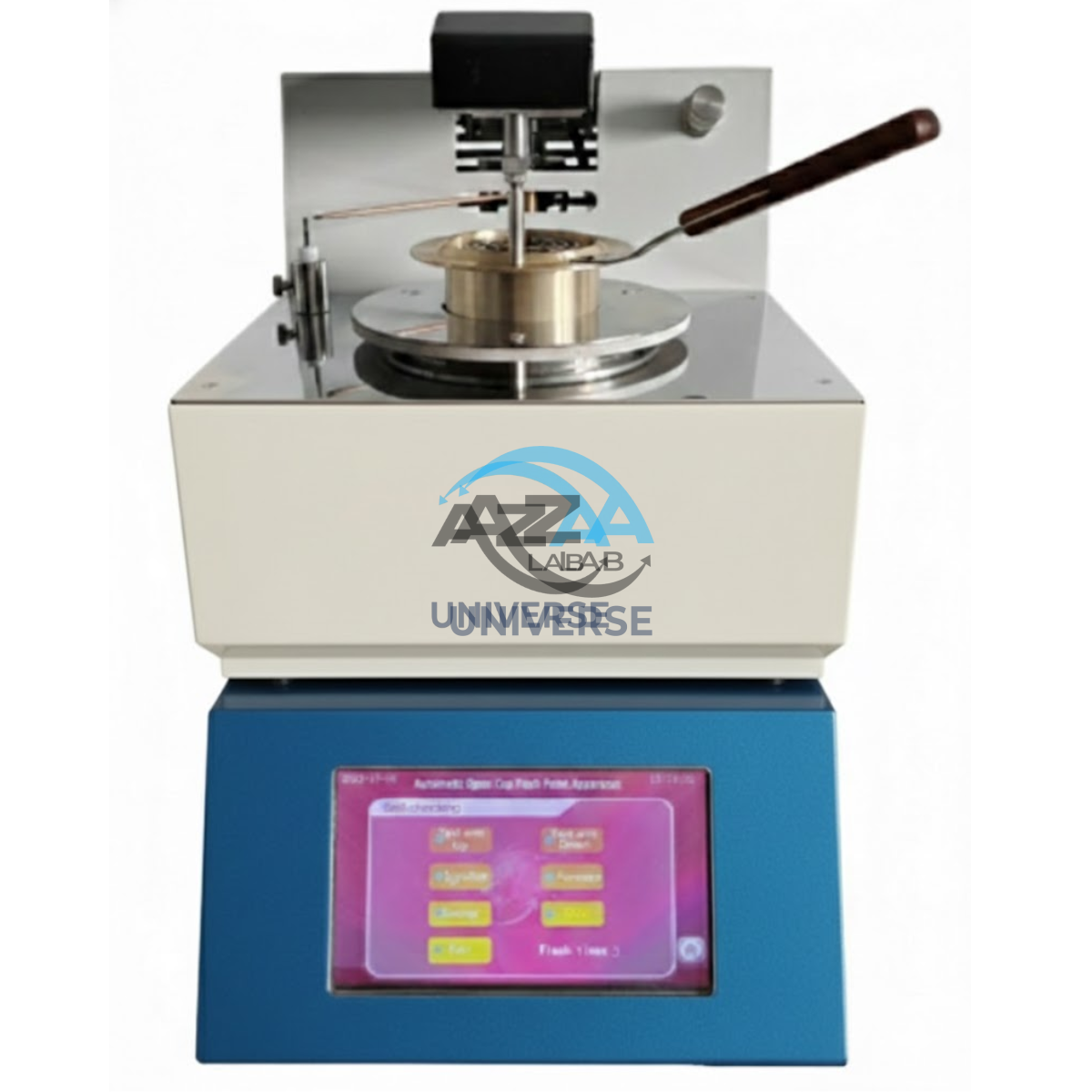
AUTOMATIC CLEVELAND OPEN CUP FLASH POINT TESTER AZA1342
The AZA1342 Automatic Cleveland Open Cup Flash Point Tester is a fully automated laboratory instrument designed to determine the flash point and fire point of petroleum products in strict accordance with ASTM D92 – Standard Test Method for Flash and Fire Points by Cleveland Open Cup (COC).
It is suitable for testing petroleum products with flash points above 79°C (175°F) and below 400°C (752°F), excluding fuel oils. The system combines precision temperature control, intelligent automation, and user-friendly operation, making it ideal for petroleum laboratories, quality control departments, research institutions, and inspection agencies.
Description
Key Features
- True-color GUI touch screen interface for intuitive operation and clear real-time data visualization
- Robust and compact instrument design with wide temperature range and excellent repeatability
- Fully automatic test process including heating, flame sweeping, flash point detection, air cooling, and result printing
- User only needs to preset the expected flash point or starting temperature; all test steps are executed automatically
- Automatic atmospheric pressure detection with optional manual input (manual input disabled when automatic mode is active)
- Automatic correction of test results based on atmospheric pressure variations
- Built-in data memory capable of storing up to 100 previous test results
- Automatic retention of preset parameters before each shutdown
- Integrated hundred-year calendar displaying date and time
- Optional RS-232 communication interface for PC connectivity and laboratory data management
Technical Specifications
| Parameter | Specification |
|---|---|
| Standard Compliance | ASTM D92 |
| Temperature Sensor | PT100 |
| Ignition Mode | Electronic ignition |
| Temperature Range | 79°C to 400°C |
| Resolution | 0.1°C |
| Repeatability | ≤150°C: ±2°C>150°C: ±3°C |
| Heating Rate | Up to 56°C below expected flash point: 14–17°C/minUp to 23°C below expected flash point: 5–6°C/min |
| Display | LCD touch screen |
| Ambient Operating Temperature | 15°C to 35°C |
| Ambient Relative Humidity | ≤85% |
| Power Supply | AC 220V ±10%, 50Hz |
| Power Consumption | ≤600 W |
| Dimensions (L × W × H) | 380 × 290 × 220 mm |
| Weight | Approx. 15 kg |
Applications
- Petroleum and petrochemical laboratories
- Quality control and assurance testing
- Oil and lubricant analysis
- Research and development facilities
- Inspection and certification bodies
Related products
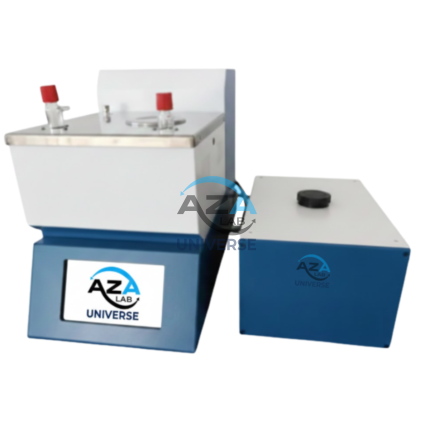
APPARATUS FOR HYDROGEN SULFIDE TESTER AZA1314
The Apparatus for Hydrogen Sulfide Tester AZA1314 from AZA Lab conforms to the ASTM D7621 Standard Test Method for the determination of hydrogen sulfide in fuel oils by rapid liquid phase extraction.
In this method, a weighed test sample is placed into a heated vessel containing a diluent base oil, where air is bubbled through to extract hydrogen sulfide gas. The extracted gas is then directed, via a vapor phase processor (Procedure A), to an H₂S-specific electrochemical detector, which measures its concentration in air and calculates the amount in the liquid phase in mg/kg. For Procedure B, the use of a filter cartridge is not required.
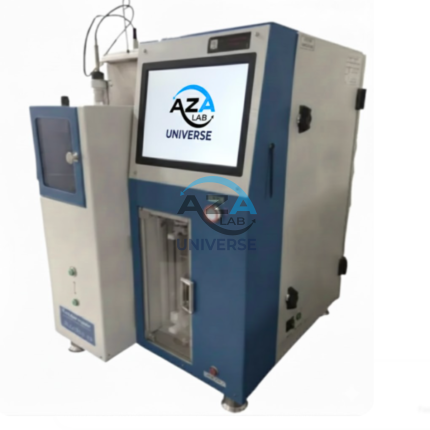
AUTODIST-86 GLASS DISTILLATION UNITAZA1282
The AutoDist-86 Glass Distillation Unit (Model AZA1282) is a high-performance laboratory water distiller designed for the continuous production of high-purity distilled water.
Constructed entirely from borosilicate glass 3.3, the unit ensures zero metallic contamination, excellent thermal resistance, and long operational life. It is ideal for laboratories requiring consistent, low-conductivity distilled water for analytical, pharmaceutical, and research applications.Distillation Performance
- Distillate Output: Up to 4 L/hour (±10%)
- Suitable for routine and medium-scale laboratory demand
- Efficient removal of:
- Dissolved salts
- Heavy metals
- Organic/inorganic impurities
- Microbial contaminants
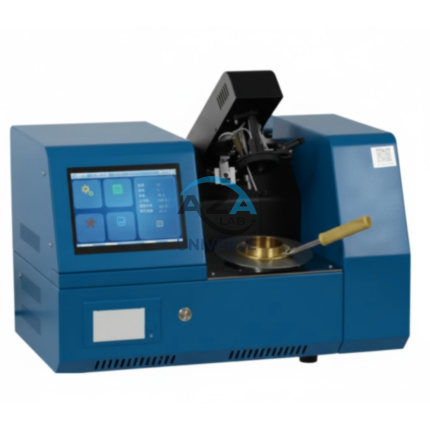
CLEVELAND OPEN CUP (D92) FLASH & FIRE POINT TESTER AZA1291
The Cleveland Open Cup Flash Point Tester AZA1291 from AZA Lab is a precision-engineered analytical instrument designed for accurate determination of flash point and fire point of petroleum products in full compliance with ASTM D92 and GB/T 3536-2008 standards. Built for reliability, safety, and intelligent operation, the AZA1291 is ideal for petroleum laboratories, refineries, inspection agencies, and quality control departments requiring repeatable and standards-compliant results.
The analyzer is suitable for samples with flash points ranging from 79°C to 400°C, covering a broad spectrum of petroleum products such as lubricating oils, transformer oils, diesel, heating oils, base oils, waxes, and other high-flash-point materials.
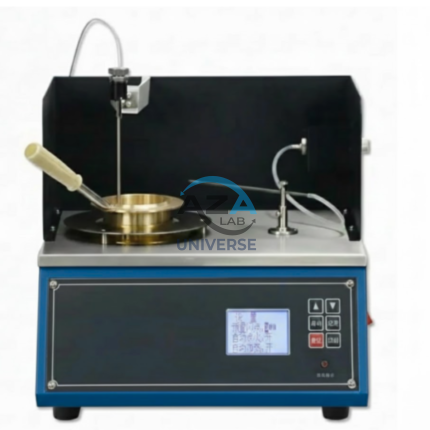
CLEVELAND OPEN-CUP FLASH & FIRE POINT TESTER AZA1292
The Cleveland Open Cup Flash Point Tester AZA1292 from AZA Lab is a reliable and precision-engineered laboratory instrument designed for determining the flash point and fire point of petroleum products in strict accordance with ASTM D92 and GB/T 3536-2008 standards. Engineered for accuracy, safety, and operational simplicity, the AZA1292 is an ideal solution for petroleum laboratories, refineries, inspection agencies, and quality control departments.
The instrument is suitable for testing petroleum products with flash points in the range of 79°C to 400°C, excluding fuel oils, and delivers consistent, repeatable, and standards-compliant results.
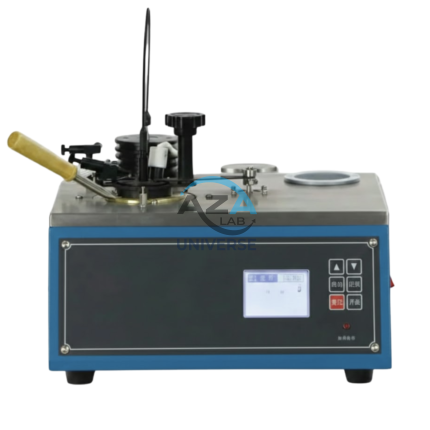
PENSKY–MARTENS CLOSED CUP FLASH POINT TESTER AZA1278
The AZA1278 Pensky–Martens Closed Cup Flash Point Tester is a high-precision, microcomputer-controlled instrument designed for accurate determination of flash points of petroleum products under controlled conditions.
Fully compliant with ASTM D93, the system supports Procedures A, B, and C, making it suitable for a wide range of fuels, lubricants, and viscous petroleum samples. It is engineered for reliability, repeatability, and safe laboratory operation.
Standards Compliance
- ASTM D93 (Pensky–Martens Closed Cup)
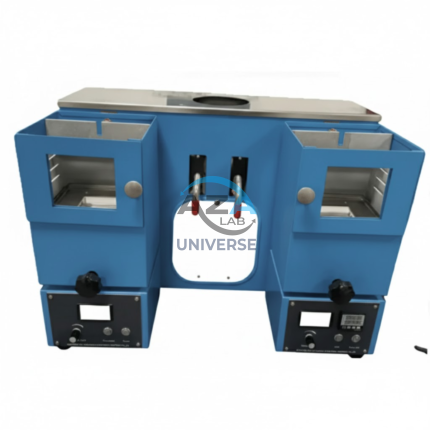
PETROLEUM PRODUCT DISTILLATION TESTER AZA1284
The AZA1284 Manual Distillation Unit from AZA Lab is a high-precision, front-type petroleum distillation system engineered for accurate determination of distillation characteristics of petroleum products in accordance with ASTM D86 and GB/T 6536 test methods. Designed for laboratories that require reliable manual control with superior thermal stability, this unit delivers consistent, repeatable, and standards-compliant results.
With its dual-unit configuration, independently controlled constant-temperature baths, and continuously adjustable heating power, the AZA1284 offers exceptional flexibility and efficiency for routine quality control, inspection, and research applications.
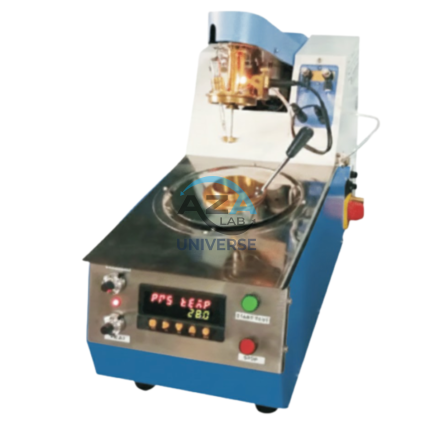
SEMI-AUTOMATED ABEL FLASH POINT ANALYZER AZA1275
The AZA1275 AutoFlash Abel Flash Point Tester from AZA Lab is a semi-automated, microcontroller-based Abel closed cup analyzer designed for precise determination of flash points of low-flash combustible liquids. Engineered to comply with IP 170, ISO 13736, and IS 1448 (Part 20), AZA1275 ensures reliable, repeatable, and regulation-compliant testing for petroleum, chemical, and industrial laboratories.
Equipped with an integrated Windows-based PC interface, AZA1275 delivers intuitive operation, automated flash detection, controlled heating, and comprehensive fault diagnostics. The system is ideal for laboratories that require accuracy, safety, and efficiency without the cost complexity of fully automated systems.
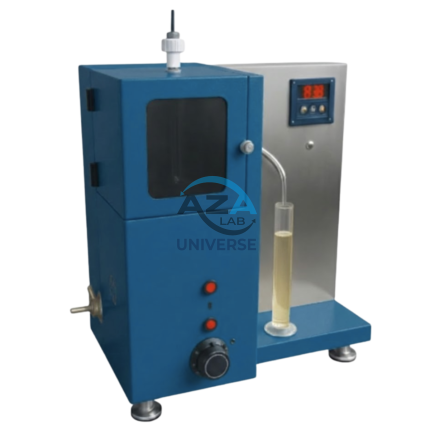
SEMI-MANUAL DISTILLATION ANALYZER AZA1286
The Semi-Manual Distillation Analyzer (AZA1286) from AZA Lab is engineered to deliver accurate, repeatable, and ASTM D86-compliant atmospheric distillation testing for petroleum products. Designed to combine the robustness of manual operation with the precision of digital instrumentation, the AZA1286 is an ideal solution for educational institutions, QA/QC laboratories, and small- to mid-scale production facilities requiring reliable routine fuel analysis without the complexity of full automation.
This analyzer provides operators with direct control over heating, condensation, and receiver handling, while benefiting from digital temperature measurement, timing functions, and safety monitoring. The result is a cost-effective, dependable system that maintains compliance with international testing requirements.