
 Rock
Rock Aggregate
 Cement
 Concrete
 Soil
Soil Steel
Steel Bitumen/Asphalt
 Security Survey Equipment
 General Items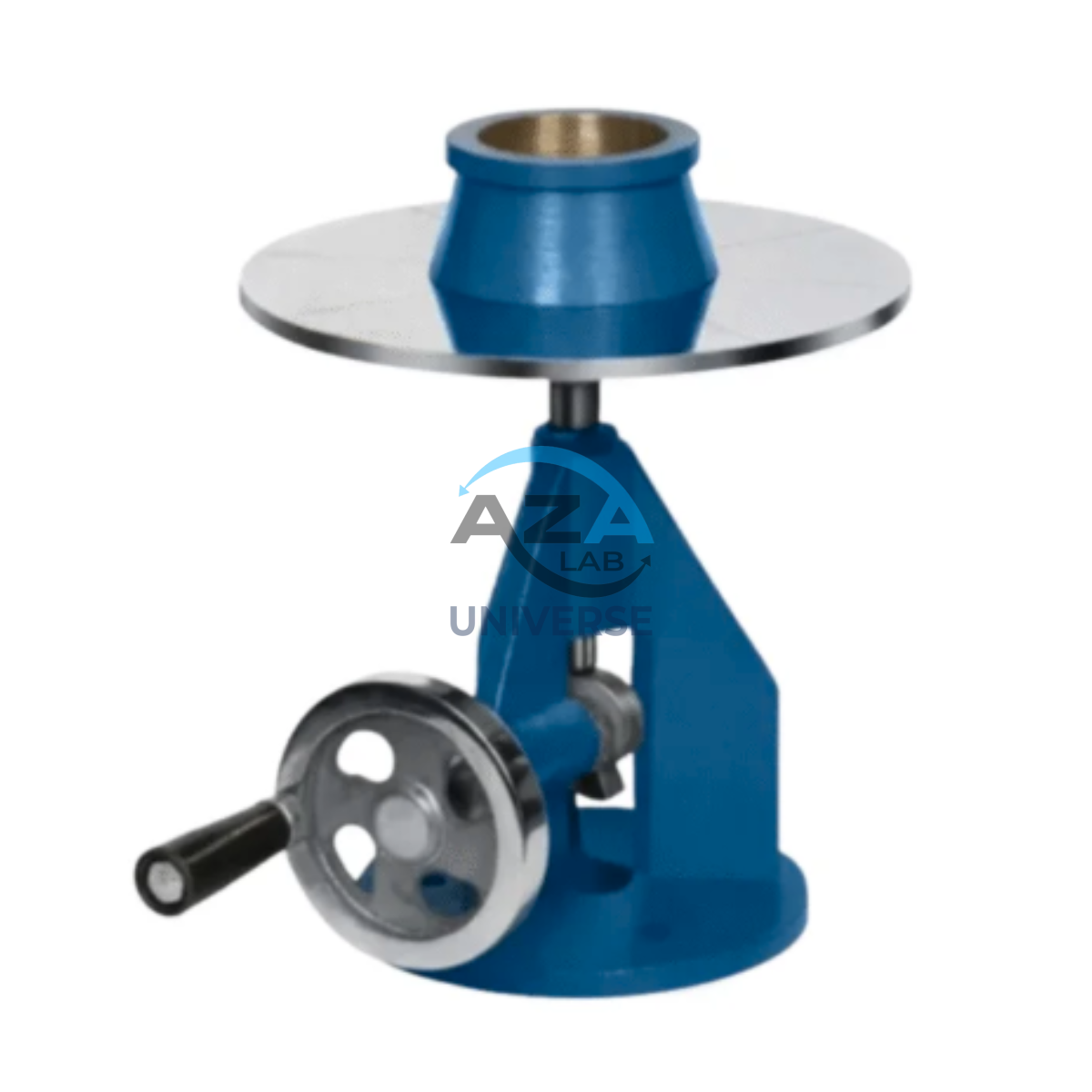
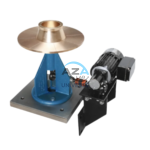
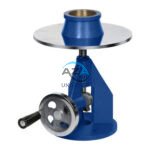
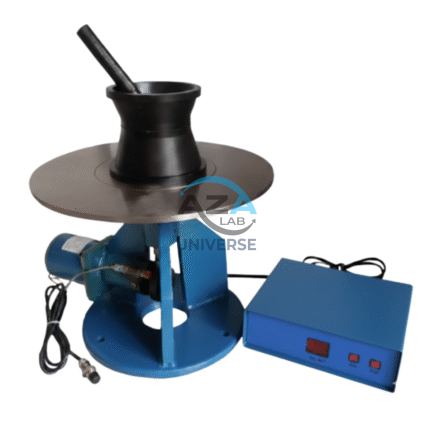
FLOW TABLE AZA0791
- Tests flow and workability of fresh concrete/mortar
- Rigid brass or steel table with drop mechanism
- Conforms to IS 1199 and ASTM C230 standards
- Ideal for site QC and construction material labs
- Supplied with mould and hand-operated handle
Description
Flow Table is a standardized laboratory device used to measure the workability and consistency of fresh cement mortar or concrete. It assesses the material’s flow by observing how it spreads upon repeated drops of a metal table. This simple but critical test helps evaluate how easily a concrete or mortar mix can be placed and compacted — which is essential for both structural performance and ease of application.
The Flow Table test is widely used in construction sites, cement testing labs, and civil engineering quality control departments. It is especially relevant for mixes where high flowability is required, such as flooring, grouting, or self-leveling concrete.
The apparatus complies with IS 1199:1959 – Methods of Sampling and Analysis of Concrete and ASTM C230/C230M – Standard Specification for Flow Table for Use in Tests of Hydraulic Cement, ensuring it meets all major industry requirements for standardized testing.
Key Components:
-
Flow Table Surface: Usually 762 mm (30 inches) in diameter, made of rigid brass or stainless steel, polished for minimal friction.
-
Drop Mechanism: Allows vertical drops of 12.5 mm to 25 mm using a cam-action or lever system.
-
Mould: A conical frustum, generally 100 mm high, used to shape the fresh mix.
-
Handle or Lever: Manual operation handle to lift and drop the table at defined intervals.
Testing Procedure:
-
A fresh mortar or concrete sample is placed in the flow mould positioned at the center of the table.
-
The mould is filled in layers and then lifted vertically.
-
The table is dropped 15–25 times using the handle, and the spread diameter is measured.
-
The difference in initial and final spread gives a quantitative measure of flowability.
This test is crucial for determining whether a mix can properly fill formwork, embed reinforcement, and compact under its own weight. It’s particularly useful for self-compacting concrete, micro-concrete, and highly fluid mortars.
Advantages of Using Flow Table:
-
Rapid assessment of consistency and workability
-
Non-destructive and easy to repeat
-
No power source required — fully manual
-
Provides visual and dimensional verification of flow characteristics
-
Portable and durable for lab and field use
Applications:
-
Concrete product manufacturing
-
On-site inspection during concrete placement
-
Admixture effectiveness testing
-
Precast concrete quality assurance
-
Civil engineering educational demonstrations
The Flow Table plays a vital role in identifying performance differences between mortar mixes and adjusting water-cement ratios or admixture dosages. Its simplicity makes it a favorite even in field conditions, especially where precision in mortar placement is required for repair and overlay works.
Specifications:
| Parameter | Specification |
|---|---|
| Table Diameter | 762 mm (30 inches) |
| Table Material | Brass, stainless steel, or mild steel |
| Table Drop Height | 12.5 mm to 25 mm |
| Mould Dimensions | 100 mm height × 100 mm top × 200 mm bottom |
| Mould Material | Cast aluminum or steel |
| No. of Drops | Typically 25 drops per test cycle |
| Operating Mechanism | Manual lever-operated cam |
| Standards Compliance | IS 1199:1959, ASTM C230 |
| Surface Finish | Polished and rust-resistant |
Frequently Asked Questions (FAQ):
Q1: What does the Flow Table measure?
It measures the spread (in mm) of fresh mortar or concrete, giving an indicator of its flowability and workability.
Q2: Is this test applicable to both concrete and mortar?
Yes. While primarily used for cement mortar, the table can be used with lightweight or self-compacting concrete mixes as well.
Q3: Which standards govern this equipment?
The equipment complies with IS 1199:1959 and ASTM C230, both of which define dimensions and testing procedures.
Q4: How many drops are used in a standard test?
The standard procedure usually involves 25 drops, unless specified otherwise by a testing method or standard.
Q5: Can the table be used without the flow mould?
The flow mould is essential to standardize the initial shape and volume of the sample — using the table without it will invalidate the test.
Additional information
| Table Diameter |
762 mm (30 inches) |
|---|---|
| Table Material |
Brass, stainless steel, or mild steel |
| Table Drop Height |
12.5 mm to 25 mm |
| Mould Dimensions |
100 mm height × 100 mm top × 200 mm bottom |
You may also like…
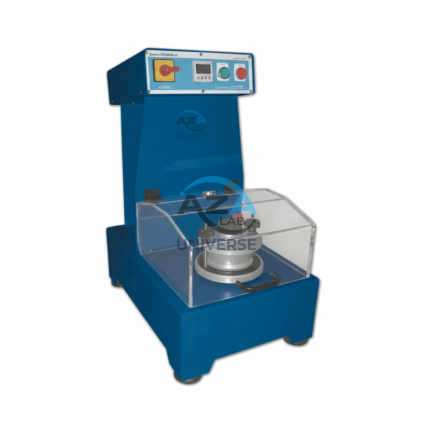
Abrasion Testing Machine for Glazed Tiles AZA1261
The AZA LAB Abrasion Testing Machine for Glazed Tiles (AZA1261) is a precision-engineered laboratory instrument designed for the accurate determination of abrasion resistance in glazed ceramic tiles. Fully compliant with BIS 13630-11 and EN ISO 10545-7, this machine is essential for evaluating tile durability and surface wear performance in accordance with international quality standards.
The AZA1261 simulates real-world foot traffic and surface wear conditions, enabling manufacturers, testing laboratories, and quality control departments to verify that glazed tiles maintain their appearance, texture, and integrity even under high-traffic usage.
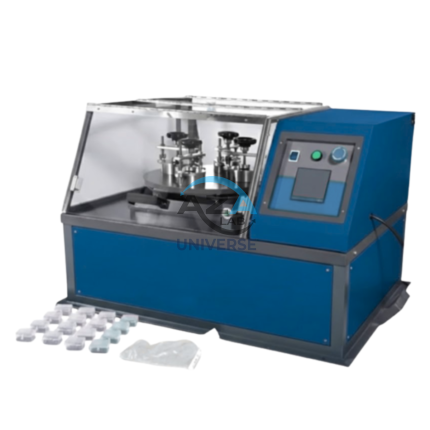
Abrasion Testing Machine for Glazed Tiles AZA1262
The AZA LAB Abrasion Testing Machine for Glazed Tiles (AZA1262) is a robust, high-performance laboratory instrument engineered for precise and high-speed abrasion resistance testing of glazed ceramic tiles. Fully compliant with BIS 13630-11 and EN ISO 10545-7, this machine is designed to ensure reliable evaluation of tile durability under simulated real-world wear conditions.
With the capability to test up to four specimens simultaneously, the AZA1262 significantly improves testing efficiency while maintaining exceptional accuracy and repeatability—making it ideal for tile manufacturers, certification laboratories, and quality control departments
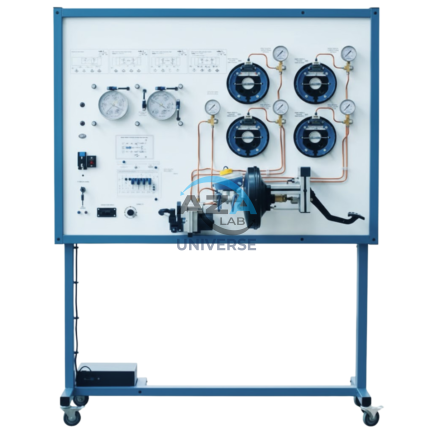
ABS Braking System Training Board Simulator AZA1245
The AZA1245 AZALAB ABS Braking System Training Board Simulator is a fully functional automotive training platform designed to provide in-depth, hands-on understanding of Anti-lock Braking System (ABS) operation, diagnostics, and repair procedures. Built using real automobile components, this simulator enables students and technicians to study ABS structure, electronic control, hydraulic behavior, and fault diagnostics in a safe and controlled learning environment.
This training system is ideal for automotive training institutes, engineering colleges, technical schools, and service technician programs, supporting both instructional demonstrations and practical troubleshooting exercises.
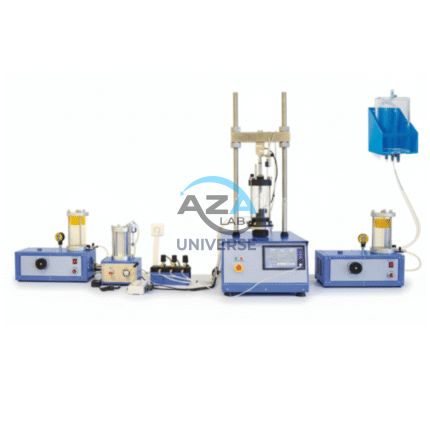
Advanced Triaxial Test System (UU–CU–CD Capable) (AZA 1296)
- UU–CU–CD test modes for complete soil strength profiling
- Automated control of pressure, load, and drainage
- Compatible with clay, silt, sand, and mixed soils
- Integrated data acquisition and real-time graphing
- Meets ASTM D2850, D4767, BS1377, AASHTO standards
- Ideal for geotechnical, research, and academic use
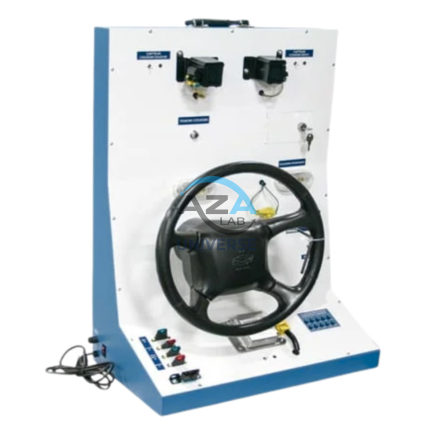
Air Bag Trainer AZA1246
The AZA1246 AZALAB Air Bag Trainer is a comprehensive educational training platform designed to demonstrate the structure, operation, diagnostics, and fault analysis of modern automotive airbag systems, also known as Supplemental Restraint Systems (SRS). Built using OEM automotive components, this trainer delivers a realistic learning experience while maintaining complete operational safety.
This system is ideally suited for automotive engineering colleges, ITIs, polytechnic institutes, vocational training centers, and service technician programs, enabling both theoretical instruction and hands-on diagnostics practice.
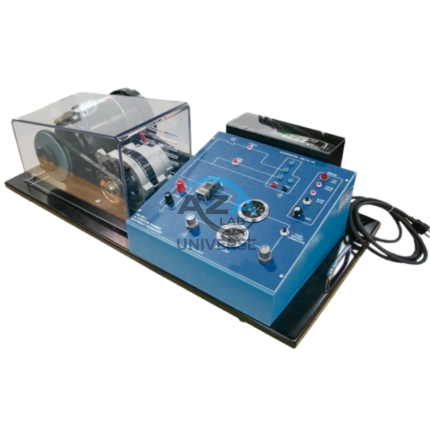
Alternator Trainer AZA1247
The AZA1247 AZALAB Alternator Trainer is a hands-on automotive electrical training system designed to demonstrate the working principles, construction, and diagnostics of an automotive alternator with external voltage regulation. Built using OEM automotive components, this trainer provides a realistic and safe learning platform for students, technicians, and trainees to understand vehicle charging systems in depth.
This system is ideal for automotive engineering institutes, ITIs, polytechnics, vocational training centers, and service technician programs, supporting both theoretical instruction and practical experimentation.
Related products
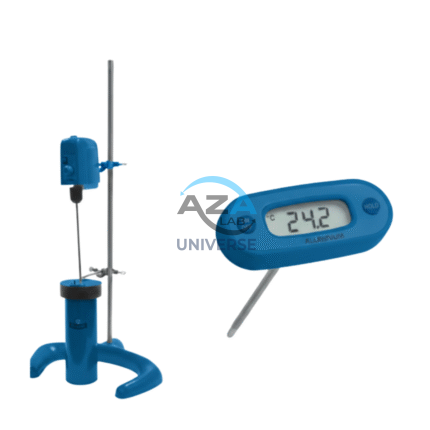
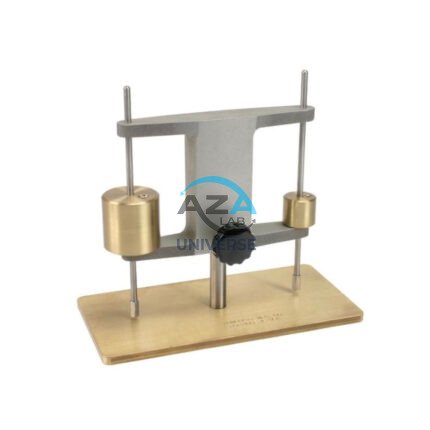
APPARATUS FOR REACTIVITY OF QUICKLIME AZA0809
The AZA0809 Quicklime Reactivity Apparatus is a precision laboratory instrument engineered to measure the thermal reactivity of quicklime (CaO) when it reacts with water—a process known as slaking. This exothermic reaction produces heat, and by recording the temperature rise over time, the apparatus helps determine the quality, fineness, and reactivity rate of quicklime.
Widely used in lime processing plants, cement industries, construction materials testing labs, and research institutions, this apparatus ensures accurate evaluation of quicklime performance for applications in soil stabilization, water treatment, chemical manufacturing, and cement additives.
The apparatus fully complies with IS 1514:1990 – Methods of Sampling and Test for Quicklime and Hydrated Lime and ASTM C110 – Standard Test Methods for Physical Testing of Quicklime, Hydrated Lime, and Limestone.
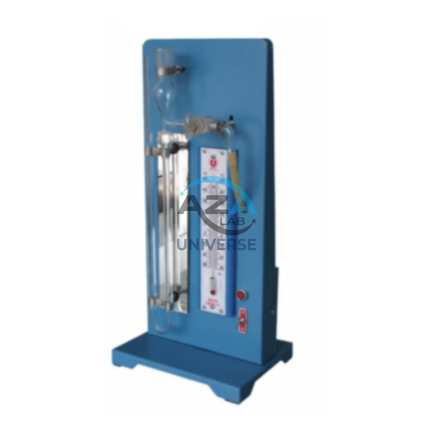
JOLTING APPARATUS AZA0802
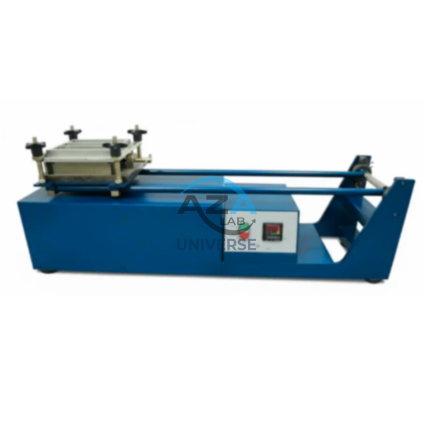
The AZA0802 Jolting Apparatus is a precision-engineered laboratory instrument designed for uniform compaction of cement mortar specimens, ensuring reproducibility and accuracy in strength testing. It plays a vital role in preparing mortar prisms for compressive and flexural strength tests, eliminating air voids and ensuring homogeneous density throughout each specimen.
Manufactured in accordance with IS 10080:1982, and suitable for use under EN 196-1 and ASTM C348 testing standards, the AZA0802 is essential for any laboratory involved in cement quality evaluation, research, or certification.
Whether used in construction QC labs, cement manufacturing units, academic institutions, or R&D centers, the AZA0802 offers dependable, consistent, and safe compaction performance for standardized mortar testing.
Why Compaction Matters in Mortar Testing
The quality and reliability of mortar strength tests depend heavily on the degree of compaction during specimen preparation. Air voids, improper leveling, or inconsistent compaction can lead to inaccurate test values and unreliable performance assessments.
The AZA0802 utilizes a mechanical cam-driven system delivering 60 precise jolts per minute, effectively removing entrapped air from the mortar mix. An inbuilt 60-second automatic timer ensures standard-compliant compaction by stopping the machine after the required number of jolts.
This ensures:
-
Highly consistent mortar density
-
Repeatable strength results
-
Compliance with national and international testing standards
Applications Across Industries
The AZA0802 Jolting Apparatus is widely used in:
-
Cement manufacturing QC laboratories
-
Construction and civil engineering testing labs
-
Educational and training institutes
-
Material certification & calibration laboratories
-
R&D units working on advanced cement products
Key Features & Benefits
-
Standard-Compliant Operation
Conforms fully to IS 10080, EN 196-1, and ASTM C348 for mortar compaction. -
Precise Jolting Mechanism
Delivers 60 calibrated jolts/min, with smooth camshaft motion ensuring uniform compaction. -
Heavy-Duty Mild Steel Frame
Rigid, vibration-resistant structure enhances accuracy and long-term reliability. -
Automatic Timer Control
Pre-set 60-second timer ensures correct compaction cycles without operator intervention. -
Safety Enclosure
Protective guard minimizes risk by shielding moving components during operation. -
Quick-Action Mould Clamping
Secure clamping mechanism designed for 40 × 40 × 160 mm prism moulds. -
Space-Saving Design
Compact, bench-top model ideal for laboratories with limited workspace. -
Low-Maintenance Drive System
Enclosed mechanism requires minimal lubrication and cleaning.
Technical Specifications
| Specification | Details |
|---|---|
| Model | AZA0802 |
| Application | Mortar Prism Compaction |
| Conformity | IS 10080, EN 196-1, ASTM C348 |
| Jolts per Minute | 60 jolts/min (customizable) |
| Timer | 60-sec automatic timer |
| Compatible Mould Size | 40 × 40 × 160 mm |
| Motor Power | 0.25 HP, 230 V AC |
| Construction | Mild steel frame, powder coated |
| Dimensions (L × W × H) | Approx. 500 × 350 × 450 mm |
| Weight | Approx. 35–40 kg |
| Warranty | 1 Year (Manufacturing defects only) |
| Made In | India |
Frequently Asked Questions (FAQ)
Q1: What is the purpose of a jolting apparatus?
It compacts mortar uniformly by applying controlled jolts, removing air pockets and ensuring specimen consistency for strength testing.
Q2: How many jolts does the AZA0802 deliver?
It delivers 60 jolts in one minute, as required by IS 10080. Custom settings are available upon request.
Q3: Which moulds can it be used with?
It is compatible with all standard 40 × 40 × 160 mm mortar prism moulds.
Q4: Is it suitable for educational laboratories?
Yes. Safety guards, controlled operation, and automatic timing make it ideal for use by students under supervision.
Q5: Does it require heavy maintenance?
No. The apparatus has a sealed mechanism requiring minimal lubrication and is easy to clean after each session.
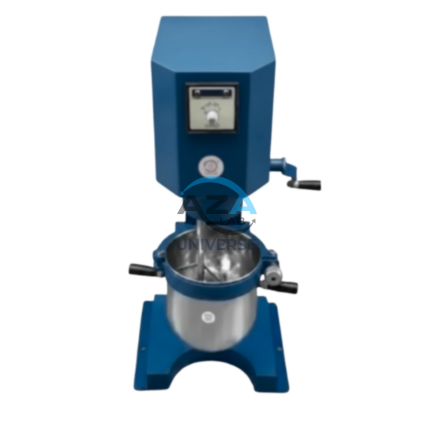
MORTOR MIXER AZA0804
Built to meet the rigorous requirements of IS:4031, IS:1727, and ASTM C305, the AZA0804 ensures your mortar mixes are prepared exactly as required for credible, repeatable laboratory results. It is widely used in construction material laboratories, cement manufacturing QC divisions, R&D centers, government-approved testing labs, and academic institutions.
This mixer, known commonly as a mortar mixer, cement mortar mixer, lab mortar mixer, AZA0804 mixer, is an essential machine for preparing standardized mortar samples used in cement testing across the industry.
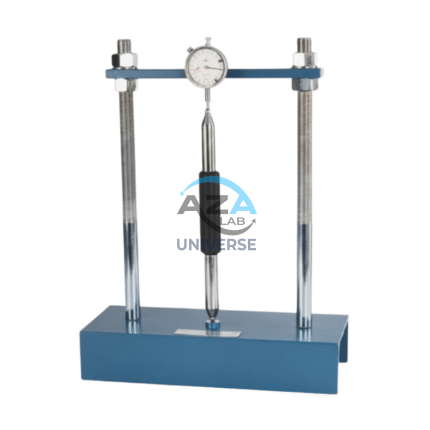
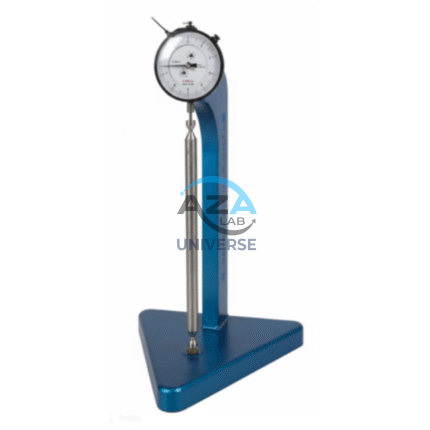
VOLUME CHANGE APPARATUS AZA0796
- Precision apparatus for measuring soil volume change
- Ideal for CD and CU triaxial testing
- Manual and digital versions available
- Durable lab-grade stainless steel build
- Fully compliant with IS and ASTM standards
- Provided with all necessary accessories
- Backed by Azalab’s quality assurance and support