
 Rock
Rock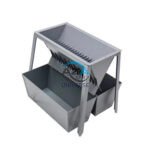 Aggregate
 Cement
 Concrete
 Soil
Soil Steel
Steel Bitumen/Asphalt
 Security Survey Equipment
 General Items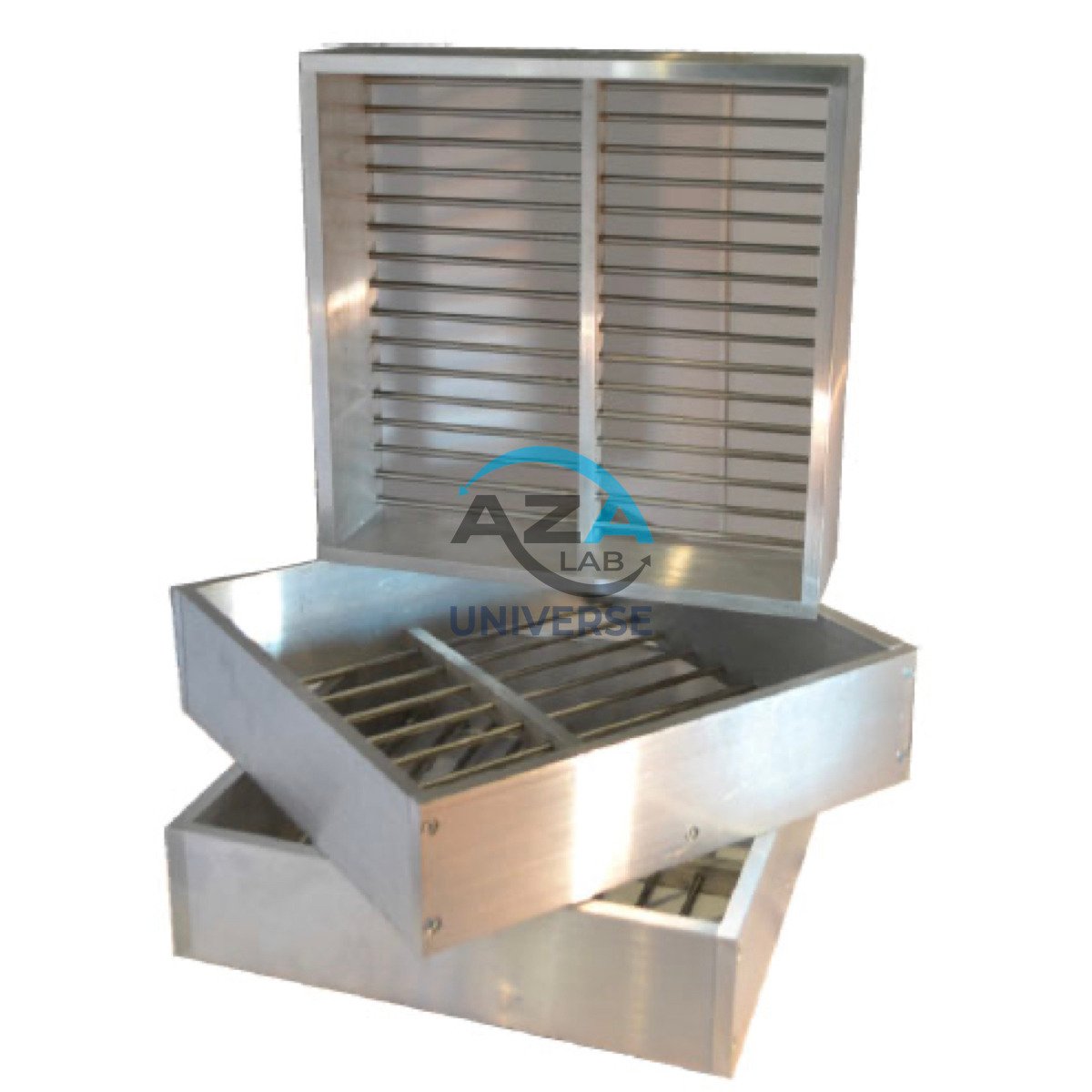
GRID SIEVES AZA0972
The AZA0972 Grid Sieves are heavy-duty screening tools designed for rapid particle size classification of coarse soils and aggregates. These sieves are ideal for quick, visual separation of gravel, crushed stone, and coarse sands in civil engineering, geotechnical, and construction materials laboratories. Their rugged construction makes them suitable for both laboratory and field applications.
Key Features
-
Designed for fast classification of coarse particles
-
Suitable for soil and aggregate testing
-
Heavy-duty stainless steel / galvanized steel construction
-
Precision-welded square or rectangular grid openings
-
Corrosion-resistant, abrasion-resistant long life design
-
Compatible with standard manual and mechanical sieve shakers
Description
Working Principle
AZA0972 Grid Sieves use rigid metal grids with large, uniformly spaced openings. When a test sample is poured onto the sieve, particles larger than the grid openings are retained, while smaller particles pass through. This allows rapid, approximate gradation before detailed laboratory sieve analysis.
Applications
-
Soil mechanics laboratories for coarse soil classification
-
Aggregate grading in construction and asphalt plants
-
Geotechnical field investigations
-
Road, embankment, and earthwork quality control
-
Educational and training laboratories
Technical Specifications
| Parameter | Specification |
|---|---|
| Model No. | AZA0972 |
| Sieve Material | Stainless steel / Galvanized steel |
| Grid Type | Square / Rectangular mesh |
| Opening Sizes | 10 mm to 100 mm |
| Outer Diameter | 300 mm (standard) / Custom available |
| Frame Type | Precision welded steel ring |
| Compatibility | Manual & mechanical sieve shakers |
| Surface Finish | Polished / Rust-proof coated |
| Weight | Approx. 1.5 – 3 kg per sieve |
| Standards | ASTM D6913, IS 2720 (Part 4) |
Standard Accessories
-
Grid sieve (single / set as requested)
-
Test certificate
-
User guide
FAQ
Q1: What are AZA0972 Grid Sieves used for?
They are used for rapid size classification of coarse aggregates and soils, especially gravel and large sand particles.
Q2: Can these be used with mechanical sieve shakers?
Yes, they are fully compatible with standard sieve shakers.
Q3: How are these different from IS sieves?
Grid sieves have larger square openings for coarse materials, while IS sieves use finer wire meshes for detailed gradation analysis.
Q4: Are custom sizes available?
Yes, custom grid opening sizes and frame diameters are available on bulk orders.
Q5: Which standards do these comply with?
They comply with ASTM D6913 and IS 2720 (Part 4).
Additional information
| Sieve Material |
Stainless steel or galvanized steel |
|---|---|
| Grid Type |
Square or rectangular mesh |
| Opening Sizes |
10 mm to 100 mm |
| Outer Diameter |
300 mm (standard); custom sizes available |
You may also like…
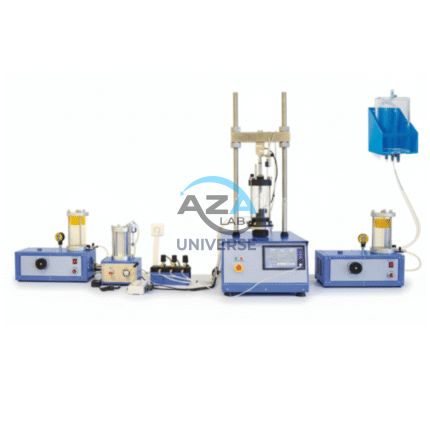
ADVANCED TRIAXIAL TEST SYSTEM (UU–CU–CD CAPABLE) AZA1296
The AZA LAB Advanced Triaxial Test System AZA1296 is a fully automated geotechnical laboratory testing system designed for accurate determination of soil shear strength and deformation characteristics under controlled stress and drainage conditions.
The system supports all major triaxial compression testing modes including:
- Unconsolidated Undrained (UU)
- Consolidated Undrained (CU)
- Consolidated Drained (CD)
Engineered for high-precision geotechnical analysis, the AZA1296 replicates in-situ soil stress conditions to evaluate soil stability, strength behavior, pore pressure response, and failure mechanisms under axial loading.
The system integrates servo-controlled loading, automatic pressure regulation, real-time pore pressure monitoring, automated data acquisition, and advanced software analysis, making it ideal for geotechnical laboratories, civil engineering projects, infrastructure development, research institutions, and academic applications.
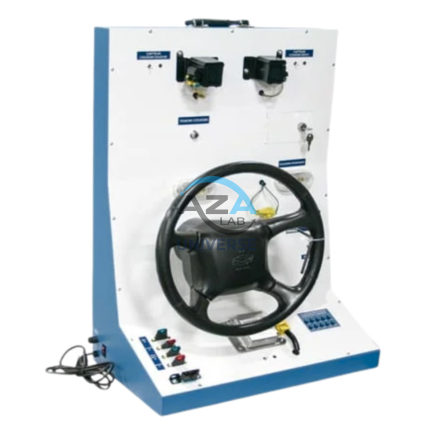
AIR BAG TRAINER AZA1246
The AZA1246 AZALAB Air Bag Trainer is a comprehensive educational training platform designed to demonstrate the structure, operation, diagnostics, and fault analysis of modern automotive airbag systems, also known as Supplemental Restraint Systems (SRS). Built using OEM automotive components, this trainer delivers a realistic learning experience while maintaining complete operational safety.
This system is ideally suited for automotive engineering colleges, ITIs, polytechnic institutes, vocational training centers, and service technician programs, enabling both theoretical instruction and hands-on diagnostics practice.
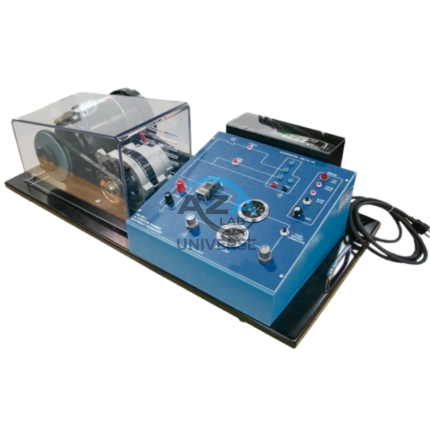
ALTERNATOR TRAINER AZA1247
The AZA1247 AZALAB Alternator Trainer is a hands-on automotive electrical training system designed to demonstrate the working principles, construction, and diagnostics of an automotive alternator with external voltage regulation. Built using OEM automotive components, this trainer provides a realistic and safe learning platform for students, technicians, and trainees to understand vehicle charging systems in depth.
This system is ideal for automotive engineering institutes, ITIs, polytechnics, vocational training centers, and service technician programs, supporting both theoretical instruction and practical experimentation.
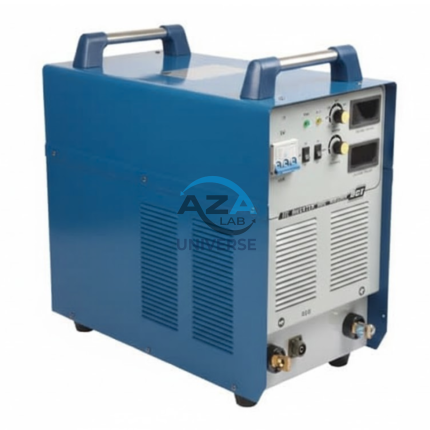
ARC WELDING MACHINE AZA1234
The AZA1234 Arc Welding Machine by A Z A Lab is a high-performance industrial welding solution engineered for demanding fabrication, maintenance, and structural welding applications. Designed using advanced inverter technology, this machine delivers superior arc stability, high efficiency, and reliable welding performance across a wide range of electrode types and materials.
With an inverter frequency of up to 20 kHz, the AZA1234 ensures fast dynamic response, reduced spatter, and excellent weld bead appearance. Its robust electrical design supports a high duty cycle, allowing continuous operation under heavy loads while maintaining consistent welding output—even with output cable lengths of up to 100 meters.
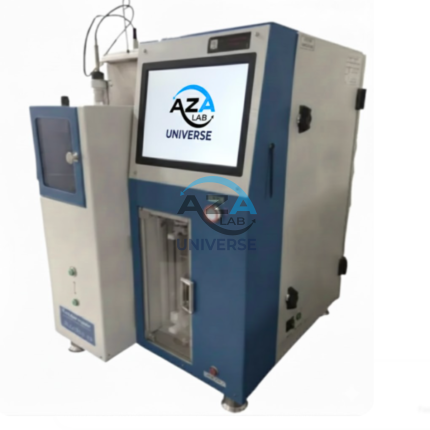
AUOTFLASH AUTOMATED ABEL FLASH POINT ANALYZER AZA1277
The AutoFlash-1277 (Model: AZA1277) from AZA Lab is a fully automated, microcontroller-based Abel Flash Point Analyzer designed for accurate, safe, and repeatable determination of flash points of combustible liquids. Engineered to meet stringent international testing requirements, this advanced instrument conforms to IP 170, ISO 13736, and IS 1448 (Part 20) standards.
Covering a standard temperature range of –30°C to 70°C, extendable up to 110°C, the AZA1277 is ideally suited for laboratories involved in petroleum testing, petrochemical quality control, fuels research, and regulatory compliance.
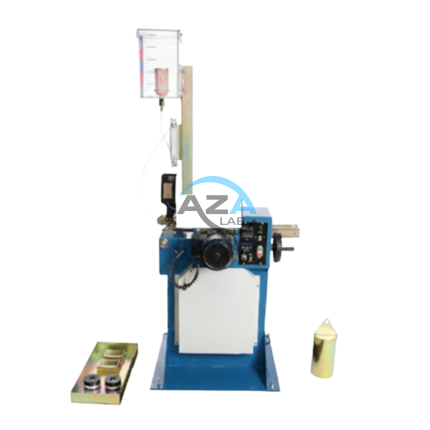
AUTODIST-86 GLASS DISTILLATION UNITAZA1282
The AutoDist-86 Glass Distillation Unit (Model AZA1282) is a high-performance laboratory water distiller designed for the continuous production of high-purity distilled water.
Constructed entirely from borosilicate glass 3.3, the unit ensures zero metallic contamination, excellent thermal resistance, and long operational life. It is ideal for laboratories requiring consistent, low-conductivity distilled water for analytical, pharmaceutical, and research applications.Distillation Performance
- Distillate Output: Up to 4 L/hour (±10%)
- Suitable for routine and medium-scale laboratory demand
- Efficient removal of:
- Dissolved salts
- Heavy metals
- Organic/inorganic impurities
- Microbial contaminants
Related products
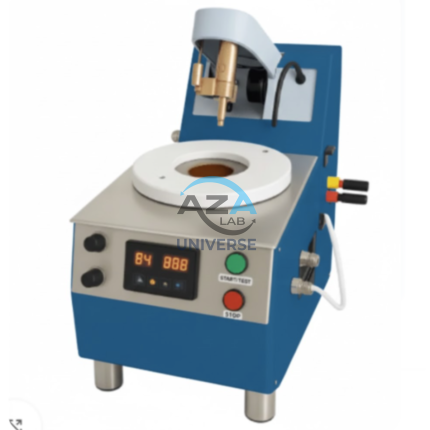
ACCELERATED POLISHING MACHINE AZA0984
Key Features
- Tests polished stone value (PSV) of road aggregates
- Conforms to ASTM D3319 and BS 812 Part 114
- Heavy-duty rotating disc with abrasive feed system
- Integrated water spray system to simulate wet road conditions
- Powder-coated steel body for corrosion resistance
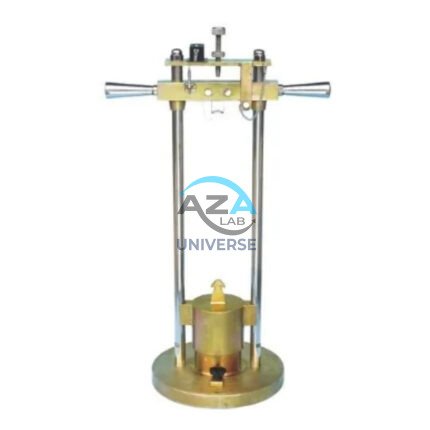
AGGREGATE IMPACT TESTER WITH BLOW COUNTER AZA0983
The AZA0983 Aggregate Impact Tester with Digital Blow Counter is a precision-engineered laboratory apparatus used to determine the Aggregate Impact Value (AIV) of coarse aggregates. It is designed to evaluate the toughness and resistance of aggregates used in road pavements, highways, and structural concrete.
This equipment is manufactured for durability, accuracy, and long service life, and is fully compliant with IS:2386 (Part IV) and BS 812 standards.
Key Features
-
Determines Aggregate Impact Value (AIV) for pavement materials
-
Integrated digital blow counter for accurate strike counting
-
Conforms to IS:2386 (Part IV) and BS 812
-
Heavy-duty, vibration-resistant frame
-
Cylindrical steel cup and standard impact hammer
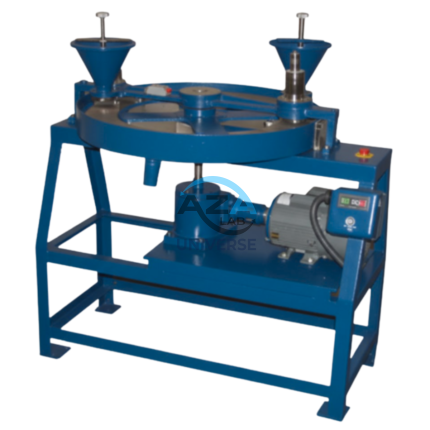
DORRY ABRASION TESTING MACHINE AZA0988
Key Functions
- Evaluates abrasion and wear resistance of aggregates
- Simulates real-life mechanical rubbing and surface wear
- Ensures quality control for construction materials
- Supports research and teaching in civil engineering labs
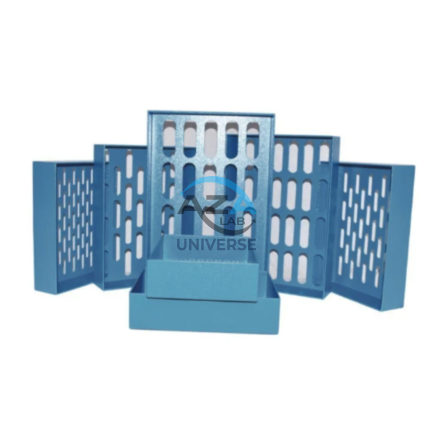
FLAKINESS SIEVE SET AZA0973
The AZA0973 Flakiness Sieve Set is a laboratory-grade testing instrument designed to determine the flakiness index of coarse aggregates. It is an essential tool for evaluating aggregate particle shape, helping ensure strength, durability, and performance of concrete and road construction materials. This system is manufactured for full compliance with IS 2386 (Part I) and is widely used in civil engineering laboratories and construction quality control sites.
Key Features
-
Used for determining flakiness index of coarse aggregates
-
Fully compliant with IS 2386 (Part I) standards
-
Precision-machined slotted gauges for multiple aggregate sizes
-
Heavy-duty stainless steel / powder-coated steel construction
-
Corrosion-resistant, long service life
-
Portable and easy to use in lab and field environments
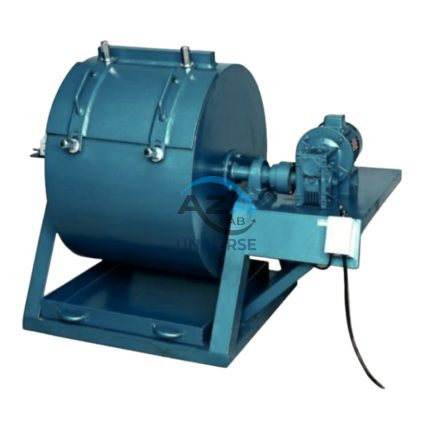
LOS ANGELES ABRASION TESTING MACHINE AZA0986
Key Functions
- Tests abrasion resistance of coarse aggregates
- Evaluates impact strength under repeated load cycles
- Ensures material suitability for roads, highways, and structural concrete
- Provides accurate, repeatable test results for quality control
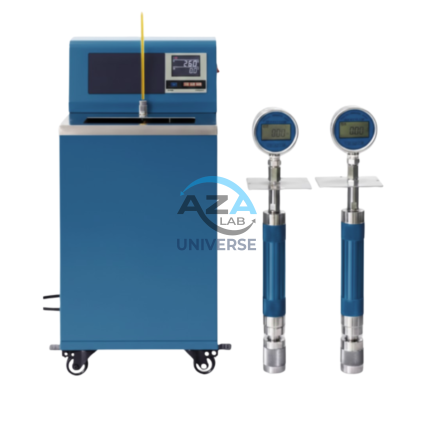
REID VAPOR PRESSURE TESTER AZA1321
- Floor-Standing Design with stainless-steel working table for strength and easy operation
- Digital Temperature Controller for precise and uniform water bath heating
- Dual High-Accuracy Pressure Gauges for reliable internal pressure readings
- Dual Vapor Bombs for simultaneous testing and increased productivity
- Rugged Construction for long-term laboratory and industrial use
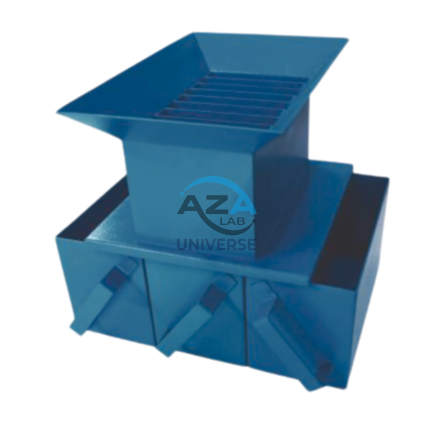
RIFFLE SAMPLE DIVIDER AZA0980A
Key Features
- Used for precise sample splitting of fine & coarse aggregates
- Uniform chute spacing for even material distribution
- Heavy-duty powder-coated steel body
- Supplied with two high-capacity collection pans
- Smooth-flow chute design to minimize material loss
- Simple, manual operation – no power required
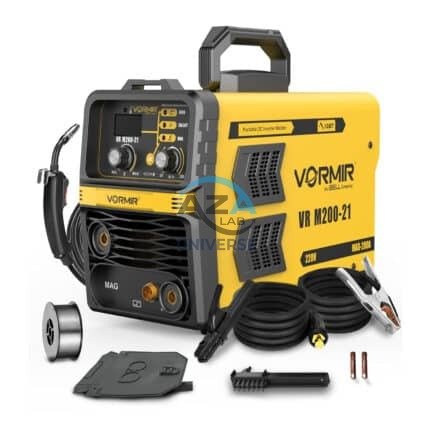
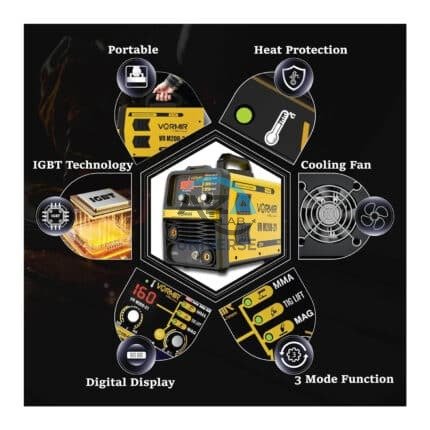
TIG Welding Machine AZA 1235
- TIG welding machine for precise, clean welds
- Dual voltage input (110V/220V) for flexibility
- Advanced IGBT inverter technology
- Digital LCD display for accurate settings
- Ideal for steel, stainless steel, and aluminum
- Overheat and overload protection
- Lightweight and portable for field use
- Model: AZA 1235 – designed for professional use