
 Rock
Rock Aggregate
 Cement
 Concrete
 Soil
Soil Steel
Steel Bitumen/Asphalt
 Security Survey Equipment
 General Items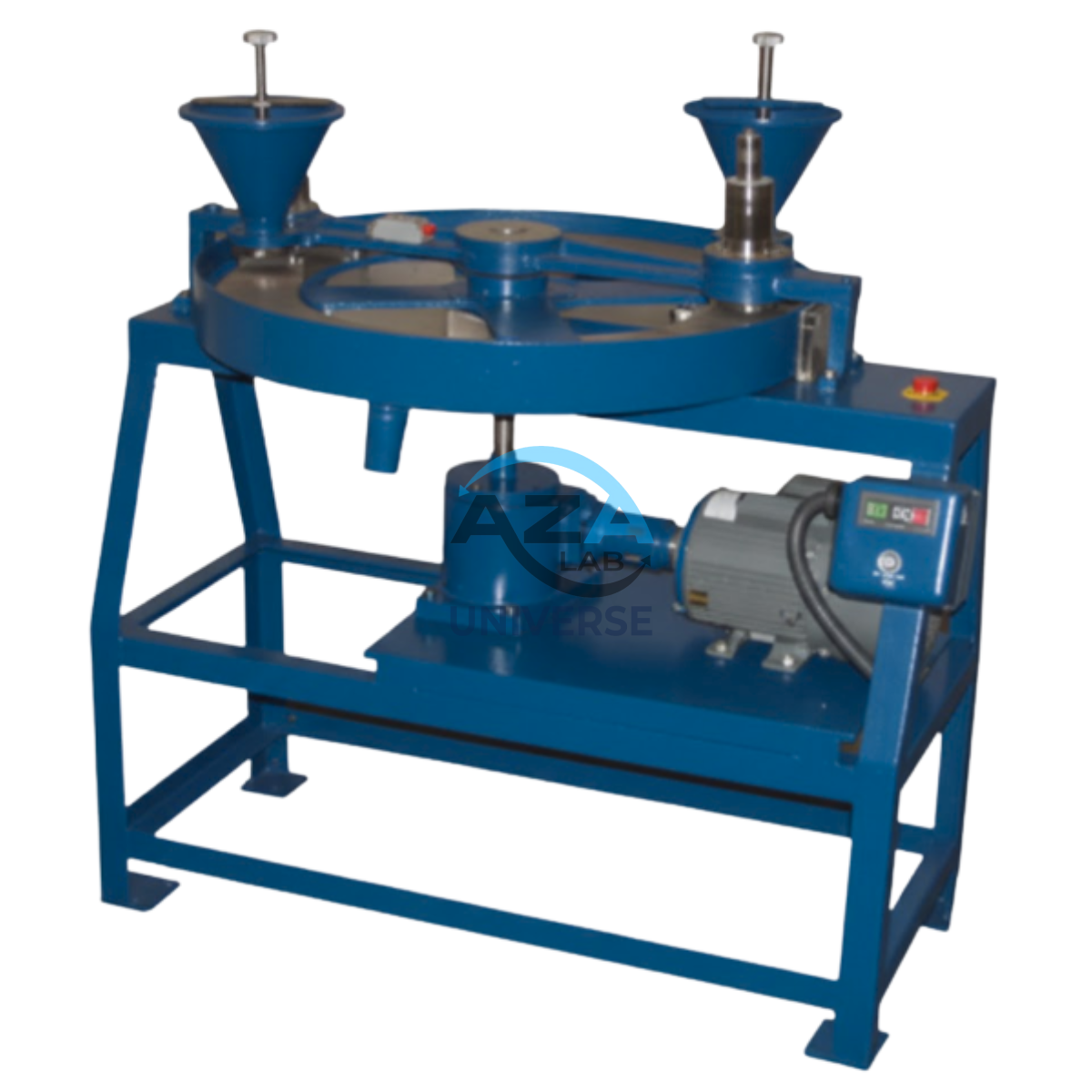
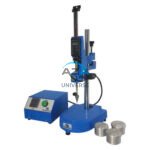
DORRY ABRASION TESTING MACHINE AZA0988
The AZA0988 Dorry Abrasion Testing Machine by Azalab is a robust, motorized laboratory instrument designed to measure the abrasion resistance (wear loss) of coarse aggregates used in road construction, railway ballast, and structural concrete. This machine provides consistent, repeatable test results in accordance with IS 2386 (Part IV) standards, helping engineers and laboratories ensure material durability and performance.
Key Functions
- Evaluates abrasion and wear resistance of aggregates
- Simulates real-life mechanical rubbing and surface wear
- Ensures quality control for construction materials
- Supports research and teaching in civil engineering labs
Description
Standards Compliance
-
IS:2386 (Part IV)
Working Principle
The aggregate sample is placed inside a steel test cylinder mounted on a rotating steel disc. A weighted loading arm applies a constant force on the sample. As the disc rotates at a controlled speed, the sample rubs against emery powder, simulating abrasive wear.
After the specified revolutions, the sample is cleaned, dried, and weighed. The percentage weight loss represents the abrasion value.
Key Features
-
Heavy-duty motorized steel disc system
-
Precisely machined loading arm with dead weights
-
Stable, vibration-resistant steel frame
-
Simple operation with low maintenance
-
Designed for long-term laboratory use
Technical Specifications
| Parameter | Specification |
|---|---|
| Model | AZA0988 |
| Disc Diameter | 20 – 30 cm |
| Motor | 0.5 HP, Single Phase |
| Rotation Speed | 28 – 30 RPM |
| Load Application | 30 – 50 N via weight arm |
| Abrasive Medium | Standard Emery Powder |
| Power Supply | 230V AC |
| Frame Material | Mild steel, powder coated |
| Compliance | IS 2386 (Part IV) |
Applications
-
Road and highway material testing
-
Railway ballast durability testing
-
Concrete mix and aggregate evaluation
-
Civil engineering colleges and R&D labs
FAQ
Q1: What is the AZA0988 used for?
It is used to determine the abrasion resistance of coarse aggregates.
Q2: Which standard does it follow?
It complies with IS 2386 (Part IV).
Q3: Is it suitable for continuous lab use?
Yes, it is designed for heavy-duty laboratory applications.
Q4: What abrasive material is used?
Standard emery powder is used.
Q5: Does the machine require frequent maintenance?
Only basic periodic cleaning and lubrication are required.
Additional information
| Model |
AZA 0989 |
|---|---|
| Disc Diameter |
20 cm – 30 cm |
| Motor |
0.5 HP, Single Phase |
| Load Application |
30–50 N weight through loading lever |
| Abrasive Material |
Standard emery powder |
| Power Supply |
230V AC |
| Construction |
Mild steel frame, corrosion-resistant finish |
| Compliance |
IS 2386 (Part IV) |
Related products
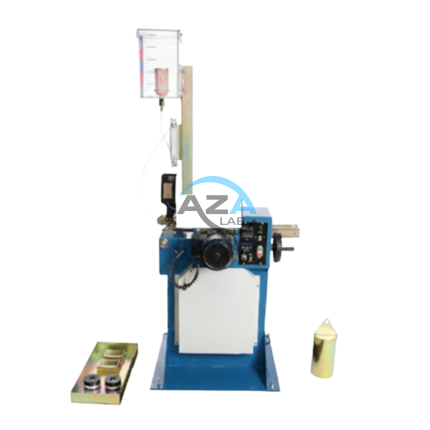
ACCELERATED POLISHING MACHINE AZA0984
Key Features
- Tests polished stone value (PSV) of road aggregates
- Conforms to ASTM D3319 and BS 812 Part 114
- Heavy-duty rotating disc with abrasive feed system
- Integrated water spray system to simulate wet road conditions
- Powder-coated steel body for corrosion resistance
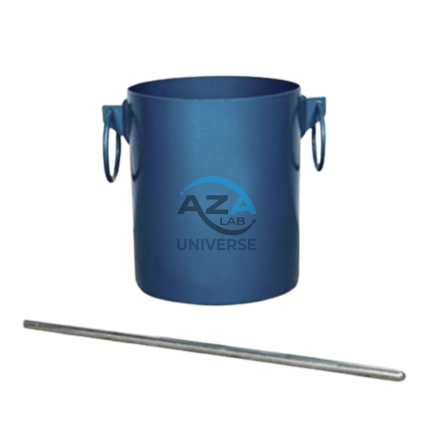
CYLINDRICAL MEASURES AZA0977
The AZA0977 Cylindrical Measures are precision laboratory containers designed for determining the bulk density (unit weight) and void ratio of fine and coarse aggregates. These measurements are essential for quality control in concrete mix design, highway construction, and geotechnical investigations. Manufactured by Azalab, these measures fully comply with IS 2386 (Part III), ASTM C29, and BS 812 standards.
Key Features
-
Used for measuring bulk density and void ratio of aggregates
-
Available in standard capacities: 3L, 5L, and 15L
-
Heavy-duty mild steel / aluminum construction
-
Smooth, accurately machined internal surfaces
-
Supplied with tamping rod and leveling accessories
-
Corrosion-resistant, long-life surface finish
-
Easy-grip handles for portability
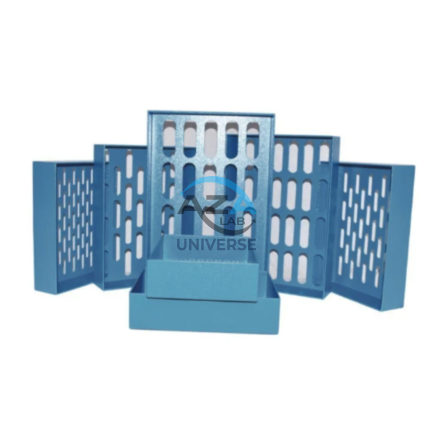
FLAKINESS SIEVE SET AZA0973
The AZA0973 Flakiness Sieve Set is a laboratory-grade testing instrument designed to determine the flakiness index of coarse aggregates. It is an essential tool for evaluating aggregate particle shape, helping ensure strength, durability, and performance of concrete and road construction materials. This system is manufactured for full compliance with IS 2386 (Part I) and is widely used in civil engineering laboratories and construction quality control sites.
Key Features
-
Used for determining flakiness index of coarse aggregates
-
Fully compliant with IS 2386 (Part I) standards
-
Precision-machined slotted gauges for multiple aggregate sizes
-
Heavy-duty stainless steel / powder-coated steel construction
-
Corrosion-resistant, long service life
-
Portable and easy to use in lab and field environments
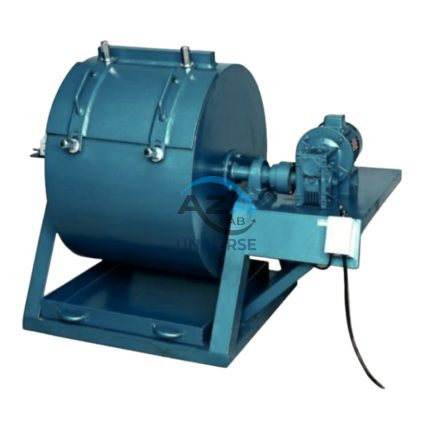
LOS ANGELES ABRASION TESTING MACHINE AZA0986
Key Functions
- Tests abrasion resistance of coarse aggregates
- Evaluates impact strength under repeated load cycles
- Ensures material suitability for roads, highways, and structural concrete
- Provides accurate, repeatable test results for quality control
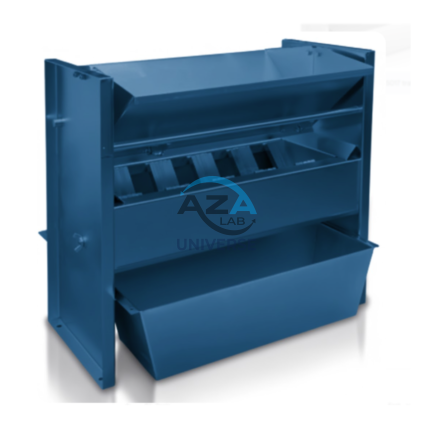
SAMPLE SPLITTER AZA0981
Key Features
- Accurately splits bulk aggregates into representative samples
- Multiple slot options for different particle sizes
- Heavy-duty powder-coated steel frame
- Uniform chute spacing for even material distribution
- Supplied with two sturdy collection pans
- Portable and easy to operate
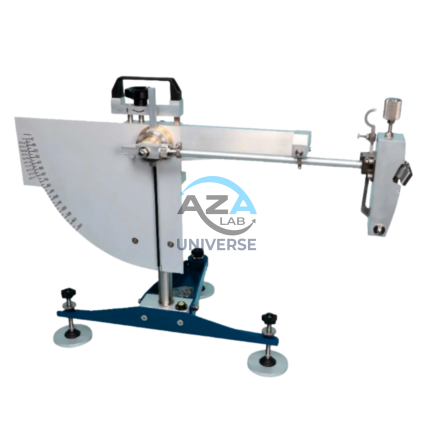
SKID RESISTANCE AND FRICTION TESTER STANDARD AZA0985
The AZA0985 Skid Resistance & Friction Tester is a precision mechanical instrument designed to measure the coefficient of friction and skid resistance of pavement surfaces. Based on the pendulum operating principle, it accurately determines Skid Resistance Value (SRV) / British Pendulum Number (BPN) for both wet and dry surfaces.
This equipment is widely used by highway authorities, airport maintenance teams, civil engineering laboratories, and R&D institutions to ensure surface safety and compliance with international standards.
Key Features
-
Tests skid resistance of roads, runways & industrial floors
-
Conforms to ASTM E303 and BS 812 Part 114 standards
-
Fully mechanical pendulum system – no power required
-
Heavy-duty base with spring-loaded arm mechanism
-
Portable and field-friendly design
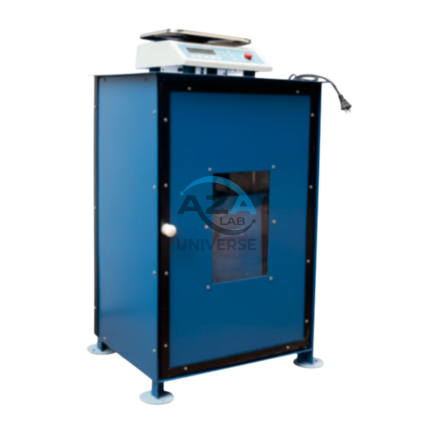
SPECIFIC GRAVITY AND WATER ABSORPTION OF AGGREGATES AZA0979
Key Features
- Comprehensive apparatus for specific gravity and water absorption testing
- Suitable for both fine and coarse aggregates
- Heavy-duty, corrosion-resistant construction
- High accuracy and repeatable results
- User-friendly configuration for lab and field use
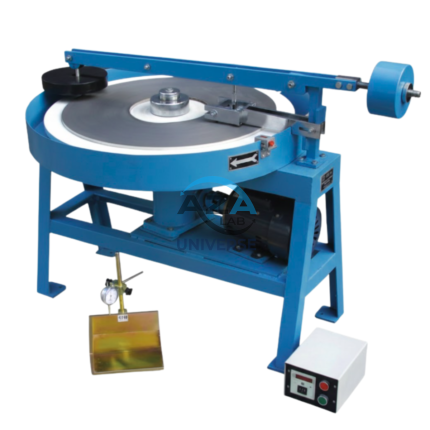
TILE ABRASION TESTING MACHINE AZA0992
Purpose of Testing
This test determines the depth of wear (in mm) on the tile surface after a fixed number of revolutions under an abrasive load. It helps manufacturers, contractors, and consultants verify whether tiles meet durability requirements for high-traffic applications.