
 Rock
Rock Aggregate
 Cement
 Concrete
 Soil
Soil Steel
Steel Bitumen/Asphalt
 Security Survey Equipment
 General Items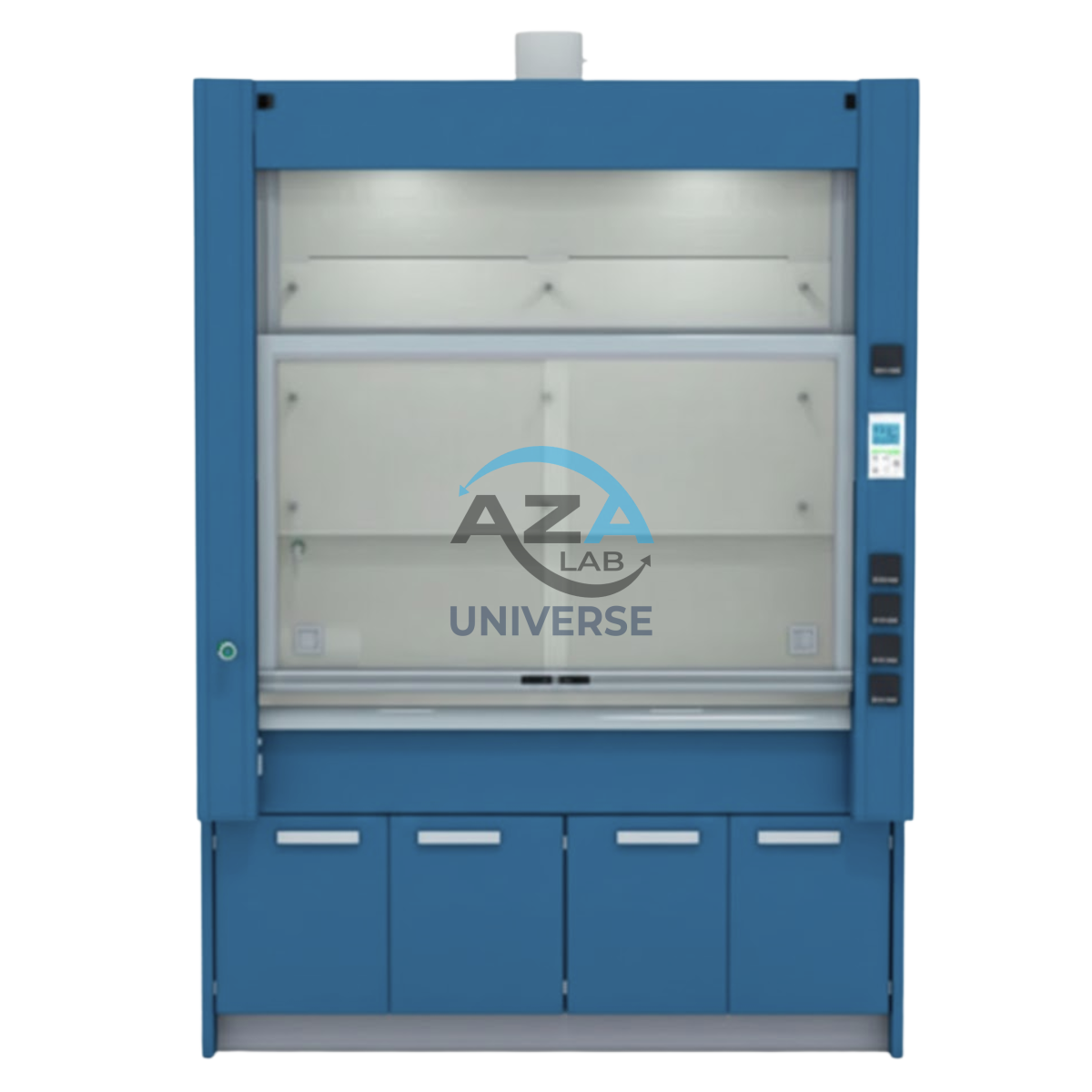
FUME HOOD CABINET AZA1086
The AZA1086 Laboratory Fume Hood Cabinet is a critical safety and ventilation system designed to protect laboratory personnel from exposure to hazardous fumes, vapors, gases, and particulate matter generated during chemical handling and experimental procedures. Engineered to meet international laboratory safety standards, this unit provides a controlled working enclosure that supports safe, compliant, and efficient laboratory operations.
AZA1086 is available in both ducted and ductless configurations, allowing flexibility based on laboratory layout, infrastructure, and environmental requirements. Ducted models expel contaminated air outside the facility through an exhaust system, while ductless models utilize advanced filtration technology to clean and safely recirculate air back into the laboratory.
Description
The fume hood cabinet creates a negative-pressure workspace that effectively captures airborne contaminants at the source. It is designed for continuous use in chemical laboratories where volatile solvents, acids, bases, and reactive substances are handled.
Constructed using chemical-resistant epoxy-coated steel, the cabinet ensures long-term durability even in corrosive environments. The work surface is available in phenolic resin or polypropylene, both known for their excellent resistance to chemicals, moisture, and heat.
A vertically sliding tempered glass sash provides visibility and operator protection while maintaining proper airflow balance. The sash is counterbalanced for smooth operation and reduced user fatigue.
Ventilation and Airflow Performance
AZA1086 maintains a face velocity of 0.5 m/s, ensuring effective containment of hazardous vapors. The airflow performance complies with ASHRAE 110 and EN 14175 standards, which define laboratory fume hood containment, safety, and efficiency requirements.
Optional airflow monitoring systems and audible/visual alarms continuously track operational conditions and alert users in case of airflow failure or unsafe conditions.
Ducted vs. Ductless Configuration
Ducted Model
- Direct exhaust of contaminated air outside the building
- Suitable for high-volume chemical usage
- Recommended for aggressive or unknown chemical emissions
Ductless Model
- Equipped with activated carbon and HEPA filtration
- Energy-efficient with reduced HVAC load
- Ideal for laboratories with limited ducting infrastructure
Design and Safety Features
- Epoxy-coated steel structure for corrosion resistance
- Tempered glass sash for impact resistance and visibility
- LED internal lighting for clear workspace illumination
- Noise-insulated blower for quiet operation
- Optional chemical storage base cabinet
- Optional explosion-proof fittings and linings
- Integrated service utilities (gas, water, vacuum – optional)
Typical Applications
AZA1086 Laboratory Fume Hood Cabinet is widely used for:
- Acid digestion and chemical synthesis
- Solvent evaporation and sample preparation
- Titration and wet chemistry analysis
- Pharmaceutical formulation and R&D
- Petrochemical and industrial quality control
- Academic teaching and research laboratories
Compliance and Standards
The unit supports Good Laboratory Practice (GLP) and complies with:
- ASHRAE 110 – Fume hood performance testing
- EN 14175 – European laboratory fume hood standards
These standards ensure safe containment, airflow stability, and operational reliability.
Technical Specifications
| Parameter | Details |
|---|---|
| Model | AZA1086 |
| Type | Ducted / Ductless |
| External Dimensions | 1200 × 800 × 2300 mm (customizable) |
| Worktop Material | Phenolic Resin / Polypropylene |
| Frame Material | Epoxy-coated steel |
| Sash Type | Vertical sliding, tempered glass |
| Face Velocity | 0.5 m/s (adjustable) |
| Filtration (Ductless) | Activated carbon + HEPA |
| Lighting | LED, internally mounted |
| Power Supply | 220V, 50Hz |
| Compliance | ASHRAE 110, EN 14175 |
| Optional Features | Base cabinet, airflow alarm, exhaust fan |
Frequently Asked Questions (FAQ)
Q1: What is the purpose of a laboratory fume hood?
A laboratory fume hood protects users by capturing and removing hazardous chemical vapors, fumes, and dust generated during experiments.
Q2: What is the difference between ducted and ductless models?
Ducted hoods expel contaminated air externally, while ductless hoods filter air through carbon and HEPA filters before recirculation.
Q3: Is AZA1086 compliant with laboratory safety standards?
Yes. It complies with ASHRAE 110 and EN 14175 airflow and containment standards.
Q4: Can this fume hood be customized?
Yes. Dimensions, worktop material, filtration type, storage cabinets, and service fittings can be customized based on laboratory needs.
Q5: What maintenance is required?
Routine inspection of airflow, sash operation, and filter replacement (for ductless models) is recommended. Ducted systems require periodic duct inspection.
Product Highlights
- High-performance laboratory fume hood cabinet
- Available in ducted and ductless configurations
- Chemical-resistant construction and work surface
- Protects personnel from toxic gases and vapors
- Compliant with ASHRAE 110 and EN 14175 standards
Model: AZA1086
Additional information
| Model Types |
Ducted / Ductless |
|---|---|
| External Dimensions |
1200 × 800 × 2300 mm (customizable) |
| Worktop Material |
Phenolic resin / Polypropylene |
| Frame Material |
Epoxy-coated steel |
You may also like…
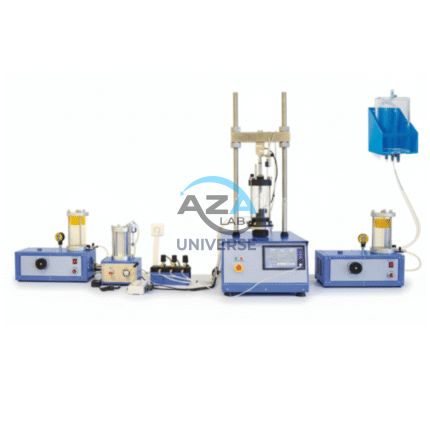
ADVANCED TRIAXIAL TEST SYSTEM (UU–CU–CD CAPABLE) AZA1296
The AZA LAB Advanced Triaxial Test System AZA1296 is a fully automated geotechnical laboratory testing system designed for accurate determination of soil shear strength and deformation characteristics under controlled stress and drainage conditions.
The system supports all major triaxial compression testing modes including:
- Unconsolidated Undrained (UU)
- Consolidated Undrained (CU)
- Consolidated Drained (CD)
Engineered for high-precision geotechnical analysis, the AZA1296 replicates in-situ soil stress conditions to evaluate soil stability, strength behavior, pore pressure response, and failure mechanisms under axial loading.
The system integrates servo-controlled loading, automatic pressure regulation, real-time pore pressure monitoring, automated data acquisition, and advanced software analysis, making it ideal for geotechnical laboratories, civil engineering projects, infrastructure development, research institutions, and academic applications.
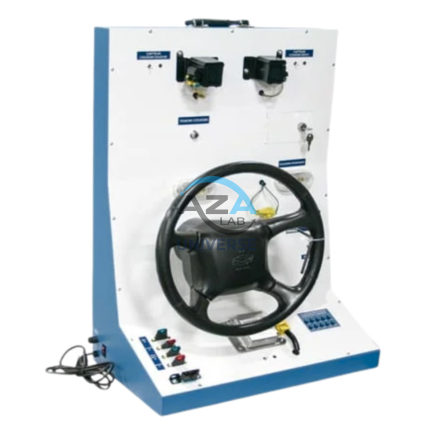
AIR BAG TRAINER AZA1246
The AZA1246 AZALAB Air Bag Trainer is a comprehensive educational training platform designed to demonstrate the structure, operation, diagnostics, and fault analysis of modern automotive airbag systems, also known as Supplemental Restraint Systems (SRS). Built using OEM automotive components, this trainer delivers a realistic learning experience while maintaining complete operational safety.
This system is ideally suited for automotive engineering colleges, ITIs, polytechnic institutes, vocational training centers, and service technician programs, enabling both theoretical instruction and hands-on diagnostics practice.
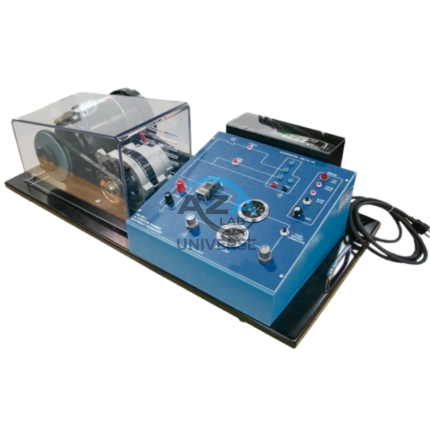
ALTERNATOR TRAINER AZA1247
The AZA1247 AZALAB Alternator Trainer is a hands-on automotive electrical training system designed to demonstrate the working principles, construction, and diagnostics of an automotive alternator with external voltage regulation. Built using OEM automotive components, this trainer provides a realistic and safe learning platform for students, technicians, and trainees to understand vehicle charging systems in depth.
This system is ideal for automotive engineering institutes, ITIs, polytechnics, vocational training centers, and service technician programs, supporting both theoretical instruction and practical experimentation.
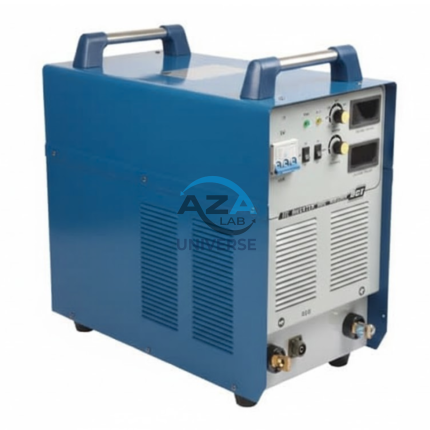
ARC WELDING MACHINE AZA1234
The AZA1234 Arc Welding Machine by A Z A Lab is a high-performance industrial welding solution engineered for demanding fabrication, maintenance, and structural welding applications. Designed using advanced inverter technology, this machine delivers superior arc stability, high efficiency, and reliable welding performance across a wide range of electrode types and materials.
With an inverter frequency of up to 20 kHz, the AZA1234 ensures fast dynamic response, reduced spatter, and excellent weld bead appearance. Its robust electrical design supports a high duty cycle, allowing continuous operation under heavy loads while maintaining consistent welding output—even with output cable lengths of up to 100 meters.
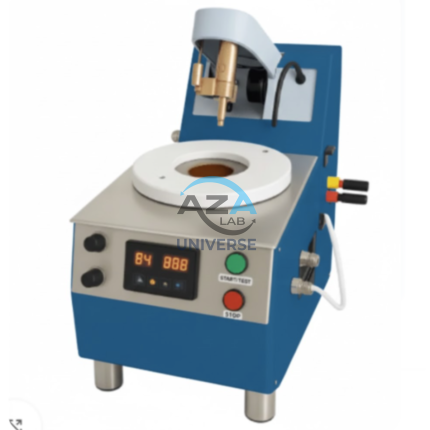
AUOTFLASH AUTOMATED ABEL FLASH POINT ANALYZER AZA1277
The AutoFlash-1277 (Model: AZA1277) from AZA Lab is a fully automated, microcontroller-based Abel Flash Point Analyzer designed for accurate, safe, and repeatable determination of flash points of combustible liquids. Engineered to meet stringent international testing requirements, this advanced instrument conforms to IP 170, ISO 13736, and IS 1448 (Part 20) standards.
Covering a standard temperature range of –30°C to 70°C, extendable up to 110°C, the AZA1277 is ideally suited for laboratories involved in petroleum testing, petrochemical quality control, fuels research, and regulatory compliance.
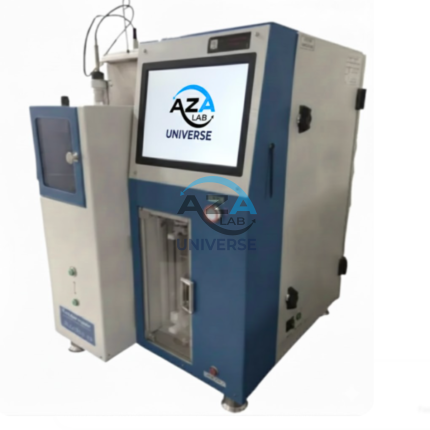
AUTODIST-86 GLASS DISTILLATION UNITAZA1282
The AutoDist-86 Glass Distillation Unit (Model AZA1282) is a high-performance laboratory water distiller designed for the continuous production of high-purity distilled water.
Constructed entirely from borosilicate glass 3.3, the unit ensures zero metallic contamination, excellent thermal resistance, and long operational life. It is ideal for laboratories requiring consistent, low-conductivity distilled water for analytical, pharmaceutical, and research applications.Distillation Performance
- Distillate Output: Up to 4 L/hour (±10%)
- Suitable for routine and medium-scale laboratory demand
- Efficient removal of:
- Dissolved salts
- Heavy metals
- Organic/inorganic impurities
- Microbial contaminants
Related products
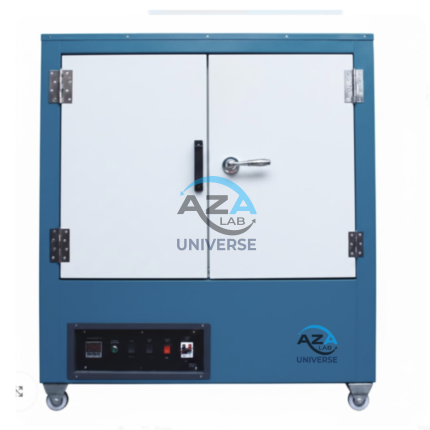
DIGITAL DOUBLE DOOR DRYING OVEN AZA1058
The AZA1058 Digital Double Door Drying Oven from AZALAB is a high-performance, forced-air convection oven engineered for critical drying, sterilization, curing, aging, and material conditioning applications in laboratory, industrial, and research environments. Designed for demanding workflows, it delivers exceptional temperature uniformity, stability, and repeatability, even during continuous operation.
The innovative double-door configuration enhances operational efficiency by improving access control, reducing heat loss during loading/unloading, and enabling better segregation of samples in multi-user or high-throughput environments.
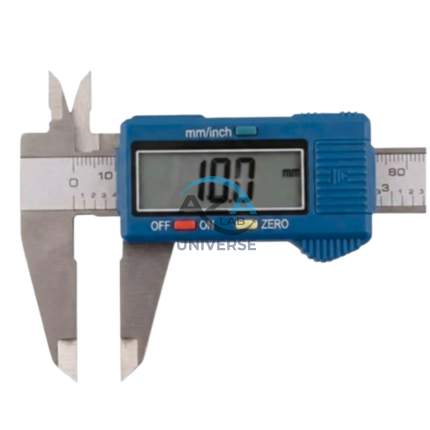
DIGITAL VERNIER CALIPER AZA1079
The Digital Vernier Caliper is a high-precision dimensional measuring instrument widely used in laboratories, engineering workshops, industrial inspection, and research environments. Combining the proven mechanical accuracy of a traditional vernier caliper with the speed and clarity of a digital LCD display, AZA1079 by AZALAB delivers fast, reliable, and repeatable measurement results.
Manufactured from hardened stainless steel, this digital caliper is corrosion-resistant, wear-resistant, and designed for long-term laboratory and industrial use. It is ideal for accurately measuring internal dimensions, external dimensions, depths, and step measurements where precision directly impacts testing outcomes or product quality.
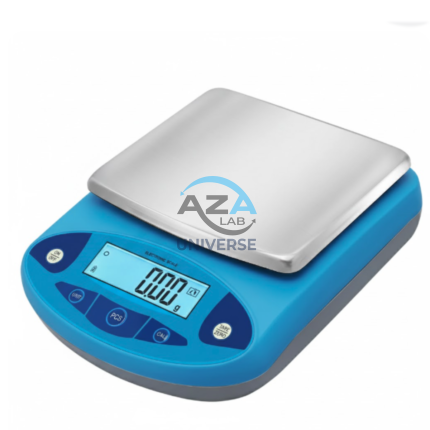
ELECTRONIC BALANCE AZA1090
The AZA1090 Electronic Balance is a high-precision digital laboratory weighing instrument designed for environments where accuracy, repeatability, and compliance are critical. It is widely used in pharmaceutical laboratories, chemical analysis, food testing, environmental science, quality control, and R&D applications, where even minor weight variations can impact results.
Combining advanced load-cell technology with intelligent digital processing, AZA1090 delivers fast, stable, and reliable measurements across a broad range of laboratory tasks.
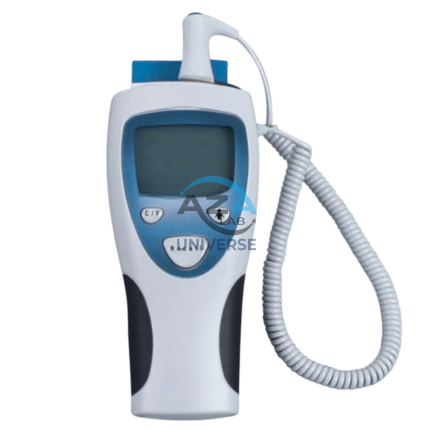
ELECTRONIC THERMOMETER AZA1075
The Electronic Thermometer is a fast-response, high-accuracy temperature measuring instrument widely used across laboratory, industrial, pharmaceutical, medical, HVAC, and food safety environments. Designed with advanced electronic sensing technology and a clear digital display, it delivers reliable and repeatable temperature readings within seconds.
The AZA1075 Electronic Thermometer from AZALAB is engineered for precision, durability, and ease of use. Available in contact probe-based and non-contact infrared (IR) configurations, it supports a wide range of applications—from direct immersion in liquids to hygienic surface temperature measurement.
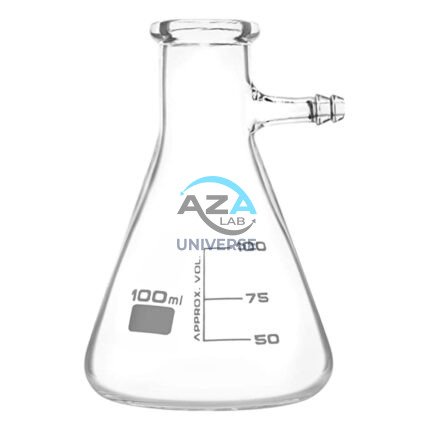
FUNNELS AND FLASKS AZA1048
AZA1048 Borosilicate Glass Funnels & Flasks from AZA LAB (Azalab) are precision-manufactured laboratory glassware designed for accurate measurement, filtration, extraction, titration, distillation, and safe chemical handling. Produced from high-grade borosilicate glass, these products deliver excellent thermal resistance, chemical stability, and mechanical strength, making them suitable for continuous laboratory use.
The AZA1048 range complies with standard laboratory specifications and is widely used in pharmaceutical laboratories, chemical industries, educational institutions, research facilities, and quality-control laboratories.
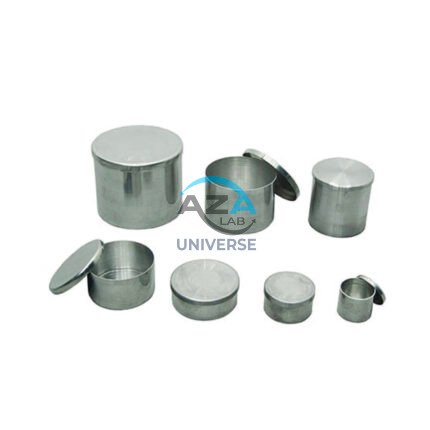
MOISTURE TINS AZA1049
AZA1049 Moisture Tins from Azalab are precision laboratory containers specifically designed for the determination of moisture (water) content in soils, aggregates, powders, and other granular materials. These tins are a fundamental accessory in geotechnical, civil engineering, construction material, and academic laboratories, where accurate moisture measurement is essential for reliable test results.
Manufactured from lightweight aluminum or corrosion-resistant stainless steel, AZA1049 moisture tins are engineered to withstand repeated heating cycles, handling, and long-term laboratory use without deformation or loss of dimensional stability.
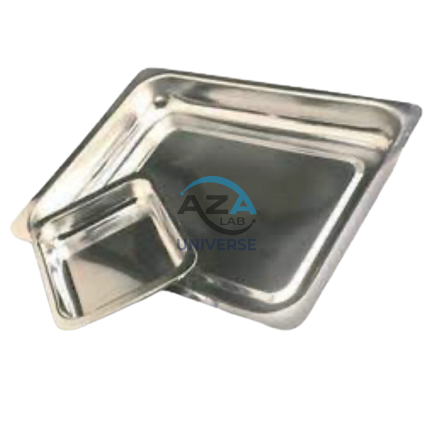
SAMPLING TRAYS AZA1045
AZA1045 Sampling Trays are robust, laboratory-grade trays designed for safe handling, heating, storage, and transfer of bulk material samples in testing and quality control environments. These trays are indispensable tools in geotechnical laboratories, construction material testing labs, soil and aggregate testing facilities, environmental labs, food testing units, and industrial R&D centers.
Specifically engineered to withstand repeated handling and oven heating cycles, AZA1045 trays provide a stable, non-reactive surface for maintaining sample integrity throughout preparation, drying, and evaluation processes.
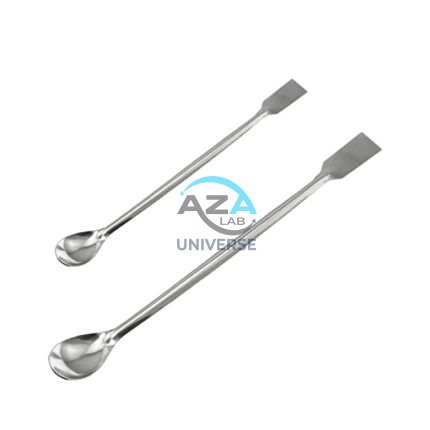
SPATULAS AZA1084
Laboratory spatulas are indispensable hand tools used for precise transferring, mixing, scraping, and handling of solid and semi-solid materials in scientific environments. AZA1084 by AZALAB is designed to meet the demanding requirements of research, analytical, pharmaceutical, food testing, and educational laboratories, where accuracy, cleanliness, and material compatibility are critical.
AZA1084 spatulas are manufactured in stainless steel, polypropylene (PP), and PTFE, allowing laboratories to select the most suitable material based on chemical compatibility, sterilization needs, and workflow preferences. Each variant is engineered for durability, ease of handling, and contamination-free sample transfer.