
 Rock
Rock Aggregate
 Cement
 Concrete
 Soil
Soil Steel
Steel Bitumen/Asphalt
 Security Survey Equipment
 General Items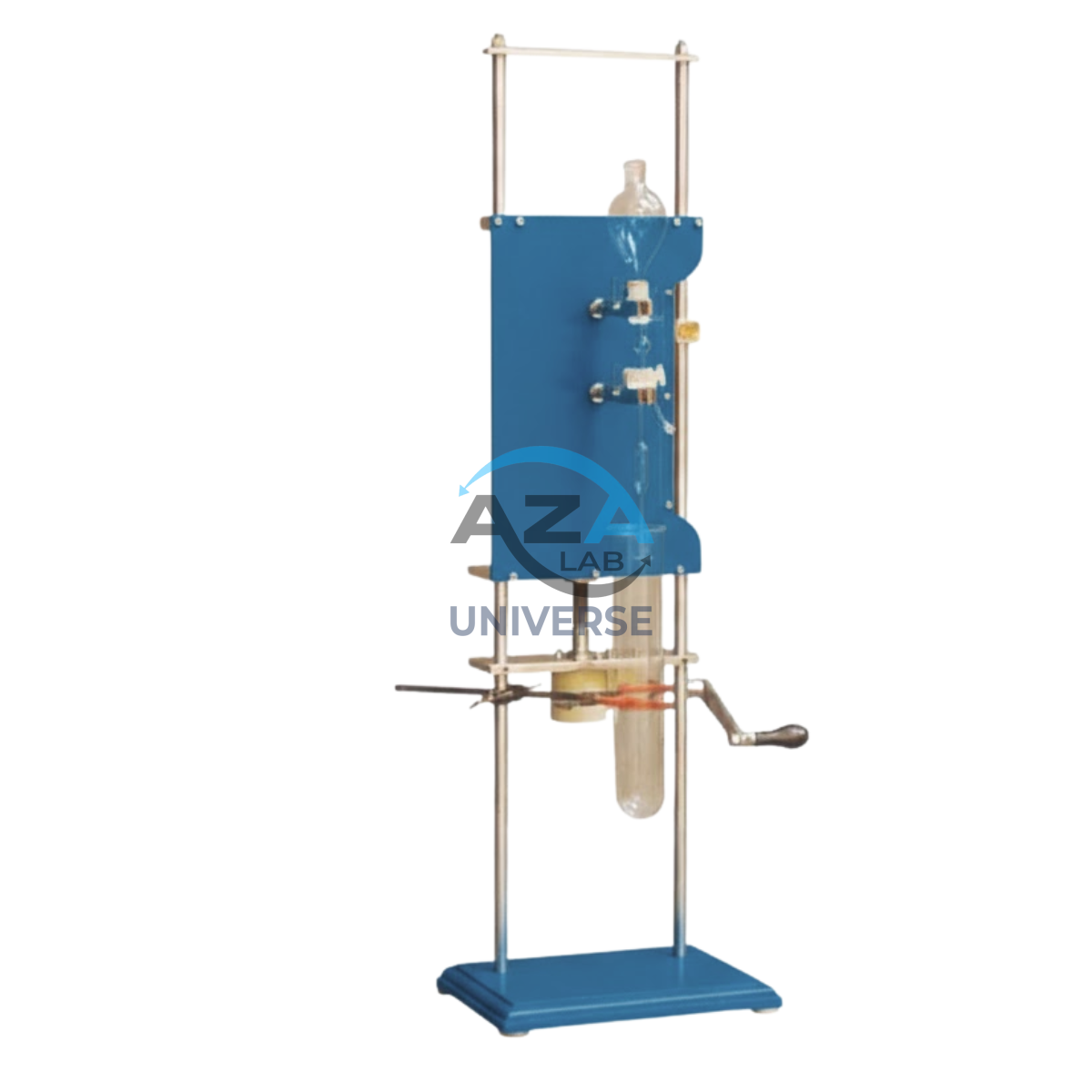
GRAIN SIZE ANALYSIS (PIPETTE METHOD) AZA0856
The AZA0856 Grain Size Analysis (Pipette Method) Apparatus from AZA Lab is a precision testing setup used for determining the distribution of fine soil particles such as silt and clay. It is widely used in geotechnical engineering, civil construction quality control, soil mechanics research, and academic laboratories, particularly where conventional sieve analysis is ineffective for particles finer than 75 microns.
This apparatus is designed for the mechanical analysis of sub-sieve soil particles, expressing quantitatively the proportion by weight of various particle sizes present in a soil sample. The pipette method, based on sedimentation principles and Stokes’ Law, provides accurate and repeatable results for fine-grained soils.
The system consists of a sliding vertical panel operated by a precision screw mechanism, allowing an Anderson pipette to be raised or lowered accurately. A sedimentation tube is held securely below the pipette using a laboratory clamp. The depth of immersion is measured using a millimeter-graduated scale mounted alongside the sliding panel.
The apparatus is supplied complete with a 10 ml Anderson pipette, a 500 ml glass sedimentation tube, and test form pads, conforming to standard laboratory practices.
Description
Working Principle
The AZA0856 operates on the principle of sedimentation of soil particles in a liquid medium (typically distilled water mixed with a dispersing agent such as sodium hexametaphosphate to prevent flocculation). Once a uniform suspension is prepared, soil particles settle under gravity.
According to Stokes’ Law, larger particles settle faster than finer ones. At predetermined time intervals, a fixed volume of suspension is extracted from a known depth using the pipette. The extracted samples are dried and weighed, enabling calculation of the percentage of particles finer than specific sizes.
This method is suitable for particle sizes ranging from 0.002 mm to 0.075 mm and is essential for accurate classification of cohesive soils.
Applications
- Geotechnical investigation and soil profiling
- Classification of fine-grained soils (clays and silts)
- Foundation and subgrade assessment
- Construction quality control and earthworks
- Academic teaching and soil mechanics research
Standards Compliance
- IS 2720 (Part IV) – Grain Size Analysis of Soils
- ASTM D422 – Particle-Size Analysis of Soils
- BS 1377 – Methods of Test for Soils for Civil Engineering Purposes
Technical Specifications
| Component | Specification |
|---|---|
| Model | AZA0856 |
| Sedimentation Cylinder | 1000 ml, borosilicate glass, graduated |
| Pipette Volume | 10 ml Anderson pipette, glass |
| Sedimentation Tube | 500 ml, glass |
| Stand Material | Mild steel / powder-coated aluminium |
| Depth Measurement | Adjustable, mm-graduated scale |
| Particle Size Range | 0.002 mm to 0.075 mm |
| Dispersing Agent | Sodium hexametaphosphate (not included) |
| Test Forms | Pad of 50 sheets (included) |
What’s Included
- 1 × Grain Size Analysis Apparatus with sliding stand (AZA0856)
- 1 × Anderson Pipette, 10 ml (glass)
- 1 × Sedimentation Tube, 500 ml (glass)
- 1 × Test Forms Pad (50 sheets)
Optional Accessories & Spares (At Extra Cost)
- Anderson Pipette – 25 ml
- Sedimentation Tube – 100 ml
- Anderson Pipette – 10 ml (spare)
- Sedimentation Tube – 500 ml (spare)
- Test Forms Pad – 50 sheets
Frequently Asked Questions (FAQ)
Q1: What is the purpose of the pipette method in grain size analysis?
It is used to determine the proportion of fine soil particles smaller than 75 microns that cannot be analyzed using sieves.
Q2: Which standards does AZA0856 comply with?
The apparatus conforms to IS 2720 (Part IV), ASTM D422, and BS 1377.
Q3: Is this method suitable for all soil types?
It is most effective for fine-grained soils such as clays and silts. Coarser soils should be analyzed using sieve methods.
Q4: Is the dispersing agent included?
No. Dispersing agents such as sodium hexametaphosphate must be procured separately.
Q5: How accurate is the pipette method?
When performed correctly, it provides highly accurate and repeatable measurements of fine soil particle distribution.
Additional information
| Pipette Volume |
10 ml with 0.1 ml divisions |
|---|---|
| Sedimentation Cylinder |
1000 ml, Borosilicate Glass, Graduated |
| Sampling Depth |
Adjustable (commonly 10 cm below water level) |
You may also like…
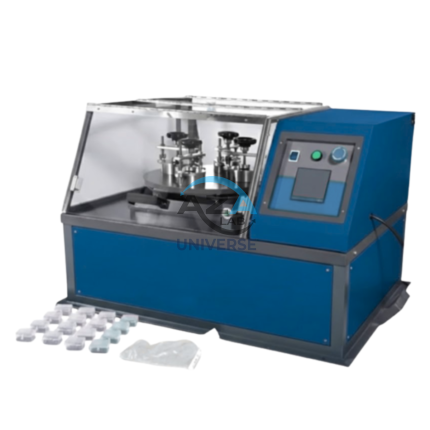
Abrasion Testing Machine for Glazed Tiles AZA1262
The AZA LAB Abrasion Testing Machine for Glazed Tiles (AZA1262) is a robust, high-performance laboratory instrument engineered for precise and high-speed abrasion resistance testing of glazed ceramic tiles. Fully compliant with BIS 13630-11 and EN ISO 10545-7, this machine is designed to ensure reliable evaluation of tile durability under simulated real-world wear conditions.
With the capability to test up to four specimens simultaneously, the AZA1262 significantly improves testing efficiency while maintaining exceptional accuracy and repeatability—making it ideal for tile manufacturers, certification laboratories, and quality control departments
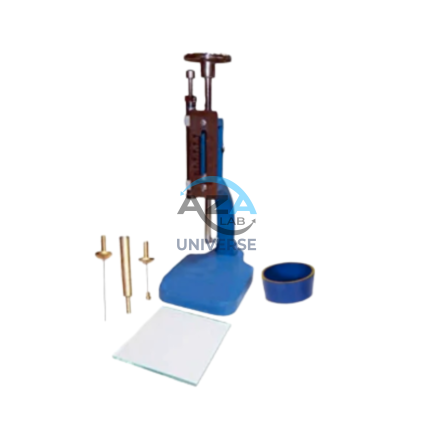
Related products
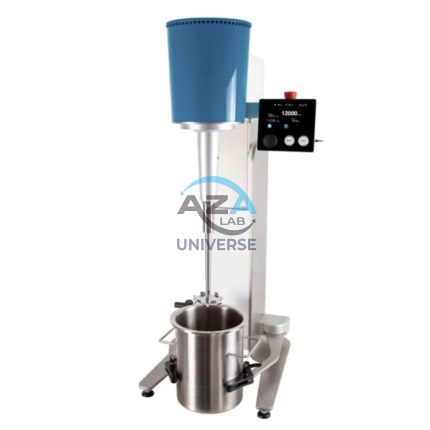
HIGH SPEED STIRRER AZA0855
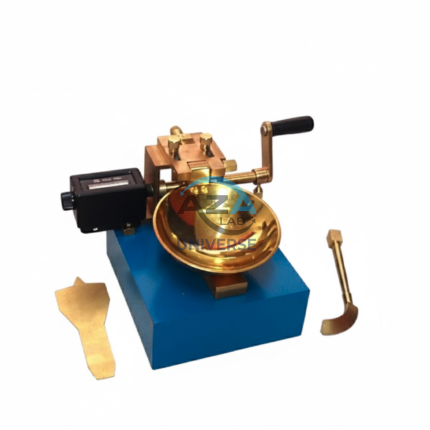
LIQUID LIMIT DEVICE WITH COUNTER AZA0853
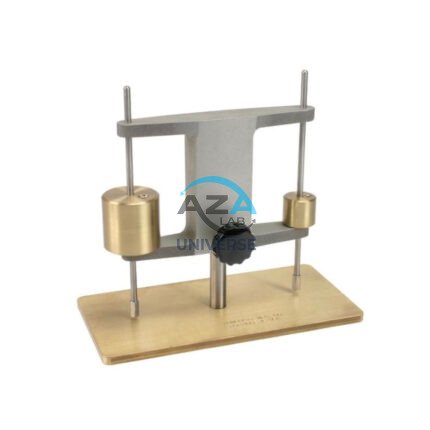
The AZA0853 Liquid Limit Device with Counter from AZALAB is a precision-engineered instrument used for determining the liquid limit of soils in accordance with the Casagrande method. This test is a fundamental component of soil classification and geotechnical investigation, providing critical insight into the plasticity, compressibility, and shear strength of fine-grained soils.
Designed for reliable, repeatable, and standardized testing, the AZA0853 is widely used in geotechnical laboratories, civil engineering departments, construction quality control labs, and academic institutions.
Principle of Liquid Limit Test (Casagrande Method)
The liquid limit is defined as the water content at which soil transitions from a plastic state to a liquid state. In practice, it is determined as the moisture content at which a standard groove cut in the soil sample closes over a length of 12.5 mm under 25 blows of the liquid limit apparatus.
The AZA0853 consists of a polished brass cup mounted on an adjustable bracket. The cup is repeatedly raised and dropped from a fixed height of 1 cm onto a hard rubber base by means of a manually operated cam mechanism. A built-in mechanical counter accurately records the number of blows, ensuring compliance with testing standards and reducing operator error.
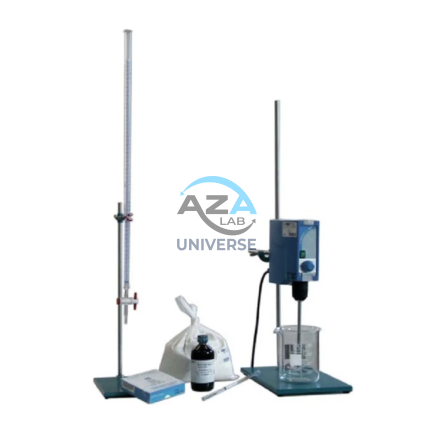
METHYLENE BLUE TEST SET AZA0860
Standards Compliance
- EN 933-9 – Tests for geometrical properties of aggregates (Methylene Blue Test)
- NF P94-068
- UNE 83 180
- UNI 8520-15
- ASTM C837 – Methylene Blue Index of Clay in Fine Aggregate
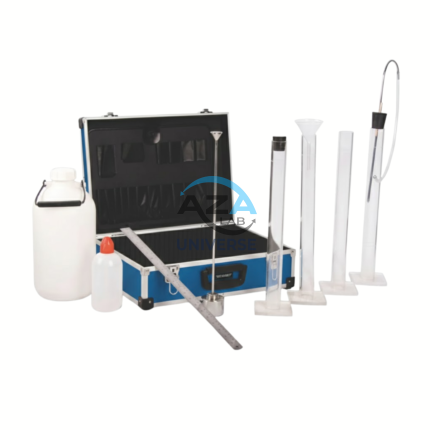
SAND EQUIVALENT TEST SET AZA0859
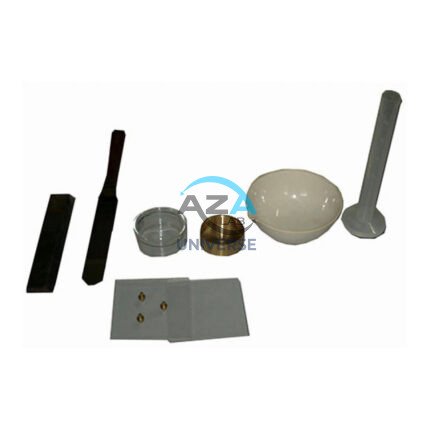
SHRINKAGE LIMIT SET AZA0849
Standards Compliance
The AZA0849 Shrinkage Limit Set conforms to major national and international testing standards, ensuring reliable and universally accepted test results:- IS 2720 (Part VII)
- ASTM D427
- BS 1377
- AASHTO T 92
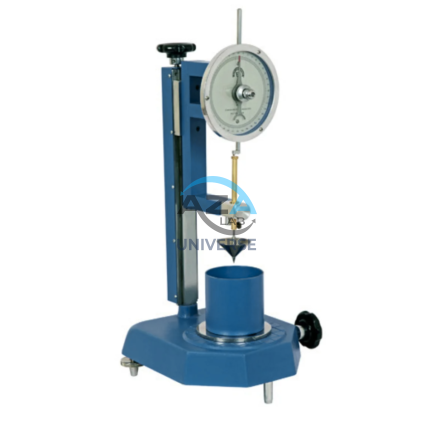
SOIL CONE PENETROMETER AZA0851
Principle of Operation
A soil paste prepared at a known moisture content is placed in the sample cup. The stainless steel cone, of specified mass and angle, is allowed to penetrate the soil freely for 5 seconds. The depth of penetration (up to 20 mm) is measured using a precision depth gauge. The moisture content corresponding to 20 mm penetration is defined as the liquid limit of the soil.Standards Compliance
- IS 2720 (Part 5) – Determination of liquid and plastic limits
- ASTM D4318 – Liquid Limit, Plastic Limit, and Plasticity Index of Soils
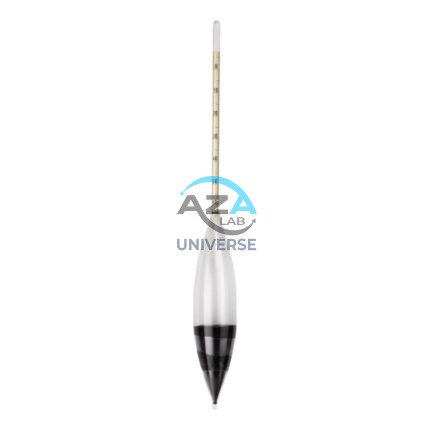
SOIL HYDROMETER AZA0858
WATER LEVEL INDICATOR AZA0871
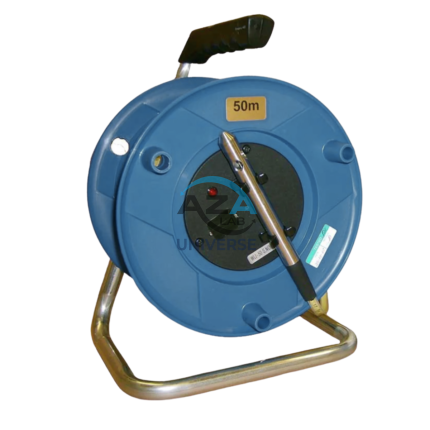
The AZA0871 Water Level Indicator from Azalab is a high-precision electronic instrument designed for accurate measurement of groundwater levels in boreholes, wells, standpipes, and observation tubes. It is an essential tool for professionals involved in groundwater monitoring, environmental site assessments, hydrological investigations, geotechnical projects, and dewatering operations.
Accurate water level measurement is fundamental for understanding aquifer behavior, monitoring seasonal or pumping-induced fluctuations, assessing contamination plumes, and supporting the design of foundations, irrigation systems, and water resource management plans. The AZA0871 provides a reliable, fast, and field-ready solution for both static and dynamic water level measurements.