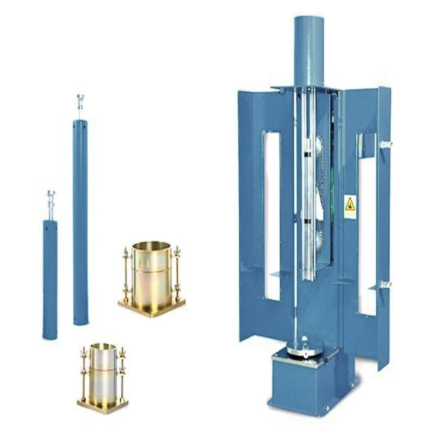
AZA 0886 RELATIVE DENSITY TEST

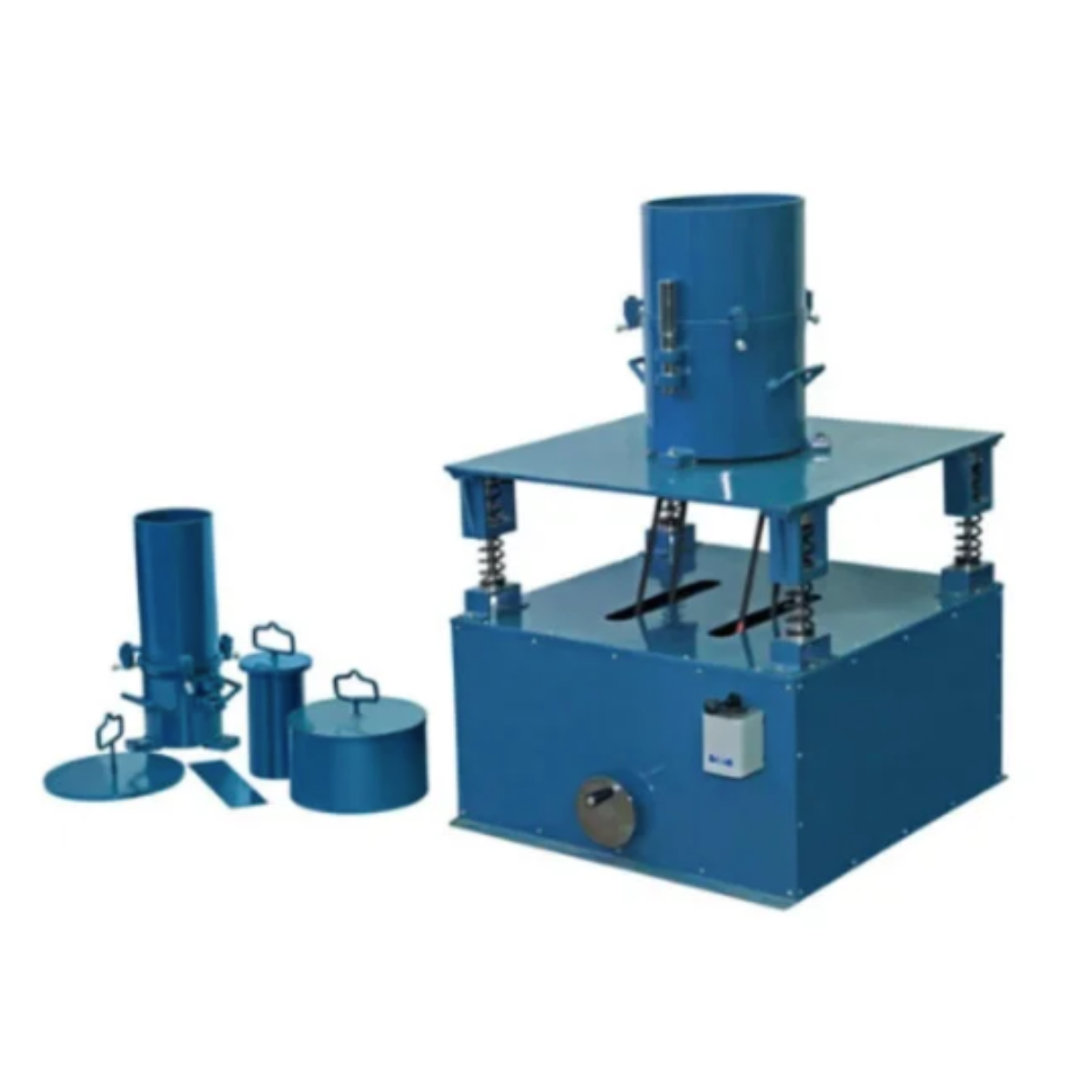
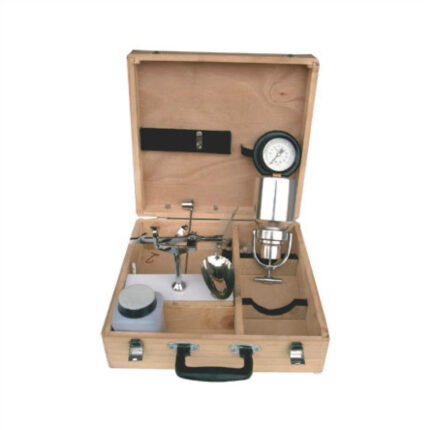
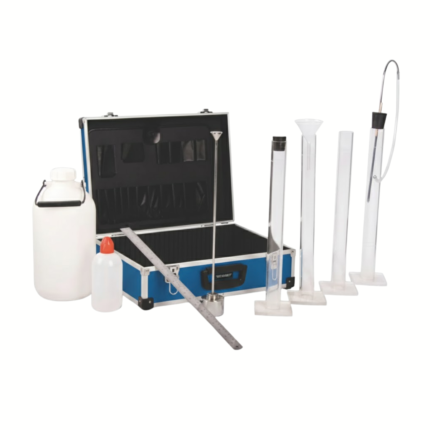
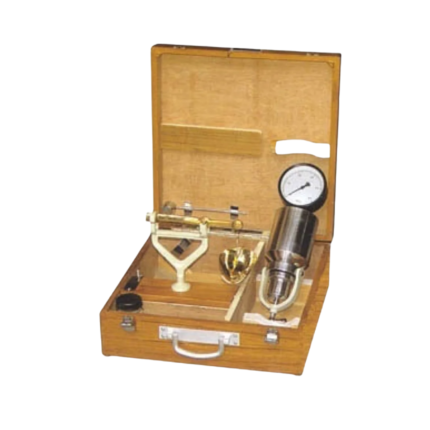
  • Relative Density Test: Essential apparatus for determining the relative density of cohesionless, free-draining soils.
  • Vibratory Table: Features a high-frequency vibratory table (approx. 3600 vibrations/minute) to achieve maximum soil density.
  • Dual Mould Capacity: Includes cylindrical metal unit weight moulds of both 3000 ml and 15000 ml capacity.
  • Amplitude Control: Variable amplitude adjustment for precise compaction control.
  • Surcharge Weights: Supplied with surcharge weights to achieve the required pressure during compaction.
  • Standard Compliant: Meets the essential requirements of IS 2720 (Part XIV), ASTM D 4253 & ASTM D 4254.
  • Azalab Quality: Robust and reliable equipment for accurate geotechnical testing.
Category:
Description

Description

AZA 0886: Relative Density Test Apparatus for Cohesionless Soil Characterization

The AZA 0886 Relative Density Test apparatus from Azalab is a crucial piece of geotechnical testing equipment designed for the accurate determination of the relative density (or density index) of cohesionless, free-draining soils. Unlike cohesive soils, the compaction characteristics of sands and gravels are best described by their relative density, which quantifies their state of compactness relative to their loosest and densest possible states. This parameter is indispensable for predicting the behavior of granular soils under various loading conditions, assessing liquefaction potential during seismic events, and designing foundations, embankments, and earth-retaining structures.

The core of the AZA 0886 system is a powerful vibratory table. This cushioned steel vibrating deck, typically around 75cm x 75cm, is capable of generating approximately 3600 vibrations per minute under a standard load. The amplitude of vibration is precisely variable, allowing for adjustments in steps (e.g., from 0.05mm to 0.65mm) to suit different soil types and testing requirements. This controlled vibration simulates field compaction conditions, enabling the laboratory determination of the maximum dry density of the soil.

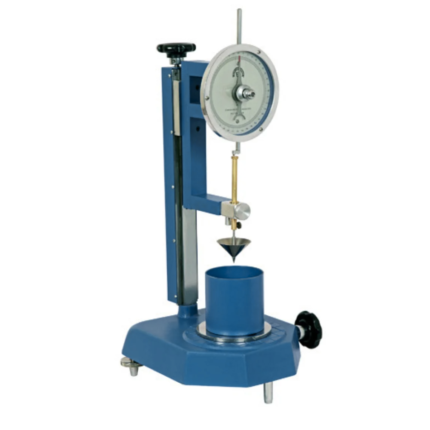
The apparatus comes complete with two cylindrical metal unit weight moulds of differing capacities: a 3000 ml mould and a larger 15000 ml mould. These varying sizes accommodate different maximum particle sizes in the soil sample, ensuring compliance with relevant testing standards. Each mould is accompanied by a guide sleeve with clamp assembly, a surcharge base plate with a handle, and the necessary surcharge weights. These weights, in conjunction with the base plate, apply a standardized pressure (e.g., equivalent to 140 kg/cm²) on the soil sample during the vibration process, helping to achieve the densest possible state. A dial gauge (e.g., 0.01mm x 50mm travel) with an extension piece is also included for precise measurement of vertical deformation during the compaction process.

The procedure for determining relative density involves two main steps: first, establishing the minimum density of the soil by carefully pouring it into the mould to achieve the loosest possible state. Second, determining the maximum density by vibrating the soil in the mould under surcharge until no further compaction occurs. By measuring the dry unit weight of the soil in these two extreme states, along with its natural or in-situ dry unit weight, the relative density can be calculated using a specific formula involving void ratios or dry densities. This robust method, facilitated by the AZA 0886, provides well-defined results for soils that do not respond well to conventional moisture-density (Proctor) compaction tests.

Azalab ensures that the AZA 0886 Relative Density Test apparatus is manufactured to high standards, meeting the essential requirements of key international standards such as IS 2720 (Part XIV), ASTM D 4253 (Standard Test Methods for Maximum Index Density and Unit Weight of Soils Using a Vibratory Table), and ASTM D 4254 (Standard Test Methods for Minimum Index Density and Unit Weight of Soils and Calculation of Relative Density). For further understanding of the theory and application of relative density in geotechnical engineering, resources from reputable bodies like ASTM International or textbooks on “Soil Mechanics and Foundation Engineering” are highly recommended.

By utilizing the AZA 0886 Relative Density Test equipment, laboratories can accurately characterize the compactness of cohesionless soils, providing vital data for engineers to make informed decisions on soil improvement, foundation design, and overall project stability.


Specifications for the AZA 0886 RELATIVE DENSITY TEST

  • Model Number: AZA 0886
  • Test Type: Relative Density Test for cohesionless, free-draining soils.
  • Vibratory Table:
    • Deck Size: Approximately 75cm x 75cm (cushioned steel vibrating deck).
    • Frequency: Approximately 3600 vibrations per minute (under 11.5 kg load).
    • Amplitude: Variable between 0.05mm to 0.65mm (in steps of 0.05mm to 0.25mm, 0.25mm to 0.45mm, and 0.45mm to 0.65mm).
    • Power Supply: 415V, Three Phase (or as specified).
  • Cylindrical Metal Unit Weight Moulds:
    • Capacity 1: 3000 ml
    • Capacity 2: 15000 ml
  • Accessories per Mould:
    • Guide sleeve with clamp assembly.
    • Surcharge base plate for mould.
    • Handle for surcharge base plate.
    • Surcharge weight(s): Total weight (together with surcharge base plate and handle) equivalent to 140 kg/cm² for each mould.
  • Measurement:
    • Dial Gauge: 0.01mm x 50mm travel.
    • Extension piece: 25mm for dial gauge.
  • Compliance: IS 2720 (Part XIV), ASTM D 4253, ASTM D 4254.
  • Construction: Heavy-duty steel and precision-machined components for durability.
  • Usage/Application: Determination of the relative density of cohesionless free-draining soils.

FREQUENTLY ASKED QUESTIONS (FAQ) about the AZA 0886 RELATIVE DENSITY TEST

Q1: What is the primary purpose of the AZA 0886 Relative Density Test apparatus? A1: The AZA 0886 is primarily used to determine the relative density (or density index) of cohesionless, free-draining soils such as sands and gravels. This helps assess their compactness and predict their behavior under load.

Q2: Why is a vibratory table used in this test instead of impact compaction? A2: Cohesionless soils do not compact effectively with impact methods. The vibratory table in the AZA 0886 simulates dynamic compaction, allowing for the accurate determination of the maximum dry density and ensuring a well-defined density relationship.

Q3: What soil types is the Relative Density Test suitable for? A3: This test, performed with the AZA 0886, is specifically designed for cohesionless, free-draining soils (e.g., sands, gravels) that may contain a small percentage of fines but still behave as granular materials.

Q4: What are the two main densities determined during a relative density test? A4: The test determines the maximum index density (densest possible state achieved by vibration) and the minimum index density (loosest possible state achieved by pouring) of the soil. These values are used to calculate the relative density.

Q5: Are different mould capacities provided with the AZA 0886? A5: Yes, the AZA 0886 typically includes two cylindrical metal unit weight moulds: a 3000 ml capacity and a 15000 ml capacity, to accommodate different soil particle sizes as per standards.

Q6: What international standards does the AZA 0886 comply with? A6: The AZA 0886 meets the essential requirements of IS 2720 (Part XIV), ASTM D 4253 (for maximum density), and ASTM D 4254 (for minimum density and calculation of relative density).

Q7: How does relative density data benefit civil engineering projects? A7: Relative density data is crucial for assessing the stability of granular soil foundations, evaluating the potential for soil liquefaction in earthquake-prone areas, and guiding compaction efforts for granular fills in road and railway construction.

Additional information

Additional information

Model Number

AZA 0886

Test Type

Relative Density Test for cohesionless, free-draining soils.

Compliance

IS 2720 (Part XIV), ASTM D 4253, ASTM D 4254.

Construction

Heavy-duty steel and precision-machined components for durability.

Usage/Application

Determination of the relative density of cohesionless free-draining soils.