 Rock
Rock Aggregate
 Cement
 Concrete
 Soil
Soil Steel
Steel Bitumen/Asphalt
 Security Survey Equipment
 General Items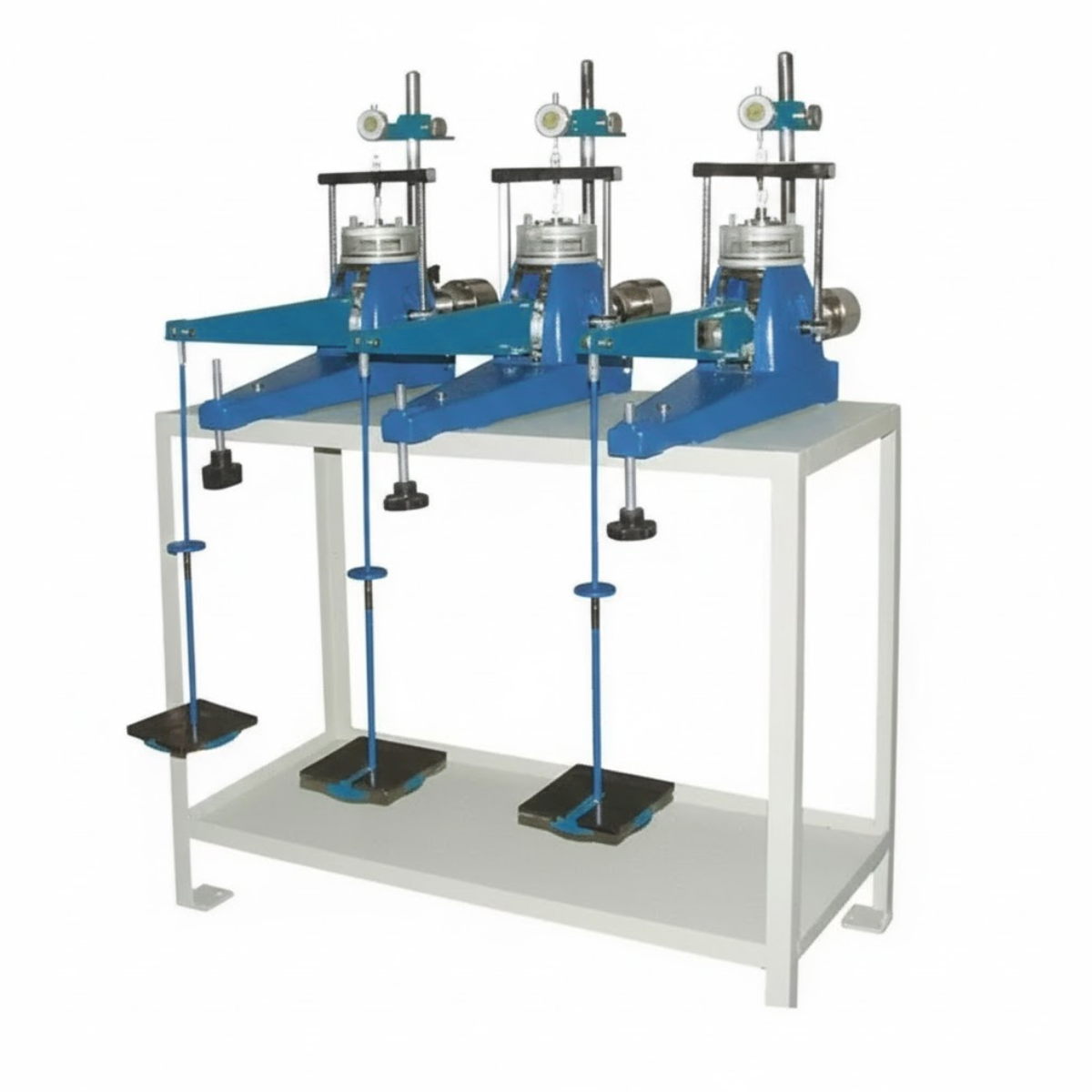
CONSOLIDATION APPARATUS(ELECTRONIC BENCH MODEL) AZA0899
The Electronic Bench Model Consolidation Apparatus from Azalab is a precision-engineered geotechnical testing instrument designed for accurate determination of soil consolidation characteristics. It is used to evaluate the rate and magnitude of volume change in soil specimens subjected to controlled static loading, enabling reliable prediction of long-term settlement in foundations, embankments, and other civil engineering structures. The compact bench-mounted configuration makes it especially suitable for laboratories with limited working space while maintaining high accuracy and stability.
Description
Working Principle
A laterally confined soil specimen is subjected to incremental vertical loads under drained conditions. The resulting deformation over time is continuously measured using an electronic displacement transducer. The recorded data is used to generate consolidation curves and calculate essential soil parameters in accordance with established consolidation theory and effective stress principles.
Key Applications
• Settlement analysis of foundations and earth structures
• Evaluation of compressibility characteristics of cohesive soils
• Geotechnical investigation for buildings, roads, and embankments •
Academic research and soil mechanics laboratories
• Quality control and design verification in civil engineering projects
Salient Features
• Electronic benchtop consolidation apparatus (oedometer)
• High-precision LVDT for continuous deformation measurement
• Automated data acquisition with digital readout and PC connectivity
• Compact and rigid bench model design
• User-friendly operation with reduced manual intervention
• Suitable for undisturbed and remoulded soil specimens
• Designed for long-term reliability and repeatable results
Test Parameters Determined
• Coefficient of consolidation (c_v)
• Compression index (C_c)
• Swelling / recompression index (C_s)
• Preconsolidation pressure (p′_c)
• Void ratio versus effective stress relationship
• Time–deformation characteristics
Technical Specifications Test Type:
Soil consolidation (Oedometer test) Configuration: Bench-mounted, compact design Loading System: – Dead weights with lever arm arrangement – Optional motorised loading system with controlled loading rates Consolidation Cell Sizes: 50 mm, 63.5 mm, 75 mm diameter (typical) Displacement Measurement: Electronic LVDT (Linear Variable Differential Transformer) Data Acquisition: Digital data logger with display and PC interface (USB / RS-232) Software: Data logging, graphical plotting (e–log p, deformation vs time), and parameter calculation Maximum Load Capacity: Typically up to 1000 kPa or higher (model dependent) Power Supply: 230 V AC, 50 Hz Construction: Heavy-duty steel frame with corrosion-resistant components
Standards Compliance • ASTM D2435 – One-Dimensional Consolidation Properties of Soils • BS 1377 (Part 5) – Compressibility, Permeability and Durability Tests
Optional Accessories • Motorised loading unit • Additional consolidation cells and rings • Advanced data acquisition and analysis software • Calibration accessories
Frequently Asked Questions (FAQ)
What is the purpose of a consolidation test? The consolidation test is used to determine how soils compress over time under load, allowing engineers to predict settlement magnitude and rate.
Why use an electronic consolidation apparatus? Electronic measurement ensures higher accuracy, continuous data recording, elimination of reading errors, and improved testing efficiency compared to dial gauge systems.
Is the apparatus suitable for small laboratories? Yes. The bench model configuration is specifically designed for space-constrained laboratory environments.
Can both undisturbed and remoulded samples be tested? Yes. The apparatus supports testing of both undisturbed and remoulded soil specimens when prepared correctly.
What maintenance is required? Routine cleaning, periodic calibration of the LVDT, and inspection of the loading mechanism are recommended to ensure long-term accuracy and reliability.
Summary
The Electronic Bench Model Consolidation Apparatus offers a reliable, space-saving, and high-precision solution for soil consolidation testing. Its electronic data acquisition system, robust construction, and compliance with international standards make it an ideal choice for professional geotechnical laboratories, consultants, and academic institutions.
Additional information
| Model Number |
AZA 0899 |
|---|---|
| Test Type |
Soil Consolidation (Oedometer Test) |
| ConfigurationBench Model, compact dePower Supply |
Standard electrical supply (e.g., 230V AC, 50Hz) |
| Material Construction |
Robust steel frame, corrosion-resistant components.sign |
| Dimensions |
Compact benchtop design. |
Related products

DYNAMIC CONE PENETROMETER AZA0872
The AZA0872 Dynamic Cone Penetrometer (DCP) from Azalab is a robust, field-proven instrument designed for rapid in-situ evaluation of soil strength, stiffness, and compaction. It is extensively used by civil engineers, geotechnical consultants, and construction teams for pavement design, quality control, and site investigation works.
The DCP test provides a fast and economical method to assess the strength of subgrades, sub-bases, and granular base course layers, with results that can be directly correlated to California Bearing Ratio (CBR) values. This eliminates the need for time-consuming laboratory testing or undisturbed soil sampling, enabling immediate decision-making at site.
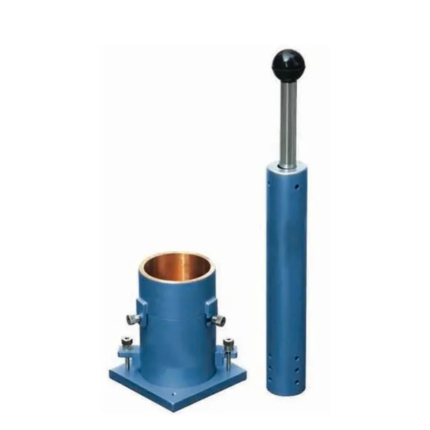
HEAVY COMPACTION TEST AZA0866
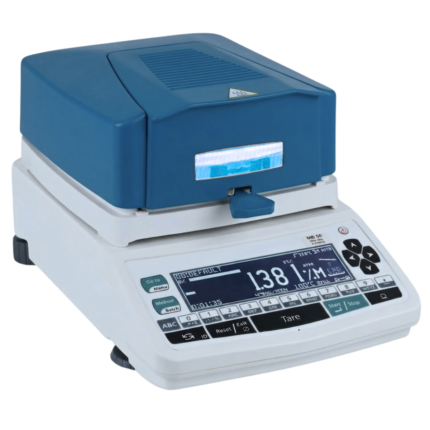
INFRARED MOISTURE METER AZA0875
The AZA0875 Infrared Moisture Meter from Azalab is a high-precision analytical instrument designed for fast, accurate moisture content determination across a wide range of materials. Utilizing advanced infrared (halogen) heating technology, the AZA0875 significantly reduces analysis time compared to conventional oven-drying methods, delivering reliable results within minutes.
This instrument is ideally suited for geotechnical laboratories, construction quality control, chemical and pharmaceutical industries, food processing, and material testing laboratories, where rapid and repeatable moisture data is essential for process control and compliance.
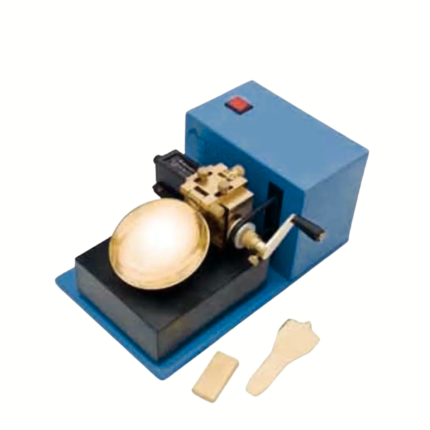
LIQUID LIMIT DEVICE (MOTORISED) AZA0854
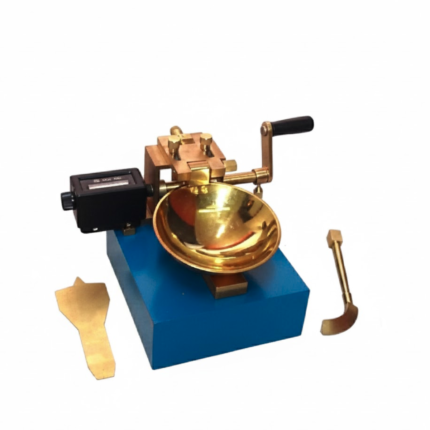
LIQUID LIMIT DEVICE WITH COUNTER AZA0853
The AZA0853 Liquid Limit Device with Counter from AZALAB is a precision-engineered instrument used for determining the liquid limit of soils in accordance with the Casagrande method. This test is a fundamental component of soil classification and geotechnical investigation, providing critical insight into the plasticity, compressibility, and shear strength of fine-grained soils.
Designed for reliable, repeatable, and standardized testing, the AZA0853 is widely used in geotechnical laboratories, civil engineering departments, construction quality control labs, and academic institutions.
Principle of Liquid Limit Test (Casagrande Method)
The liquid limit is defined as the water content at which soil transitions from a plastic state to a liquid state. In practice, it is determined as the moisture content at which a standard groove cut in the soil sample closes over a length of 12.5 mm under 25 blows of the liquid limit apparatus.
The AZA0853 consists of a polished brass cup mounted on an adjustable bracket. The cup is repeatedly raised and dropped from a fixed height of 1 cm onto a hard rubber base by means of a manually operated cam mechanism. A built-in mechanical counter accurately records the number of blows, ensuring compliance with testing standards and reducing operator error.
SAND EQUIVALENT TEST SET AZA0859

SHRINKAGE LIMIT SET AZA0849
Standards Compliance
The AZA0849 Shrinkage Limit Set conforms to major national and international testing standards, ensuring reliable and universally accepted test results:- IS 2720 (Part VII)
- ASTM D427
- BS 1377
- AASHTO T 92