
 Rock
Rock Aggregate
 Cement
 Concrete
 Soil
Soil Steel
Steel Bitumen/Asphalt
 Security Survey Equipment
 General Items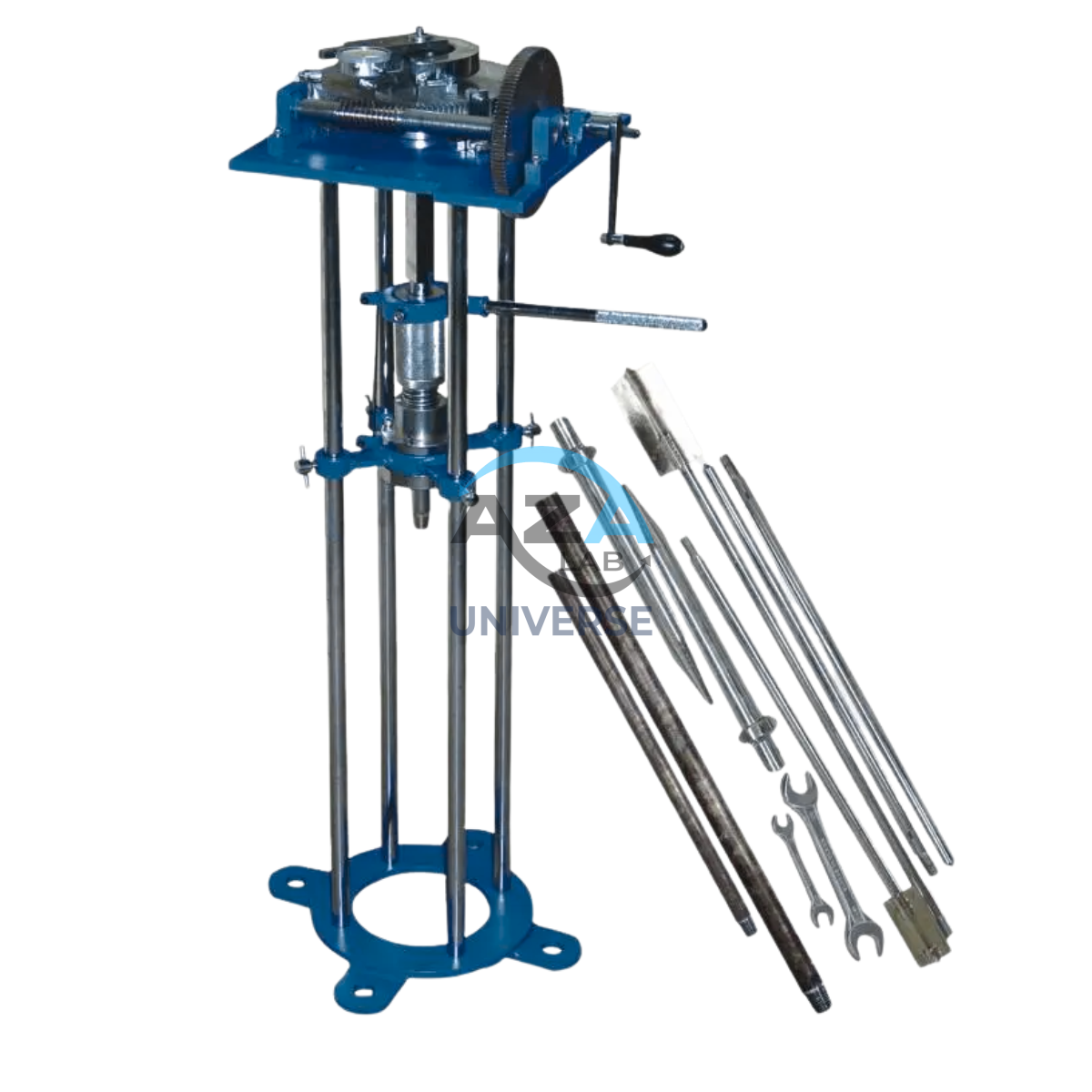
IN-SITU VANE SHEAR TEST AZA0922
The AZA0922 In-Situ Vane Shear Test Apparatus by Azalab is a precision field instrument designed for the direct determination of undrained shear strength (cᵤ) of soft to medium cohesive soils in their natural, undisturbed condition. It is an essential tool for geotechnical site investigations where laboratory sampling is difficult or where soil disturbance must be minimized.
This apparatus is especially effective for soft and sensitive clays and silts, providing reliable strength parameters for foundation design, embankment stability, and earthworks across varied field conditions
Description
Purpose and Significance
The in-situ vane shear test is a well-established field method for measuring the shear resistance of saturated cohesive soils without the need for sample extraction. By applying controlled torque to a cruciform vane embedded in the soil, the apparatus determines the soil’s resistance to shear failure directly in the ground.
The AZA0922 also enables soil sensitivity determination by measuring both undisturbed and remolded shear strength, which is critical for evaluating the behavior of sensitive clays under construction disturbance.
Applications
The AZA0922 is widely used in:
-
Geotechnical site investigations
-
Foundation and pile design in soft clay deposits
-
Embankment and slope stability studies
-
Retaining wall and excavation analysis
-
Dredging and soft sediment characterization
-
Infrastructure projects such as roads, bridges, dams, and buildings
Working Principle
-
A cruciform vane is pushed into the soil at the required depth.
-
Torque is applied at a controlled rate using a geared torque head.
-
Soil fails along a cylindrical shear surface around the vane.
-
Maximum torque at failure is recorded.
-
Undrained shear strength (cᵤ) is calculated using vane dimensions and applied torque.
-
For sensitivity, the soil is remolded by rapid rotation and the test is repeated.
Construction & Key Features
-
Torque Applicator Assembly
Heavy-duty, base-mounted system with geared crank for smooth and controlled torque application. -
Torque Measurement System
Calibrated split proving ring with high-precision dial gauge and conversion chart. -
Cruciform Vanes
Manufactured from high-grade steel for durability and minimal soil disturbance.
Standard H/D ratio of 2:1 as per standards. -
Extension & Dummy Rods
Square cross-section rods with secure couplings for testing at various depths.
Dummy rods provided for friction correction. -
Low-Friction Mechanism
Thrust collars/bearings minimize rod friction to ensure accurate torque measurement. -
Rotation Indicator
Allows precise monitoring of angular displacement during testing. -
Detachable Stand
Provides stable anchoring during field operation. -
Portable Design
Supplied with a sturdy carrying case for easy transport and protection.
Standards Compliance
The AZA0922 is designed and manufactured in compliance with:
-
IS 4434:1982 (Reaffirmed 2016) – Field Vane Shear Test for Cohesive Soils
-
ASTM D2573 – Field Vane Shear Test in Cohesive Soil
-
ISO 22476-9 – Geotechnical Field Vane Test
Specifications
| Parameter | Specification |
|---|---|
| Model | AZA0922 |
| Test Method | In-Situ Vane Shear Test |
| Application | Undrained shear strength (cᵤ) & sensitivity |
| Soil Type | Soft to medium cohesive soils (clays, silts) |
| Torque Capacity | Up to 2000 kgf·cm (≈200 N·m) |
| Torque Measurement | Split proving ring with precision dial gauge |
| Vane Sizes Supplied | 37.5 × 75 mm, 50 × 100 mm |
| Vane Material | High-grade steel |
| Torque Rods | Square section, multiple lengths |
| Friction Control | Bearings / thrust collars with dummy rods |
| Stand | Detachable, heavy-duty |
| Carrying Case | Included |
| Standards | IS 4434, ASTM D2573, ISO 22476-9 |
| Country of Origin | Made in India |
Frequently Asked Questions (FAQ)
Q1: What does the AZA0922 measure?
It measures the undrained shear strength (cᵤ) of cohesive soils directly in the field.
Q2: Which soils are suitable for this test?
Soft to medium saturated clays and silts. It is not suitable for sandy or gravelly soils.
Q3: Why is in-situ testing preferred for soft clays?
Because it minimizes soil disturbance, providing more accurate strength values than laboratory tests on disturbed samples.
Q4: Can soil sensitivity be determined?
Yes. By comparing undisturbed and remolded shear strength values.
Q5: Is the apparatus suitable for field conditions?
Yes. It is robust, portable, and designed specifically for demanding field environments.
Additional information
| Model |
AZA 0922 |
|---|---|
| Test Method |
In-Situ Vane Shear Test (Field Vane Test) |
| Stand |
Detachable, robust stand for anchoring the instrument. |
| Construction |
Heavy-duty, durable components suitable for field conditions. |
| Country of Origin |
Made in India. |
| Standards Compliance |
IS 4434:1982 (Reaffirmed 2016), ASTM D2573, ISO 22476-9. |
Related products
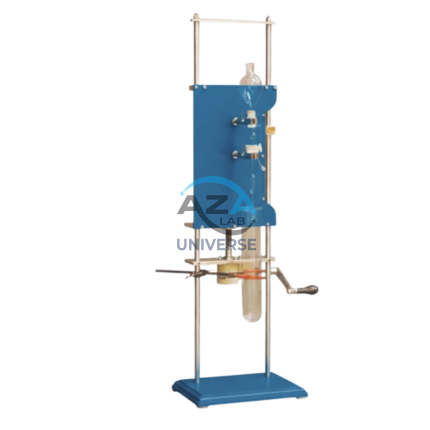
GRAIN SIZE ANALYSIS (PIPETTE METHOD) AZA0856
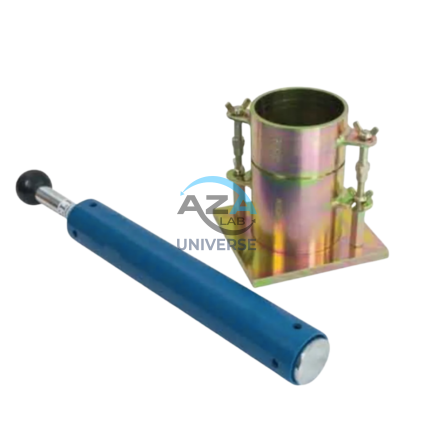
HEAVY COMPACTION TEST AZA0865
-
- Specify target field compaction densities
- Control moisture during earthwork
- Ensure long-term stability and load-bearing performance
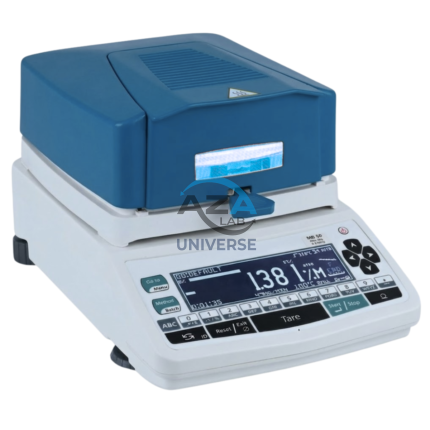
INFRARED MOISTURE METER AZA0875
The AZA0875 Infrared Moisture Meter from Azalab is a high-precision analytical instrument designed for fast, accurate moisture content determination across a wide range of materials. Utilizing advanced infrared (halogen) heating technology, the AZA0875 significantly reduces analysis time compared to conventional oven-drying methods, delivering reliable results within minutes.
This instrument is ideally suited for geotechnical laboratories, construction quality control, chemical and pharmaceutical industries, food processing, and material testing laboratories, where rapid and repeatable moisture data is essential for process control and compliance.
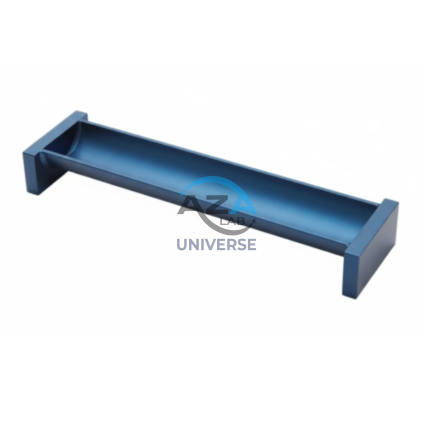
LINEAR SHRINKAGE MOULD AZA0850
The AZA0850 Precision Linear Shrinkage Mould from AZALAB is a compact and highly accurate laboratory instrument designed for determining the linear shrinkage of fine-grained cohesive soils in accordance with BS 1377-2. This test is a key component of soil classification and is especially important in identifying shrink–swell behavior of clays and expansive soils.
Linear shrinkage testing measures the reduction in length of a soil specimen upon drying, expressed as a percentage of its original length. The results provide valuable insight into soil expansiveness, volume stability, and suitability for foundations, pavements, and earthworks.
Manufactured from high-quality brass or stainless steel, the AZA0850 mould offers precise internal dimensions, excellent corrosion resistance, and a smooth polished finish for easy sample preparation and removal. Its robust construction ensures repeatable, reliable results even under high-frequency laboratory use.
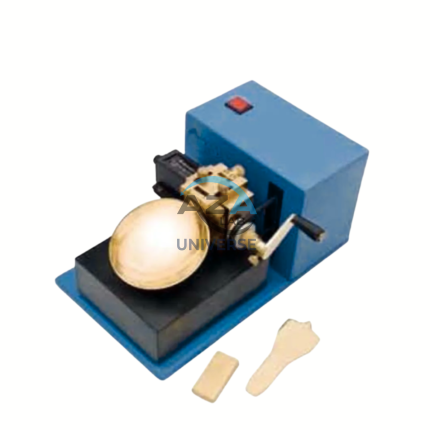
LIQUID LIMIT DEVICE (MOTORISED) AZA0854
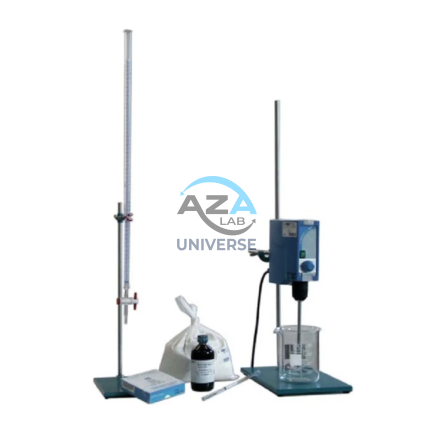
METHYLENE BLUE TEST SET AZA0860
- EN 933-9 – Tests for geometrical properties of aggregates (Methylene Blue Test)
- NF P94-068
- UNE 83 180
- UNI 8520-15
- ASTM C837 – Methylene Blue Index of Clay in Fine Aggregate
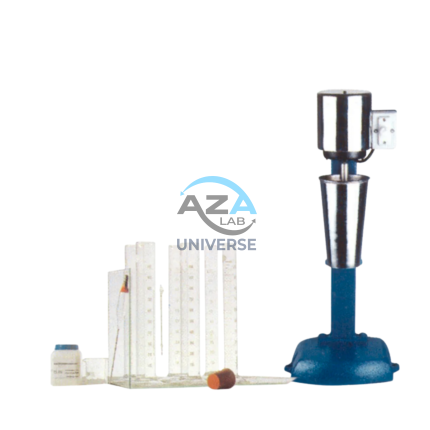
PARTICLE SIZE SEDIMENTATION (HYDROMETER METHOD) AZA0857
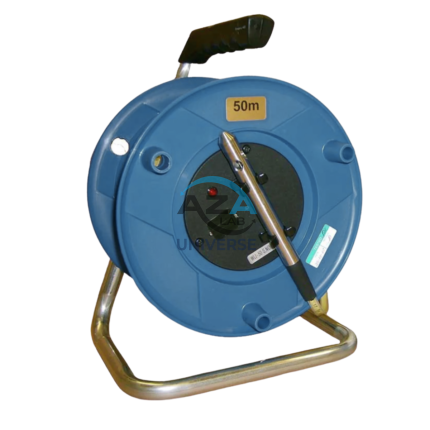
WATER LEVEL INDICATOR AZA0871
The AZA0871 Water Level Indicator from Azalab is a high-precision electronic instrument designed for accurate measurement of groundwater levels in boreholes, wells, standpipes, and observation tubes. It is an essential tool for professionals involved in groundwater monitoring, environmental site assessments, hydrological investigations, geotechnical projects, and dewatering operations.
Accurate water level measurement is fundamental for understanding aquifer behavior, monitoring seasonal or pumping-induced fluctuations, assessing contamination plumes, and supporting the design of foundations, irrigation systems, and water resource management plans. The AZA0871 provides a reliable, fast, and field-ready solution for both static and dynamic water level measurements.