
 Rock
Rock Aggregate
 Cement
 Concrete
 Soil
Soil Steel
Steel Bitumen/Asphalt
 Security Survey Equipment
 General Items
BRAZILIAN TEST APPARATUS AZA1004
AZA1004 Brazilian Test Apparatus is a precision-engineered device used to determine the indirect tensile strength of cylindrical rock samples using the standardized Brazilian (splitting tensile) test method. This apparatus is widely trusted in geotechnical engineering, mining, civil engineering, and academic research for evaluating rock behavior under tensile stress.
Built with a heavy-duty steel frame and plated loading jaws, AZA1004 ensures uniform load distribution and highly repeatable testing results in both laboratory and field environments.
Description
Key Features
• Determines indirect tensile strength of rock cores and discs
• Fully compliant with ASTM D3967 and ISRM Suggested Methods
• Heavy-duty steel frame for high load stability
• Hardened, plated steel loading jaws
• High-precision load transfer system
• Compatible with manual or hydraulic loading systems
• Suitable for lab and on-site testing
• Compact and portable construction
Working Principle
The test applies diametral compressive force on a cylindrical rock disc.
Although compression is applied, the rock fails due to tensile stress along the loaded plane.
Tensile Strength Formula:
T = 2P / (πDL)
Where:
P = Maximum applied load
D = Specimen diameter
L = Specimen thickness
Applications
• Rock mechanics testing
• Tunnel and underground stability analysis
• Mining and quarry site evaluation
• Geotechnical investigations
• Academic and research laboratories
Technical Specifications
| Parameter | Specification |
|---|---|
| Model | AZA1004 |
| Test Method | Brazilian / Splitting Tensile Test |
| Specimen Diameter | 50–100 mm |
| Specimen Thickness | 25–50 mm |
| Load Capacity | Up to 200 kN |
| Loading Method | Manual screw or hydraulic system |
| Frame Material | Heavy-duty mild steel |
| Loading Jaws | Hardened plated steel |
| Standards | ASTM D3967, ISRM |
| Weight | Approx. 45–60 kg |
Frequently Asked Questions (FAQ)
Q1: What does AZA1004 measure?
It measures the indirect tensile strength of cylindrical rock samples.
Q2: Does it match international standards?
Yes, it complies with ASTM D3967 and ISRM Suggested Methods.
Q3: Can it be used in the field?
Yes, its compact and robust design allows both lab and on-site use.
Q4: What kind of specimens can be tested?
Rock discs typically 50–100 mm diameter and 25–50 mm thickness.
Q5: Is it compatible with universal testing machines?
Yes, it can be mounted on UTM and hydraulic compression machines.
Related products
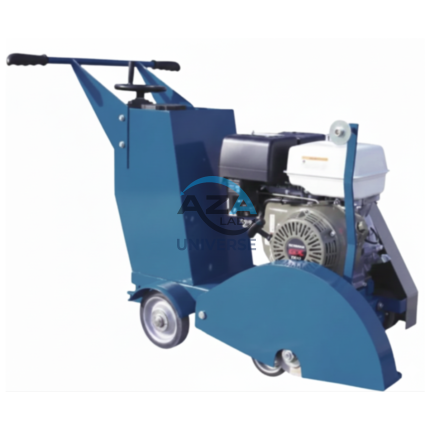
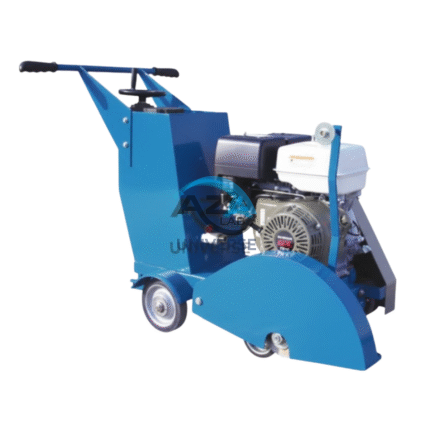
ASPHALT & CONCRETE FLOOR SAW AZA0998
AZA0998 Asphalt & Concrete Floor Saw is a heavy-duty, professional cutting machine designed for high-precision cutting of asphalt and concrete surfaces. Built for demanding construction environments, this machine delivers powerful performance, long-term durability, and exceptional cutting accuracy for roadwork, utility installations, trenching, and demolition projects.
Powered by a high-performance industrial engine, the AZA0998 delivers consistent torque and blade speed, allowing smooth cutting through thick concrete slabs and dense asphalt without power loss. Its strong power transmission system ensures uninterrupted operation, improving job-site efficiency and reducing downtime.
The machine features a precision depth-control system, enabling operators to achieve accurate and uniform cutting depths. Its stable, reinforced steel chassis minimizes vibration and maintains straight-line stability, resulting in clean, professional-grade cuts every time.
Designed for harsh job-site conditions, the AZA0998 uses heavy-gauge steel construction, corrosion-resistant components, and durable mechanical parts that ensure long service life and reduced maintenance.
Operator comfort and safety are enhanced through ergonomically designed, vibration-dampened handlebars, easy-access controls, full blade guarding, and an emergency stop system, allowing safe and fatigue-free operation during extended use.
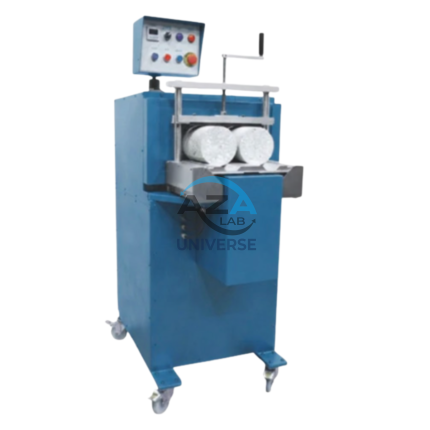
AUTOMATIC GRINDING MACHINE AZA1001
AZA1001 Automatic Grinding Machine is a high-precision laboratory system designed for perfect end-face preparation of cylindrical rock and concrete core samples. Built for geotechnical, mining, civil engineering, and material testing laboratories, this fully automatic grinder ensures flatness, parallelism, and repeatability required for accurate strength testing.
It is essential for preparing specimens for UCS (Uniaxial Compressive Strength), triaxial, Brazilian tensile, and point load tests, where poorly prepared end faces can compromise results.
With programmable controls and vibration-free construction, AZA1001 delivers consistent, hands-free grinding with minimal operator effort.
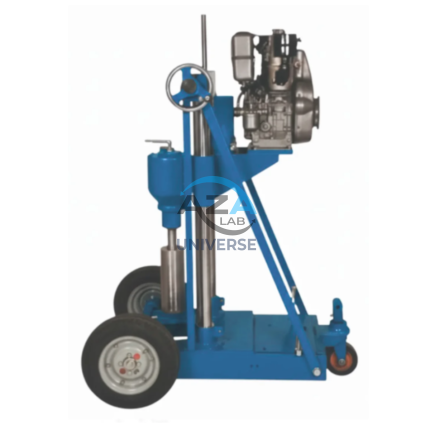
CORE CUTTING/CORE DRILLING MACHINE (PETROL) AZA0994
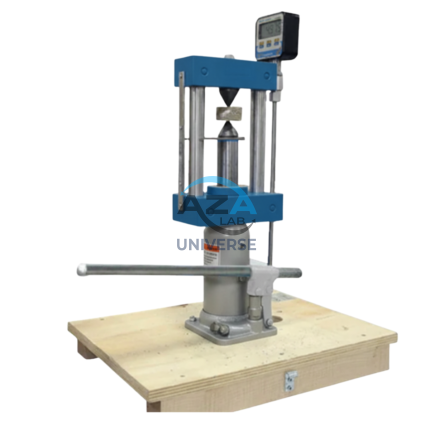
DIGITAL POINT LOAD TEST APPARATUS AZA1003
AZA1003 Digital Point Load Test Apparatus is a high-precision hydraulic testing system designed for determining the point load strength index of rock specimens in laboratory and field environments. Built with a 60 kN hydraulic load frame and an advanced digital measuring unit, this apparatus delivers accurate, repeatable, and standards-compliant results for geotechnical, mining, and civil engineering applications.
The manual hand-pump operated hydraulic system allows smooth and controlled load application, while the adjustable frame supports rock cores and irregular specimens up to 102 mm diameter.
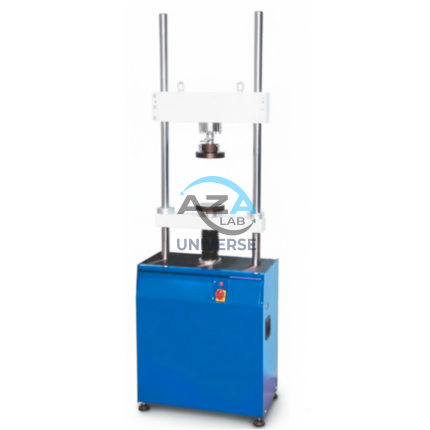
LOAD FRAME FOR UNIVERSAL COMPRESSION TEST OF ROCKS12 SPEED 200 KN AZA1007
The AZA1007 Universal Compression Test Load Frame is a heavy-duty mechanical and hydraulic testing system specially designed for determining the uniaxial compressive strength (UCS) and deformation behavior of rock core specimens. Engineered for precision and durability, this equipment is widely used in geotechnical laboratories, civil engineering institutes, mining operations, tunneling projects, and research organizations.
Built with a 200 kN high-capacity loading system and a 12-speed gear control mechanism, AZA1007 allows highly controlled and uniform load application, ensuring repeatable and accurate test results. Its rigid steel construction minimizes frame deformation during testing, offering maximum stability and long service life even under heavy laboratory workloads.
This load frame is manufactured to comply with ISRM Suggested Methods and ASTM D7012 requirements, making it a reliable solution for internationally accepted rock strength testing.
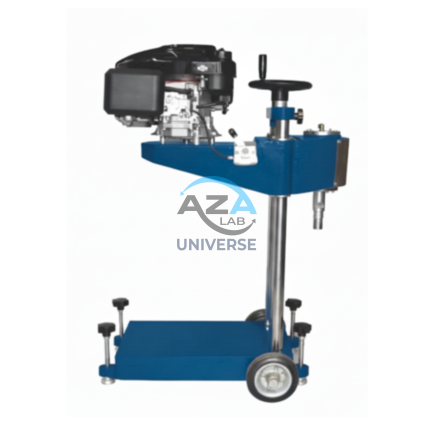
PORTABLE CORE CUTTING DRILLING MACHINE PETROL DRIVEN AZA0995
AZA0995 Petrol-Driven Core Cutting & Drilling Machine is a high-performance, portable coring system designed for on-site sampling of concrete, asphalt (bitumen), and rock surfaces. Built for demanding field conditions, this machine combines power, mobility, and cutting precision, making it ideal for civil engineers, geotechnical teams, road authorities, and construction quality control laboratories.
The petrol-powered 4-stroke engine ensures complete independence from electrical power, allowing reliable operation in remote and off-grid locations. Mounted on a trolley-type heavy-duty steel frame, the unit is easy to transport across rough or uneven terrain while providing excellent stability during drilling.
This machine supports core barrel sizes from 25 mm to 150 mm, making it suitable for a wide range of sampling requirements—from pavement layer checks to structural concrete strength investigations. The adjustable vertical drill column allows accurate alignment, ensuring clean, straight, and damage-free cores.
An integrated water feed system enables wet drilling, which keeps the diamond core bit cool, minimizes dust, and improves core quality. The vibration-dampened spindle system ensures smooth cutting, reduced operator fatigue, and longer machine life.
Designed with operator safety and durability in mind, AZA0995 features ergonomic handles, emergency cut-off, corrosion-resistant components, and a robust engine mount to prevent unwanted movement during operation.

ROCK BOLT PULL OUT TEST APPARATUS AZA1006
AZA1006 Rock Bolt Pull Out Test Apparatus is a high-precision, field-grade hydraulic testing system designed to determine the anchoring strength and load-bearing capacity of rock bolts, anchor bars, and grouted tendons directly in-situ. It is widely used in mining, tunneling, underground excavation, dam construction, and slope stabilization projects to verify the safety and performance of installed support systems.
This rugged and portable apparatus allows engineers to apply a controlled tensile load to rock bolts and measure both ultimate pull-out force and displacement. By simulating real-world tensile stresses, it helps evaluate grout bonding quality, rock mass interaction, and overall installation effectiveness before final commissioning of underground structures.
As underground infrastructure grows, ensuring the reliability of anchoring systems is critical. AZA1006 delivers dependable performance through its hydraulic pull mechanism, precision pressure monitoring, and easy-to-deploy field design, making it an essential tool for geotechnical safety assurance.
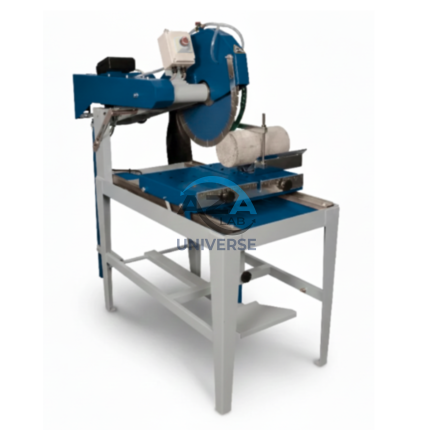
ROCK/CONCRETE CUTTING MACHINE AZA0997
AZA0997 Rock / Concrete Cutting Machine is a heavy-duty, high-performance cutting system engineered for extreme-duty applications involving hard rock, reinforced concrete, and masonry structures. Designed for professionals working in mining, quarrying, demolition, and major infrastructure projects, this machine delivers outstanding cutting force, precision control, and long-term durability in the harshest working conditions.
Built with a powerful high-torque drive system, the AZA0997 maintains consistent cutting speed even when working through dense rock layers or steel-reinforced concrete. Its engineered power transmission minimizes energy loss and converts maximum torque into efficient cutting force, allowing smooth, uninterrupted cutting performance.
Precision is a core strength of this machine. The stable structural frame, low-vibration cutting assembly, and balanced weight distribution allow operators to achieve clean, straight, and controlled cuts, reducing material damage and improving job-site efficiency.
The machine features a reinforced steel chassis, sealed bearings, and abrasion-resistant components, providing long operational life even in dust-heavy and high-impact environments. Integrated water cooling and dust suppression systems ensure safer operation, improved tool life, and better visibility on site.
Designed with the operator in mind, the AZA0997 includes ergonomic control positioning, vibration-dampening handles, and built-in safety systems, reducing fatigue during extended operation and improving overall user safety.