
 Rock
Rock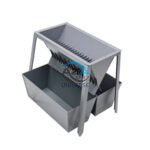 Aggregate
 Cement
 Concrete
 Soil
Soil Steel
Steel Bitumen/Asphalt
 Security Survey Equipment
 General Items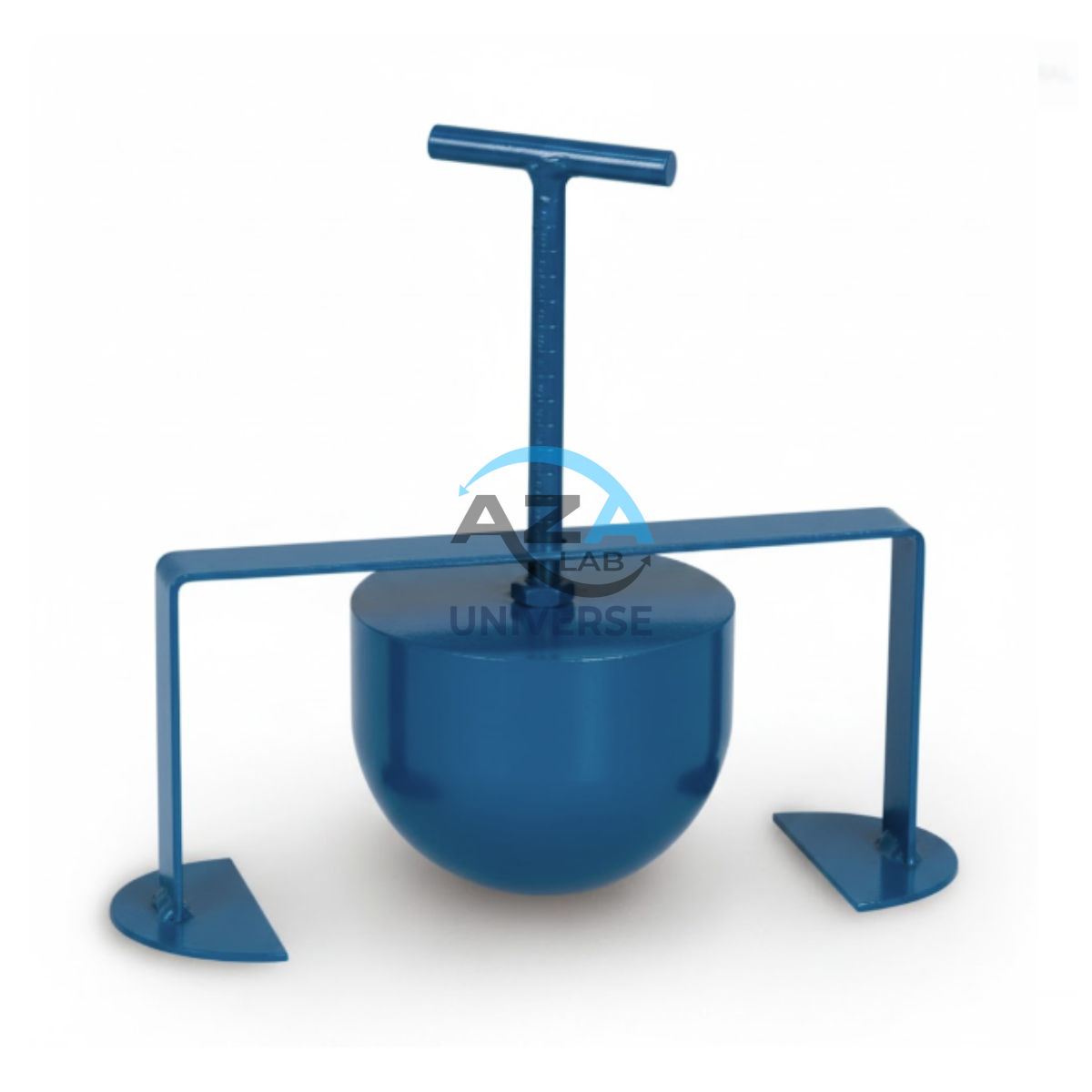
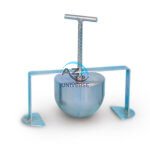
KELLEY BALL PENETRATION APPARATUS AZA1106
The AZA1106 Kelley Ball Penetration Apparatus is a precise and durable instrument used to determine the workability of fresh concrete through direct steel ball penetration. Considered an effective alternative to the slump test, it provides a quantitative, repeatable, and non-disruptive measurement of concrete consistency, making it ideal for both laboratory and field applications.
Engineered with robust materials and compliant with ASTM C360, this apparatus ensures consistent performance, long service life, and ease of use in demanding construction and testing environments.
Key Features
- Direct workability assessment using steel ball penetration
- Fully compliant with ASTM C360
- Portable and rugged for field and lab testing
- Heavy-duty steel/aluminum frame for long-term durability
- Built-in scale for accurate depth measurement
- Simple setup and low maintenance
- Provides a reliable alternative to the slump test
Description
How the Test Works
- The apparatus is positioned on the surface of freshly mixed concrete.
- The standard 30 lb (13.6 kg) steel ball is lowered onto the concrete.
- The depth of penetration is measured using the attached scale.
- The penetration value directly correlates with concrete workability.
This method provides quick, direct, and repeatable measurements, especially useful when comparing different concrete mixes on-site.
Technical Specifications
| Specification | Details |
| Model | AZA1106 |
| Test Method | Kelley Ball Penetration Test |
| Standard Compliance | ASTM C360 |
| Ball Diameter | 152 mm (6 inches) |
| Ball Weight | Approx. 30 lbs (13.6 kg) |
| Frame Material | Cast Aluminum or Steel |
| Measurement Scale | Built-in, high-accuracy depth reading |
| Usage | Field & Laboratory |
| Application | Concrete workability assessment |
| Portability | Yes, lightweight and easy to transport |
| Finish | Powder-coated / Anti-corrosive |
Applications
- Construction sites
- Ready-mix concrete plants
- Research laboratories
- Quality control and inspection agencies
- Comparative mix studies
FAQ
Q1: What does the Kelley Ball test measure?
It measures the workability of fresh concrete by recording the penetration depth of a standard steel ball.
Q2: How does it compare to a slump test?
It provides a direct and often more consistent indication of workability without disturbing the sample.
Q3: Can it be used on-site?
Yes, the AZA1106 is designed for field portability and rugged use.
Q4: Does it meet international standards?
Yes, it fully complies with ASTM C360.
Q5: How is it maintained?
Clean off concrete residues after use and store in a dry environment to prevent corrosion.
AZA1106 – A reliable, field-ready solution for accurate concrete workability testing.
Additional information
| Model |
AZA 1106 |
|---|---|
| Method |
Kelley Ball Penetration Test |
| Ball Diameter |
152 mm (6 inches) |
| Ball Weight |
Approx. 30 lbs (13.6 kg) |
| Usage |
Field and laboratory |
| Portability |
Yes, easily transportable |
| Finish |
Powder-coated/anti-corrosive finish |
Related products
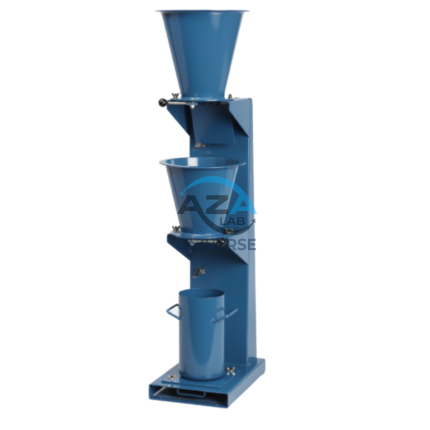
COMPACTION FACTOR APPARATUS AZA1107
- Precision measurement of compaction factor for dry and stiff concrete
- Double-hopper system with smooth trap release
- Conforms to IS 1199 and BS 1881 standards
- Suitable for precast plants, RMC units, and civil engineering labs
- Rugged, powder-coated mild-steel construction
- Cylindrical container included for final measurement

K-SLUMP TESTER AZA1104
AZA1104 K-Slump Tester is a fast, reliable, and non-destructive testing device designed to measure the workability and consistency of fresh concrete directly at construction sites or in laboratory environments. It provides instant slump approximation without the need for traditional slump cones, base plates, or tamping rods, making it an essential tool for modern concrete quality control.
This handheld instrument is widely used by civil engineers, site technicians, and quality inspectors who require quick, repeatable, and real-time results during concrete batching, transportation, and placement. Its simple design eliminates complicated setup, reducing testing time and operator fatigue.
Manufactured from high-grade stainless steel, the probe is corrosion-resistant and suitable for harsh site conditions. The etched scale markings provide direct readings in millimeters or inches, allowing accurate penetration depth measurement without additional instruments.
Unlike traditional slump testing methods, the AZA1104 enables non-destructive testing, meaning the concrete surface remains intact and usable after testing. This feature is especially useful when multiple checks are needed during large pours or continuous batching operation
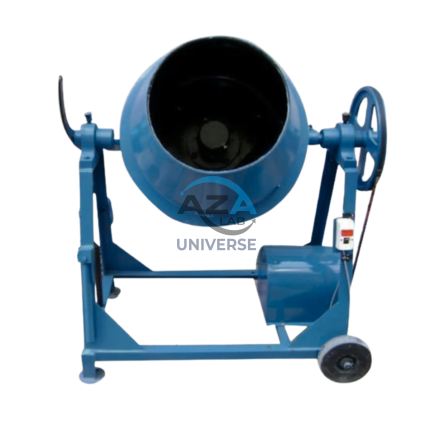
LABORATORY CONCRETE MIXER (MOTORISED) AZA1116
Key Features
- Motorised operation for consistent and uniform mixing
- Ideal for laboratory-scale concrete preparation
- Durable drum crafted from mild steel or stainless steel
- Heavy-duty induction motor for long, reliable service life
- Stable, rigid frame designed for lab environments
- User-friendly controls with built-in safety features
- Reduced manual effort and improved batch repeatability
- Suitable for QC labs, R&D facilities, and educational institutions
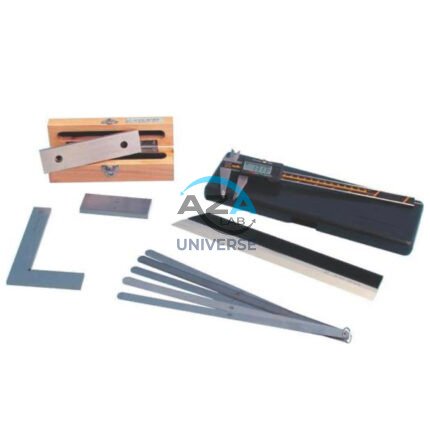
MOULD VERIFICATION KIT – PRECISION QC TOOL AZA1121
- Flatness of mould and specimen surfaces
- Straightness along mould edges and specimen sides
- Perpendicularity of internal walls and corners
- Dimensional accuracy (L × W × H, and diameter for cylinders)
- Go/No-Go tolerance checks for standardized cube mould sizes
- Surface deviation & gap measurement using feeler gauges
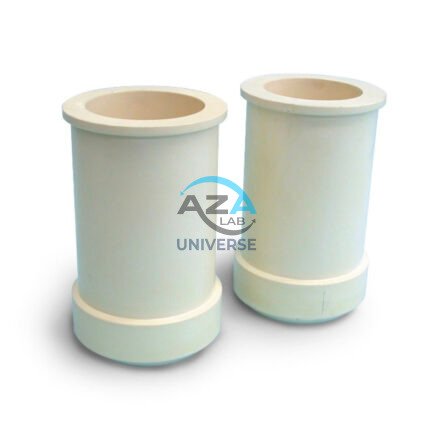
PLASTIC CYLINDERICAL MOULD AZA1127
| Model No. | Size | Material | Weight |
|---|---|---|---|
| AZA 1127 A | 150 mm × 300 mm | Polyurethane | 1.65 kg |
| AZA 1127 B | 100 mm × 200 mm | Polyurethane | 0.90 kg |
POCKET CONCRETE PENETROMETER AZA1114
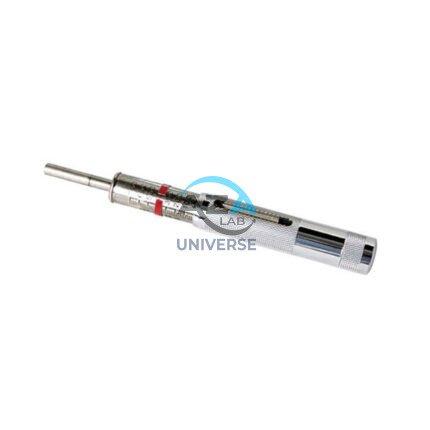
- Measures Early Setting & Strength of concrete and mortar
- Direct Penetration Reading via spring-loaded plunger
- Dual Units: MPa or psi
- ASTM C403 & IS 8142 Compliant
- Compact, Portable & Field-Ready
- Includes Carrying Case & Calibration Chart

SLUMP CONE, PLASTIC AZA1103
AZA1103 Slump Cone (Plastic) is a durable and lightweight testing tool designed for accurate measurement of concrete workability and consistency. It is widely used in construction sites, civil engineering laboratories, and quality control departments for fast and reliable slump testing of fresh concrete mixes.
Unlike traditional metal cones, this model is manufactured from high-quality rigid plastic, making it corrosion-resistant, dent-proof, and highly suitable for repeated field and laboratory use. Its lightweight construction makes it easy to transport and ideal for site engineers and mobile testing teams.
The apparatus is manufactured to standard dimensions and fully complies with IS 1199 and ASTM C143, ensuring accurate and repeatable test results. The smooth internal surface minimizes friction, allowing easy release of concrete and improving measurement accuracy.
This slump cone helps engineers quickly determine if a concrete mix has the correct consistency for placement, compaction, and finishing. It is especially useful for quality checks before concrete pouring to avoid honeycombing, segregation, or improper flow.
AZA1103 is reusable, easy to clean, and requires minimal maintenance, making it a long-lasting and cost-effective solution for routine concrete testing.

SLUMP TEST APPARATUS AZA1102
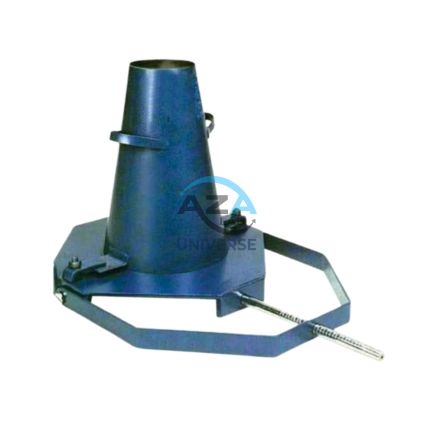
AZA1102 Slump Test Apparatus is designed for the accurate evaluation of concrete workability and consistency in both laboratory and field conditions. It is an essential quality control tool used in construction projects, civil engineering laboratories, and educational institutions.
This apparatus complies with IS 7320 and BS 1881-102 standards, ensuring reliable and standardized test results. It is primarily used to determine the slump value of fresh concrete, indicating its ease of placement, compaction, and finishing.
The set includes a durable metal slump cone manufactured to standard dimensions — 200 mm bottom diameter, 100 mm top diameter, and 300 mm height — providing dimensional accuracy and long service life. A 16 mm diameter tamping rod, 600 mm long with rounded ends, is provided to properly compact the concrete sample in layers.
The apparatus is suitable for testing concrete with aggregate sizes up to 38 mm, making it ideal for common residential, commercial, and infrastructure applications.
To improve handling and stability, the unit includes a rigid base plate with clamping arrangements and lifting handles, making it easy to use both on construction sites and in laboratories.
The AZA1102 Slump Test Apparatus is known for its simple operation, rugged construction, high accuracy, and low maintenance, making it a dependable choice for routine concrete testing.