
 Rock
Rock Aggregate
 Cement
 Concrete
 Soil
Soil Steel
Steel Bitumen/Asphalt
 Security Survey Equipment
 General Items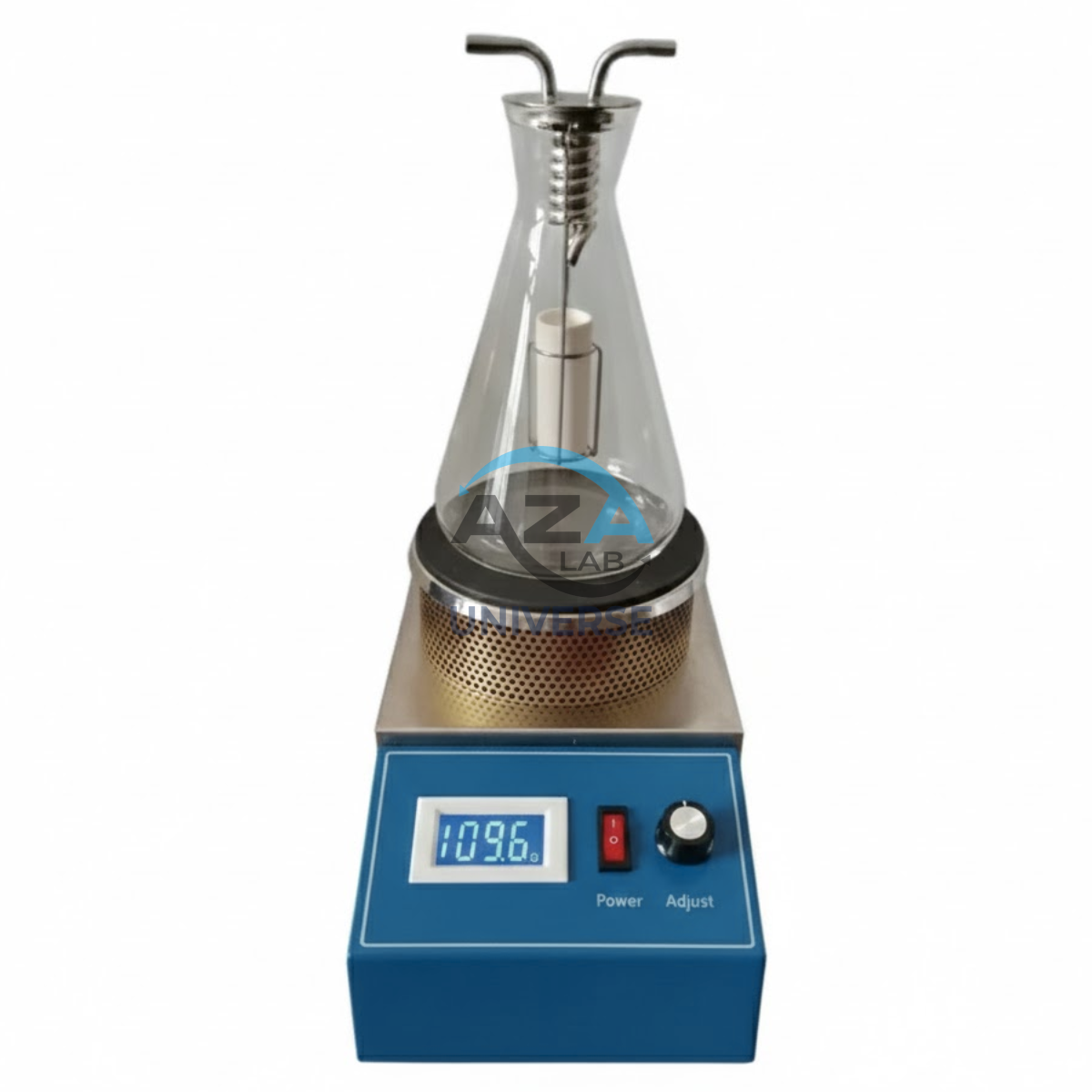
SEDIMENT EXTRACTION TESTER AZA1313
The AZA1313 Sediment Extraction Tester from AZA Lab is a precision laboratory instrument engineered for the accurate determination of sediment content in crude oils and fuel oils using the extraction method specified in ASTM D473. Designed for reliability, consistency, and long-term laboratory use, this tester is an essential tool for petroleum refineries, inspection laboratories, and fuel quality control facilities.
Sediment content is a critical quality parameter that directly impacts storage stability, processing efficiency, pipeline integrity, and combustion performance of petroleum products. The AZA1313 ensures precise sediment measurement by extracting insoluble material using toluene, delivering dependable results across sediment concentrations ranging from 0.01% to 0.40% by mass, with capability for higher concentrations when required.
Description
Accurate Sediment Determination by Extraction Method
The ASTM D473 extraction method is widely recognized for its accuracy in quantifying sediment present in crude and fuel oils. The AZA1313 provides uniform heating, controlled extraction conditions, and high-quality condensation, ensuring repeatable and traceable test results.
During testing, the oil sample is dissolved in toluene and heated under controlled conditions. Insoluble sediment is separated and quantified, providing an accurate indication of oil cleanliness and contamination levels. This information is essential for quality certification, refinery processing decisions, and regulatory compliance.
Key Features
ASTM D473 Compliance
-
Fully conforms to ASTM D473 – Standard Test Method for Sediment in Crude Oils and Fuel Oils by the Extraction Method
-
Suitable for regulatory, contractual, and quality assurance testing
Uniform & Stable Heating
-
Electric heating system ensures even temperature distribution
-
Stepless voltage regulation allows precise control of extraction conditions
Robust & Corrosion-Resistant Design
-
Standard plated cover and condenser pipe resist corrosion from solvents
-
Designed for continuous laboratory operation
High-Quality Extraction Components
-
Stainless-steel basket ensures durability and chemical resistance
-
Glass water receiver provides clear observation and efficient condensation
User-Friendly Operation
-
Simple setup and control
-
Ideal for routine testing and high-throughput laboratory environments
Applications
-
Petroleum Refineries – Monitoring crude oil cleanliness before processing
-
Fuel Oil Testing Laboratories – Quality certification and compliance verification
-
Pipeline & Storage Facilities – Assessing sediment-related fouling risks
-
Inspection & Survey Companies – Independent fuel quality evaluation
-
Research & Development Labs – Studying sediment formation and stability
Technical Specifications
| Parameter | Specification |
|---|---|
| Model | AZA1313 |
| Test Method | ASTM D473 – Extraction Method |
| Rated Voltage | AC 220V ±10%, 50Hz |
| Power Output | 0–700 W, continuously adjustable |
| Temperature Control | Solid-state voltage regulator, stepless adjustment |
| Voltage Display Range | AC 0–250V |
| Erlenmeyer Flask Capacity | 2000 mL |
| Ambient Operating Conditions | Temperature: 10–40°C |
| Relative Humidity | ≤85% |
Why Choose AZA1313
-
Internationally accepted ASTM D473 compliance
-
Accurate and repeatable sediment measurement
-
Durable, corrosion-resistant construction for long service life
-
Stable heating and precise extraction control
-
Ideal for refinery, laboratory, and industrial fuel testing
Related products
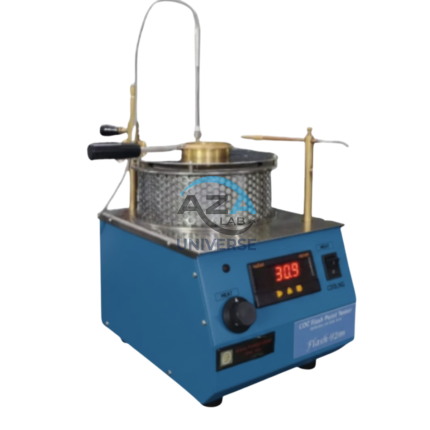
CLASSIC OPEN CUP FLASH POINT APPARATUS AZA1294
The AZA LAB Classic Open Cup Flash Point Apparatus AZA1294 is a reliable and cost-effective laboratory instrument designed for accurate determination of flash point temperature of petroleum products and combustible liquids using the Cleveland Open Cup (COC) method.
Manufactured in full compliance with ASTM D92 and ISO 2592 standards, the AZA1294 is ideally suited for petroleum laboratories, quality control facilities, educational institutions, refinery laboratories, and industrial safety testing environments where dependable flash point determination is essential.
The apparatus combines a classic manual testing approach with durable construction, stable heating performance, and straightforward operation, making it an excellent solution for routine laboratory testing, operator training, and quality assurance applications.
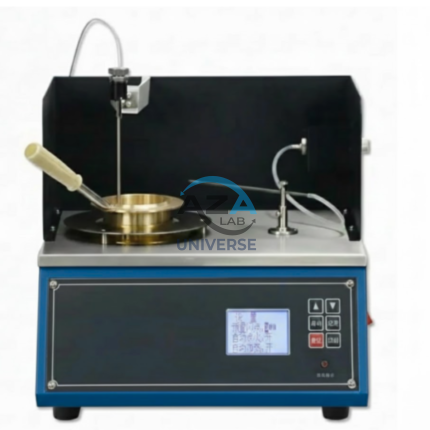
CLEVELAND OPEN-CUP FLASH & FIRE POINT TESTER AZA1292
The Cleveland Open Cup Flash Point Tester AZA1292 from AZA Lab is a reliable and precision-engineered laboratory instrument designed for determining the flash point and fire point of petroleum products in strict accordance with ASTM D92 and GB/T 3536-2008 standards. Engineered for accuracy, safety, and operational simplicity, the AZA1292 is an ideal solution for petroleum laboratories, refineries, inspection agencies, and quality control departments.
The instrument is suitable for testing petroleum products with flash points in the range of 79°C to 400°C, excluding fuel oils, and delivers consistent, repeatable, and standards-compliant results.
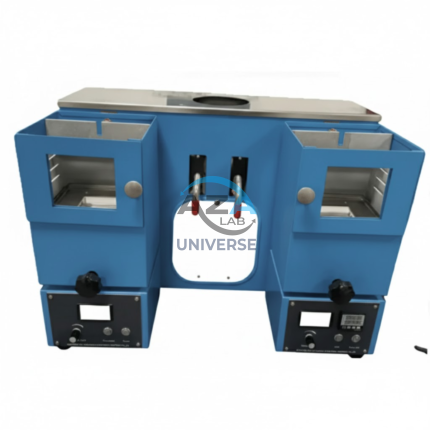
PETROLEUM PRODUCT DISTILLATION TESTER AZA1284
The AZA1284 Manual Distillation Unit from AZA Lab is a high-precision, front-type petroleum distillation system engineered for accurate determination of distillation characteristics of petroleum products in accordance with ASTM D86 and GB/T 6536 test methods. Designed for laboratories that require reliable manual control with superior thermal stability, this unit delivers consistent, repeatable, and standards-compliant results.
With its dual-unit configuration, independently controlled constant-temperature baths, and continuously adjustable heating power, the AZA1284 offers exceptional flexibility and efficiency for routine quality control, inspection, and research applications.
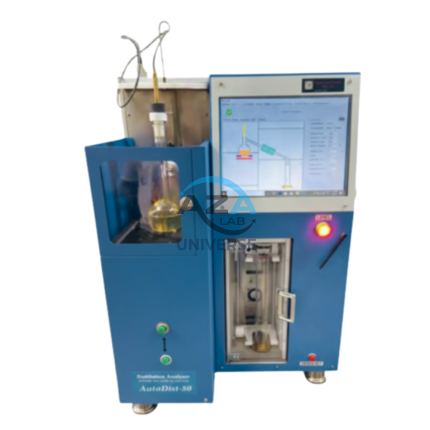
PRECISION AUTOMATED DISTILLATION ANALYZER AZA1281
Standards Compliance
- ASTM D86
- ISO 3405
- IP 123
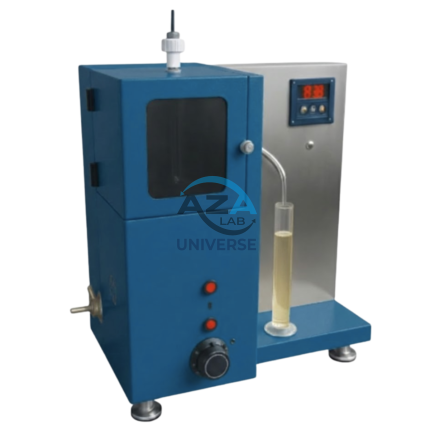
SEMI-MANUAL DISTILLATION ANALYZER AZA1286
The Semi-Manual Distillation Analyzer (AZA1286) from AZA Lab is engineered to deliver accurate, repeatable, and ASTM D86-compliant atmospheric distillation testing for petroleum products. Designed to combine the robustness of manual operation with the precision of digital instrumentation, the AZA1286 is an ideal solution for educational institutions, QA/QC laboratories, and small- to mid-scale production facilities requiring reliable routine fuel analysis without the complexity of full automation.
This analyzer provides operators with direct control over heating, condensation, and receiver handling, while benefiting from digital temperature measurement, timing functions, and safety monitoring. The result is a cost-effective, dependable system that maintains compliance with international testing requirements.
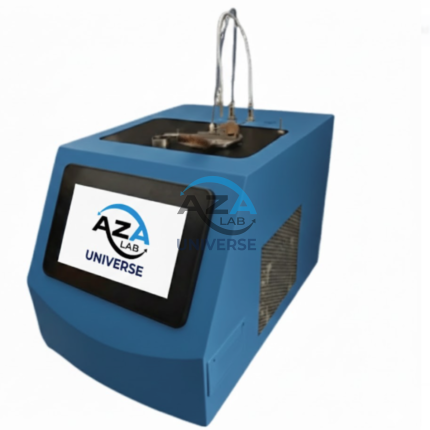
TAG CLOSED CUP FLASH POINT TESTER AZA1280
Standards Compliance
- ASTM D56 (Tag Closed Cup Method)
Measurement Capability
- Flash Point Range: –40°C to 70°C
- Suitable for liquids with flash points below 93°C
- Designed for low viscosity and highly volatile samples
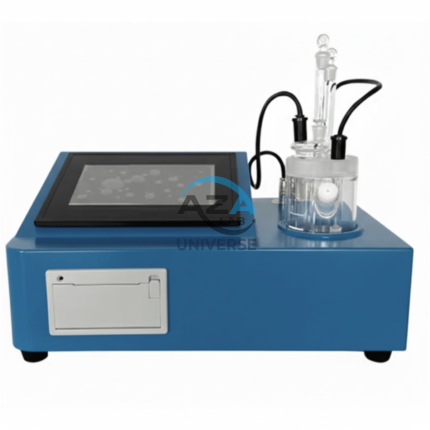
TAN & TBN (KARL FISCHER MOISTURE TITRATOR) TESTER AZA1315
The AZA1315 Karl Fischer Moisture Titrator from AZA Lab is a high-precision analytical instrument designed for the determination of trace water content in liquid petroleum products, lubricating oils, additives, and related materials using the Coulometric Karl Fischer method.
The instrument is designed and manufactured in full compliance with international and industry standards including GB/T 7600, SH/T 0246, ASTM D1533, and ASTM D6304, ensuring accurate, repeatable, and globally accepted moisture analysis results.
Powered by advanced microcomputer control technology, the AZA1315 delivers fast testing, high sensitivity, and stable performance. Its touch-screen LCD interface, fully automated titration, and built-in thermal printer make it an ideal solution for laboratories and industrial quality control environments requiring precise moisture determination.
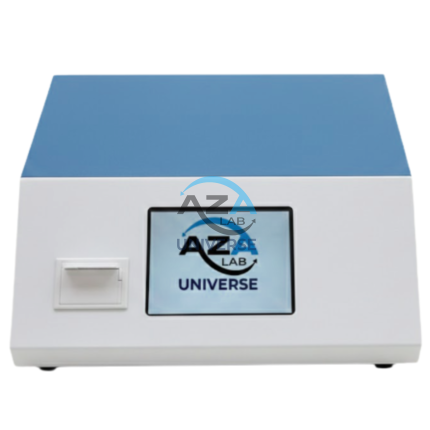
X-RAY SULFUR METER TESTER AZA1300B
The X-Ray Sulfur Meter (Model: AZA1300B) from AZA Lab is a highly efficient and precise instrument designed to measure sulfur content in petroleum and petrochemical products during production. It enables fast, non-destructive analysis, making it an essential tool for quality control, process optimization, and regulatory compliance.
Ideal for use in refineries, laboratories, and production sites, this instrument provides accurate, reliable results with minimal sample preparation, ensuring consistent performance and repeatability.