
 Rock
Rock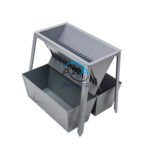 Aggregate
 Cement
 Concrete
 Soil
Soil Steel
Steel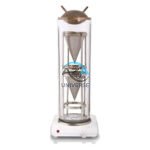 Bitumen/Asphalt
 Security Survey Equipment
 General Items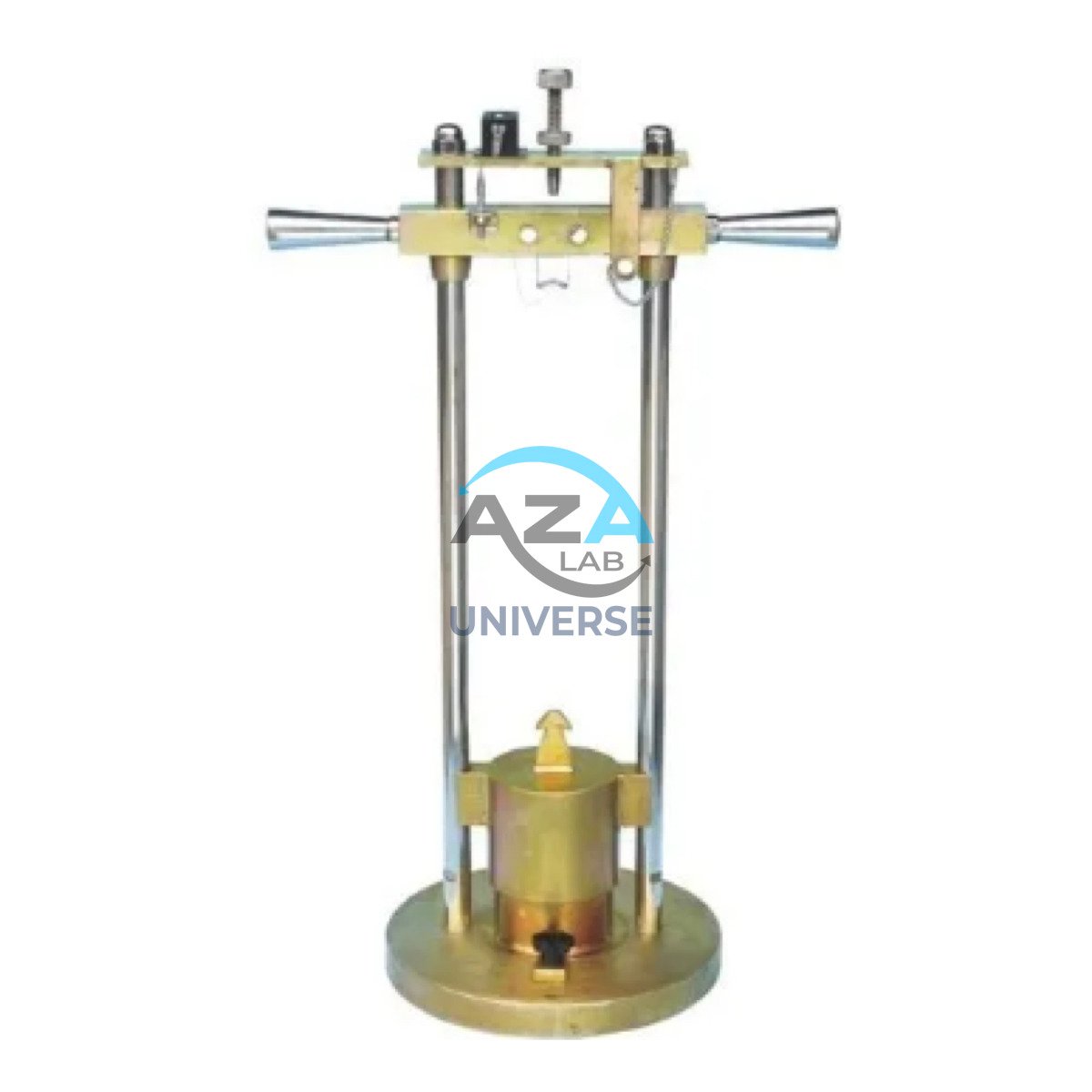
AGGREGATE IMPACT TESTER WITH BLOW COUNTER AZA0983
The AZA0983 Aggregate Impact Tester with Digital Blow Counter is a precision-engineered laboratory apparatus used to determine the Aggregate Impact Value (AIV) of coarse aggregates. It is designed to evaluate the toughness and resistance of aggregates used in road pavements, highways, and structural concrete.
This equipment is manufactured for durability, accuracy, and long service life, and is fully compliant with IS:2386 (Part IV) and BS 812 standards.
Key Features
-
Determines Aggregate Impact Value (AIV) for pavement materials
-
Integrated digital blow counter for accurate strike counting
-
Conforms to IS:2386 (Part IV) and BS 812
-
Heavy-duty, vibration-resistant frame
-
Cylindrical steel cup and standard impact hammer
Description
Purpose of the Test
The AIV test measures the resistance of aggregates to sudden impact or shock loads. This is crucial for understanding how aggregates will perform under repeated traffic loads and heavy vehicle movement.
Lower AIV values indicate stronger and more durable aggregates suitable for:
-
Highway roads
-
Airport runways
-
Industrial pavements
Working Principle
A prepared aggregate sample is placed inside a hardened steel cylindrical cup. A standard impact hammer (13.5–14 kg) is dropped freely from a height of 380 mm.
The built-in digital blow counter accurately records each strike. Standard testing involves 15 blows. After testing, the crushed material is sieved and the percentage of fines is used to calculate the Aggregate Impact Value (AIV %).
Included Components
-
Cylindrical Steel Cup
-
Impact Hammer
-
Guide Rod Assembly
-
Digital Blow Counter
-
Heavy Cast-Iron Base Frame
Applications
-
Highway and road material testing
-
Civil engineering laboratories
-
University and research institutions
-
Asphalt and RMC plants
-
Construction QA/QC departments
Technical Specifications
| Parameter | Details |
|---|---|
| Model No. | AZA0983 |
| Standard Compliance | IS:2386 (Part IV), BS 812 |
| Hammer Weight | 13.5 – 14 kg |
| Drop Height | 380 ± 5 mm |
| Blow Counter | Digital (LED Display) |
| Cup Material | Hardened Steel |
| Base Frame | Cast iron with anti-vibration mounts |
| Power Supply | 220V AC |
| Approx. Weight | 45–50 kg |
FAQ
Q1: What is this apparatus used for?
It is used to determine the Aggregate Impact Value (AIV) of coarse aggregates.
Q2: Why is the blow counter important?
It ensures accurate and consistent counting of hammer strikes during the test.
Q3: How many blows are applied in the test?
15 standard blows as per IS and BS standards.
Q4: Does it require frequent calibration?
Only the digital counter requires periodic checking; the mechanical parts are low maintenance.
Q5: Can this be used at construction sites?
Yes, it is suitable for both laboratory and field-level quality control.
Related products
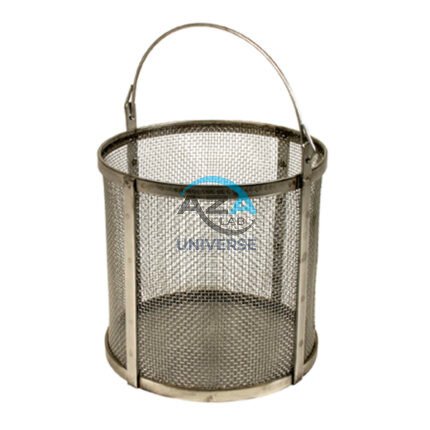
DENSITY BASKET AZA0978
Key Features
- Used for specific gravity and water absorption tests
- Made from high-quality stainless steel mesh
- Equipped with a strong welded suspension hook
- Corrosion-resistant, rust-free and long-lasting
- Smooth welded edges to prevent sample damage
- Standardized mesh aperture for proper water flow
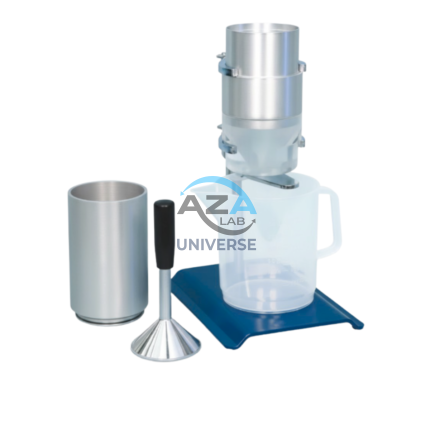
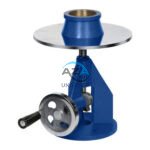
INDEX APPARATUS (FLOW COEFFICIENT OF FINE AGGREGATES) AZA0975
The AZA0975 Flow Coefficient Index Apparatus is a precision laboratory instrument designed to measure the flow coefficient of fine aggregates, such as natural sand and crushed sand. This test helps evaluate workability, particle shape, and grading, which are critical factors in concrete and mortar mix performance. The apparatus is manufactured in compliance with IS 2386 (Part I) and is widely used in civil engineering laboratories and construction quality control departments.
Key Features
-
Measures flow coefficient of fine aggregates
-
Fully compliant with IS 2386 (Part I)
-
Evaluates workability and particle shape characteristics
-
Supplied as a complete set: funnel, stand, cylinder, and base plate
-
Precision-machined components for consistent results
-
Corrosion-resistant, durable construction
-
Easy manual operation for laboratory and field use
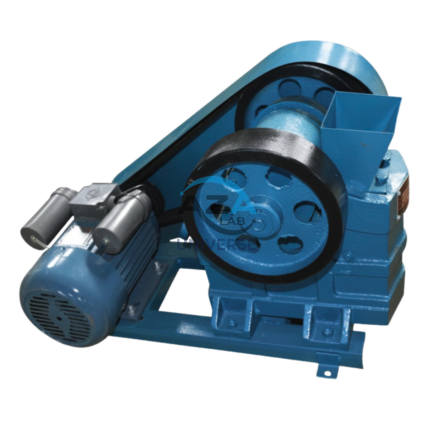
JAW CRUSHER AZA0990
Key Applications
- Crushing of rocks, minerals & hard aggregates
- Soil and geotechnical laboratories
- Cement plants and construction R&D labs
- Pre-processing for pulverisers and sieve shakers
- Mining and metallurgical laboratories
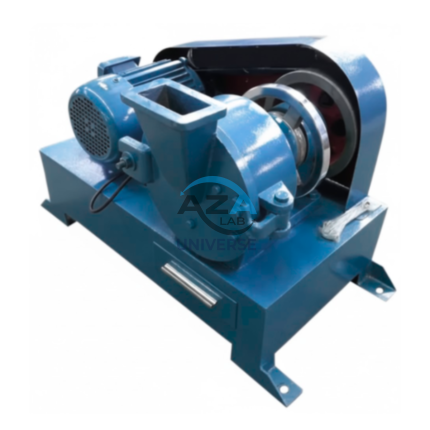
LABORATORY PULVERIZER AZA0991
Key Applications
- Cement laboratories – clinker & cement grinding
- Soil and geotechnical labs – fine soil preparation
- Mining & metallurgy – ore and mineral pulverizing
- Construction material testing – mortar & concrete sample prep
- Agricultural and environmental labs
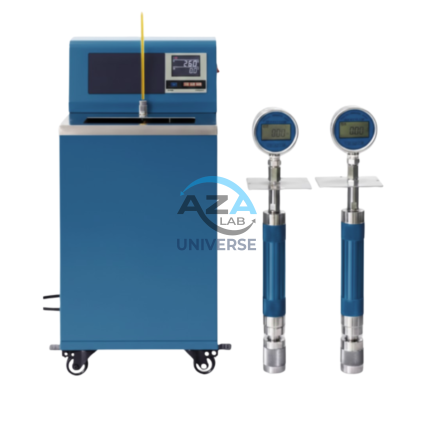
REID VAPOR PRESSURE TESTER AZA1321
- Floor-Standing Design with stainless-steel working table for strength and easy operation
- Digital Temperature Controller for precise and uniform water bath heating
- Dual High-Accuracy Pressure Gauges for reliable internal pressure readings
- Dual Vapor Bombs for simultaneous testing and increased productivity
- Rugged Construction for long-term laboratory and industrial use
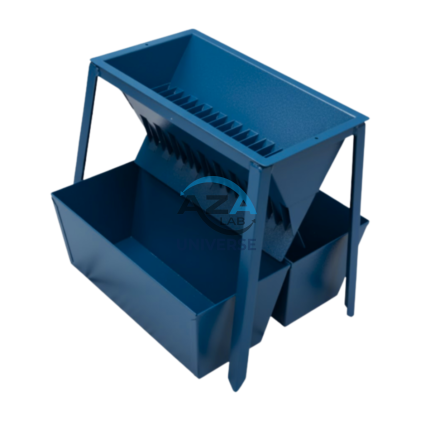
RIFFLE SAMPLE DIVIDER AZA0980
Key Features
- Accurate material splitting for laboratory testing
- Heavy-duty corrosion-resistant metal construction
- Uniform slot widths for consistent sample division
- Smooth-flow chute design for minimal sample loss
- Supplied with two receiving pans for clean, efficient operation
- Compact bench-top design
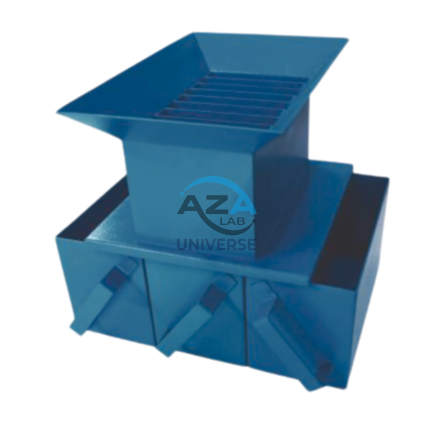
RIFFLE SAMPLE DIVIDER AZA0980A
Key Features
- Used for precise sample splitting of fine & coarse aggregates
- Uniform chute spacing for even material distribution
- Heavy-duty powder-coated steel body
- Supplied with two high-capacity collection pans
- Smooth-flow chute design to minimize material loss
- Simple, manual operation – no power required
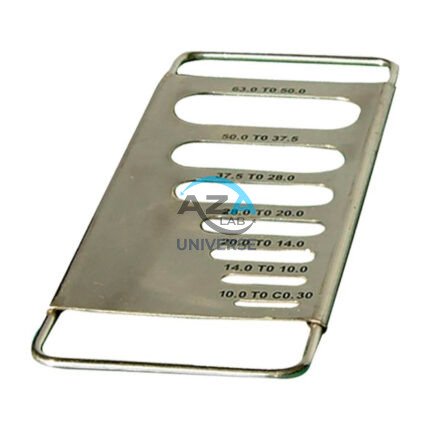
THICKNESS GAUGE AZA0970
The AZA0970 Thickness Gauge is a precision measuring instrument designed for accurate thickness measurement of coatings, films, metals, plastics, rubbers, and painted surfaces. Engineered for laboratory and industrial applications, this compact and reliable device ensures consistent quality control, compliance with standards, and improved material performance across multiple industries.
Key Features
-
High-precision thickness measurement for laboratory and field use
-
Suitable for metals, films, plastics, rubber, and paint coatings
-
Available in analog dial and digital LCD display models
-
Lightweight, compact, and portable design
-
Fast response time with stable, repeatable readings
-
Easy zeroing and calibration mechanism