
 Rock
Rock Aggregate
 Cement
 Concrete
 Soil
Soil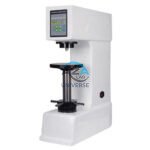 Steel
Steel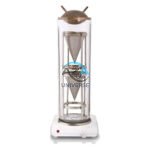 Bitumen/Asphalt
 Security Survey Equipment
 General Items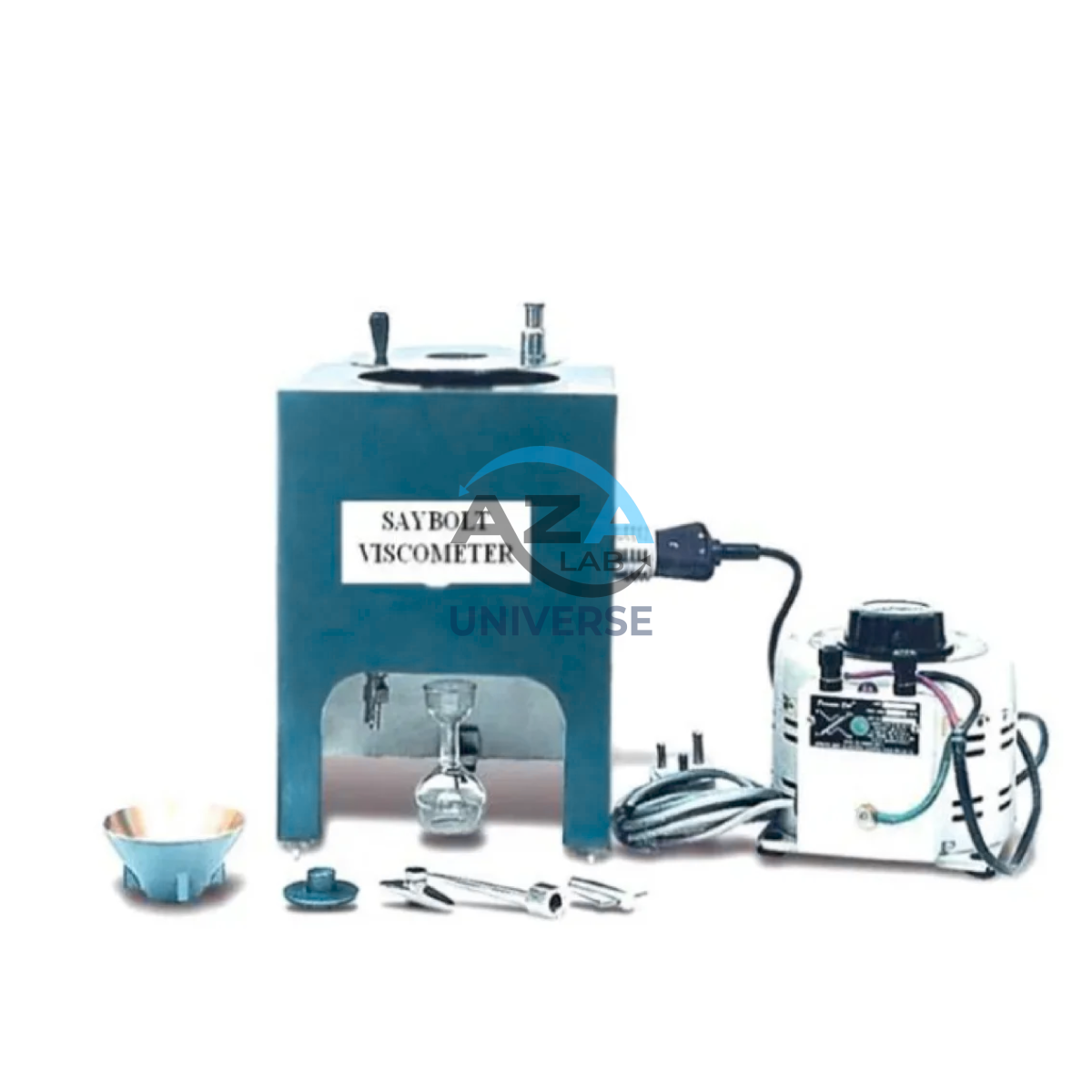
SAY BOLT VISCOMETER AZA0950
The AZA0950 Saybolt Viscometer from AZALAB is a fundamental laboratory instrument designed to determine the empirical viscosity of petroleum products, lubricants, and bituminous materials. Viscosity—defined as a fluid’s resistance to flow—is a critical performance parameter influencing lubrication efficiency, fuel handling, and asphalt workability.
The Saybolt method measures efflux time, providing a standardized and widely accepted indication of flow behavior at controlled temperatures.
Description
Working Principle of AZA0950 Saybolt Viscometer
The AZA0950 operates by measuring the time required for 60 mL of a liquid sample to flow under gravity through a calibrated orifice at a specified temperature.
Saybolt Orifice Types
Saybolt Universal Viscometer (SUV)
-
Smaller orifice diameter
-
Suitable for low- to medium-viscosity fluids
-
Typical test temperatures:
-
37.8 °C (100 °F)
-
98.9 °C (210 °F)
-
-
Results expressed in Saybolt Universal Seconds (SUS)
Saybolt Furol Viscometer (SFV)
-
Larger orifice (≈ twice the diameter of Universal)
-
Used for high-viscosity materials such as fuel oils and bitumen
-
Typical temperatures: 120 °C to 240 °C
-
Results expressed in Saybolt Furol Seconds (SFS)
-
SFS values are approximately one-tenth of SUS for the same material
Construction and Design – AZA0950
-
Electrically heated oil or air bath
-
Digital PID temperature controller
-
Motorized bath stirrer for uniform heat distribution
-
Precision-machined brass or stainless-steel viscometer tubes
-
Standard 60 mL receiving flask
-
External stopwatch for efflux timing
Standards Compliance
The AZA0950 Saybolt Viscometer is designed to conform to:
-
ASTM D88 – Saybolt Viscosity
-
AASHTO T72 – Saybolt Viscosity
-
IP 70
-
IS 1206 (Part 1) – Applied principles
-
IS 8887:2004 – Bitumen Emulsion for Roads (Saybolt Furol reference)
Key Features of AZA0950
-
High-precision temperature control (±0.1 °C)
-
Dual capability: Saybolt Universal & Furol
-
Robust, corrosion-resistant construction
-
Uniform bath temperature via motorized stirring
-
Suitable for continuous quality-control testing
Applications of AZA0950
Petroleum Industry
-
Lubricating oils
-
Fuel oils
-
Crude and refined petroleum products
Road & Infrastructure (India)
-
Cut-back bitumen
-
Road oils
-
Bitumen emulsions (RS, MS, SS grades as per IS 8887)
Industrial & Research
-
Hydraulic and gear oils
-
R&D formulation studies
-
Batch consistency verification
Saybolt vs Kinematic Viscosity
-
Saybolt viscosity is empirical (time-based)
-
Kinematic viscosity is absolute (cSt)
-
Approximate conversion possible using ASTM charts
-
Saybolt remains relevant for routine QC and legacy specifications
Technical Specifications – AZA0950
-
Model: AZA0950
-
Test Method: Saybolt Efflux Time
-
Test Volume: 60 mL
-
Viscosity Types: SUS / SFS
-
Temperature Range: Ambient to 240 °C (up to 300 °C optional)
-
Temperature Accuracy: ±0.1 °C
-
Heating: Electric immersion heater
-
Stirrer: Motorized
-
Power Supply: 230 V AC, 50 Hz, Single Phase
Supplied Accessories
-
Saybolt Universal orifice
-
Saybolt Furol orifice
-
60 mL receiving flask
-
Thermometer holder
-
Withdrawal tube
-
Filter funnel
-
Bath unit
Optional Accessories
-
ASTM/IP calibrated thermometers
-
Certified viscosity standard oils
-
Digital stopwatch
-
Orifice cleaning wire
FAQ – AZA0950 Saybolt Viscometer
Q1. What does AZA0950 measure?
Empirical viscosity expressed in Saybolt Universal Seconds (SUS) or Saybolt Furol Seconds (SFS).
Q2. SUV vs SFV?
SUV uses a smaller orifice for lighter fluids; SFV uses a larger orifice for viscous materials.
Q3. Is AZA0950 relevant in India?
Yes. It is referenced in IS 8887 for bitumen emulsions and widely used in MoRTH-aligned QC labs.
Q4. How important is temperature control?
Critical. Even minor temperature variations significantly affect viscosity readings.
Q5. Maintenance requirements?
Routine cleaning of orifices, calibration with standard oils, and periodic thermometer verification.
Additional information
| Model Number |
AZA 0950 |
|---|---|
| Test Type |
Saybolt Viscosity (Empirical Viscosity by Efflux Time) |
| Application |
Lubricating oils, fuel oils, light fuel oils, crude oils, bituminous materials (asphalt, cut-back bitumen). |
| Heater |
Immersion heating elements. |
| Stirrer |
Motorized stirrer for bath temperature uniformity. |
| Receiving Flask |
Standard 60 ml Saybolt Receiving Flask. |
Related products
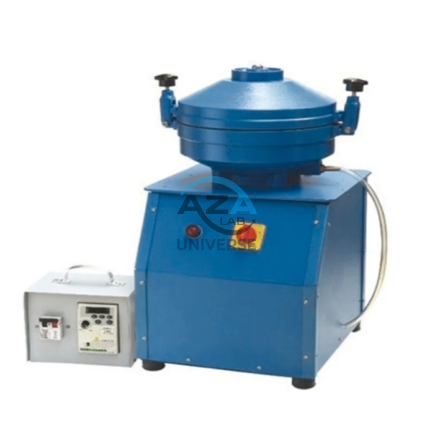
CENTRIFUGE EXTRACTOR (MOTORISED) AZA0946
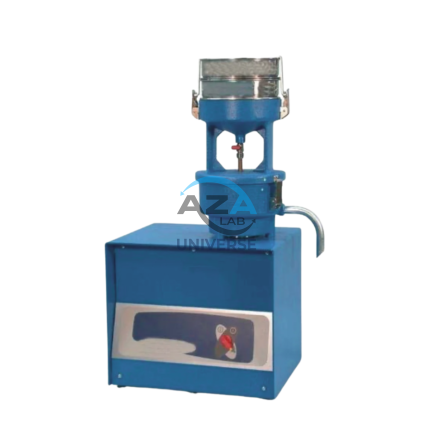
FILTERLESS CENTIFUGE EXTRACTOR AZA0947
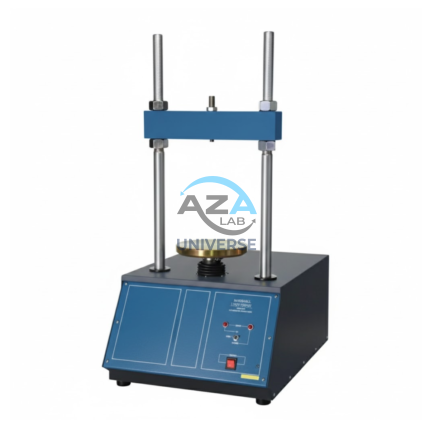
MARSHALL STABILITY TEST APPARATUS AZA0953
The AZA0953 Marshall Stability Test Apparatus from AZALAB is a fundamental and widely adopted instrument in civil engineering and highway material laboratories for evaluating the performance characteristics of compacted bituminous mixtures. It forms the core equipment of the Marshall Mix Design Method, a globally recognized and extensively used procedure for asphalt concrete pavement design and quality control.
The apparatus is designed to accurately determine two critical parameters of asphalt mixtures—Marshall Stability and Marshall Flow—which together indicate the mix’s load-bearing capacity, resistance to permanent deformation, and ability to accommodate traffic-induced stresses without cracking.
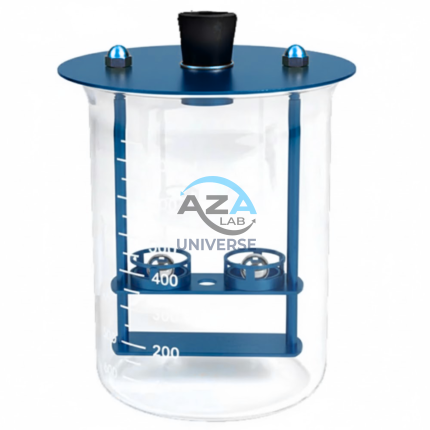
RING AND BALL APPARATUS AZA0932
The AZA0932 Ring & Ball Apparatus from Azalab is a fundamental laboratory instrument designed for the manual determination of the softening point of bitumen, road tars, and bituminous binders. The softening point test is a critical quality control parameter in civil engineering and road construction, particularly in regions with wide temperature variations.
The softening point represents the temperature at which a bituminous material changes from a semi-solid to a softened state under standardized conditions. The AZA0932 provides a robust, reliable, and cost-effective manual solution, fully compliant with Indian and international testing standards.
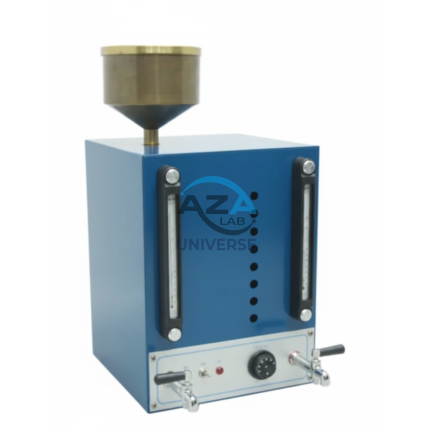
SOLVENT RECOVERY UNIT AZA0949
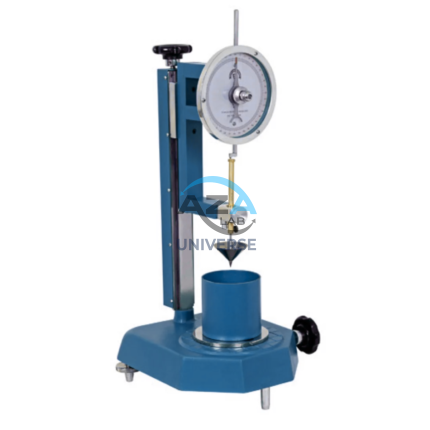
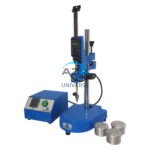
STANDARD PENETROMETER AZA0938
The AZA0938 Standard Penetrometer from Azalab is a robust, reliable, and manually operated laboratory instrument designed for the accurate determination of the consistency of bituminous materials, including bitumen, asphalt, waxes, and greases. It is an essential testing device widely used in civil engineering laboratories, highway authorities, asphalt plants, and quality control laboratories where consistent and repeatable penetration measurements are required.
The AZA0938 operates on the classical penetration testing principle and provides a cost-effective yet precise solution for grading and classifying bituminous binders in accordance with internationally recognized standards such as ASTM D5, EN 1426, AASHTO T49, IP 49, and IS 1203.
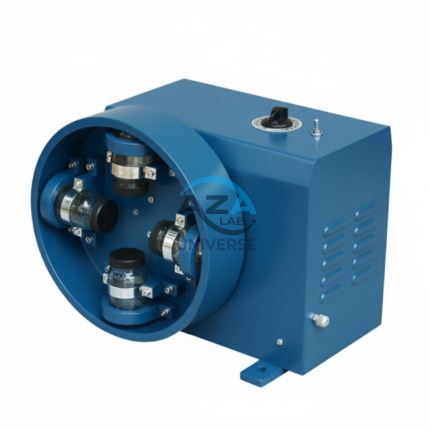
STRIPPING VALUE APPARATUS AZA0943
The AZA0943 Stripping Value Apparatus from Azalab is a precision laboratory instrument designed to evaluate the adhesion characteristics of bitumen-coated aggregates when subjected to water immersion. This test is critical in assessing the resistance of aggregates to stripping, a major cause of premature pavement failure due to moisture ingress.
The apparatus is widely used in road construction quality control laboratories, civil engineering departments, research institutions, and third-party testing facilities. It fully complies with ASTM D1664 and IS 6241, ensuring acceptance across both international and Indian testing frameworks.
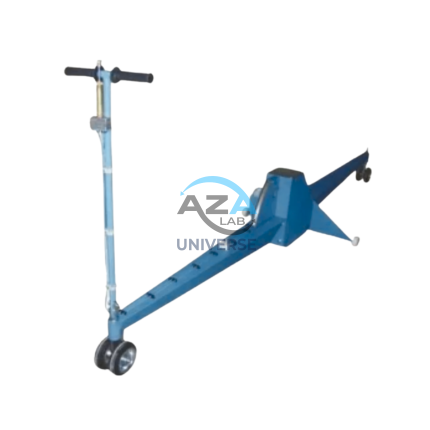
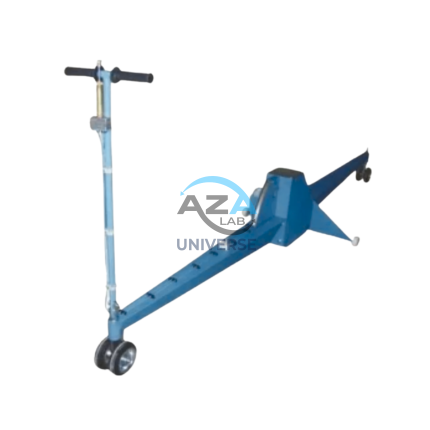
TRAVELLING BEAM DEVICE AZA0960
The AZA0960 Travelling Beam Device from AZALAB is a fundamental and widely accepted instrument for measuring longitudinal surface unevenness (roughness) of road pavements. It is extensively used by highway engineers, road contractors, consultants, and quality control laboratories across India for evaluating the riding quality and service condition of both newly constructed and existing roads.
Surface unevenness directly influences vehicle operating costs, passenger comfort, road safety, drainage performance, and pavement service life. The AZA0960 provides a reliable and cost-effective method for quantifying pavement roughness, enabling engineers to ensure compliance with specifications laid down by the Ministry of Road Transport & Highways (MoRTH) and the Indian Roads Congress (IRC).