
 Rock
Rock Aggregate
 Cement
 Concrete
 Soil
Soil Steel
Steel Bitumen/Asphalt
 Security Survey Equipment
 General Items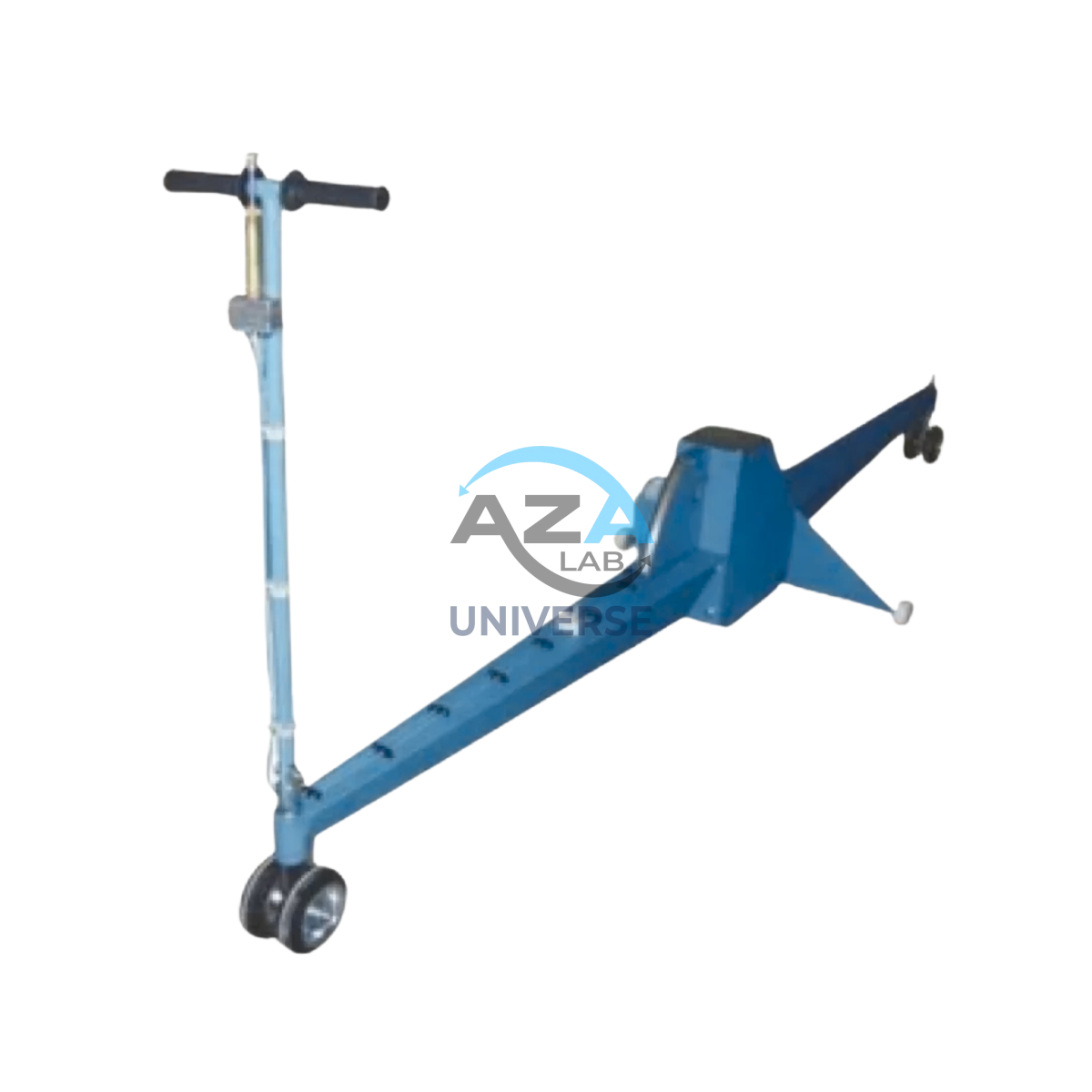
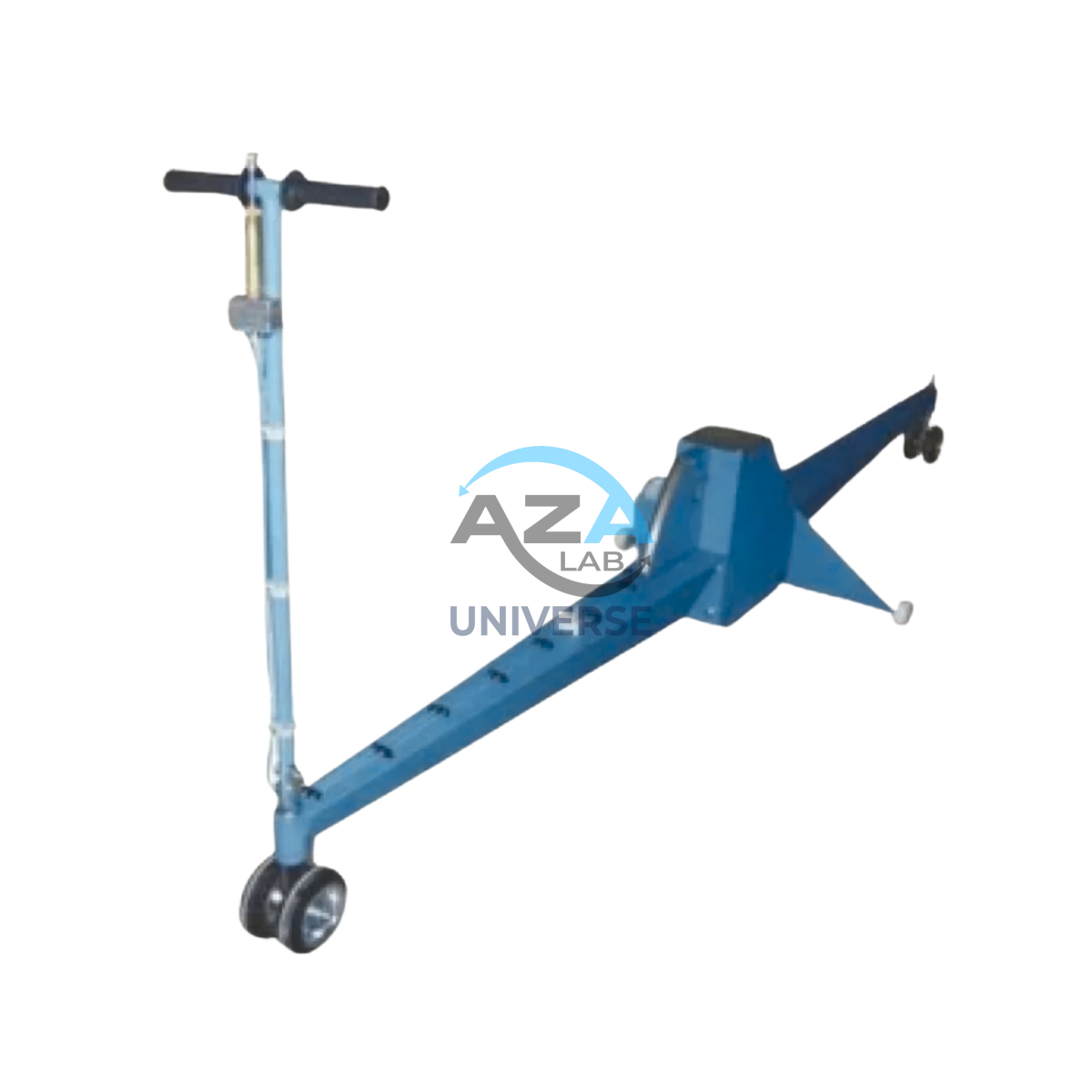


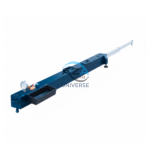
TRAVELLING BEAM DEVICE AZA0960
The AZA0960 Travelling Beam Device from AZALAB is a fundamental and widely accepted instrument for measuring longitudinal surface unevenness (roughness) of road pavements. It is extensively used by highway engineers, road contractors, consultants, and quality control laboratories across India for evaluating the riding quality and service condition of both newly constructed and existing roads.
Surface unevenness directly influences vehicle operating costs, passenger comfort, road safety, drainage performance, and pavement service life. The AZA0960 provides a reliable and cost-effective method for quantifying pavement roughness, enabling engineers to ensure compliance with specifications laid down by the Ministry of Road Transport & Highways (MoRTH) and the Indian Roads Congress (IRC).
Description
Principle of Operation
The AZA0960 operates on a proven mechanical measurement principle:
-
A rigid travelling beam, typically 3 m or 4 m in length, is supported by two end wheels that establish a reference plane.
-
A central measuring wheel or probe tracks vertical deviations of the pavement surface relative to this reference.
-
As the device is manually pushed or pulled along the road, the vertical movements of the central wheel are transmitted to a high-precision dial gauge or digital indicator.
-
These deviations are recorded at specified intervals and accumulated over a known length.
-
The results are used to compute longitudinal unevenness, commonly expressed as mm per km, which serves as a key indicator of pavement riding quality.
This method is widely specified in India for routine pavement evaluation and quality acceptance.
Design and Construction
The AZA0960 Travelling Beam Device is engineered for accuracy, durability, and ease of field operation:
-
Rigid Beam Construction
Manufactured from high-grade aluminum alloy or robust steel to minimize deflection and ensure measurement accuracy. -
Precision Measuring System
Central measuring wheel or probe connected to a sensitive dial gauge or digital display, capable of detecting minute surface deviations. -
Smooth Rolling Wheels
End support wheels and measuring wheel are designed for smooth movement with minimal friction or slippage. -
High Measurement Resolution
Dial gauge typically with 0.01 mm or 0.1 mm least count, enabling fine resolution of surface irregularities. -
Portable & Field-Friendly
Designed for easy assembly, disassembly, and transport for on-site testing. -
Rugged Build
Suitable for repeated use in demanding site conditions on asphalt and concrete pavements.
Key Applications
Quality Control of New Construction
-
Verification of riding quality of newly laid asphalt or concrete pavements
-
Ensures compliance with contractual roughness limits before project acceptance
Pavement Performance Evaluation
-
Periodic monitoring of road roughness to assess deterioration over time
Maintenance & Rehabilitation Planning
-
Identification of pavement sections with excessive unevenness
-
Helps prioritize resurfacing, overlay, or rehabilitation works
Economic & Performance Assessment
-
Roughness data supports evaluation of vehicle operating costs and pavement serviceability
-
Can be correlated with International Roughness Index (IRI) for broader performance analysis
Benefits
-
Accurate Roughness Measurement
Provides reliable data on longitudinal pavement unevenness. -
Improved Riding Comfort
Helps ensure smoother road surfaces for road users. -
Better Maintenance Decisions
Identifies critical sections requiring repair or rehabilitation. -
Cost-Effective Solution
Simple mechanical system with low maintenance requirements. -
Standard Accepted Method
Widely recognized and specified by Indian road authorities.
Technical Specifications
Model Number: AZA0960
Product Type:
-
Travelling Beam Device / Road Roughness Tester
Application:
-
Measurement of longitudinal unevenness of flexible and rigid pavements
Beam Length:
-
3 meters or 4 meters (standard options)
Measuring System:
-
Sensor: Central measuring wheel or probe
-
Indicator:
-
Dial Gauge (typical range 0–10 mm, least count 0.01 mm or 0.1 mm)
-
Digital indicator (optional)
-
Support Wheels:
-
Smooth-rolling wheels at beam ends for stable reference
Construction Material:
-
High-grade aluminum alloy or robust steel beam
Unevenness Output:
-
Used to calculate unevenness index (mm/km)
Portability:
-
Designed for easy manual operation and field transport
Weight:
-
Approximately 20–40 kg (depending on beam length and material)
Standard Compliance:
-
Conforms to IRC and MoRTH specifications for pavement surface unevenness measurement
Accessories (Typical):
-
Carrying case
-
Calibration stand (optional)
-
Assembly tools
Operation and Maintenance
Operation:
The AZA0960 is placed on the pavement surface and moved manually along the test section. Readings are recorded at specified chainages and processed to compute unevenness values.
Maintenance:
-
Clean beam, wheels, and gauge after use
-
Inspect wheels for wear
-
Periodically verify calibration of the measuring gauge
Frequently Asked Questions (FAQ)
Q1: What does the AZA0960 measure?
It measures the longitudinal surface unevenness (roughness) of road pavements.
Q2: Which pavements can be tested?
Both flexible (bituminous) and rigid (cement concrete) pavements.
Q3: Why is roughness measurement important?
Roughness affects riding comfort, vehicle operating costs, safety, and pavement life.
Q4: How is unevenness expressed?
Typically as an unevenness index in mm/km.
Q5: Is the AZA0960 suitable for site use?
Yes. It is rugged, portable, and designed specifically for field measurements.
Q6: Does it comply with Indian standards?
Yes. It is manufactured in accordance with IRC and MoRTH guidelines.
Summary
-
Reliable travelling beam device for pavement roughness evaluation
-
Measures longitudinal unevenness of roads accurately
-
Essential for quality control, acceptance testing, and maintenance planning
-
Rugged, portable, and field-proven design
-
Fully compliant with Indian road construction standards
Additional information
| Model Number |
AZA 0960 |
|---|---|
| Type |
Travelling Beam Device (Road Roughness Tester) |
| Application |
Measurement of longitudinal unevenness of flexible and rigid pavements. |
| Beam Length |
Standard beam lengths, typically 3 meters or 4 meters. |
| Weight |
Varies depending on beam length and material, typically in the range of 20-40 kg. |
| Sensor |
Central measuring wheel or probe. |
Related products
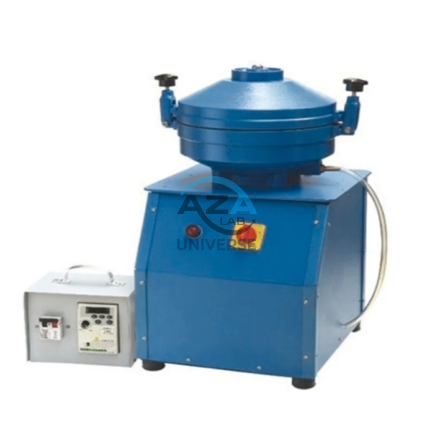
CENTRIFUGE EXTRACTOR (MOTORISED) AZA0946
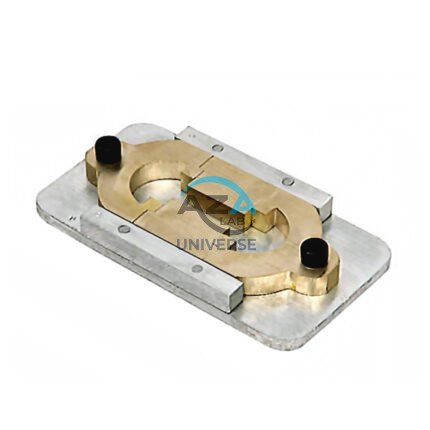
ELASTIC RECOVERY MOULD AZA0958
The AZA0958 Elastic Recovery Mould is a precision-engineered testing accessory used in bitumen ductility and elastic recovery tests, particularly for evaluating polymer-modified bitumen (PMB) and elastomer-modified binders. It plays a critical role in determining the elastic behavior of bituminous binders after elongation, which directly influences pavement performance under traffic loads and temperature variations.
Elastic recovery is a key parameter for modern road construction materials, especially where enhanced flexibility, crack resistance, and rutting resistance are required. The AZA0958 mould ensures the formation of standardized, dimensionally accurate specimens, enabling reliable and repeatable elastic recovery measurements in accordance with international standards.
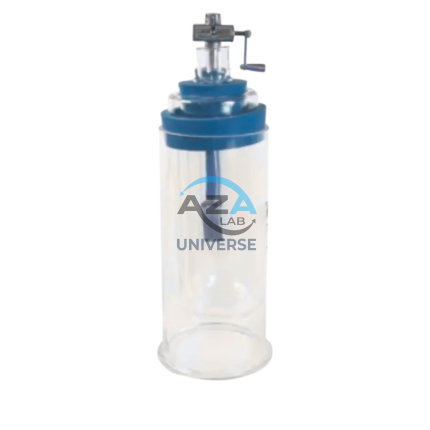
FRAASS BREAKING POINT APPARATUS AZA0935
The AZA0935 Fraass Breaking Point Apparatus from Azalab is a specialized laboratory instrument designed for the accurate determination of the Fraass Breaking Point of bitumen and bituminous binders. This test is essential for evaluating the low-temperature behavior and brittleness of asphalt materials, particularly for pavements exposed to cold climatic conditions.
The Fraass Breaking Point represents the temperature at which a thin film of bitumen loses flexibility and cracks when subjected to controlled cooling and repeated flexing. Determining this temperature is critical for selecting suitable binder grades and preventing thermal cracking in asphalt pavements, thereby ensuring long-term durability and serviceability.
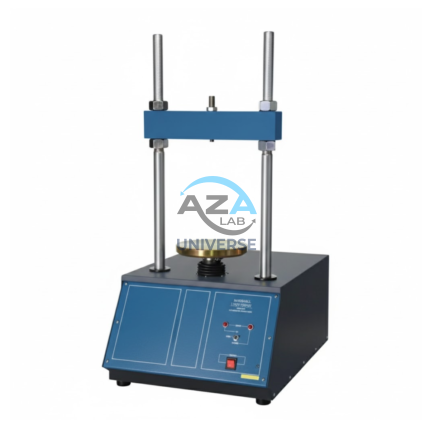
MARSHALL STABILITY TEST APPARATUS AZA0953
The AZA0953 Marshall Stability Test Apparatus from AZALAB is a fundamental and widely adopted instrument in civil engineering and highway material laboratories for evaluating the performance characteristics of compacted bituminous mixtures. It forms the core equipment of the Marshall Mix Design Method, a globally recognized and extensively used procedure for asphalt concrete pavement design and quality control.
The apparatus is designed to accurately determine two critical parameters of asphalt mixtures—Marshall Stability and Marshall Flow—which together indicate the mix’s load-bearing capacity, resistance to permanent deformation, and ability to accommodate traffic-induced stresses without cracking.
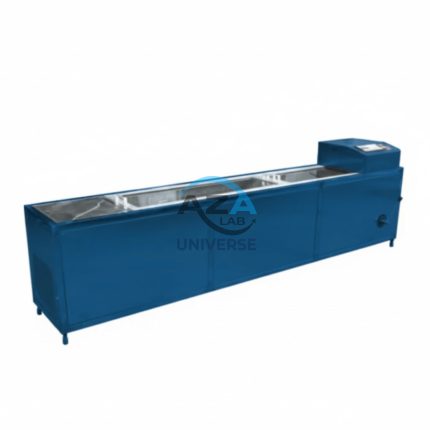
REFRIGERATED DUCTILITY TEST AZA0957
The AZA0957 Refrigerated Ductility Testing Apparatus from AZALAB is a specialized laboratory instrument designed to determine the ductility of asphalt binders and bituminous materials at low temperatures. This test is critically important for evaluating the performance of asphalt pavements in cold and variable climatic conditions, where thermal contraction can lead to cracking and premature pavement failure.
Ductility, defined as the distance a bituminous binder can be stretched under tensile stress before rupture, is a key indicator of binder flexibility. At low temperatures, asphalt binders become increasingly stiff and brittle. The AZA0957 enables engineers and material technologists to accurately assess a binder’s resistance to thermal cracking, ensuring the selection of materials suitable for cold climates and long-term pavement durability.
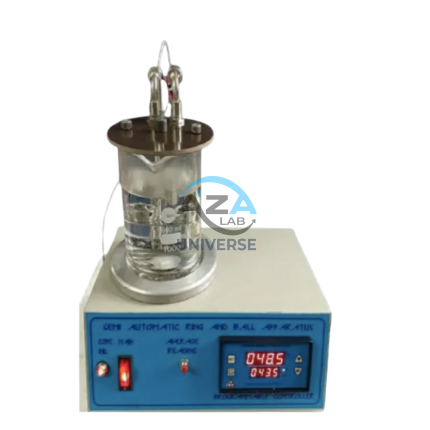
RING & BALL APPARATUS(SEMI AUTOMATIC) AZA0934
The AZA0934 Ring & Ball Apparatus (Semi-Automatic) from Azalab is an advanced laboratory instrument designed for the precise determination of the softening point of bitumen, asphalt binders, and related bituminous materials. This critical test evaluates the temperature susceptibility and high-temperature performance of asphalt binders, directly influencing pavement resistance to rutting and permanent deformation under hot service conditions.
By integrating the standard Ring & Ball method with semi-automatic control and detection features, the AZA0934 significantly improves accuracy, repeatability, and operational efficiency, making it ideal for modern quality control, research, and specification laboratories.
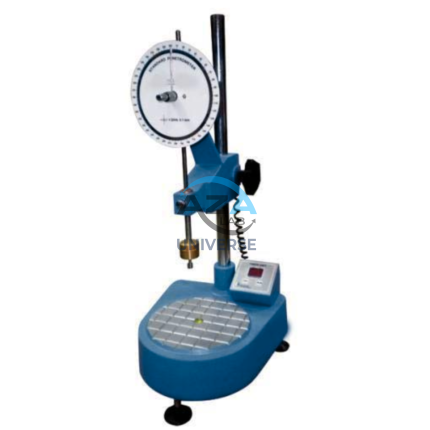
SEMI-AUTOMATIC PENETROMETER AZA0940
The AZA0940 Semi-Automatic Penetrometer from Azalab is a high-precision laboratory instrument designed for the accurate determination of the consistency of bituminous materials, including bitumen, asphalt, and other semi-solid products such as greases and waxes. Engineered to bridge the gap between manual and fully digital systems, the AZA0940 combines robust mechanical construction with digital timing and automated needle release, delivering excellent accuracy, repeatability, and ease of operation.
This instrument is widely used in civil engineering laboratories, highway authorities, asphalt plants, research institutions, and quality control laboratories, where dependable penetration testing in compliance with ASTM D5, EN 1426, and AASHTO T49 is required.
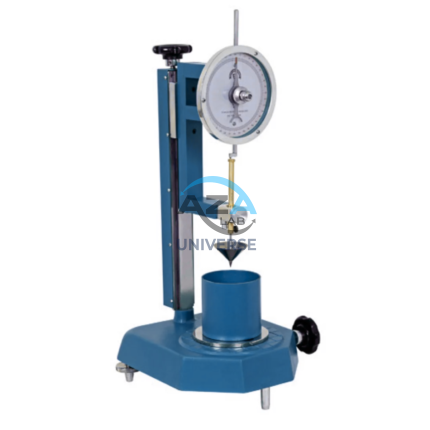
STANDARD PENETROMETER AZA0938
The AZA0938 Standard Penetrometer from Azalab is a robust, reliable, and manually operated laboratory instrument designed for the accurate determination of the consistency of bituminous materials, including bitumen, asphalt, waxes, and greases. It is an essential testing device widely used in civil engineering laboratories, highway authorities, asphalt plants, and quality control laboratories where consistent and repeatable penetration measurements are required.
The AZA0938 operates on the classical penetration testing principle and provides a cost-effective yet precise solution for grading and classifying bituminous binders in accordance with internationally recognized standards such as ASTM D5, EN 1426, AASHTO T49, IP 49, and IS 1203.