 Rock
Rock Aggregate
 Cement
 Concrete
 Soil
Soil Steel
Steel Bitumen/Asphalt
 Security Survey Equipment
 General Items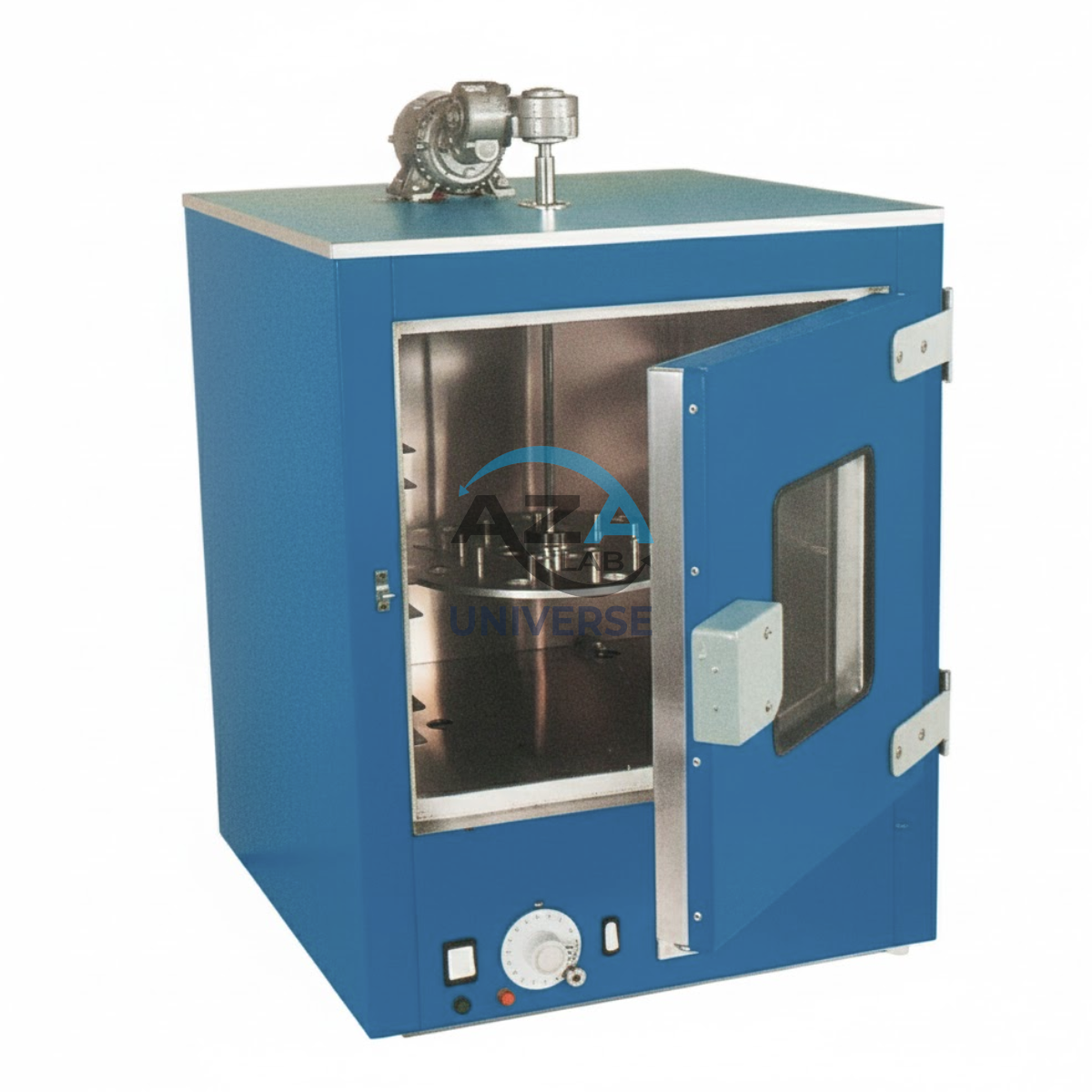
Purpose of the Loss on Heating (Thin Film Oven) Test
The Loss on Heating Thin Film Oven test evaluates:
-
Volatile loss in asphalt binders
-
Oxidative hardening during short-term aging
-
Changes in rheological properties after heating
In the AZA0966, asphalt samples are spread as a thin film in shallow pans and exposed to controlled temperature and static air while being rotated continuously. This controlled exposure accelerates aging, allowing engineers to assess binder behavior during plant mixing and placement.
The test is conducted in accordance with internationally recognized standards such as ASTM D6, ASTM D1754, and AASHTO T179, making the AZA0966 suitable for global and national testing protocols.
Design & Operating Principle
The AZA0966 maintains a uniform test temperature of 163°C ± 0.5°C for a standard test duration of 5 hours. Asphalt binder samples placed in standard thin film oven pans are mounted on a precision motorized rotating carousel, ensuring even thermal exposure.
During operation:
-
Samples are pre-weighed and placed in the oven.
-
The rotating shelf continuously exposes the thin film to heat.
-
Volatile components evaporate, causing mass loss.
-
Oxidation leads to binder hardening.
-
After completion, samples are re-weighed and further tested for penetration, ductility, viscosity, or rheological changes.
This process provides reliable insight into binder aging behavior and compliance with specification limits.
Key Features & Benefits
-
High-precision temperature control (±0.5°C)
-
Uniform heat distribution for repeatable results
-
Motorized rotating shelf for consistent sample exposure
-
Stainless steel chamber for corrosion resistance and thermal stability
-
Digital temperature controller with clear display
-
Energy-efficient insulation for stable operation
-
Robust laboratory construction for long service life
Applications
-
Asphalt binder quality control
-
Short-term aging simulation
-
Bitumen volatility assessment
-
Pavement mix design verification
-
Research and performance evaluation
-
Government and contractor testing laboratories
The AZA0966 is an essential instrument for predicting how asphalt binders will behave after mixing and placement, helping prevent early pavement distress.
Technical Specifications
| Feature | Specification |
|---|---|
| Model Number | AZA0966 |
| Oven Type | Loss on Heating Thin Film Oven (LOH / TFO) |
| Standard Compliance | ASTM D6, ASTM D1754, AASHTO T179, IS 9382 |
| Test Temperature | 163°C (adjustable) |
| Temperature Accuracy | ±0.5°C or better |
| Temperature Uniformity | Excellent within chamber |
| Chamber Material | High-grade Stainless Steel |
| Exterior Body | Powder-coated Mild Steel / Stainless Steel |
| Insulation | High-efficiency thermal insulation |
| Rotation System | Motorized rotating shelf |
| Rotation Speed | Approx. 5.5 rpm |
| Sample Capacity | Typically 4–8 thin film oven pans (pans optional) |
| Control System | Digital / microprocessor-based |
Why Choose AZA0966?
-
Accurate Aging Simulation – Reliable representation of plant mixing conditions
-
Standards Compliant – Accepted worldwide for asphalt binder testing
-
Repeatable Results – Uniform heating and controlled exposure
-
Durable Construction – Designed for continuous laboratory use
-
Critical QC Tool – Ensures binder suitability and pavement longevity
Frequently Asked Questions (FAQ)
Q1: What is the primary purpose of AZA0966?
A1: To measure loss in mass and hardening of asphalt binders when exposed to heat and air, simulating short-term aging during asphalt production.
Q2: How does LOH differ from RTFO?
A2: LOH uses static air and thin films on rotating pans, producing less severe aging. RTFO uses forced air and rolling bottles, causing more aggressive oxidation.
Q3: What test temperature is used?
A3: The standard test temperature is 163°C, controlled precisely throughout the test.
Q4: What standards does AZA0966 comply with?
A4: ASTM D6, ASTM D1754, AASHTO T179, and relevant Indian Standards.
Q5: What maintenance is required?
A5: Routine cleaning, inspection of rotation mechanism, and periodic temperature calibration.
Q6: Why is Loss on Heating important in asphalt QC?
A6: It helps identify binders prone to excessive volatilization or hardening, which can lead to premature pavement cracking and reduced service life.
AZA0966 – Precision Thin Film Oven for Asphalt Binder Aging & Volatility Testing
An essential laboratory instrument for ensuring asphalt binder quality, compliance, and long-term pavement performance.