
 Rock
Rock Aggregate
 Cement
 Concrete
 Soil
Soil Steel
Steel Bitumen/Asphalt
 Security Survey Equipment
 General Items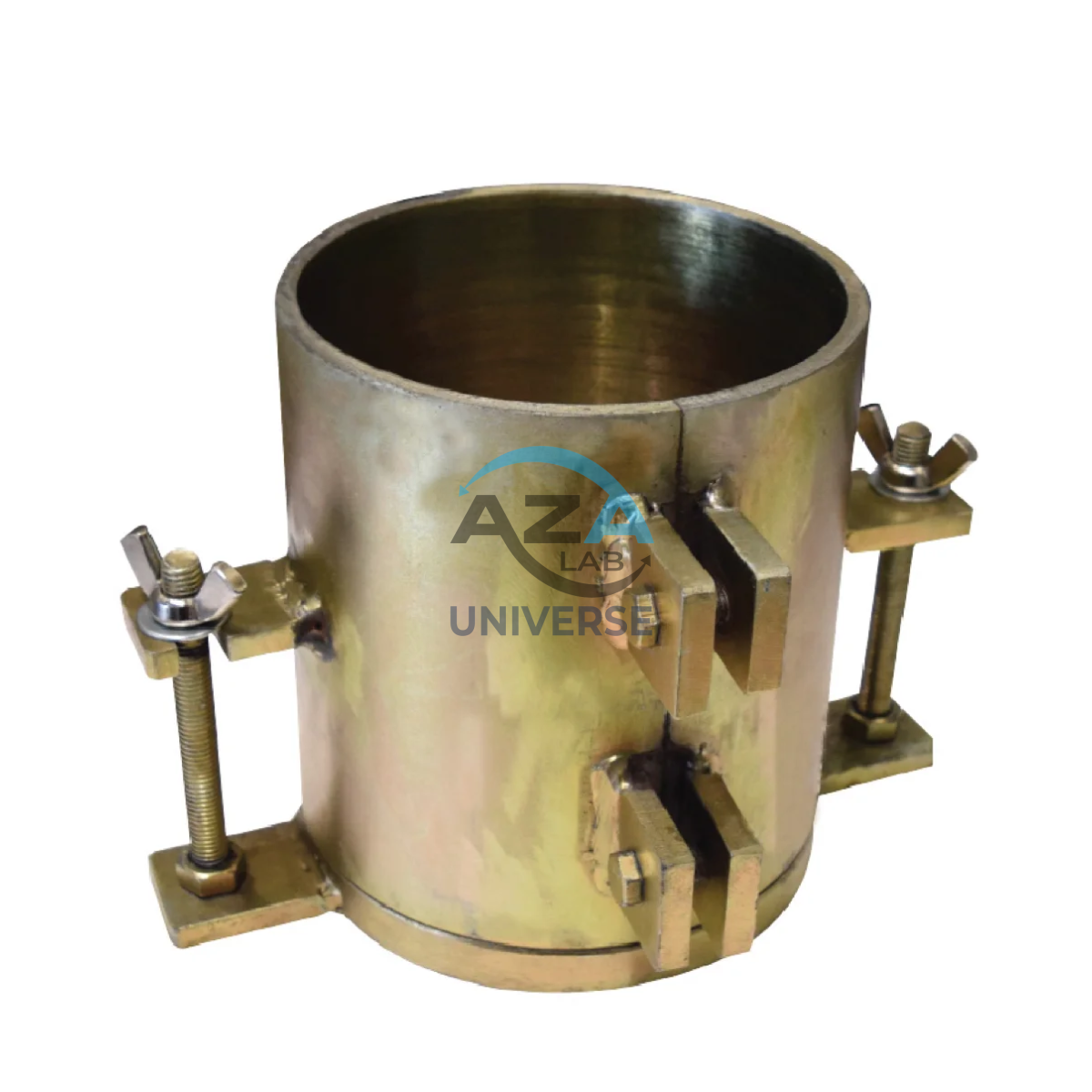
PRD MOULD BS 590:10 AZA0965
The AZA0965 PRD Mould from AZALAB is a precision-manufactured cylindrical steel mould designed for preparing compacted bituminous mix specimens for the Percentage Refusal Density (PRD) test, in strict accordance with British Standard BS 598:110. This mould is a critical component in asphalt quality control, enabling laboratories to determine the maximum achievable density of bituminous mixtures under controlled laboratory compaction.
The PRD test simulates intensive site compaction and is widely used to assess whether field-compacted asphalt has achieved a density close to laboratory refusal density. Accurate mould dimensions are essential to ensure reliable density and void content calculations, particularly for heavily trafficked roads and performance-critical pavement layers
Description
Purpose of the PRD Test
The Percentage Refusal Density (PRD) test determines the highest density a bituminous mix can reach when subjected to a prescribed number of compaction blows using a PRD hammer. The resulting density is compared with field-compacted density to evaluate:
-
Effectiveness of site compaction
-
Suitability of asphalt mix design
-
Potential risk of over- or under-compaction
-
Long-term pavement durability
The AZA0965 PRD Mould serves as the container in which the heated bituminous mix is compacted, providing a fixed and standardized volume for accurate density determination.
Construction & Design
The AZA0965 is manufactured from high-grade hardened steel or cast iron, precision-machined and ground to maintain exact internal dimensions and tolerances specified in BS 598:110. The mould is designed to withstand repeated exposure to high temperatures and heavy mechanical compaction without deformation or dimensional drift.
It is typically used in conjunction with a BS-compliant baseplate, collar, and PRD compaction hammer, forming a complete PRD testing assembly.
Strict dimensional inspection is carried out before dispatch to ensure consistent laboratory performance and reproducible test results.
Key Features
-
Fully compliant with BS 598:110
-
Precision-machined internal diameter and height
-
High-strength steel / cast iron construction
-
Resistant to thermal cycling and impact loads
-
Smooth internal surface for easy sample extraction
-
Long service life with minimal maintenance
-
Ensures accurate and repeatable density calculations
Applications
-
Percentage Refusal Density (PRD) testing
-
Asphalt mix design verification
-
Highway and airport pavement quality control
-
Contractor QA/QC laboratories
-
Government and third-party testing agencies
-
Academic and research institutions
The AZA0965 PRD Mould is particularly important when comparing laboratory refusal density with field density results to confirm compliance with specification limits.
Technical Specifications
| Feature | Specification |
|---|---|
| Model Number | AZA0965 |
| Standard Compliance | BS 598:110 |
| Material | Hardened Steel / Cast Iron |
| Internal Diameter | As per BS 598:110 (typically ~101 mm) |
| Height | As per BS 598:110 |
| Surface Finish | Smooth, rust-resistant |
| Application | PRD compaction of bituminous mixes |
| Accessories Used With | PRD hammer, baseplate, collar |
| Reuse Capability | High (with proper cleaning) |
Why Choose AZA0965 PRD Mould?
-
Dimensional Accuracy – Prevents volume-related density errors
-
Standards Compliance – Fully aligned with BS 598:110 requirements
-
Durability – Designed for repeated laboratory compaction cycles
-
Consistency – Enables reproducible results across different labs and projects
-
Essential QC Tool – Critical for evaluating compaction efficiency and mix suitability
Frequently Asked Questions (FAQ)
Q1: What does PRD mean in asphalt testing?
A1: PRD stands for Percentage Refusal Density, representing the maximum density achievable in the laboratory under standardized compaction.
Q2: Why is a PRD mould necessary?
A2: The mould provides a fixed, standard volume required for accurate compaction and density calculations of bituminous mixes.
Q3: Is AZA0965 compatible with ASTM or Indian standards?
A3: AZA0965 is specifically manufactured to BS 598:110. ASTM or IS-compliant moulds are available as separate models.
Q4: What material is used in the mould?
A4: High-grade hardened steel or cast iron for durability and dimensional stability.
Q5: Can the mould be reused?
A5: Yes. With proper cleaning and care, the mould can be reused for hundreds of test cycles without loss of accuracy.
AZA0965 – Precision PRD Mould for Reliable Asphalt Density Evaluation
A critical accessory for laboratories focused on accurate compaction control, compliance, and pavement performance assurance.
Additional information
| Standard Compliance |
BS 598:110 |
|---|---|
| Material |
Hardened Steel or Cast Iron |
| Internal Diameter |
As per BS 598:110 (typically ~101 mm) |
| Height |
As per BS 598:110 |
You may also like…
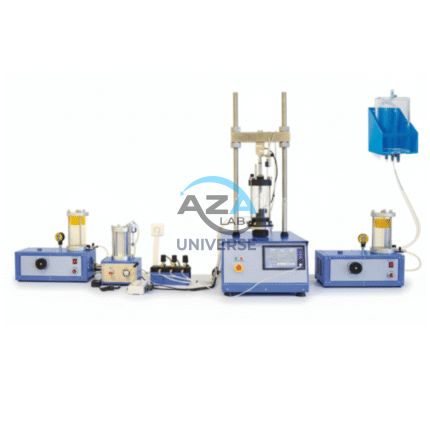
ADVANCED TRIAXIAL TEST SYSTEM (UU–CU–CD CAPABLE) AZA1296
The AZA LAB Advanced Triaxial Test System AZA1296 is a fully automated geotechnical laboratory testing system designed for accurate determination of soil shear strength and deformation characteristics under controlled stress and drainage conditions.
The system supports all major triaxial compression testing modes including:
- Unconsolidated Undrained (UU)
- Consolidated Undrained (CU)
- Consolidated Drained (CD)
Engineered for high-precision geotechnical analysis, the AZA1296 replicates in-situ soil stress conditions to evaluate soil stability, strength behavior, pore pressure response, and failure mechanisms under axial loading.
The system integrates servo-controlled loading, automatic pressure regulation, real-time pore pressure monitoring, automated data acquisition, and advanced software analysis, making it ideal for geotechnical laboratories, civil engineering projects, infrastructure development, research institutions, and academic applications.
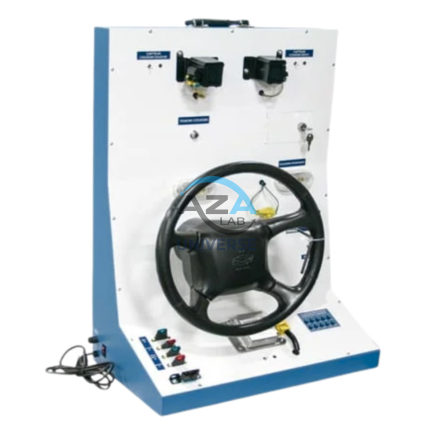
AIR BAG TRAINER AZA1246
The AZA1246 AZALAB Air Bag Trainer is a comprehensive educational training platform designed to demonstrate the structure, operation, diagnostics, and fault analysis of modern automotive airbag systems, also known as Supplemental Restraint Systems (SRS). Built using OEM automotive components, this trainer delivers a realistic learning experience while maintaining complete operational safety.
This system is ideally suited for automotive engineering colleges, ITIs, polytechnic institutes, vocational training centers, and service technician programs, enabling both theoretical instruction and hands-on diagnostics practice.
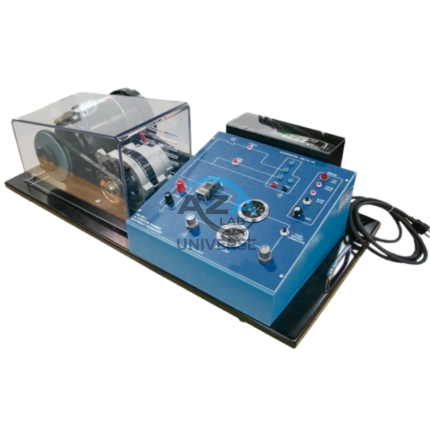
ALTERNATOR TRAINER AZA1247
The AZA1247 AZALAB Alternator Trainer is a hands-on automotive electrical training system designed to demonstrate the working principles, construction, and diagnostics of an automotive alternator with external voltage regulation. Built using OEM automotive components, this trainer provides a realistic and safe learning platform for students, technicians, and trainees to understand vehicle charging systems in depth.
This system is ideal for automotive engineering institutes, ITIs, polytechnics, vocational training centers, and service technician programs, supporting both theoretical instruction and practical experimentation.
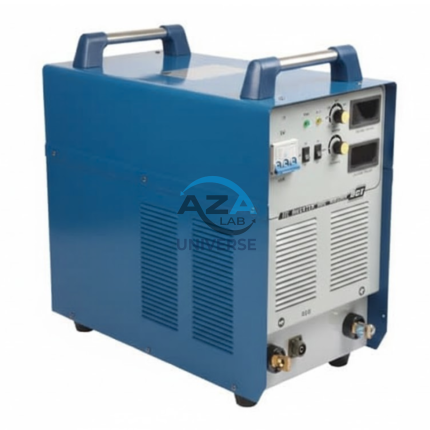
ARC WELDING MACHINE AZA1234
The AZA1234 Arc Welding Machine by A Z A Lab is a high-performance industrial welding solution engineered for demanding fabrication, maintenance, and structural welding applications. Designed using advanced inverter technology, this machine delivers superior arc stability, high efficiency, and reliable welding performance across a wide range of electrode types and materials.
With an inverter frequency of up to 20 kHz, the AZA1234 ensures fast dynamic response, reduced spatter, and excellent weld bead appearance. Its robust electrical design supports a high duty cycle, allowing continuous operation under heavy loads while maintaining consistent welding output—even with output cable lengths of up to 100 meters.
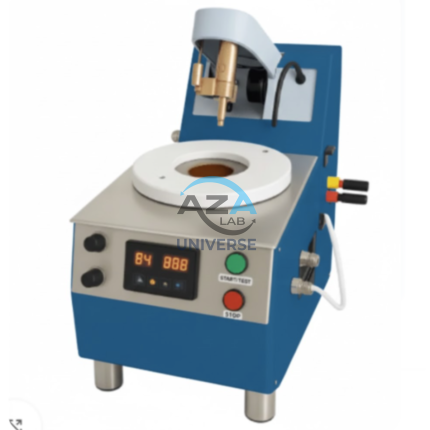
AUOTFLASH AUTOMATED ABEL FLASH POINT ANALYZER AZA1277
The AutoFlash-1277 (Model: AZA1277) from AZA Lab is a fully automated, microcontroller-based Abel Flash Point Analyzer designed for accurate, safe, and repeatable determination of flash points of combustible liquids. Engineered to meet stringent international testing requirements, this advanced instrument conforms to IP 170, ISO 13736, and IS 1448 (Part 20) standards.
Covering a standard temperature range of –30°C to 70°C, extendable up to 110°C, the AZA1277 is ideally suited for laboratories involved in petroleum testing, petrochemical quality control, fuels research, and regulatory compliance.
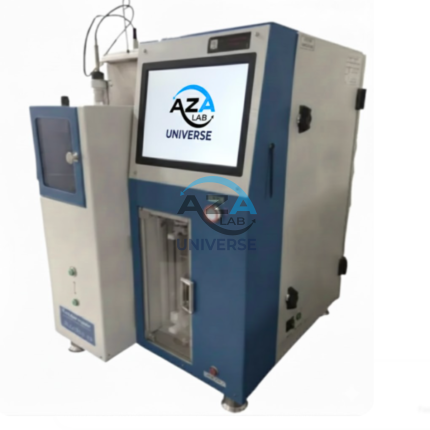
AUTODIST-86 GLASS DISTILLATION UNITAZA1282
The AutoDist-86 Glass Distillation Unit (Model AZA1282) is a high-performance laboratory water distiller designed for the continuous production of high-purity distilled water.
Constructed entirely from borosilicate glass 3.3, the unit ensures zero metallic contamination, excellent thermal resistance, and long operational life. It is ideal for laboratories requiring consistent, low-conductivity distilled water for analytical, pharmaceutical, and research applications.Distillation Performance
- Distillate Output: Up to 4 L/hour (±10%)
- Suitable for routine and medium-scale laboratory demand
- Efficient removal of:
- Dissolved salts
- Heavy metals
- Organic/inorganic impurities
- Microbial contaminants
Related products
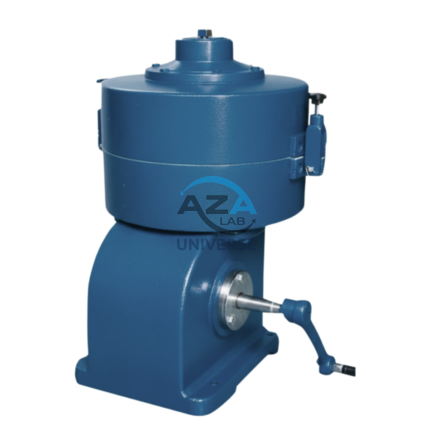
CENTRIFUGE EXTRACTOR (HAND OPERATED) AZA0944
Key Features
- Manual hand-crank operation (no external power required)
- Heavy-duty cast aluminum body for long life
- Removable aluminum extraction bowl for easy cleaning
- Smooth, vibration-free rotation mechanism
- Tight safety lid to prevent solvent loss
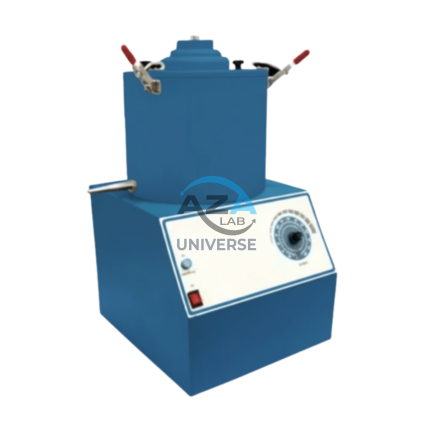
CENTRIFUGE EXTRACTOR (MOTORISED) AZA0945
-
- Powerful high-speed motor for rapid centrifugal separation
- Fully compliant with ASTM D2172 and AASHTO T164
- Stainless steel extraction bowl for corrosion resistance and durability
- Transparent, impact-resistant safety lid for visual monitoring
- Lid-interlock safety system prevents operation when open
- Low-vibration, balanced design for stable operation
- User-friendly digital control panel with variable speed control
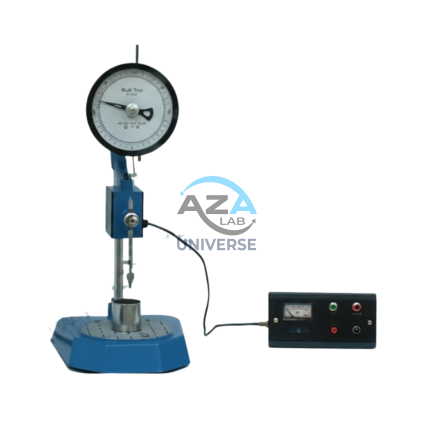
DIGITAL PENETROMETER AZA0939
The AZA0939 Digital Penetrometer from Azalab is an advanced, high-precision laboratory instrument designed for the accurate determination of the consistency of bituminous materials, including bitumen, asphalt, greases, waxes, petroleum jelly, and other semi-solid substances. Engineered for laboratories that demand maximum accuracy, repeatability, and ease of operation, the AZA0939 combines classical penetration testing principles with modern digital measurement and automated timing.
This instrument is widely used in civil engineering laboratories, road construction authorities, asphalt plants, petroleum laboratories, research institutions, and quality control departments, where strict compliance with international standards such as ASTM D5, EN 1426, AASHTO T49, IP 49, and IS 1203 is required.
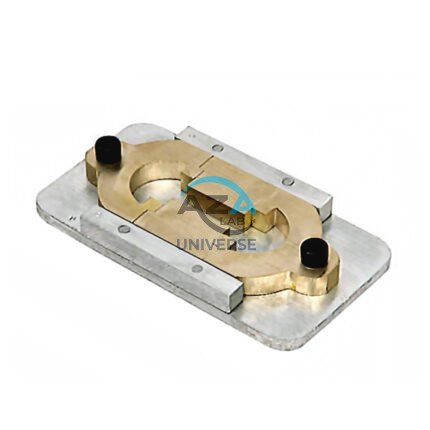
ELASTIC RECOVERY MOULD AZA0958
The AZA0958 Elastic Recovery Mould is a precision-engineered testing accessory used in bitumen ductility and elastic recovery tests, particularly for evaluating polymer-modified bitumen (PMB) and elastomer-modified binders. It plays a critical role in determining the elastic behavior of bituminous binders after elongation, which directly influences pavement performance under traffic loads and temperature variations.
Elastic recovery is a key parameter for modern road construction materials, especially where enhanced flexibility, crack resistance, and rutting resistance are required. The AZA0958 mould ensures the formation of standardized, dimensionally accurate specimens, enabling reliable and repeatable elastic recovery measurements in accordance with international standards.
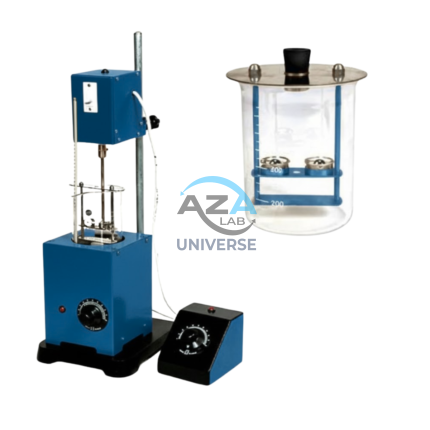
RING AND BALL APPARATUS (ELECTRICAL) AZA0933
The AZA0933 Ring & Ball Apparatus (Electrical) from Azalab is a precision laboratory instrument designed for the accurate and repeatable determination of the softening point of bitumen, asphalt binders, and other bituminous materials. This test is fundamental for evaluating the temperature susceptibility and high-temperature performance of asphalt binders, which directly influences pavement resistance to rutting and deformation.
By utilizing electrically controlled heating instead of open flame, the AZA0933 ensures consistent heating rates, improved safety, and superior test repeatability, making it an essential instrument for highway laboratories, civil engineering departments, and research institutions.
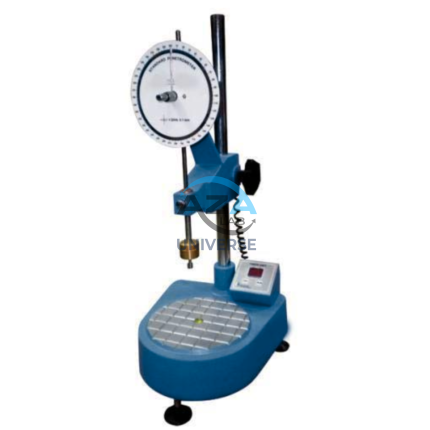
SEMI-AUTOMATIC PENETROMETER AZA0940
The AZA0940 Semi-Automatic Penetrometer from Azalab is a high-precision laboratory instrument designed for the accurate determination of the consistency of bituminous materials, including bitumen, asphalt, and other semi-solid products such as greases and waxes. Engineered to bridge the gap between manual and fully digital systems, the AZA0940 combines robust mechanical construction with digital timing and automated needle release, delivering excellent accuracy, repeatability, and ease of operation.
This instrument is widely used in civil engineering laboratories, highway authorities, asphalt plants, research institutions, and quality control laboratories, where dependable penetration testing in compliance with ASTM D5, EN 1426, and AASHTO T49 is required.
STANDARD PENETROMETER AZA0938
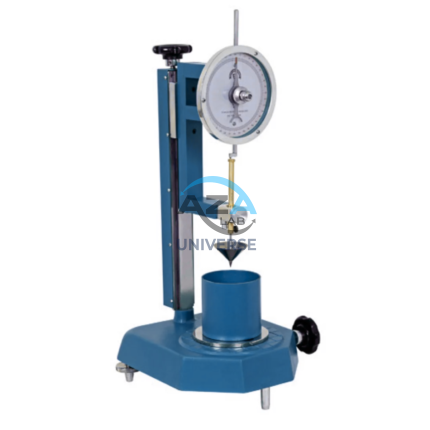
The AZA0938 Standard Penetrometer from Azalab is a robust, reliable, and manually operated laboratory instrument designed for the accurate determination of the consistency of bituminous materials, including bitumen, asphalt, waxes, and greases. It is an essential testing device widely used in civil engineering laboratories, highway authorities, asphalt plants, and quality control laboratories where consistent and repeatable penetration measurements are required.
The AZA0938 operates on the classical penetration testing principle and provides a cost-effective yet precise solution for grading and classifying bituminous binders in accordance with internationally recognized standards such as ASTM D5, EN 1426, AASHTO T49, IP 49, and IS 1203.
STRIPPING VALUE APPARATUS AZA0943
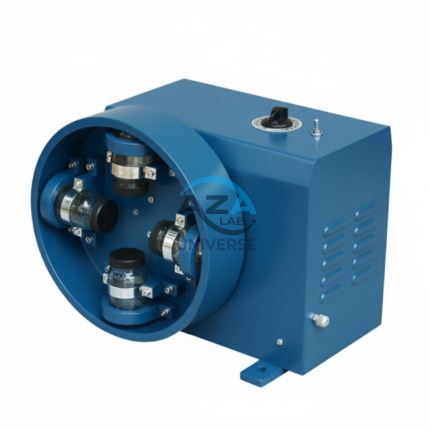
The AZA0943 Stripping Value Apparatus from Azalab is a precision laboratory instrument designed to evaluate the adhesion characteristics of bitumen-coated aggregates when subjected to water immersion. This test is critical in assessing the resistance of aggregates to stripping, a major cause of premature pavement failure due to moisture ingress.
The apparatus is widely used in road construction quality control laboratories, civil engineering departments, research institutions, and third-party testing facilities. It fully complies with ASTM D1664 and IS 6241, ensuring acceptance across both international and Indian testing frameworks.