
 Rock
 Aggregate
 Cement
 Concrete
 Soil
 Steel
 Bitumen/Asphalt
 Security Survey Equipment
 General Items


CYLINDRICAL MOULD AZA1123
The AZA1123 Cylindrical Mould is a precision-engineered, heavy-duty mould designed for casting standardized cylindrical concrete specimens used for compressive strength, split tensile strength, and durability testing. It is an essential tool for construction material testing labs, civil engineering institutions, and quality control facilities that routinely evaluate concrete performance.
Built for repeatable use and dimensional stability, the AZA1123 ensures uniform specimen geometry in accordance with IS, ASTM, and ACI guidelines, making it a dependable choice for compliance testing and research applications.
Purpose & Function
The cylindrical mould is used to prepare concrete specimens of standard dimensions, typically:
- 150 mm diameter × 300 mm height
- 100 mm diameter × 200 mm height
These specimens are used to perform:
- Compressive strength tests
- Split tensile strength tests
- Elastic modulus evaluations
- Durability and material behavior studies
Accurate geometry ensures that the applied load is uniformly transferred, resulting in consistent and valid test outcomes.
Description
Construction & Design
Manufactured from high-grade cast iron or mild steel, the AZA1123 is engineered for long-term durability and resistance to deformation. The precision-machined surfaces ensure a smooth finish on the concrete sample, enabling easy demoulding and reducing surface imperfections.
Key Design Elements
-
Detachable Base & Side Sections
Facilitates quick demoulding and easy cleaning. -
Leak-Proof Fitment
Tight clamping bolts prevent slurry leakage during casting. -
Corrosion-Resistant Coating
Protects the mould from wear and environmental exposure. -
Precision-Machined Internal Diameter
Maintains strict tolerance as per IS and ASTM standards. -
Rugged, Reusable Construction
Ideal for repeated testing cycles in labs and field conditions.
Standards Compliance
The mould complies with major international testing standards, including:
-
IS 10086 – Specification for Moulds for Concrete Test Specimens
-
IS 516 – Methods of Tests for Strength of Concrete
-
ASTM C31 – Making and Curing Concrete Test Specimens
-
ASTM C39 – Compressive Strength of Cylindrical Concrete Specimens
-
ACI Concrete Practice Guidelines
These standards outline specimen preparation, curing, and testing procedures, for which the AZA1123 is fully suitable.
Applications
-
Government and private material testing laboratories
-
Construction quality control departments
-
RMC and cement plant testing units
-
Research and development centers
-
Civil engineering colleges and institutes
Key Features
-
Cylindrical mould for standard concrete test specimens
-
Detachable components for easy demoulding
-
Leak-proof, rigid assembly
-
Machined, smooth internal finish
-
Heavy-duty cast iron / mild steel construction
-
Rust-protected surface for long life
-
Complies with IS & ASTM testing standards
-
Ideal for compressive and split tensile strength testing
Specifications
| Parameter | Details |
|---|---|
| Model | AZA1123 |
| Type | Cylindrical Concrete Mould |
| Material | Cast Iron / Mild Steel |
| Internal Dimensions | 150 mm × 300 mm or 100 mm × 200 mm |
| Finish | Machined & anti-rust coated |
| Standard Compliance | IS 10086, ASTM C31, ASTM C39 |
| Usage | Casting cylindrical concrete specimens |
| Features | Detachable parts, reusable, leak-proof, rugged design |
Frequently Asked Questions (FAQ)
Q1. What is the purpose of the AZA1123 cylindrical mould?
It is used to cast cylindrical concrete specimens for compressive and split tensile strength testing.
Q2. What are the standard specimen dimensions?
150 × 300 mm and 100 × 200 mm, depending on the test requirement.
Q3. Is the mould reusable?
Yes. With proper cleaning and maintenance, it supports long-term, repeated use.
Q4. How should the mould be cleaned after casting?
After demoulding, rinse with water and clean using a soft brush. Avoid sharp tools that may damage the machined surface.
Q5. Is bulk ordering available?
Yes. Institutional and project-based bulk supply is available upon request.
Cylindrical Mould – AZA1123
High-strength cast iron/mild steel cylindrical mould for concrete compressive and tensile strength testing. Precision-machined, leak-proof, corrosion-resistant, and compliant with IS 10086 and ASTM C39/C31. Available in 150×300 mm and 100×200 mm sizes. Ideal for labs, QC units, and field testing.
Additional information
| Model |
AZA 1123 |
|---|---|
| Type |
Cylindrical Mould |
| Material |
Cast Iron / Mild Steel |
| Usage |
Casting concrete specimens |
| Features |
Detachable parts, reusable, rugged design |
Related products
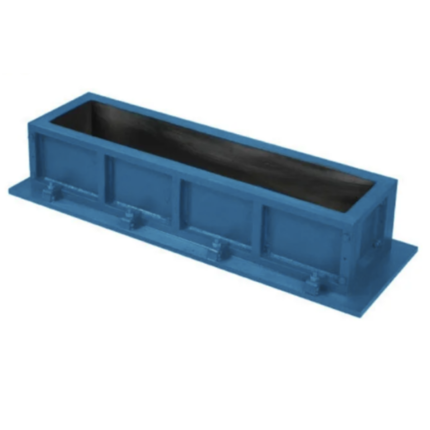
BEAM MOULD AZA1124
Purpose & Importance
Flexural strength testing evaluates a concrete beam’s ability to resist bending stress. Standards such as IS 516, ASTM C78, and BS EN 12390-5 specify strict guidelines for specimen dimensions and surface finish. The AZA1124 Beam Mould enables users to produce uniform, high-quality concrete beams with precise cross-sections, ensuring reliability and compliance during flexural strength evaluation.Beams cast from AZA1124 are used for:
- Flexural tensile strength testing
- Load-bearing capacity studies
- Structural behavior simulations
- R&D on mix designs and reinforcement additives
Ideal for:
- Civil engineering research laboratories
- Cement product quality assurance departments
- Construction material testing centers
- Technical universities and engineering institutions

INITIAL SURFACE ABSORPTION TEST (ISAT) APPARATUS AZA1108
AZA1108 ISAT Apparatus is a precision-engineered testing instrument designed to measure the Initial Surface Absorption of hardened concrete. This test is essential for evaluating the durability of concrete by determining how quickly water penetrates the surface under controlled conditions. The apparatus is widely used in civil engineering laboratories and quality control departments to assess permeability and long-term performance of concrete structures exposed to moisture.
Built with a high-accuracy capillary tube system, the AZA1108 maintains a constant water head over a defined test area and records the volume of water absorbed over specific time intervals — typically at 10, 30, and 60 minutes. The readings obtained help engineers understand the surface porosity of concrete, which is a critical indicator of resistance against weathering, chloride ingress, corrosion of reinforcement, and environmental deterioration.
Designed in compliance with BS 1881-208, this apparatus ensures reliable, repeatable, and standard-compliant results. Its sturdy, rust-proof construction and easy-to-use configuration make it ideal for both routine testing and advanced durability studies in construction material laboratories.

J-RING, NARROW GAP AZA1109
AZA1109 J-Ring – Narrow Gap is a precision testing apparatus designed to evaluate the passing ability of Self-Compacting Concrete (SCC) under highly restrictive conditions. This device simulates densely congested reinforcement zones by creating artificial obstructions that the fresh SCC must flow through without blocking or segregating. It is an essential tool for determining whether SCC mixes are suitable for heavily reinforced structural elements such as beams, columns, and shear walls.
The narrow gap design offers a more stringent test compared to standard J-Rings, allowing engineers and quality control professionals to accurately observe flow diameter, T50 flow time, and blocking behavior. When used in combination with a standard slump flow cone, AZA1109 provides reliable, repeatable results that help optimize mix designs and ensure consistent on-site performance.
Manufactured from durable, corrosion-resistant steel, the AZA1109 is built for repeated use in laboratory and field testing environments. The apparatus is fully compliant with ASTM C1621 and EFNARC guidelines, ensuring internationally accepted testing procedures.
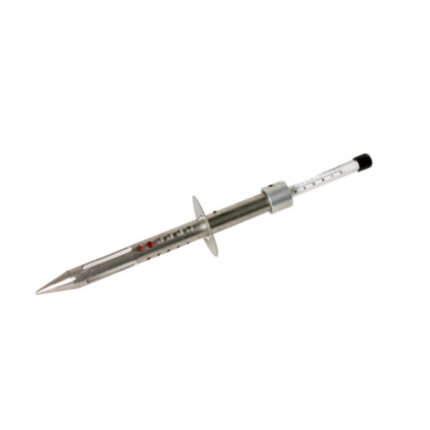
K-SLUMP TESTER AZA1104
AZA1104 K-Slump Tester is a fast, reliable, and non-destructive testing device designed to measure the workability and consistency of fresh concrete directly at construction sites or in laboratory environments. It provides instant slump approximation without the need for traditional slump cones, base plates, or tamping rods, making it an essential tool for modern concrete quality control.
This handheld instrument is widely used by civil engineers, site technicians, and quality inspectors who require quick, repeatable, and real-time results during concrete batching, transportation, and placement. Its simple design eliminates complicated setup, reducing testing time and operator fatigue.
Manufactured from high-grade stainless steel, the probe is corrosion-resistant and suitable for harsh site conditions. The etched scale markings provide direct readings in millimeters or inches, allowing accurate penetration depth measurement without additional instruments.
Unlike traditional slump testing methods, the AZA1104 enables non-destructive testing, meaning the concrete surface remains intact and usable after testing. This feature is especially useful when multiple checks are needed during large pours or continuous batching operation
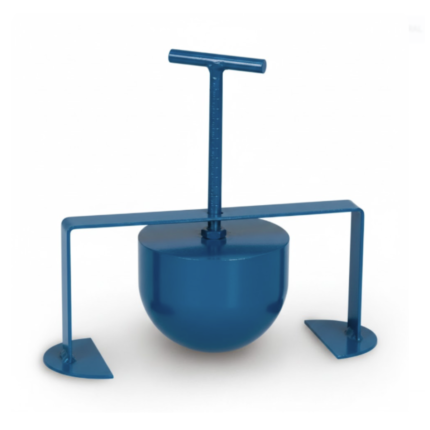
KELLEY BALL PENETRATION APPARATUS AZA1106
- Direct workability assessment using steel ball penetration
- Fully compliant with ASTM C360
- Portable and rugged for field and lab testing
- Heavy-duty steel/aluminum frame for long-term durability
- Built-in scale for accurate depth measurement
- Simple setup and low maintenance
- Provides a reliable alternative to the slump test
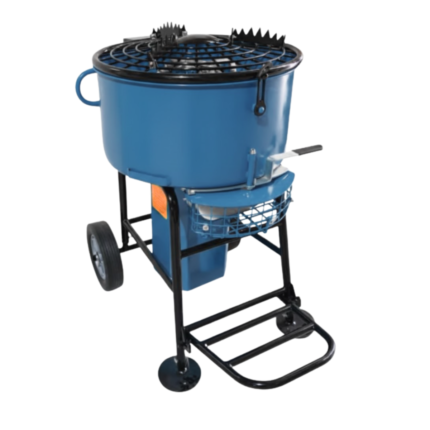
LABOMIX CONCRETE PAN MIXER AZA1118
The AZA1118 Labomix Concrete Pan Mixer is designed for demanding, high-volume mixing operations in construction laboratories, R&D facilities, and material testing centers. Built for durability and precision, it delivers consistent blends of concrete, mortar, grout, and aggregate mixes while supporting rigorous IS/ASTM test procedures.
Engineered with a high-efficiency gear-driven transmission, it provides stable torque, low maintenance requirements, and excellent mixing uniformity. The unit is available in multiple capacities from 90 litres to 300 litres, enabling users to select suitable volume for their operational needs.
The mixer features exchangeable mixing shovels, a safe-locking automatic discharge system, and large mobility wheels that allow a single operator to handle batching, mixing, and discharging efficiently.
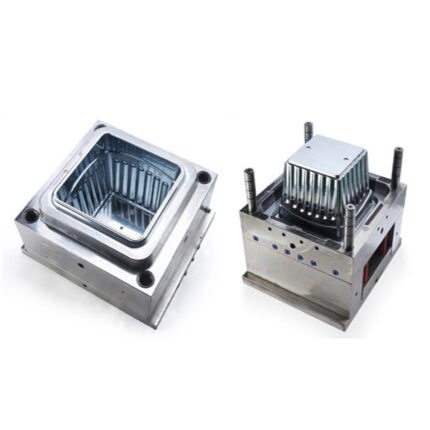
PLASTIC MOULDS AZA1125
The AZA1125 One-Piece Plastic Cube Mould (150 mm) from Azalab is a next-generation alternative to traditional metal cube moulds. Built from high-strength, non-deformable engineering plastic, this mould is designed to offer superior ease of use, long service life, and consistent dimensional accuracy for concrete compressive strength testing.
Its seamless, single-piece construction eliminates the need for bolts, screws, or external frames. Users simply apply demoulding oil, cast the concrete, and after curing, eject the cube using compressed air or water pressure, achieving clean and damage-free removal every time.
Compared to heavy metal moulds, the AZA1125 weighs nearly 90% less, providing clear advantages in portability, handling, and storage—making it ideal for both laboratory and on-site testing environments. Manufactured using an eco-friendly, non-polluting process, this mould supports sustainability goals in modern construction testing.

POCKET CONCRETE PENETROMETER AZA1114
- Measures Early Setting & Strength of concrete and mortar
- Direct Penetration Reading via spring-loaded plunger
- Dual Units: MPa or psi
- ASTM C403 & IS 8142 Compliant
- Compact, Portable & Field-Ready
- Includes Carrying Case & Calibration Chart