
 Rock
Rock Aggregate
 Cement
 Concrete
 Soil
Soil Steel
Steel Bitumen/Asphalt
 Security Survey Equipment
 General Items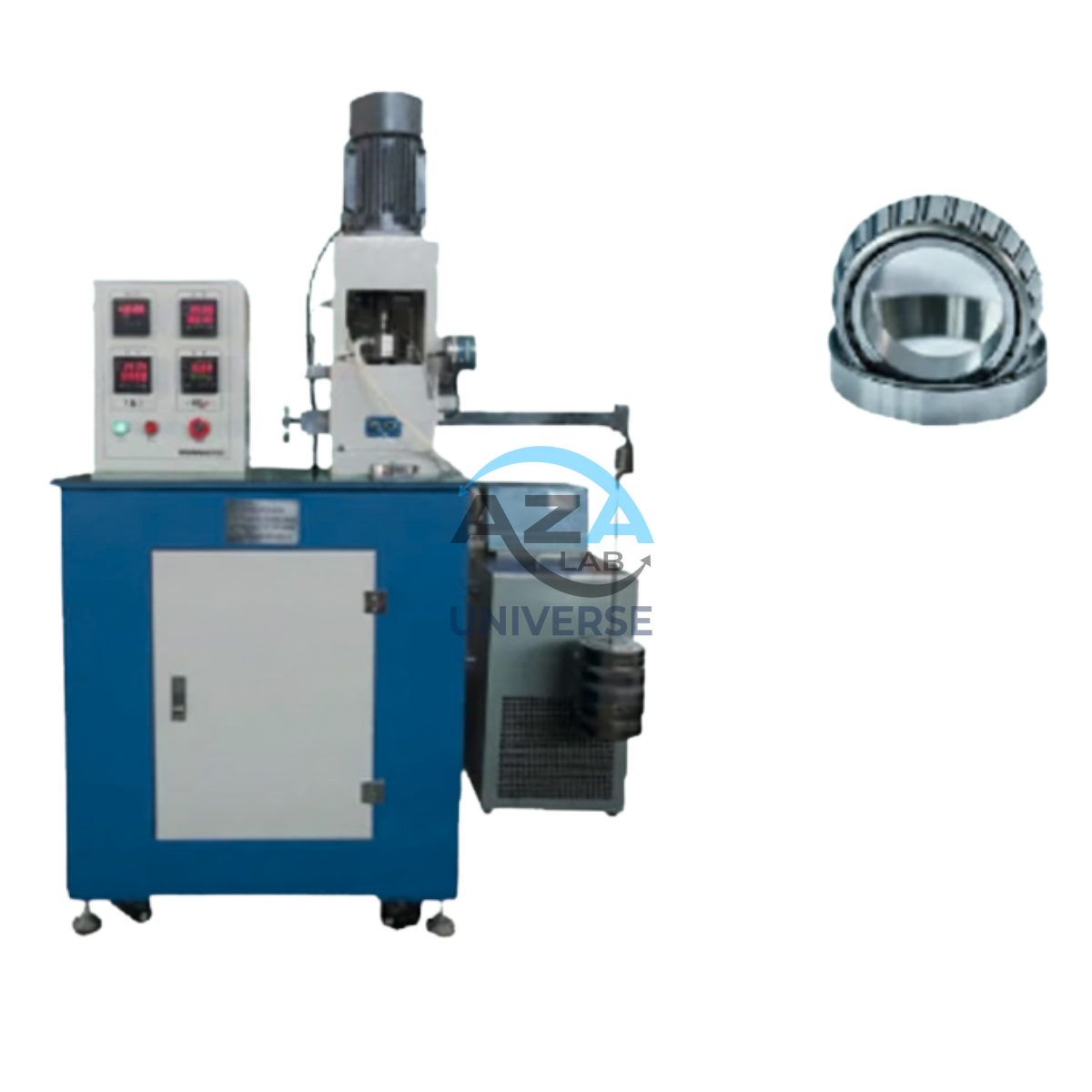
APPARATUS FOR SHEAR STABILITY OF LUBRICATING OILS CONTAINING POLYMERS AZA1329
The Apparatus for Shear Stability of Lubricating Oils Containing Polymers (Model: AZA1329) from AZA Lab is a high-precision KRL-type friction tester designed to determine the shear stability of lubricating oils and polymer-containing pressure fluids. It operates in accordance with DIN 51350-6 – Testing of Lubricants: Testing in the Shell Four-Ball Tester, Part 6, which defines the KRL method (Kugel Rollen Lager) for viscosity stability testing.
The instrument uses SKF 32008 tapered roller bearings as the friction pair to simulate the mechanical shear conditions experienced by lubricants in transmission and hydraulic systems. This test provides a reliable prediction of permanent viscosity loss, helping users evaluate the durability and performance stability of lubricants under stress.
Description
Working Principle
The AZA1329 KRL Tester applies controlled mechanical shear stress to the test lubricant inside a four-ball friction system equipped with a tapered roller bearing assembly.
Under specified conditions—speed of 1500 rpm, test force of 5000 N, temperature of 60°C, and test duration of approximately 20 hours—the lubricant experiences mechanical degradation similar to that occurring in real gear systems.
After the test, the viscosity is measured before and after shearing. The percentage decrease in viscosity represents the shear stability of the lubricant.
Construction and Design
The AZA1329 is built on a heavy-duty steel frame and includes a precision-controlled heating and cooling system. The testing chamber is embedded with the bearing and mandrel assembly, supported by advanced sensors and controllers to ensure consistent performance throughout the test duration.
The system consists of:
- Embedded test body and drive spindle
- SKF 32008 tapered roller friction pair
- Tapered roller bearing assembly
- Constant temperature control system
- Data acquisition and display interface
Key Features & Advantages
- Standards Compliant: Fully meets DIN 51350-6 and equivalent CEC L-45-99 (KRL) requirements.
• Real-World Simulation: Recreates mechanical shear conditions of lubricants under load.
• Stable Temperature Control: Imported compressor maintains a constant 60°C ±1°C environment.
• High Load Capability: Supports continuous operation at 5000 N load.
• Long-Duration Test Operation: Performs up to 1.74 million revolutions (≈20 hours).
• Precision Monitoring: Displays real-time temperature, speed, and duration.
• Durable and Safe: Rugged design with overload and overheat protection.
• Low Maintenance: Built for continuous operation with minimal servicing.
Test Conditions
| Parameter | Condition |
| Tap Speed | 1500 RPM |
| Test Force | 5000 N |
| Test Temperature | 60°C |
| Test Duration | 20 Hours |
| Total Revolutions | 1.74 Million |
The AZA1329 Apparatus for Shear Stability of Lubricating Oils Containing Polymers from AZA LAB offers a dependable, high-precision solution for evaluating lubricant shear stability according to DIN 51350-6 standards. With its rugged design, automated temperature control, and reliable performance, this system is an essential tool for laboratories focused on lubricant development, testing, and certification.
| Parameter | Specification |
|---|---|
| Model | AZA-1329 |
| Applicable Standard | DIN 51350-6 |
| Motor Speed | 1475 ± 25 RPM |
| Temperature Control Mode | Imported compressor cooling system |
| Sample Temperature | 60 ± 1°C |
| Sample Volume | 40 ± 0.5 ml |
| Test Load | 5000 ± 200 N |
| Total Revolutions | 1.74 million |
| Test Duration | Approximately 19 hours 40 minutes |
| Power Requirement | 5.5 kW |
| Power Supply | AC 220V, 50Hz |
| Dimensions (L × W × H) | 640 × 380 × 895 mm |
| Weight | 150 kg |
Related products
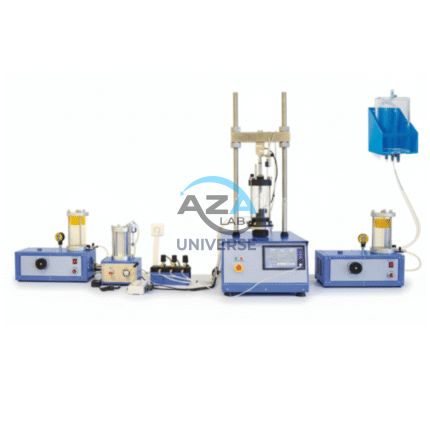
ADVANCED TRIAXIAL TEST SYSTEM (UU–CU–CD CAPABLE) AZA1296
The AZA LAB Advanced Triaxial Test System AZA1296 is a fully automated geotechnical laboratory testing system designed for accurate determination of soil shear strength and deformation characteristics under controlled stress and drainage conditions.
The system supports all major triaxial compression testing modes including:
- Unconsolidated Undrained (UU)
- Consolidated Undrained (CU)
- Consolidated Drained (CD)
Engineered for high-precision geotechnical analysis, the AZA1296 replicates in-situ soil stress conditions to evaluate soil stability, strength behavior, pore pressure response, and failure mechanisms under axial loading.
The system integrates servo-controlled loading, automatic pressure regulation, real-time pore pressure monitoring, automated data acquisition, and advanced software analysis, making it ideal for geotechnical laboratories, civil engineering projects, infrastructure development, research institutions, and academic applications.
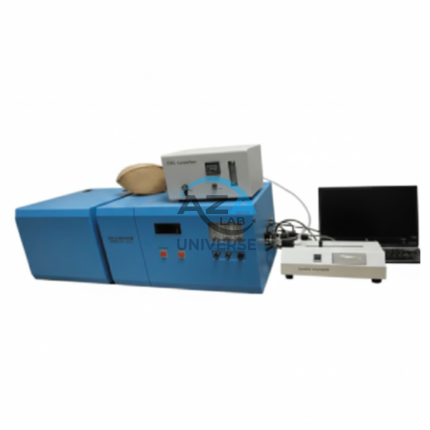
APPARATUS FOR SULFUR CONTENT IN LPG AZA1300A
Apparatus for Sulfur Content in LPG – AZA1300A
The AZA1300A Apparatus for Sulfur Content in LPG from Azalab is a high-performance analytical system designed for the accurate determination of total volatile sulfur in gaseous hydrocarbons and liquefied petroleum gases (LPG). Developed in strict accordance with ASTM D6667, this advanced instrument utilizes the Ultraviolet Fluorescence (UVF) detection method, delivering exceptional sensitivity, stability, and repeatability across a wide concentration range.
The AZA1300A is purpose-built for refineries, petrochemical plants, natural gas processing units, inspection laboratories, and quality assurance facilities, where precise sulfur measurement is critical for product quality, regulatory compliance, and environmental safety
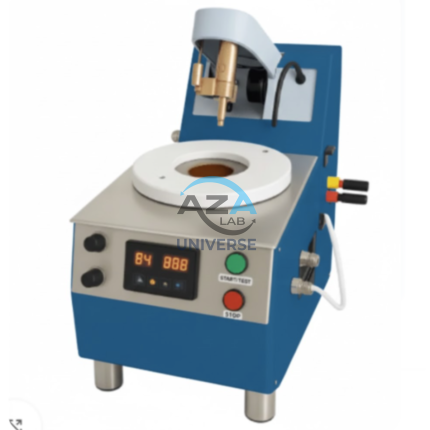
AUOTFLASH AUTOMATED ABEL FLASH POINT ANALYZER AZA1277
The AutoFlash-1277 (Model: AZA1277) from AZA Lab is a fully automated, microcontroller-based Abel Flash Point Analyzer designed for accurate, safe, and repeatable determination of flash points of combustible liquids. Engineered to meet stringent international testing requirements, this advanced instrument conforms to IP 170, ISO 13736, and IS 1448 (Part 20) standards.
Covering a standard temperature range of –30°C to 70°C, extendable up to 110°C, the AZA1277 is ideally suited for laboratories involved in petroleum testing, petrochemical quality control, fuels research, and regulatory compliance.
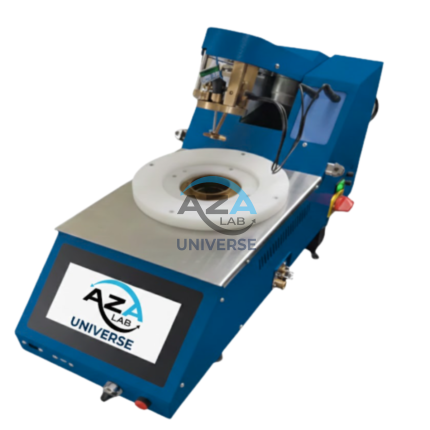
AUTOMATED CLEVELAND OPEN CUP FLASH POINT ANALYZER AZA1279
Standards Compliance
- ASTM D92 (Cleveland Open Cup)
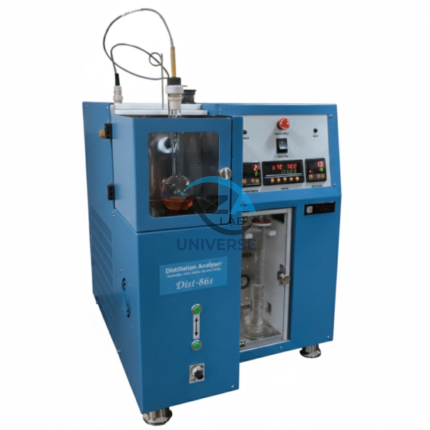
DIST-86S SEMI-AUTOMATED DISTILLATION ANALYZER AZA1283
Standards Compliance
- ASTM D86
- ISO 3405
- IP 123
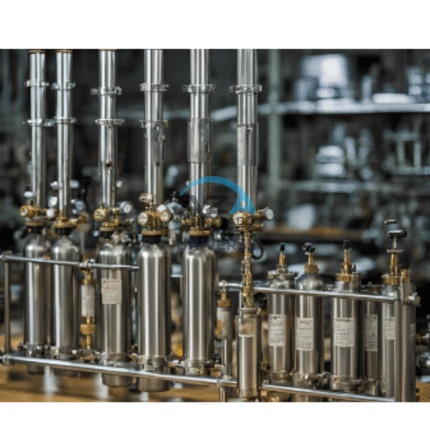
OIL & GAS SAMPLING CYLINDERS – SINGLE END WITH DIP LINE AZA1274
AZA LAB Sampling Cylinders & Gas Sampling Bombs are robust, high‑pressure vessels engineered for safe, reliable collection, storage, and transport of liquids and gases in demanding industrial environments. Available in single‑ended, double‑ended, and flat‑ended variants, they are constructed from premium materials like stainless steel (304/316 L) and Monel, offering corrosion resistance and durable performance . TPED, CE, and ISO certifications ensure compliance with international safety and transport regulations. Each cylinder features precision-engineered NPT connections (¼″ or ½″), customizable volumes from 150 cc to 10 L, and pressure ratings up to 5000 psig, making them ideal for applications in refineries, petrochemical labs, chromatographic analysis, and gas sampling in high‑pressure systems . Hydrostatic testing guarantees reliable integrity under rigorous conditions, while additional options—such as specialized valves, burst discs, dip tubes, and protective carrying cases—allow for tailored configurations to meet specific sampling needs.
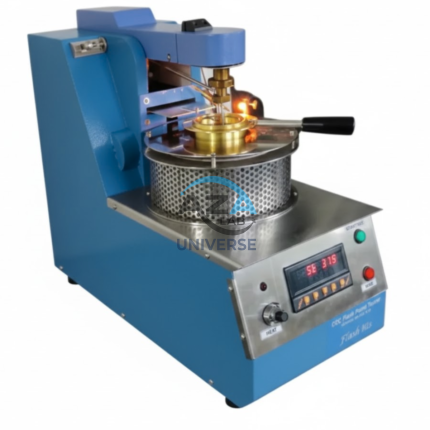
SEMI AUTOMATED CLEVELAND OPEN CUPFLASH POINT ANALYZER AZA1289
The AZA1289 Semi-Automated Cleveland Open Cup Flash Point Analyzer from AZA Lab is engineered for accurate, repeatable determination of flash and fire points of petroleum products, lubricants, and other combustible liquids. Designed in full compliance with ASTM D92 and ISO 2592, this analyzer provides an optimal balance between automation, operator control, and cost efficiency.
The Cleveland Open Cup (COC) method is the globally accepted reference method for determining flash and fire points of materials with flash points above 79°C, making AZA1289 ideal for routine quality control, safety assessment, and regulatory testing in laboratory environments.
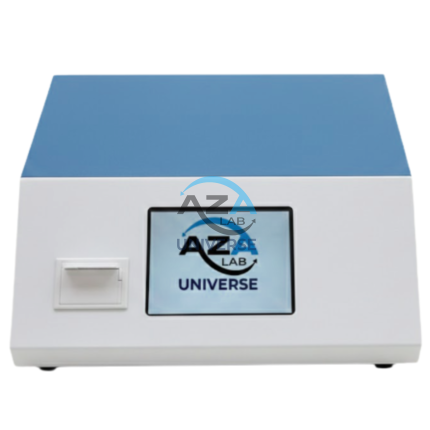
X-RAY SULFUR METER TESTER AZA1300B
The X-Ray Sulfur Meter (Model: AZA1300B) from AZA Lab is a highly efficient and precise instrument designed to measure sulfur content in petroleum and petrochemical products during production. It enables fast, non-destructive analysis, making it an essential tool for quality control, process optimization, and regulatory compliance.
Ideal for use in refineries, laboratories, and production sites, this instrument provides accurate, reliable results with minimal sample preparation, ensuring consistent performance and repeatability.