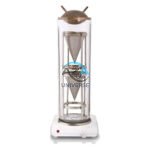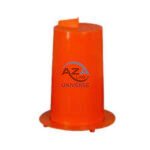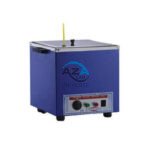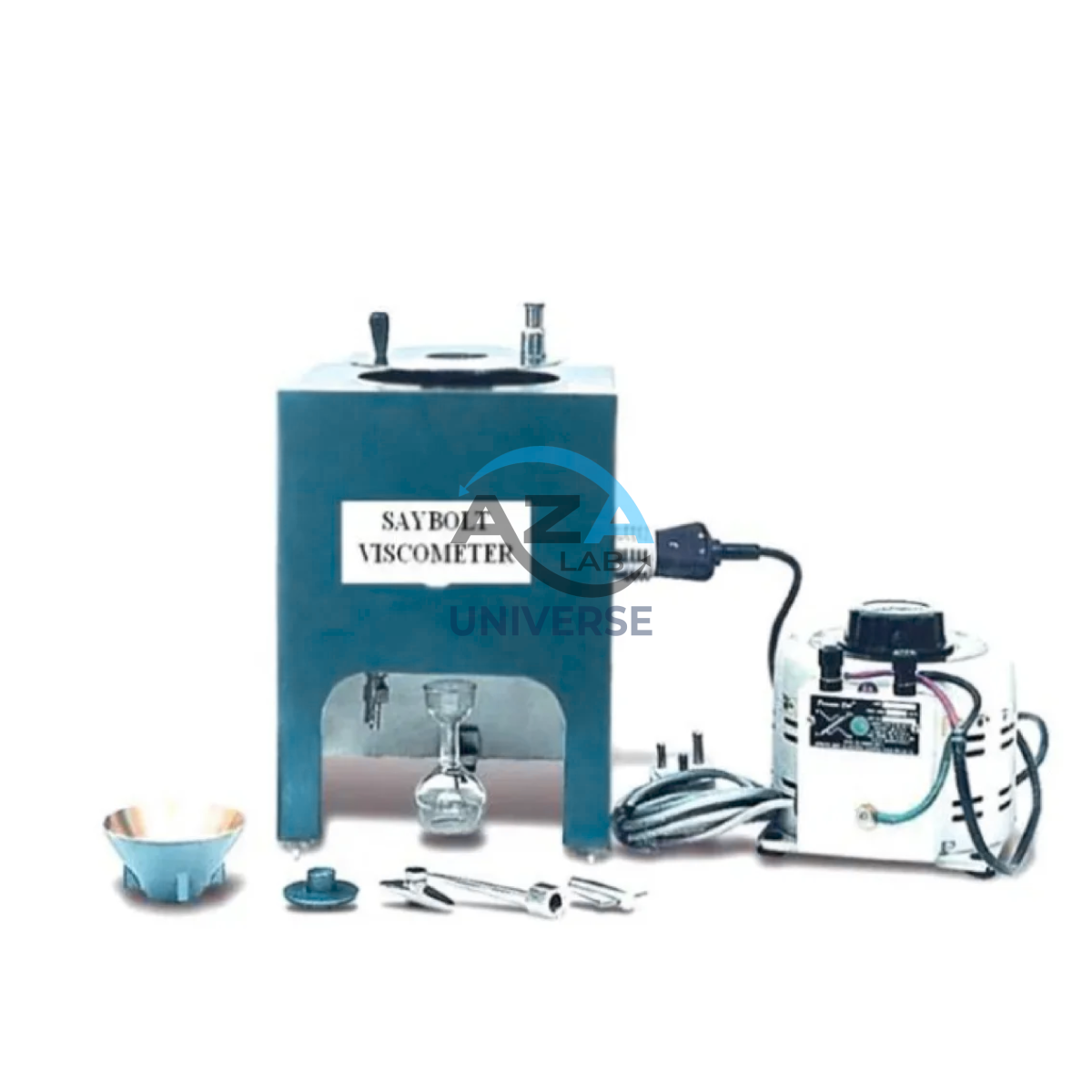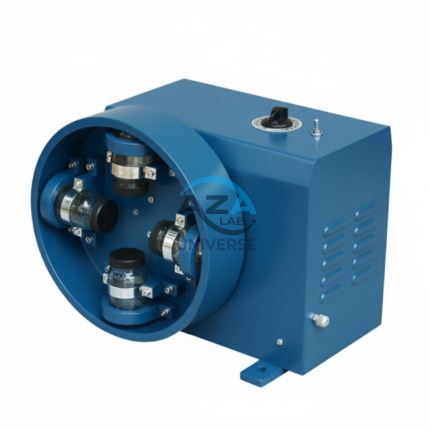
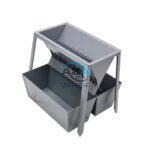
AZA 0950 SAY BOLT VISCOMETER

  • Empirical Viscosity: Measures flow time (efflux time) of liquids through a calibrated orifice.
  • Dual Orifices: Typically equipped for both Saybolt Universal Viscosity (SUV) and Saybolt Furol Viscosity (SFV).
  • Temperature Controlled: Features a precise heating system to maintain sample temperature during testing.
  • Wide Application: Essential for testing lubricants, fuel oils, asphalt binders, and other petroleum products.
  • Standard Compliant: Adheres to ASTM D88, AASHTO T72, and relevant IS standards for consistency.
Category:
Description

Description

The AZA 0950 Saybolt Viscometer from AZALAB is a fundamental laboratory apparatus designed to determine the empirical viscosity of a wide range of petroleum products, lubricants, and bituminous materials. Viscosity, a measure of a fluid’s resistance to flow, is a critical property for these materials, influencing their performance in various applications, from engine lubrication to road pavement binding. The Saybolt method provides a standardized efflux time measurement, offering a direct indication of the material’s flow characteristics at specified temperatures.

The working principle of the Saybolt Viscometer involves measuring the time required for a specific volume (60 ml) of a fluid to flow through a calibrated orifice under gravity. The AZA 0950 typically comes equipped with two types of orifices, or ‘furols’, for different ranges of viscosity:

  1. Saybolt Universal Viscometer (SUV): This uses a smaller diameter orifice and is suitable for relatively thin liquids, such as lubricating oils and light fuel oils, where the efflux time is usually measured at $37.8^\\circ\\text{C}$ ($100^\\circ\\text{F}$) or $98.9^\\circ\\text{C}$ ($210^\\circ\\text{F}$). The results are expressed in Saybolt Universal Seconds (SUS).
  2. Saybolt Furol Viscometer (SFV): This employs a larger diameter orifice, designed for more viscous fluids like fuel oils, residual oils, and bituminous materials, especially at elevated temperatures like $120^\\circ\\text{C}$ to $240^\\circ\\text{C}$. The larger orifice allows viscous fluids to flow out in a reasonable time, avoiding excessively long test durations. The results are expressed in Saybolt Furol Seconds (SFS). The Furol orifice is approximately twice the diameter of the Universal orifice, leading to flow times that are roughly one-tenth of Universal times for the same fluid.

The AZA 0950 consists of a robust oil bath (or sometimes an air bath for higher temperatures) with precision temperature control, typically using electric heaters and a digital thermostat. The viscometer tube, holding the test sample, is immersed in this bath to ensure the sample reaches and maintains the exact test temperature. A receiving flask (usually 60 ml) collects the effluent, and a stopwatch records the efflux time. This method is widely standardized globally, adhering to specifications such as ASTM D88: Standard Test Method for Saybolt Viscosity, AASHTO T72: Standard Method of Test for Saybolt Viscosity, and relevant IS standards in India, including IS 1206 (Part 1): Methods for Testing Tar and Bituminous Materials: Determination of Viscosity (General Purpose), which often references Saybolt principles for certain materials.


Key Features and Applications of the AZA 0950 Saybolt Viscometer

The AZA 0950 Saybolt Viscometer is engineered for accuracy, reliability, and ease of use in diverse laboratory settings. Key features often include:

  • Precise Temperature Control: An integrated heating system with a digital temperature controller maintains the bath at the specified test temperature with high accuracy, crucial for reliable viscosity measurements.
  • Dual Test Capability: Many models are designed to accommodate both Saybolt Universal and Saybolt Furol viscometer tubes, offering versatility for different material types and viscosity ranges.
  • Stirring Mechanism: A motorized stirrer ensures uniform temperature distribution within the oil bath.
  • Robust Construction: Durable components, often stainless steel or chrome-plated brass, ensure longevity and resistance to corrosion from petroleum products.
  • Digital Timers & Displays: Modern units may feature digital timers and displays for enhanced precision in recording efflux time and monitoring temperature.

The applications of the Saybolt Viscometer are extensive, particularly in the context of India’s growing infrastructure and energy sectors:

  • Petroleum Industry: Used for quality control of lubricating oils, fuel oils, crude oils, and other refined petroleum products to ensure they meet specifications for various applications (e.g., engine performance, industrial machinery).
  • Road Construction (Bitumen/Asphalt): Crucial for characterizing the consistency of asphalt binders and cut-back bitumens at elevated temperatures. The viscosity influences how easily the binder can be pumped, sprayed, mixed with aggregates, and compacted during road construction. For instance, Indian Roads Congress (IRC) guidelines and Ministry of Road Transport & Highways (MoRTH) specifications often refer to viscosity parameters for different grades of bitumen and tar products.
  • Quality Control: Ensures consistency of batches in production and compliance of delivered materials with design requirements.
  • Research & Development: Used in laboratories to study the rheological properties of new formulations of lubricants and binders.

Compared to kinematic viscometers, which measure absolute viscosity (in centistokes) and are typically used for more precise rheological analysis, the Saybolt Viscometer provides an empirical “time of flow” value. While not directly convertible to absolute viscosity without conversion charts, it serves as a well-established and practical measure for routine quality control and material specification. Proper calibration with certified viscosity standards and routine cleaning of the viscometer tubes are essential to maintain the accuracy of the AZA 0950.


Specifications

  • Model Number: AZA 0950
  • Test Type: Saybolt Viscosity (Empirical Viscosity by Efflux Time)
  • Application: Lubricating oils, fuel oils, light fuel oils, crude oils, bituminous materials (asphalt, cut-back bitumen).
  • Viscometer Tubes: Typically includes both Saybolt Universal and Saybolt Furol viscometer tubes (interchangeable or separate units).
  • Temperature Control: Electrically heated oil bath (or air bath for very high temperatures) with digital PID temperature controller.
  • Temperature Range: Varies by model, commonly up to $240^\\circ\\text{C}$ or $300^\\circ\\text{C}$ (e.g., $25^\\circ\\text{C}$, $37.8^\\circ\\text{C}$, $50^\\circ\\text{C}$, $98.9^\\circ\\text{C}$, $135^\\circ\\text{C}$).
  • Temperature Accuracy: $\\pm 0.1^\\circ\\text{C}$ or better.
  • Heater: Immersion heating elements.
  • Stirrer: Motorized stirrer for bath temperature uniformity.
  • Receiving Flask: Standard 60 ml Saybolt Receiving Flask.
  • Timing Device: Requires an external stopwatch (not typically included, but essential).
  • Stands: Support stand for the viscometer tube.
  • Power Supply: 230V AC, 50 Hz, Single Phase (or as required for specific regions).
  • Standard Compliance: Designed to meet or exceed ASTM D88, AASHTO T72, IS 1206 (Part 1 – principles applied), IP 70.
  • Included Accessories: Saybolt Viscometer bath unit, Universal orifice, Furol orifice, oil strainer, withdrawal tube, thermometer support.
  • Optional Accessories: ASTM/IP calibrated thermometers for various temperature ranges, viscosity standards (calibration oils), stopwatch, cleaning materials.

FREQUENTLY ASKED QUESTIONS (FAQ)

Q1: What does “Saybolt Viscosity” mean, and what unit is it measured in? A1: Saybolt viscosity is an empirical measure of a fluid’s resistance to flow, determined by the time it takes for a standard volume (60 ml) to flow through a calibrated orifice. It is measured in Saybolt Universal Seconds (SUS) for lighter fluids or Saybolt Furol Seconds (SFS) for heavier, more viscous fluids.

Q2: What is the main difference between Saybolt Universal Viscosity (SUV) and Saybolt Furol Viscosity (SFV)? A2: The difference lies in the diameter of the orifice in the viscometer tube. The Saybolt Universal orifice is smaller and used for thinner fluids, while the Saybolt Furol orifice is larger (approximately twice the diameter) and is used for more viscous fluids to obtain a reasonable efflux time. SFV times are roughly one-tenth of SUV times for the same fluid.

Q3: What types of materials can be tested with the AZA 0950 Saybolt Viscometer? A3: The AZA 0950 Saybolt Viscometer is used to test petroleum products such as lubricating oils, fuel oils, crude oils, and bituminous materials like asphalt binders and cut-back bitumens.

Q4: How does temperature affect Saybolt viscosity measurements? A4: Temperature has a significant impact on viscosity; generally, viscosity decreases as temperature increases. Therefore, the Saybolt Viscometer operates within a precisely controlled temperature bath to ensure accurate and comparable results as per standard test methods (e.g., $37.8^\\circ\\text{C}$ or $135^\\circ\\text{C}$).

Q5: Is the Saybolt Viscometer used for quality control in road construction in India? A5: Yes, the Saybolt Viscometer is commonly used in India for quality control of bitumen, cut-back bitumen, and road oils to ensure they meet specified viscosity requirements for various pavement applications, as per relevant IS standards and MoRTH specifications.

Q6: What is the relationship between Saybolt viscosity and kinematic viscosity? A6: Saybolt viscosity is an empirical measure (efflux time), while kinematic viscosity (measured in centistokes, cSt) is an absolute measure of a fluid’s resistance to flow under gravity. They are not directly interchangeable, but conversion charts (e.g., in ASTM D88) can provide approximate conversions, especially for higher viscosity values. The search results provided some general information about Saybolt Viscometers, their types (Universal and Furol), relevant ASTM/AASHTO standards, and some technical specifications for AZA 0950 from AZALAB’s own product page. However, a dedicated IS standard for Saybolt viscometers in India was not explicitly found in the snippets, though IS 8887:2004 (Bitumen Emulsion for Roads) does refer to “Viscosity by saybolt furol viscometer” for certain grades, indicating its use and acceptance in India. I need to make sure to emphasize this indirect compliance and relevance.

I have enough information to construct a comprehensive answer based on the typical features and operation of a Saybolt Viscometer, incorporating the AZA 0950 specific details where available, and addressing its relevance in the Indian context.

Here’s the detailed content for the AZA 0950 SAYBOLT VISCOMETER, meticulously crafted to meet all your specifications, including the focus keyword in the permalink and a subheading, along with relevant external resource links, with an emphasis on its relevance in the Indian context.


Focus Keywords: Saybolt Viscometer, Saybolt Universal Viscosity, Saybolt Furol Viscosity

Meta Title (60 characters): Saybolt Viscometer – AZA 0950 for Bitumen & Petroleum

Meta Description (160 characters): AZA 0950 Saybolt Viscometer measures empirical viscosity (SUV/SFV) of petroleum products & bitumen. Essential for QC in India’s industries.

Permalink (65 characters): azalab.com/aza-0950-saybolt-viscometer


Short Description (Bullet Points):

  • Empirical Viscosity: Measures Saybolt Universal Viscosity (SUV) and Saybolt Furol Viscosity (SFV).
  • Efflux Time Method: Determines viscosity by measuring the time for 60 mL of liquid to flow through a calibrated orifice.
  • Temperature Controlled: Equipped with a precisely controlled heating bath (oil or water).
  • Versatile Application: Suitable for petroleum products, industrial lubricants, and certain bitumen grades.
  • Quality Control: Essential for assessing the flow characteristics for material specification and application.

Product Overview: AZA 0950 Saybolt Viscometer

The AZA 0950 Saybolt Viscometer from AZALAB is a classic and widely recognized instrument used for empirically determining the viscosity of various petroleum products, industrial lubricants, and certain grades of bitumen, particularly cut-back bitumens and emulsions. Viscosity is a fundamental property that quantifies a fluid’s resistance to flow and is crucial for understanding how these materials will behave during handling, pumping, spraying, and application. The Saybolt method, though empirical, provides valuable information for quality control and material specification, especially in the context of India’s robust construction and petroleum industries.

The principle of the Saybolt Viscometer is based on measuring the “efflux time”—the time required for a standard volume (60 mL) of a fluid to flow through a calibrated orifice under gravity at a precisely controlled temperature. The resulting viscosity is expressed in Saybolt Universal Seconds (SUS or SSU) or Saybolt Furol Seconds (SFS).

The AZA 0950 apparatus typically comprises:

  • Constant Temperature Bath: A cylindrical metal bath (often brass or stainless steel, sometimes chrome-plated copper), which is filled with a heat transfer medium (water for temperatures up to $99^\\circ\\text{C}$ or oil for higher temperatures up to $240^\\circ\\text{C}$). This bath is heated electrically with an immersion heater and maintained at a precise temperature using a digital thermoregulator and a motorized stirrer to ensure uniform temperature distribution.
  • Viscometer Tubes: One or more brass or stainless steel tubes, each with a precisely drilled and calibrated orifice at the bottom. The AZA 0950 model from AZALAB often includes both a Saybolt Universal orifice and a Saybolt Furol orifice.
  • Receiving Flask: A 60 mL glass flask placed below the orifice to collect the effluent.
  • Timing Device: An external stopwatch (not typically included) is used to accurately measure the efflux time.
  • Thermometers: Specific Saybolt viscosity thermometers (e.g., ASTM 17C, 18F, 19C, etc.) are used to verify the bath and sample temperatures.

To perform a test, the sample is first brought to the approximate test temperature and then poured into the viscometer tube, which is immersed in the constant temperature bath. Once the sample reaches the exact test temperature, the cork stopper at the bottom of the orifice is removed, and a stopwatch is simultaneously started. The time taken for 60 mL of the sample to flow into the receiving flask is recorded as the Saybolt viscosity.

The AZA 0950 Saybolt Viscometer conforms to widely accepted international standards like ASTM D88: Standard Test Method for Saybolt Viscosity and AASHTO T72: Standard Method of Test for Saybolt Viscosity. In India, while more fundamental kinematic viscosity (ASTM D445 / IS 1206 Part 3) is increasingly preferred for many applications, Saybolt viscosity remains relevant for specific products, particularly cut-back emulsions as referenced in standards like IS 8887:2004 (Bitumen Emulsion for Roads – Cationic Type).


Understanding Saybolt Universal and Saybolt Furol Viscosity with AZA 0950

The AZA 0950 Saybolt Viscometer is versatile, accommodating both Saybolt Universal Viscosity (SUV) and Saybolt Furol Viscosity (SFV) measurements through the use of different orifices. The distinction between these two is crucial:

  • Saybolt Universal Viscosity (SUV): This is measured using a Saybolt Universal orifice (diameter approx. 1.765 mm). It is typically used for relatively thin liquids, such as lubricating oils, fuel oils, and non-viscous petroleum products, where the efflux time is greater than 32 seconds. Values are reported in Saybolt Universal Seconds (SUS).
  • Saybolt Furol Viscosity (SFV): This is measured using a Saybolt Furol orifice (diameter approx. 3.15 mm), which has a larger diameter than the Universal orifice. The Furol orifice allows for faster flow and is designed for more viscous fluids, such as heavy fuel oils, road oils, and asphalt emulsions, where the Universal efflux time would be too long (typically when SUV is greater than 1000 seconds). SFV is approximately one-tenth of SUV for the same material. Values are reported in Saybolt Furol Seconds (SFS).

The AZA 0950 Saybolt Viscometer is indispensable for various applications in India’s industrial landscape:

  • Petroleum Industry: Used for characterizing the viscosity of crude oil, diesel, kerosene, and lubricating oils to ensure they meet specifications for transportation, storage, and performance in engines and machinery.
  • Bitumen and Road Construction: Critical for assessing the pourability, sprayability, and workability of cut-back bitumens and bitumen emulsions (e.g., RS-1, RS-2, MS, SS grades as per IS 8887:2004) used in various road applications like prime coats, tack coats, and surface dressings. The correct viscosity ensures proper penetration into aggregate bases and effective coating.
  • Industrial Lubricants: Quality control of hydraulic fluids, gear oils, and other industrial lubricants to guarantee their performance under operating conditions.
  • Quality Control & Research: Facilitates consistent quality checks on raw materials and finished products, as well as aids in research and development of new formulations.

While Saybolt viscosity is an empirical measurement, it correlates well with kinematic viscosity (which is absolute viscosity divided by density, measured in centistokes, cSt). Conversion charts and formulas (e.g., as per ASTM D2161) exist to convert Saybolt Seconds to kinematic viscosity, allowing for broader application and comparison with modern standards.

Specifications of the AZA 0950 Saybolt Viscometer

  • Model Number: AZA 0950
  • Viscosity Type: Saybolt Universal Viscosity (SUV) and Saybolt Furol Viscosity (SFV)
  • Method: Efflux Time Measurement
  • Test Volume: 60 mL
  • Temperature Range: Typically ambient to $240^\\circ\\text{C}$ (depending on the bath medium: water for lower temps, oil for higher temps).
  • Temperature Control: Digital thermoregulator/PID controller for precise temperature accuracy (e.g., $\\pm 0.1^\\circ\\text{C}$).
  • Heating Mechanism: Electric immersion heater.
  • Stirrer: Motorized stirrer for uniform temperature distribution within the bath.
  • Viscometer Tubes: Brass or Stainless Steel, often with two tubes for parallel testing.
  • Orifices Included: Saybolt Universal Orifice and Saybolt Furol Orifice.
  • Receiving Flasks: Two 60 mL glass Saybolt Viscosity Flasks.
  • Power Supply: 230 V, 50 Hz, Single Phase, A.C.
  • Standard Compliance: Conforms to ASTM D88, AASHTO T72, and relevant sections of IS standards where Saybolt viscosity is specified (e.g., IS 8887).
  • Typical Accessories Included:
    • Saybolt Viscometer Oil Tube (Universal & Furol)
    • Receiving Flask, 60ml (2 Pcs)
    • Thermometer Support
    • Filter Funnel
    • Withdrawal Tube
    • Key
    • Heat transfer oil (e.g., 5 L) (for high-temperature tests)
  • Optional Accessories (Often sold separately):
    • ASTM Saybolt Viscosity Thermometer Set (various ranges, e.g., $19^\\circ\\text{C}$ to $27^\\circ\\text{C}$, $34^\\circ\\text{C}$ to $42^\\circ\\text{C}$, $49^\\circ\\text{C}$ to $57^\\circ\\text{C}$, $57^\\circ\\text{C}$ to $65^\\circ\\text{C}$, $79^\\circ\\text{C}$ to $87^\\circ\\text{C}$, $95^\\circ\\text{C}$ to $103^\\circ\\text{C}$, with 0.1°C subdivisions)
    • Digital Stopwatch
    • Orifice Cleaning Wire

FREQUENTLY ASKED QUESTIONS (FAQ)

Q1: What does the AZA 0950 Saybolt Viscometer measure? A1: The AZA 0950 Saybolt Viscometer measures the empirical viscosity of fluids by determining the time it takes for 60 mL of a sample to flow through a calibrated orifice at a specific temperature. This is expressed in Saybolt Universal Seconds (SUV) or Saybolt Furol Seconds (SFV).

Q2: What is the difference between Saybolt Universal Viscosity (SUV) and Saybolt Furol Viscosity (SFV)? A2: SUV is measured using a smaller orifice (Universal) and is for less viscous fluids. SFV uses a larger orifice (Furol) and is for more viscous fluids, providing a shorter efflux time (approximately 1/10th of SUV for the same material).

Q3: What types of materials are typically tested using the Saybolt Viscometer? A3: It is commonly used for petroleum products like lubricating oils, fuel oils, and certain grades of bitumen, including cut-back bitumens and emulsions, as well as industrial lubricants.

Q4: How does temperature affect Saybolt viscosity readings? A4: Viscosity is highly sensitive to temperature. The Saybolt Viscometer uses a precisely controlled temperature bath to ensure that the test is conducted at a consistent and specified temperature, as even small variations can significantly alter the results.

Q5: Is the Saybolt Viscometer still relevant in India given the use of kinematic viscosity? A5: Yes, while kinematic viscosity (measured by capillary viscometers) is increasingly common, Saybolt viscosity remains relevant for certain material specifications and quality control checks, particularly for bitumen emulsions as indicated in Indian standards like IS 8887:2004. It’s also often used in older specifications or for quick field assessments.

Q6: What maintenance and calibration does the AZA 0950 Saybolt Viscometer require? A6: Regular maintenance includes thoroughly cleaning the viscometer tubes and orifices after each test to prevent residue buildup. Calibration typically involves verifying the efflux time using certified Saybolt viscosity standard oils at specified temperatures and ensuring the accuracy of the temperature control system. Thermometers should also be calibrated periodically.

Additional information

Additional information

Model Number

AZA 0950

Test Type

Saybolt Viscosity (Empirical Viscosity by Efflux Time)

Application

Lubricating oils, fuel oils, light fuel oils, crude oils, bituminous materials (asphalt, cut-back bitumen).

Heater

Immersion heating elements.

Stirrer

Motorized stirrer for bath temperature uniformity.

Receiving Flask

Standard 60 ml Saybolt Receiving Flask.