
 Rock
Rock Aggregate
 Cement
 Concrete
 Soil
Soil Steel
Steel Bitumen/Asphalt
 Security Survey Equipment
 General Items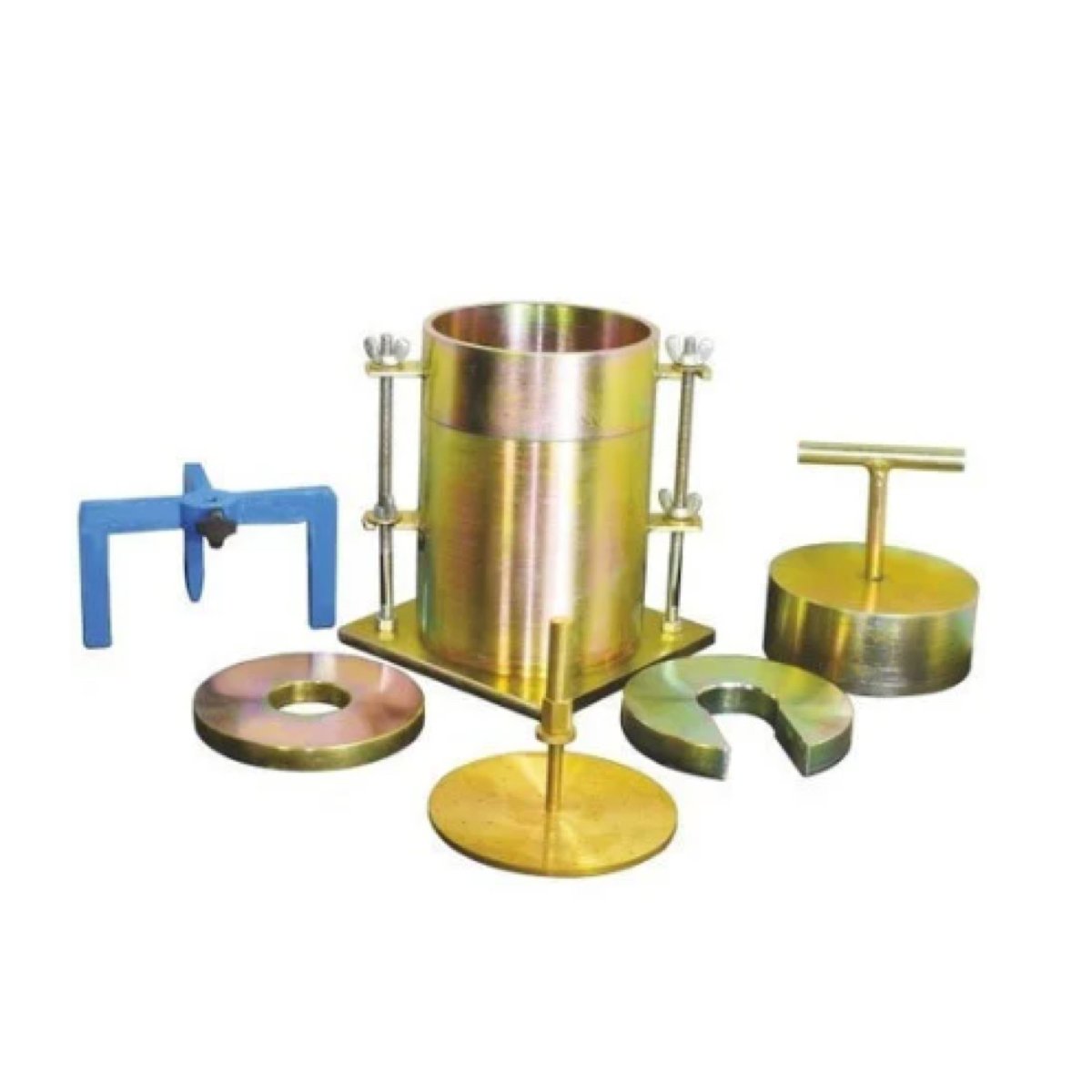
CALIFORNIA BEARING RATIO APPARATUS(ASTM VERSION MOULD) AZA0910
The AZA0910 California Bearing Ratio (CBR) Apparatus – ASTM Version Mould from Azalab is a precision-engineered laboratory system designed to determine the bearing strength of subgrade soils and pavement base materials in strict accordance with ASTM D1883. This apparatus plays a critical role in pavement and foundation design by evaluating soil resistance to penetration under controlled compaction and moisture conditions.
Widely used in highway, airfield, and infrastructure projects, the AZA0910 provides reliable and repeatable CBR values essential for assessing soil suitability and structural performance of road foundations.
Description
Applications
The AZA0910 CBR Apparatus is essential for:
-
Subgrade strength evaluation for highways and runways
-
Design of base and sub-base layers in pavement construction
-
Comparative analysis of soil types under standardized compaction
-
Soil stabilization and improvement studies
-
Laboratory quality control for infrastructure and civil projects
Both soaked and unsoaked CBR tests can be conducted, enabling simulation of worst-case field conditions such as prolonged rainfall or water saturation.
Construction & Features
The ASTM version mould is dimensionally designed to comply with U.S. and international standards and differs from BS-type moulds.
ASTM Mould Construction:
-
Internal diameter: 6 inches (152 mm)
-
Height: 7 inches (177.8 mm)
-
Detachable base plate
-
Removable extension collar
Standard Supply Includes:
-
ASTM CBR mould with base plate and extension collar
-
Penetration piston (50 mm diameter) with adjustable loading stem
-
Dial gauge or optional digital displacement indicator
-
Annular and slotted surcharge weights (typically 2.5 kg each)
-
Spacer disc and perforated plate
-
Optional soaking tank for wet CBR testing
-
Compatible with manual or motorised loading frames
All components are manufactured from corrosion-resistant steel, precision-machined for durability, dimensional accuracy, and long service life.
Standards & Compliance
The AZA0910 fully complies with:
-
ASTM D1883 – CBR of Laboratory-Compacted Soils
-
AASHTO T193 – CBR of Laboratory-Compacted Soils
-
Compatible with ASTM D698 and ASTM D1557 compaction methods
This ensures universal acceptance of test results for pavement and foundation design.
Key Benefits
-
Precision-engineered mould and accessories for ASTM-compliant testing
-
Suitable for soaked and unsoaked CBR evaluations
-
Compatible with motorised and manual load frames
-
Rugged laboratory-grade construction for repeatable results
-
Clear and reliable CBR value determination for pavement design
Specifications
| Feature | Specification |
|---|---|
| Model | AZA0910 |
| Product Type | CBR Apparatus – ASTM Version Mould |
| Mould Internal Diameter | 6 inches (152 mm) |
| Mould Height | 7 inches (177.8 mm) |
| Mould Material | Mild Steel / Stainless Steel |
| Penetration Piston Diameter | 50 mm |
| Penetration Measurement | Dial Gauge / Digital (0.01 mm resolution) |
| Loading Frame Capacity | 50 kN / 100 kN (manual or motorised) |
| Surcharge Weights | 2.5 kg annular and slotted |
| Spacer Disc Thickness | 50 mm (standard) |
| Testing Type | Soaked and Unsoaked CBR |
| Standards Compliance | ASTM D1883, AASHTO T193 |
| Application | Soil bearing capacity for road foundations |
Frequently Asked Questions (FAQ)
Q1: What is the difference between ASTM and BS CBR moulds?
ASTM moulds are 6 inches (152 mm) in diameter and 7 inches high, whereas BS moulds use different dimensions. ASTM moulds comply with U.S. and international pavement design standards.
Q2: Can soaked and unsoaked tests be performed?
Yes. With a soaking tank and appropriate surcharge weights, both test conditions are supported.
Q3: Is this apparatus suitable for field testing?
No. AZA0910 is designed exclusively for controlled laboratory testing.
Q4: Can it be used with a motorised load frame?
Yes. It is fully compatible with both motorised and hand-operated loading frames.
Q5: What is the purpose of the CBR value?
The CBR value is used to assess subgrade and base-layer strength for pavement and roadway design.
Additional information
| Mould Internal Diameter |
6 inches (152 mm) |
|---|---|
| Mould Height |
7 inches (177.8 mm) |
| Mould Material |
Mild Steel / Stainless Steel |
| Loading Piston Diameter |
50 mm |
You may also like…
ADVANCED TRIAXIAL TEST SYSTEM (UU–CU–CD CAPABLE) AZA1296
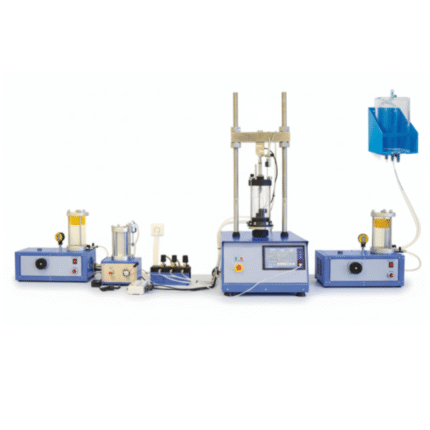
The AZA LAB Advanced Triaxial Test System AZA1296 is a fully automated geotechnical laboratory testing system designed for accurate determination of soil shear strength and deformation characteristics under controlled stress and drainage conditions.
The system supports all major triaxial compression testing modes including:
- Unconsolidated Undrained (UU)
- Consolidated Undrained (CU)
- Consolidated Drained (CD)
Engineered for high-precision geotechnical analysis, the AZA1296 replicates in-situ soil stress conditions to evaluate soil stability, strength behavior, pore pressure response, and failure mechanisms under axial loading.
The system integrates servo-controlled loading, automatic pressure regulation, real-time pore pressure monitoring, automated data acquisition, and advanced software analysis, making it ideal for geotechnical laboratories, civil engineering projects, infrastructure development, research institutions, and academic applications.
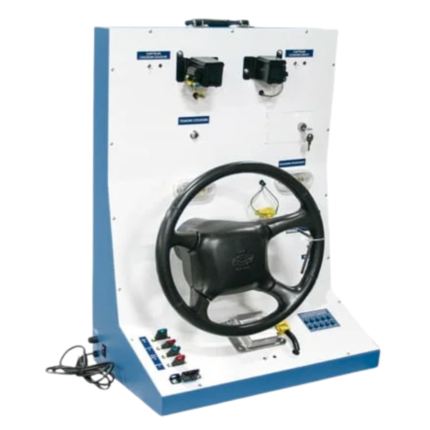
AIR BAG TRAINER AZA1246
The AZA1246 AZALAB Air Bag Trainer is a comprehensive educational training platform designed to demonstrate the structure, operation, diagnostics, and fault analysis of modern automotive airbag systems, also known as Supplemental Restraint Systems (SRS). Built using OEM automotive components, this trainer delivers a realistic learning experience while maintaining complete operational safety.
This system is ideally suited for automotive engineering colleges, ITIs, polytechnic institutes, vocational training centers, and service technician programs, enabling both theoretical instruction and hands-on diagnostics practice.
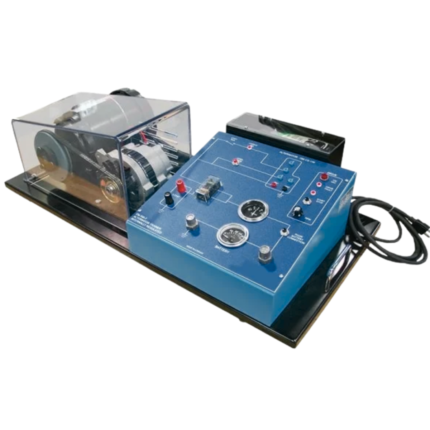
ALTERNATOR TRAINER AZA1247
The AZA1247 AZALAB Alternator Trainer is a hands-on automotive electrical training system designed to demonstrate the working principles, construction, and diagnostics of an automotive alternator with external voltage regulation. Built using OEM automotive components, this trainer provides a realistic and safe learning platform for students, technicians, and trainees to understand vehicle charging systems in depth.
This system is ideal for automotive engineering institutes, ITIs, polytechnics, vocational training centers, and service technician programs, supporting both theoretical instruction and practical experimentation.
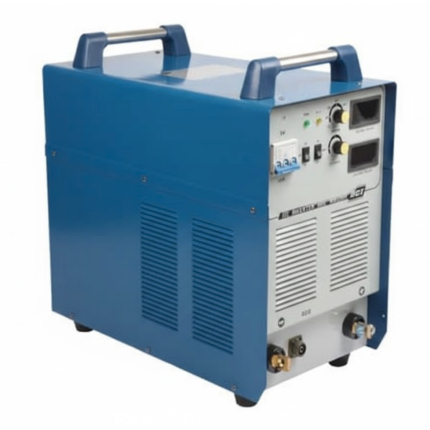
ARC WELDING MACHINE AZA1234
The AZA1234 Arc Welding Machine by A Z A Lab is a high-performance industrial welding solution engineered for demanding fabrication, maintenance, and structural welding applications. Designed using advanced inverter technology, this machine delivers superior arc stability, high efficiency, and reliable welding performance across a wide range of electrode types and materials.
With an inverter frequency of up to 20 kHz, the AZA1234 ensures fast dynamic response, reduced spatter, and excellent weld bead appearance. Its robust electrical design supports a high duty cycle, allowing continuous operation under heavy loads while maintaining consistent welding output—even with output cable lengths of up to 100 meters.
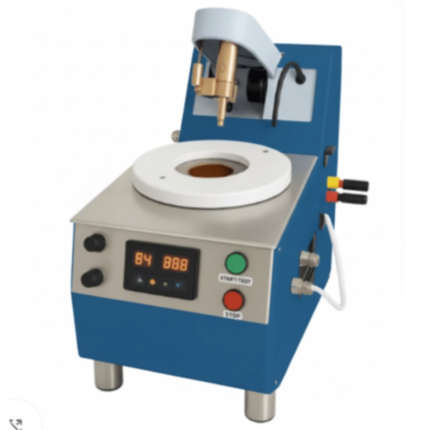
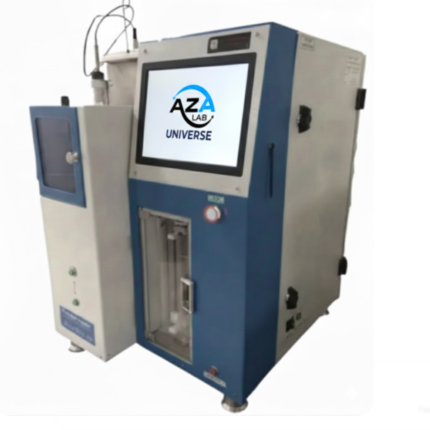
AUOTFLASH AUTOMATED ABEL FLASH POINT ANALYZER AZA1277
The AutoFlash-1277 (Model: AZA1277) from AZA Lab is a fully automated, microcontroller-based Abel Flash Point Analyzer designed for accurate, safe, and repeatable determination of flash points of combustible liquids. Engineered to meet stringent international testing requirements, this advanced instrument conforms to IP 170, ISO 13736, and IS 1448 (Part 20) standards.
Covering a standard temperature range of –30°C to 70°C, extendable up to 110°C, the AZA1277 is ideally suited for laboratories involved in petroleum testing, petrochemical quality control, fuels research, and regulatory compliance.
AUTODIST-86 GLASS DISTILLATION UNITAZA1282
The AutoDist-86 Glass Distillation Unit (Model AZA1282) is a high-performance laboratory water distiller designed for the continuous production of high-purity distilled water.
Constructed entirely from borosilicate glass 3.3, the unit ensures zero metallic contamination, excellent thermal resistance, and long operational life. It is ideal for laboratories requiring consistent, low-conductivity distilled water for analytical, pharmaceutical, and research applications.Distillation Performance
- Distillate Output: Up to 4 L/hour (±10%)
- Suitable for routine and medium-scale laboratory demand
- Efficient removal of:
- Dissolved salts
- Heavy metals
- Organic/inorganic impurities
- Microbial contaminants
Related products
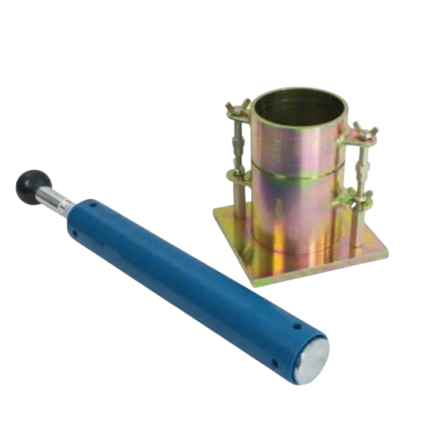
HEAVY COMPACTION TEST AZA0865
-
- Specify target field compaction densities
- Control moisture during earthwork
- Ensure long-term stability and load-bearing performance
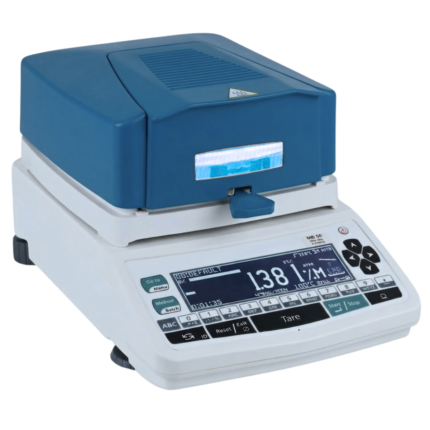
INFRARED MOISTURE METER AZA0875
The AZA0875 Infrared Moisture Meter from Azalab is a high-precision analytical instrument designed for fast, accurate moisture content determination across a wide range of materials. Utilizing advanced infrared (halogen) heating technology, the AZA0875 significantly reduces analysis time compared to conventional oven-drying methods, delivering reliable results within minutes.
This instrument is ideally suited for geotechnical laboratories, construction quality control, chemical and pharmaceutical industries, food processing, and material testing laboratories, where rapid and repeatable moisture data is essential for process control and compliance.
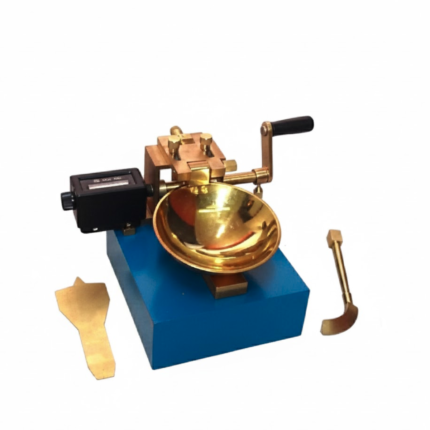
LIQUID LIMIT DEVICE WITH COUNTER AZA0853
The AZA0853 Liquid Limit Device with Counter from AZALAB is a precision-engineered instrument used for determining the liquid limit of soils in accordance with the Casagrande method. This test is a fundamental component of soil classification and geotechnical investigation, providing critical insight into the plasticity, compressibility, and shear strength of fine-grained soils.
Designed for reliable, repeatable, and standardized testing, the AZA0853 is widely used in geotechnical laboratories, civil engineering departments, construction quality control labs, and academic institutions.
Principle of Liquid Limit Test (Casagrande Method)
The liquid limit is defined as the water content at which soil transitions from a plastic state to a liquid state. In practice, it is determined as the moisture content at which a standard groove cut in the soil sample closes over a length of 12.5 mm under 25 blows of the liquid limit apparatus.
The AZA0853 consists of a polished brass cup mounted on an adjustable bracket. The cup is repeatedly raised and dropped from a fixed height of 1 cm onto a hard rubber base by means of a manually operated cam mechanism. A built-in mechanical counter accurately records the number of blows, ensuring compliance with testing standards and reducing operator error.
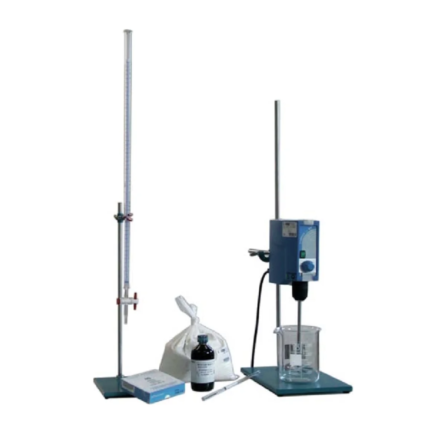
METHYLENE BLUE TEST SET AZA0860
- EN 933-9 – Tests for geometrical properties of aggregates (Methylene Blue Test)
- NF P94-068
- UNE 83 180
- UNI 8520-15
- ASTM C837 – Methylene Blue Index of Clay in Fine Aggregate

PLASTIC LIMIT SET AZA0848
- Soil classification (Atterberg limits)
- Assessing workability and consistency
- Evaluating shrink–swell characteristics
- Supporting foundation, pavement, and earthwork design
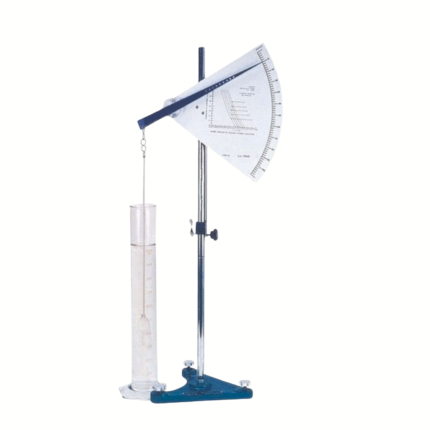
PLUMMET BALANCE AZA0862
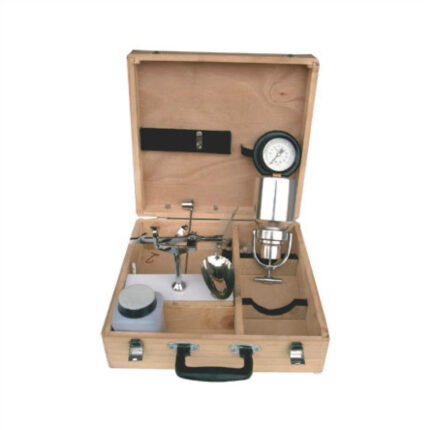
RAPID MOISTURE METER AZA0874
The AZA0874 Rapid Moisture Meter from Azalab is a compact, reliable, and field-proven instrument designed for quick determination of moisture content in soils, aggregates, sand, and other granular or fine materials. It is especially suited for on-site quality control in civil engineering, road construction, earthwork compaction, and geotechnical investigations, where timely moisture data is critical for effective decision-making.
Based on the well-established calcium carbide gas pressure method, the AZA0874 delivers accurate results within minutes, eliminating delays associated with laboratory oven-drying methods. Its portable, self-contained design makes it ideal for use at remote and demanding job sites.
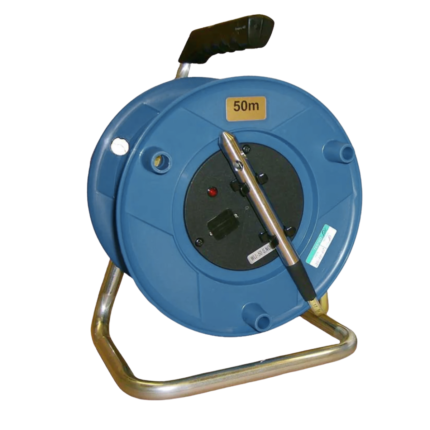
WATER LEVEL INDICATOR AZA0871
The AZA0871 Water Level Indicator from Azalab is a high-precision electronic instrument designed for accurate measurement of groundwater levels in boreholes, wells, standpipes, and observation tubes. It is an essential tool for professionals involved in groundwater monitoring, environmental site assessments, hydrological investigations, geotechnical projects, and dewatering operations.
Accurate water level measurement is fundamental for understanding aquifer behavior, monitoring seasonal or pumping-induced fluctuations, assessing contamination plumes, and supporting the design of foundations, irrigation systems, and water resource management plans. The AZA0871 provides a reliable, fast, and field-ready solution for both static and dynamic water level measurements.