
 Rock
Rock Aggregate
 Cement
 Concrete
 Soil
Soil Steel
Steel Bitumen/Asphalt
 Security Survey Equipment
 General Items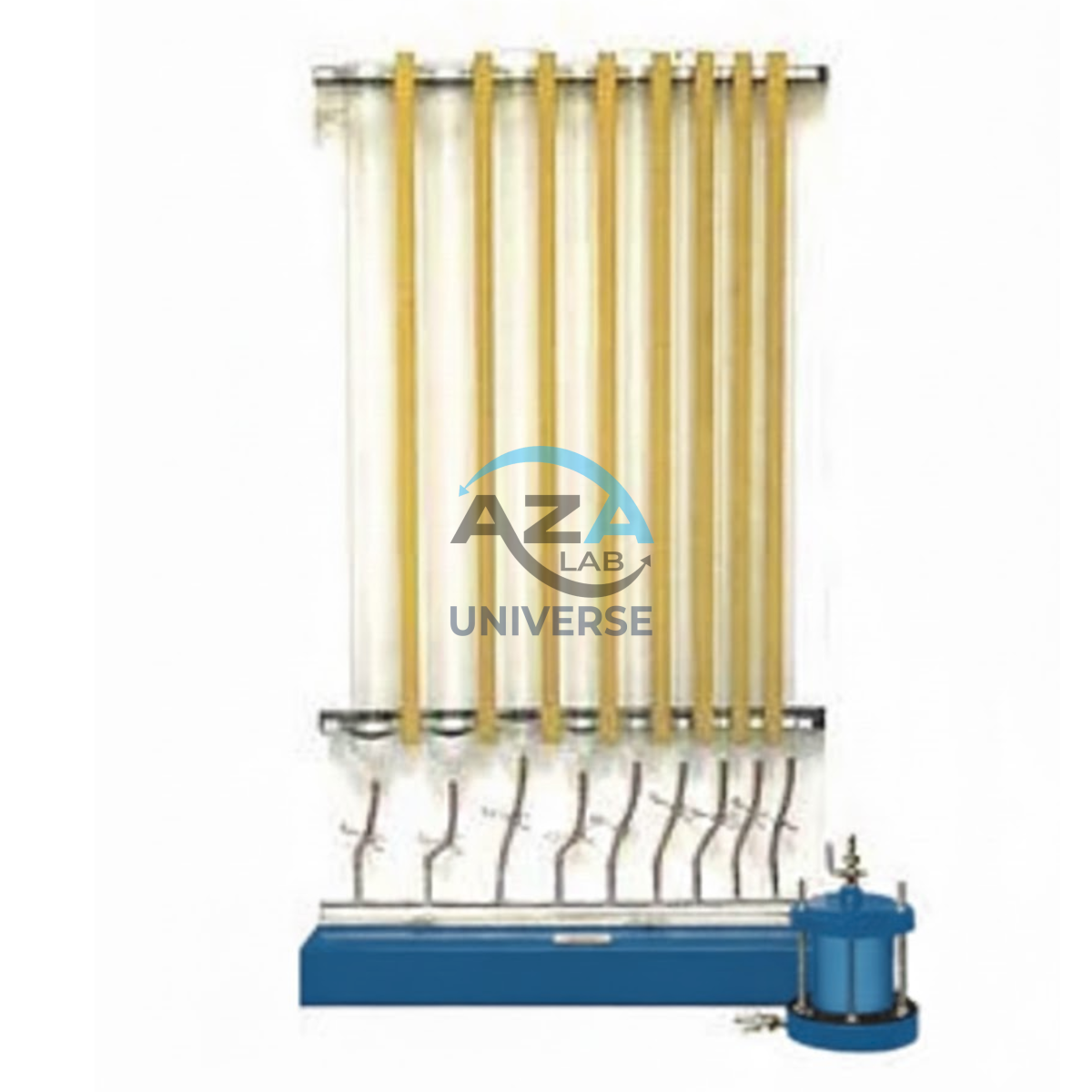
UNIVERSAL PERMEABILITY AZA0877
The AZA0877 Universal Permeability Apparatus from Azalab is a versatile and precision-engineered laboratory system designed for the accurate determination of soil permeability (hydraulic conductivity) across a wide range of soil types. Its universal design allows laboratories to perform both Constant Head and Falling Head permeability tests using a single integrated apparatus, making it an essential instrument for comprehensive geotechnical soil analysis.
Determination of soil permeability is critical in civil and geotechnical engineering for the design and evaluation of foundations, earth dams, embankments, retaining structures, drainage systems, seepage control, groundwater flow, and liquefaction assessment. The AZA0877 delivers reliable, repeatable, and standard-compliant results for professional laboratory use.
Description
Key Capability – Dual Test Methods
Constant Head Permeability Test
-
Suitable for coarse-grained soils such as sands and gravels
-
Maintains a constant hydraulic head across the soil specimen
-
Measures discharged water volume over time
-
Permeability calculated using Darcy’s Law
Falling Head Permeability Test
-
Ideal for fine-grained soils such as silts and clays
-
Measures the rate of fall of water level in a standpipe
-
Highly sensitive for low-permeability soils
The availability of multiple standpipes with varying diameters enables accurate testing over a broad range of permeability values.
Salient Features
-
Universal apparatus for constant head and falling head tests
-
Suitable for coarse-grained and fine-grained soils
-
Accurate determination of coefficient of permeability
-
Multiple glass standpipes for wide permeability range
-
Robust and corrosion-resistant construction
-
Stable laboratory mounting
-
Easy assembly, operation, and maintenance
-
Designed in accordance with IS 2720 (Part XVII)
-
Proven Azalab quality and reliability
Applications
-
Laboratory soil permeability testing
-
Foundation and earthwork design
-
Drainage and seepage studies
-
Groundwater flow analysis
-
Academic teaching and research
-
Quality control in geotechnical investigations
Technical Specifications
Model Number: AZA0877
Apparatus Type: Universal Soil Permeability Apparatus
Test Methods: Constant Head and Falling Head
Permeameter Cell (Mould):
-
Accommodates standard soil specimens (typically up to 100 mm diameter)
Standpipe Panel:
-
Multiple glass standpipes of varying bore diameters
(e.g., 6 mm, 10 mm, 20 mm, 25 mm, 40 mm, 50 mm, 60 mm, 70 mm, 75 mm)
Measuring Scale:
-
Graduated scale for precise water level readings
Drainage Plates / Porous Stones:
-
Top and bottom porous stones for controlled water flow
Tubing:
-
Flexible, leak-proof tubing for water connections
Base Assembly:
-
Rigid and stable base for secure mounting
Water Supply:
-
Requires external constant head water supply (typically supplied separately)
Material of Construction:
-
Durable, corrosion-resistant materials
Compliance:
-
IS 2720 (Part XVII)
-
Compatible with relevant international standards
Advantages
-
Single apparatus for all soil permeability ranges
-
High accuracy and repeatability
-
Reduced laboratory equipment redundancy
-
Long service life with minimal maintenance
-
Essential equipment for professional geotechnical laboratories
Frequently Asked Questions (FAQ)
Q1: What is the AZA0877 used for?
The AZA0877 is used to determine the coefficient of soil permeability (hydraulic conductivity) in laboratory conditions.
Q2: What soils can be tested with the AZA0877?
It is suitable for sands, gravels, silts, and clays, covering both high and low permeability soils.
Q3: When should Constant Head and Falling Head tests be used?
Constant Head is used for permeable soils (sands, gravels), while Falling Head is used for low-permeability soils (silts, clays).
Q4: Which standards does the AZA0877 comply with?
It complies with IS 2720 (Part XVII) for soil permeability testing.
Q5: What is supplied with the apparatus?
Permeameter mould, standpipe panel with multiple glass tubes, measuring scale, base assembly, and connecting tubing.
Additional information
| Model Number |
AZA 0877 |
|---|---|
| Apparatus Type |
Universal Soil Permeability Apparatus (Constant Head & Falling Head) |
| Permeameter Cell (Mould) Diameter |
Varies, typically accommodates samples up to 100mm diameter. |
| Tubing |
Flexible tubing for water connections. |
| Base |
Stable base for mounting the permeameter and standpipe panel. |
Related products
AUTOMATIC SOIL COMPACTOR AZA0867
GRAIN SIZE ANALYSIS (PIPETTE METHOD) AZA0856
INFRARED MOISTURE METER AZA0875
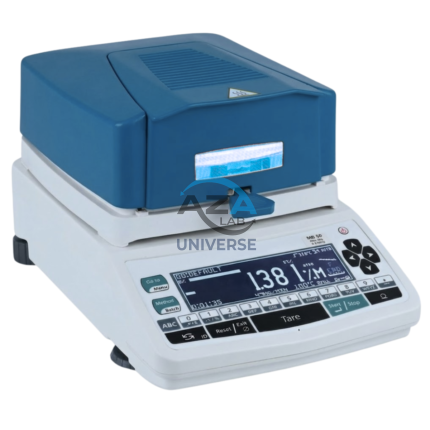
The AZA0875 Infrared Moisture Meter from Azalab is a high-precision analytical instrument designed for fast, accurate moisture content determination across a wide range of materials. Utilizing advanced infrared (halogen) heating technology, the AZA0875 significantly reduces analysis time compared to conventional oven-drying methods, delivering reliable results within minutes.
This instrument is ideally suited for geotechnical laboratories, construction quality control, chemical and pharmaceutical industries, food processing, and material testing laboratories, where rapid and repeatable moisture data is essential for process control and compliance.
RAPID MOISTURE METER AZA0874
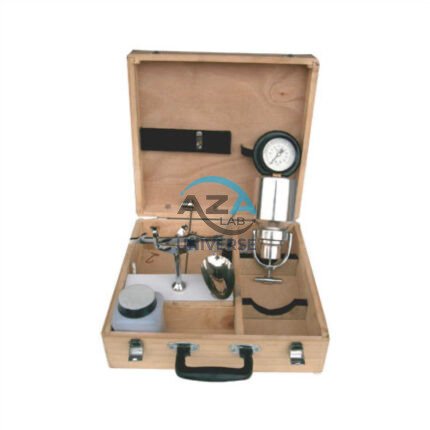
The AZA0874 Rapid Moisture Meter from Azalab is a compact, reliable, and field-proven instrument designed for quick determination of moisture content in soils, aggregates, sand, and other granular or fine materials. It is especially suited for on-site quality control in civil engineering, road construction, earthwork compaction, and geotechnical investigations, where timely moisture data is critical for effective decision-making.
Based on the well-established calcium carbide gas pressure method, the AZA0874 delivers accurate results within minutes, eliminating delays associated with laboratory oven-drying methods. Its portable, self-contained design makes it ideal for use at remote and demanding job sites.
SEMI AUTOMATIC CONE PENETROMETER AZA0852
Principle of Operation
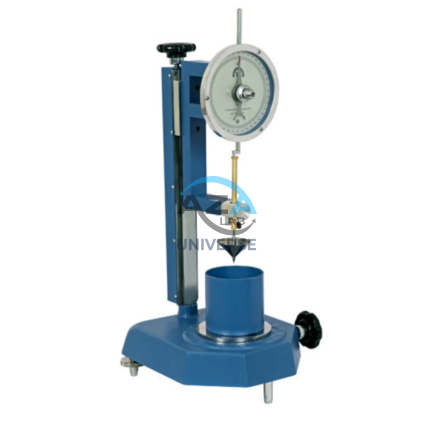
A soil paste prepared at known moisture content is placed in the sample cup. The standardized cone, attached to a calibrated weight, is released using the semi-automatic clutch mechanism, allowing free fall penetration into the soil. After the specified time (typically 5 seconds), the penetration depth is measured using a high-precision dial gauge. The moisture content corresponding to a penetration of 20 mm is considered the liquid limit of the soil, as defined in IS and BS standards.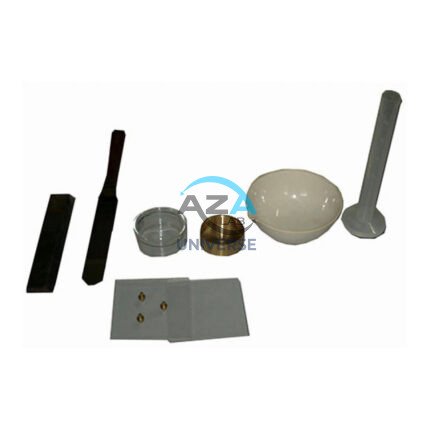
SHRINKAGE LIMIT SET AZA0849
Standards Compliance
The AZA0849 Shrinkage Limit Set conforms to major national and international testing standards, ensuring reliable and universally accepted test results:- IS 2720 (Part VII)
- ASTM D427
- BS 1377
- AASHTO T 92
SPEEDY MOISTURE ZI 3027 METER (D2 LARGE) AZA0873
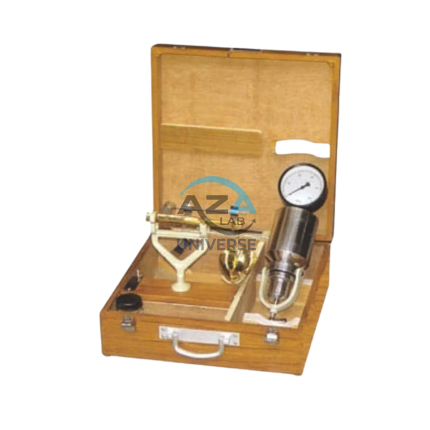
The AZA0873 Speedy Moisture ZI 3027 Meter (D2 Large) from Azalab is a high-performance field instrument designed for rapid and accurate determination of moisture content in soils, aggregates, sand, and similar materials. Based on the proven calcium carbide gas pressure method, this instrument is widely used in earthwork compaction control, road construction, geotechnical investigations, and concrete production, where immediate moisture data is critical for quality assurance.
The D2 Large configuration distinguishes the AZA0873 by allowing a larger sample size, providing more representative and reliable results, especially for heterogeneous materials and aggregates with larger particle sizes. Its rugged ZI 3027 construction ensures dependable performance under demanding site conditions.
WATER LEVEL INDICATOR AZA0871
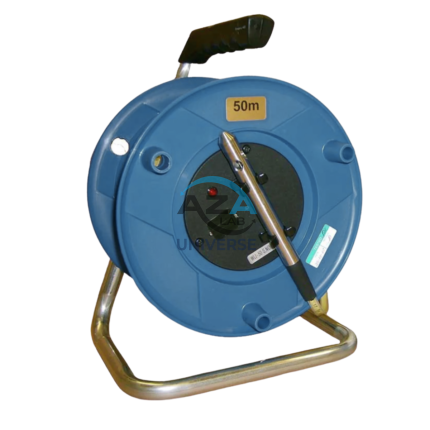
The AZA0871 Water Level Indicator from Azalab is a high-precision electronic instrument designed for accurate measurement of groundwater levels in boreholes, wells, standpipes, and observation tubes. It is an essential tool for professionals involved in groundwater monitoring, environmental site assessments, hydrological investigations, geotechnical projects, and dewatering operations.
Accurate water level measurement is fundamental for understanding aquifer behavior, monitoring seasonal or pumping-induced fluctuations, assessing contamination plumes, and supporting the design of foundations, irrigation systems, and water resource management plans. The AZA0871 provides a reliable, fast, and field-ready solution for both static and dynamic water level measurements.