
 Rock
Rock Aggregate
 Cement
 Concrete
 Soil
Soil Steel
Steel Bitumen/Asphalt
 Security Survey Equipment
 General Items

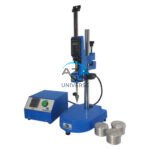
MORTAR PENETROMETER AZA1115
The AZA1115 ASTM C403 Mortar Penetrometer is a precision-engineered device designed to determine the rate of hardening and setting characteristics of mortar extracted from freshly mixed concrete. Fully compliant with ASTM C403, this instrument enables accurate measurement of penetration resistance to identify both initial and final setting times of cementitious mixes.
Built for field and laboratory use, the AZA1115 features a robust spring-loaded mechanism, a clearly graduated force scale, and six interchangeable penetration needles suitable for various mortar stiffness conditions. Its durable construction and protective wooden case make it a dependable tool for quality control engineers, construction sites, and RMC labs.
Key Features
- Complies with ASTM C403 Standard
- Used to determine mortar hardening rate
- Spring-loaded stem graduated 0–70 kg (1 kg divisions)
- Includes six interchangeable stainless steel needles
- Measures resistance at 25 mm penetration
- Shanks marked every 5 mm for depth guidance
- Supplied in a polished wooden carrying case
- Suitable for both laboratory and on-site QC
Description
Product Overview
The AZA1115 Mortar Penetrometer incorporates a calibrated spring barrel connected to a precision stem. A sliding ring captures the peak penetration resistance, enabling repeatable and consistent readings. Needle selection is based on mortar stiffness, ensuring accurate performance across early and late setting stages.
This penetrometer provides essential data for:
-
Initial and final setting time determination
-
Hardening rate of mortar extracted from concrete
-
Compliance verification with ASTM C403
-
Cement, admixture, and RMC mix characterization
-
Construction quality control and monitoring
The unit is housed in a protective wooden case to ensure safe transport and long-term durability.
Technical Specifications
| Feature | Detail |
|---|---|
| Model | AZA1115 |
| Standard Compliance | ASTM C403 |
| Measurement Range | 0–70 kg (1 kg increments) |
| Needles Included | 6 needles (645, 323, 160, 65, 32, 16 mm²) |
| Penetration Depth | 25 mm (depth marks every 12.5 mm) |
| Display Type | Analog spring mechanism with sliding ring |
| Construction | Hardened steel stem, corrosion-protected parts |
| Carrying Case | Wooden box |
| Application | Mortar extracted from sieved fresh concrete |
Applications
-
Determining initial and final setting times
-
Measuring hardening rate of sieved mortar
-
QC testing in construction sites, RMC plants, and cement labs
-
Verifying conformity to ASTM C403 requirements
-
Tracking penetration resistance at controlled depths
Frequently Asked Questions (FAQ)
Q1: What does the AZA1115 penetrometer measure?
It measures penetration resistance of mortar to determine setting time and hardening rate per ASTM C403.
Q2: Can it be used directly on concrete?
No. The test must be performed on mortar sieved from fresh concrete.
Q3: What needle sizes are included?
Six needles: 645, 323, 160, 65, 32, and 16 mm².
Q4: How is penetration depth monitored?
The stem is marked every 12.5 mm, and force is recorded when the needle penetrates 25 mm.
Q5: Is calibration required?
Yes, periodic calibration is recommended for accuracy. Calibration services can be provided upon request
Related products

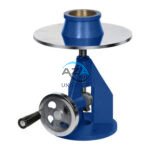
CONCRETE FLOW TABLE TEST SET AZA1110
AZA1110 Concrete Flow Table Test Set is a precision-engineered laboratory apparatus designed to determine the workability, consistency, and flow characteristics of fresh concrete. It is especially suitable for Self-Compacting Concrete (SCC), precast concrete, and high-consistency mixes where the traditional slump test is not effective.
This test set works by allowing a freshly mixed concrete sample to spread under controlled, repeated vertical jolts of a mechanically calibrated table. The final spread diameter of the concrete is measured to assess its flowability and uniformity.
Built with a rigid, precisely machined table surface, the AZA1110 ensures repeatable and reliable results. Its heavy-duty construction allows long-term use in demanding laboratory environments while remaining easy to clean, store, and maintain.
The apparatus complies with major international standards including IS 1199, ASTM C1437, and BS EN 12350-5, making it suitable for both domestic and international testing requirements.

J-RING, NARROW GAP AZA1109
AZA1109 J-Ring – Narrow Gap is a precision testing apparatus designed to evaluate the passing ability of Self-Compacting Concrete (SCC) under highly restrictive conditions. This device simulates densely congested reinforcement zones by creating artificial obstructions that the fresh SCC must flow through without blocking or segregating. It is an essential tool for determining whether SCC mixes are suitable for heavily reinforced structural elements such as beams, columns, and shear walls.
The narrow gap design offers a more stringent test compared to standard J-Rings, allowing engineers and quality control professionals to accurately observe flow diameter, T50 flow time, and blocking behavior. When used in combination with a standard slump flow cone, AZA1109 provides reliable, repeatable results that help optimize mix designs and ensure consistent on-site performance.
Manufactured from durable, corrosion-resistant steel, the AZA1109 is built for repeated use in laboratory and field testing environments. The apparatus is fully compliant with ASTM C1621 and EFNARC guidelines, ensuring internationally accepted testing procedures.
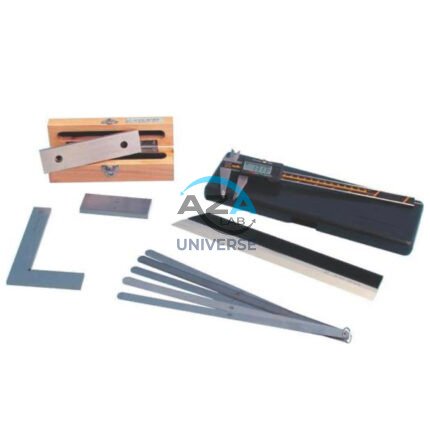
MOULD VERIFICATION KIT – PRECISION QC TOOL AZA1121
- Flatness of mould and specimen surfaces
- Straightness along mould edges and specimen sides
- Perpendicularity of internal walls and corners
- Dimensional accuracy (L × W × H, and diameter for cylinders)
- Go/No-Go tolerance checks for standardized cube mould sizes
- Surface deviation & gap measurement using feeler gauges

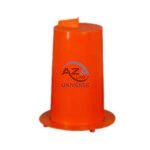
SLUMP CONE, PLASTIC AZA1103
AZA1103 Slump Cone (Plastic) is a durable and lightweight testing tool designed for accurate measurement of concrete workability and consistency. It is widely used in construction sites, civil engineering laboratories, and quality control departments for fast and reliable slump testing of fresh concrete mixes.
Unlike traditional metal cones, this model is manufactured from high-quality rigid plastic, making it corrosion-resistant, dent-proof, and highly suitable for repeated field and laboratory use. Its lightweight construction makes it easy to transport and ideal for site engineers and mobile testing teams.
The apparatus is manufactured to standard dimensions and fully complies with IS 1199 and ASTM C143, ensuring accurate and repeatable test results. The smooth internal surface minimizes friction, allowing easy release of concrete and improving measurement accuracy.
This slump cone helps engineers quickly determine if a concrete mix has the correct consistency for placement, compaction, and finishing. It is especially useful for quality checks before concrete pouring to avoid honeycombing, segregation, or improper flow.
AZA1103 is reusable, easy to clean, and requires minimal maintenance, making it a long-lasting and cost-effective solution for routine concrete testing.
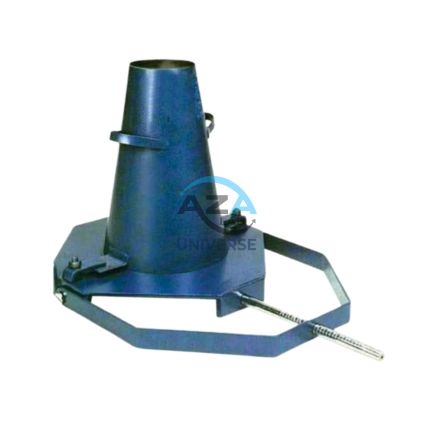

SLUMP TEST APPARATUS AZA1102
AZA1102 Slump Test Apparatus is designed for the accurate evaluation of concrete workability and consistency in both laboratory and field conditions. It is an essential quality control tool used in construction projects, civil engineering laboratories, and educational institutions.
This apparatus complies with IS 7320 and BS 1881-102 standards, ensuring reliable and standardized test results. It is primarily used to determine the slump value of fresh concrete, indicating its ease of placement, compaction, and finishing.
The set includes a durable metal slump cone manufactured to standard dimensions — 200 mm bottom diameter, 100 mm top diameter, and 300 mm height — providing dimensional accuracy and long service life. A 16 mm diameter tamping rod, 600 mm long with rounded ends, is provided to properly compact the concrete sample in layers.
The apparatus is suitable for testing concrete with aggregate sizes up to 38 mm, making it ideal for common residential, commercial, and infrastructure applications.
To improve handling and stability, the unit includes a rigid base plate with clamping arrangements and lifting handles, making it easy to use both on construction sites and in laboratories.
The AZA1102 Slump Test Apparatus is known for its simple operation, rugged construction, high accuracy, and low maintenance, making it a dependable choice for routine concrete testing.
STRAIGHT EDGE AZA1120
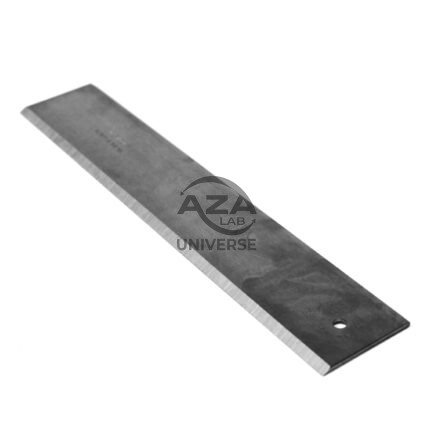
The AZA1120 Precision Steel Straight Edge is a laboratory-grade tool engineered for leveling, scraping, and finishing concrete and soil specimens during testing procedures. Used extensively in concrete cube/cylinder preparation, slump cone tests, and air meter testing, this straight edge ensures flat, uniform specimen surfaces essential for accurate and repeatable results.
Manufactured from high-grade hardened steel, the AZA1120 offers superior rigidity, dimensional stability, and long-term durability. The flat, 1-inch wide, 12-inch long bar profile allows smooth handling and effortless removal of excess material from molds. A corrosion-resistant polished or matte finish further enhances longevity and reliability in both lab and field conditions.
TAMPING ROD AZA1119
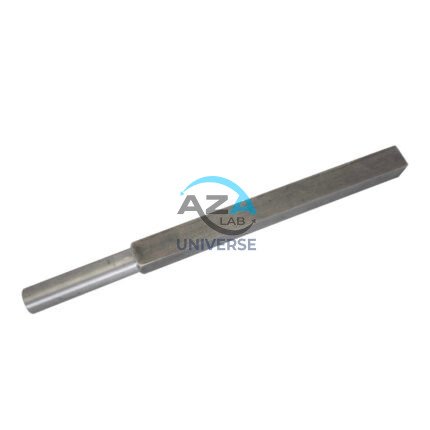
The AZA1119 Tamping Rod is a precision-engineered tool designed for proper compaction of concrete during laboratory and field testing. Essential for slump tests, cube/cylinder preparation, and unit weight determination, this rod ensures accurate removal of air voids, resulting in reliable and repeatable test outcomes.
Manufactured from hardened high-grade steel or stainless steel, the rod maintains dimensional accuracy, bending resistance, and a corrosion-proof finish. Each unit is polished to a smooth surface and features hemispherical ends to prevent mold damage and ensure uniform rodding action. The AZA1119 conforms to ASTM C143, ASTM C192, ASTM C138, IS 1199, and other major testing standards.
It is available in 16 mm and 25 mm diameters, with standard lengths of 600 mm (optional 450 mm). The rods are suitable for use in construction materials labs, QC departments, R&D centers, and field sampling units.
VEE BEE CONSISTOMETER AZA1101
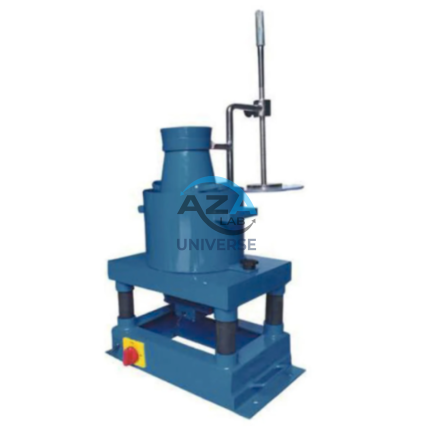
AZA1101 Vee Bee Consistometer is a laboratory-grade concrete testing instrument designed for measuring the workability of stiff and low-slump concrete mixes with high accuracy. It is widely used in construction material testing laboratories, civil engineering institutes, infrastructure projects, and quality control departments.
This equipment performs both slump test and Vee Bee time test, providing dual accuracy in concrete consistency evaluation. It is especially ideal for testing dry, roller-compacted concrete and pavement concrete mixes, where traditional slump tests alone are not sufficient.
The unit is equipped with a precision vibrating table that ensures uniform vibration and repeatable testing results. It comes as a complete set including a standard slump cone, transparent cylindrical container, graduated rod with metal disc, and a powerful vibration unit.
Manufactured from heavy-duty, powder-coated steel, the AZA1101 offers excellent durability and stable performance even under continuous laboratory use. The apparatus is designed and built in compliance with IS 1199 and ASTM C1170 standards, ensuring reliable, repeatable, and internationally accepted test results.
Its easy-to-use design, low maintenance requirement, and robust construction make the AZA1101 a dependable solution for professionals involved in construction material testing and concrete quality control.