
 Rock
Rock Aggregate
 Cement
 Concrete
 Soil
Soil Steel
Steel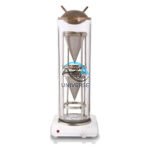 Bitumen/Asphalt
 Security Survey Equipment
 General Items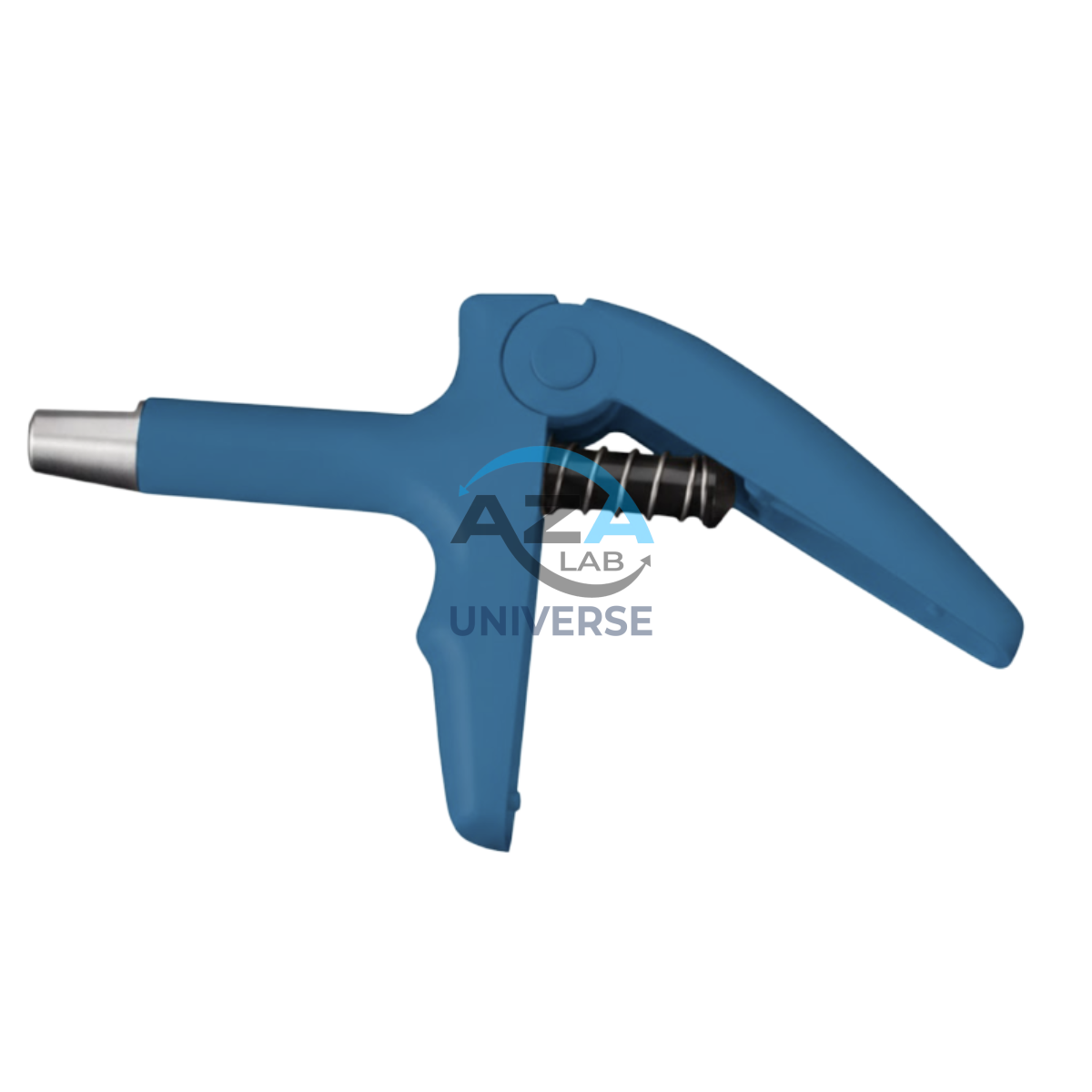
GUN FOR MOULD AZA1129
The Azalab Mould Ejection Gun (AZA1129) is engineered for fast, clean, and damage-free ejection of concrete specimens from polyurethane (PU) and ABS moulds. Designed for both laboratory and field environments, this tool connects directly to a standard compressed air or water pressure line, allowing controlled pressure to release specimens effortlessly.
Compatible with cube, cylinder, and beam moulds, the AZA1129 ensures uniform force application, eliminating specimen cracks and extending mould life. The ergonomic, rust-resistant design makes it suitable for repetitive, long-duration testing operations.
Key Features
- Designed to eject specimens from PU and ABS concrete moulds
- Connects to compressed air or water pressure line
- Enables clean, fast, and damage-free demoulding
- Compatible with cube, beam, and cylindrical moulds
- Lightweight, reusable, and corrosion-resistant construction
- Ideal for laboratory and site testing applications
Description
Specifications
| Feature | Details |
|---|---|
| Model No. | AZA1129 |
| Material | High-grade metal body with polymer ergonomic grip |
| Connection Type | Standard ¼” BSP or NPT inlet (air/water) |
| Compatible Moulds | PU & ABS moulds: cubes, cylinders, beams |
| Working Pressure | 2–8 bar (recommended) |
| Weight | Approx. 500 g |
| Operation | Connect → Apply pressure → Trigger release → Specimen ejects |
| Reusability | Yes – suitable for continuous lab/field use |
Applications
-
Ejecting specimens from PU and ABS concrete moulds
-
Cube (150 mm), cylinder (100×200 mm, 150×300 mm), and beam mould demoulding
-
Strength testing in construction labs, RMC plants, cement QC labs
-
Research and development centers
-
Field sampling and on-site quality control
Frequently Asked Questions (FAQ)
Q1: What mould types can the AZA1129 eject specimens from?
It is compatible with all standard PU and ABS moulds, including cubes, cylinders, and beams.
Q2: What pressure source is required?
The tool operates efficiently at 2–8 bar using compressed air or water.
Q3: Does it damage moulds or specimens?
No. The controlled pressure application ensures smooth, safe ejection without deformation or cracking.
Q4: Is it suitable for field use?
Yes. Its rust-resistant, lightweight design makes it ideal for outdoor and laboratory applications.
Q5: How long does the tool last?
With periodic cleaning and proper handling, the AZA1129 supports long-term, repetitive use.
Related products
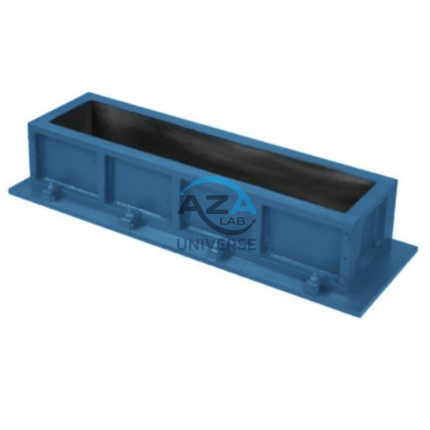
BEAM MOULD AZA1124
Purpose & Importance
Flexural strength testing evaluates a concrete beam’s ability to resist bending stress. Standards such as IS 516, ASTM C78, and BS EN 12390-5 specify strict guidelines for specimen dimensions and surface finish. The AZA1124 Beam Mould enables users to produce uniform, high-quality concrete beams with precise cross-sections, ensuring reliability and compliance during flexural strength evaluation.Beams cast from AZA1124 are used for:
- Flexural tensile strength testing
- Load-bearing capacity studies
- Structural behavior simulations
- R&D on mix designs and reinforcement additives
Ideal for:
- Civil engineering research laboratories
- Cement product quality assurance departments
- Construction material testing centers
- Technical universities and engineering institutions
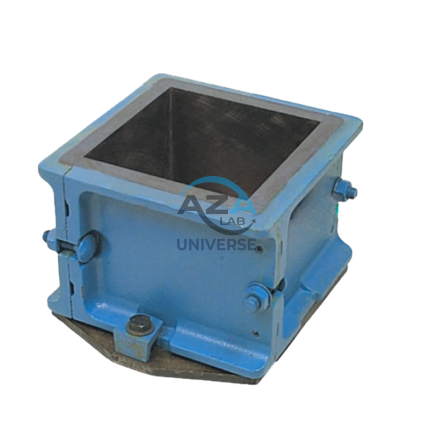
CUBE MOULD (METAL) AZA1122
Purpose & Function
This mould supports the preparation of standardized cube specimens that are used in:- Compressive strength testing
- Batch-wise quality control in construction
- Concrete mix design validation
- Research on material performance and durability

J-RING, NARROW GAP AZA1109
AZA1109 J-Ring – Narrow Gap is a precision testing apparatus designed to evaluate the passing ability of Self-Compacting Concrete (SCC) under highly restrictive conditions. This device simulates densely congested reinforcement zones by creating artificial obstructions that the fresh SCC must flow through without blocking or segregating. It is an essential tool for determining whether SCC mixes are suitable for heavily reinforced structural elements such as beams, columns, and shear walls.
The narrow gap design offers a more stringent test compared to standard J-Rings, allowing engineers and quality control professionals to accurately observe flow diameter, T50 flow time, and blocking behavior. When used in combination with a standard slump flow cone, AZA1109 provides reliable, repeatable results that help optimize mix designs and ensure consistent on-site performance.
Manufactured from durable, corrosion-resistant steel, the AZA1109 is built for repeated use in laboratory and field testing environments. The apparatus is fully compliant with ASTM C1621 and EFNARC guidelines, ensuring internationally accepted testing procedures.

L SHAPE BOX APPARATUS AZA1112
AZA1112 L Shape Box Apparatus is a precision testing device designed to evaluate the passing ability and flow performance of Self-Compacting Concrete (SCC) in congested reinforcement conditions. This apparatus simulates real-world scenarios such as densely reinforced beams, columns, tunnels, and bridge segments, where concrete must flow freely without segregation or blockage.
The distinctive L-shaped design creates a controlled flow path where freshly mixed SCC moves from a vertical chamber into a horizontal channel containing reinforcement bars. By measuring the concrete heights at both ends (H1 and H2), the H2/H1 ratio is calculated, providing a direct, quantitative assessment of the concrete’s ability to pass through obstructions.
Manufactured from durable, corrosion-resistant steel, AZA1112 is built for long-term laboratory and site use. It conforms to EN 12350-10 and EFNARC guidelines, ensuring global acceptance of test results.
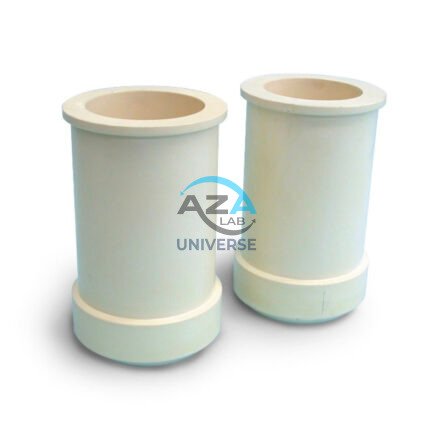
PLASTIC CYLINDERICAL MOULD AZA1127
| Model No. | Size | Material | Weight |
|---|---|---|---|
| AZA 1127 A | 150 mm × 300 mm | Polyurethane | 1.65 kg |
| AZA 1127 B | 100 mm × 200 mm | Polyurethane | 0.90 kg |
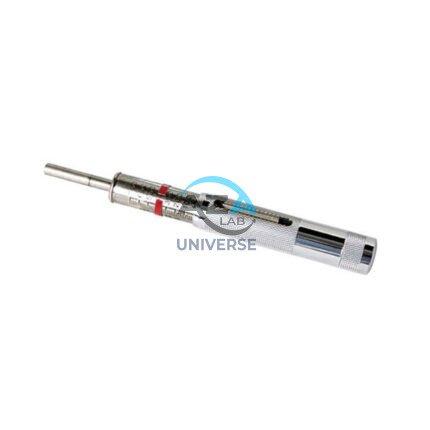
POCKET CONCRETE PENETROMETER AZA1114
- Measures Early Setting & Strength of concrete and mortar
- Direct Penetration Reading via spring-loaded plunger
- Dual Units: MPa or psi
- ASTM C403 & IS 8142 Compliant
- Compact, Portable & Field-Ready
- Includes Carrying Case & Calibration Chart
U SHAPE BOX APPARATUS AZA1113
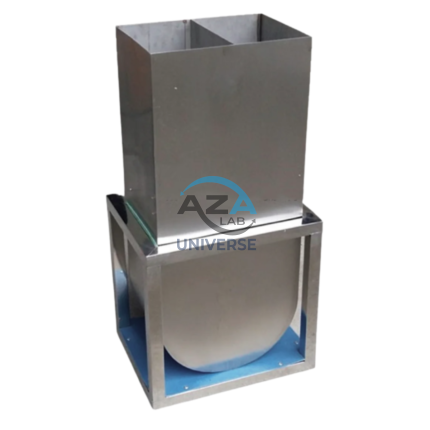
- Measures SCC blocking resistance through simulated rebar congestion
- Accurately indicates flowability and passing ability of SCC mixes
- Robust U-shaped two-chamber design with sliding gate
- Conforms to international SCC testing standards
- Includes precision steel rod arrangement and measuring scale
- Durable, corrosion-resistant construction for field and lab use
- Ideal for SCC mix design, approval, and continuous quality control
VEE BEE CONSISTOMETER AZA1101
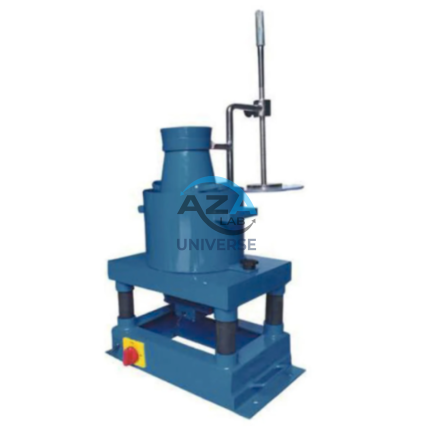
AZA1101 Vee Bee Consistometer is a laboratory-grade concrete testing instrument designed for measuring the workability of stiff and low-slump concrete mixes with high accuracy. It is widely used in construction material testing laboratories, civil engineering institutes, infrastructure projects, and quality control departments.
This equipment performs both slump test and Vee Bee time test, providing dual accuracy in concrete consistency evaluation. It is especially ideal for testing dry, roller-compacted concrete and pavement concrete mixes, where traditional slump tests alone are not sufficient.
The unit is equipped with a precision vibrating table that ensures uniform vibration and repeatable testing results. It comes as a complete set including a standard slump cone, transparent cylindrical container, graduated rod with metal disc, and a powerful vibration unit.
Manufactured from heavy-duty, powder-coated steel, the AZA1101 offers excellent durability and stable performance even under continuous laboratory use. The apparatus is designed and built in compliance with IS 1199 and ASTM C1170 standards, ensuring reliable, repeatable, and internationally accepted test results.
Its easy-to-use design, low maintenance requirement, and robust construction make the AZA1101 a dependable solution for professionals involved in construction material testing and concrete quality control.