
 Rock
Rock Aggregate
 Cement
 Concrete
 Soil
Soil Steel
Steel Bitumen/Asphalt
 Security Survey Equipment
 General Items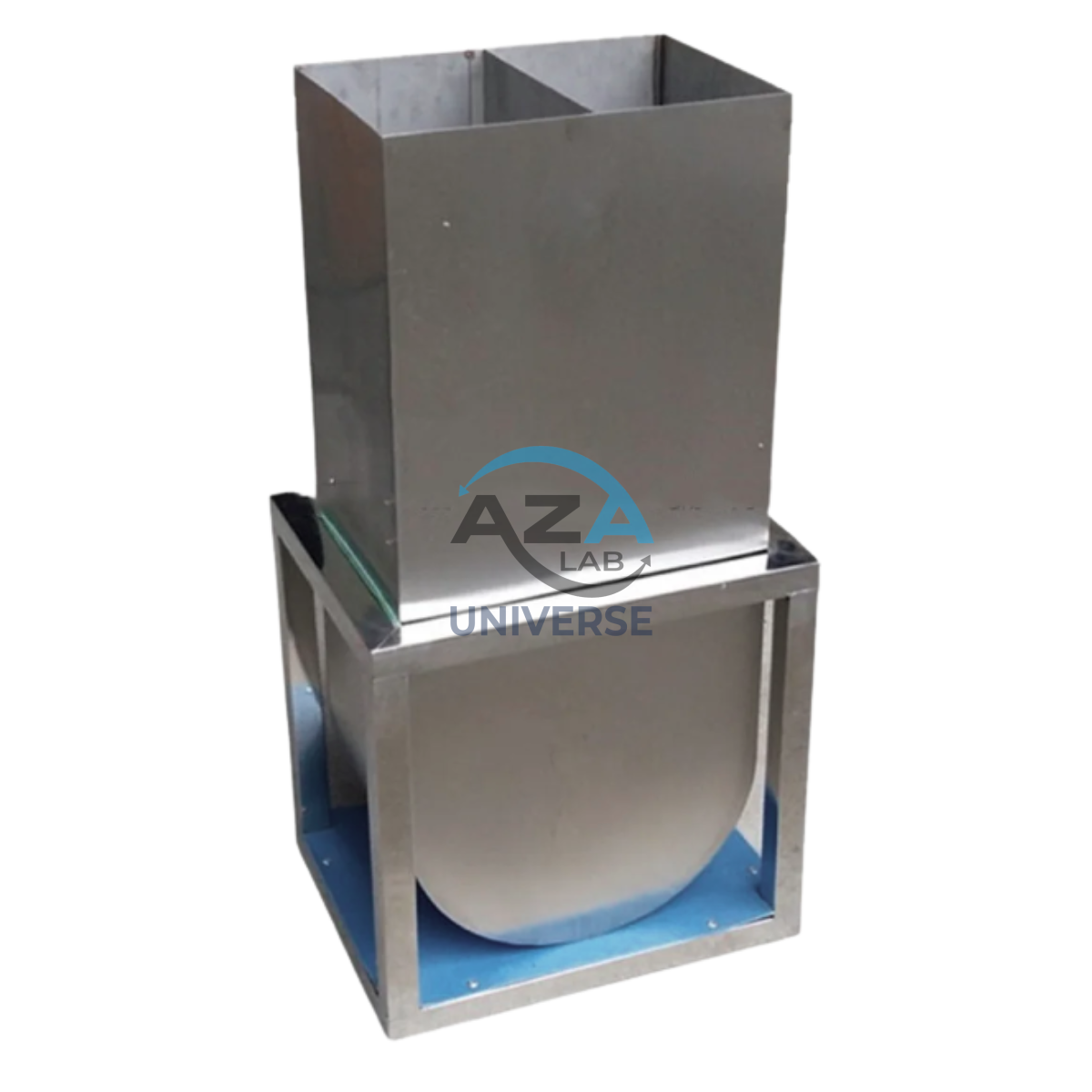

U SHAPE BOX APPARATUS AZA1113
Blocking Resistance Test for Self-Compacting Concrete (SCC)
The AZA1113 U Shape Box Apparatus is a precision-engineered instrument designed to evaluate the blocking resistance of Self-Compacting Concrete (SCC) as it flows through congested reinforcement. This apparatus is widely used in quality control laboratories, construction sites, precast manufacturing units, and research facilities.
Built as per EN 12350-11 and EFNARC guidelines, the U Shape Box test simulates real reinforcement obstacles to help engineers assess SCC’s passing ability, segregation resistance, and suitability for high-density rebar placements.
Key Features
- Measures SCC blocking resistance through simulated rebar congestion
- Accurately indicates flowability and passing ability of SCC mixes
- Robust U-shaped two-chamber design with sliding gate
- Conforms to international SCC testing standards
- Includes precision steel rod arrangement and measuring scale
- Durable, corrosion-resistant construction for field and lab use
- Ideal for SCC mix design, approval, and continuous quality control
Description
How the Test Works
- Fresh SCC is poured into one chamber of the U-shaped apparatus.
- The sliding gate is lifted, allowing SCC to flow horizontally through vertical steel rods.
- After the flow stops, concrete heights in both chambers (H1 and H2) are measured.
- Height difference (H1 – H2) indicates blocking resistance.
- ≤ 30 mm: Good passing ability
- > 30 mm: Indicates blockage or segregation tendency
Applications
- Evaluation of SCC mix suitability for congested reinforcement zones
- Precast concrete manufacturing (beams, columns, walls)
- On-site SCC quality assurance
- R&D and materials testing laboratories
- Complementary testing with L Box, V Funnel, and J Ring tests
Specifications
| Specification | Details |
| Model | AZA1113 |
| Product Type | U Shape Box Apparatus |
| Material | Powder-coated mild steel / Stainless steel |
| Dimensions | Height: 600 mm; Width: 410 mm |
| Rebar Arrangement | 13 mm rods @ 35 mm center-to-center |
| Chambers | Dual compartments with sliding gate |
| Measurement Scale | Included on both chambers |
| Standards Complied | EN 12350-11, EFNARC |
| Application | SCC passing ability and blocking resistance test |
| Accessories Included | U Box unit, gate mechanism, scale, instruction manual |
Frequently Asked Questions (FAQ)
Q1: What does the U Shape Box test evaluate?
It measures the blocking resistance of SCC as it flows through simulated reinforcement.
Q2: What indicates good passing ability?
A height difference of ≤ 30 mm between the two chambers.
Q3: Why does blocking occur?
Due to poor mix design, high coarse aggregate content, inadequate paste volume, or segregation.
Q4: Can traditional concrete be tested?
No. This apparatus is specifically designed for Self-Compacting Concrete.
Q5: Where is the test commonly used?
QC labs, construction sites, precast plants, and material development centers
Additional information
| Model |
AZA 1113 |
|---|---|
| Product Type |
U Shape Box Apparatus |
| Material |
Powder-coated mild steel or stainless steel |
| Dimensions |
Height: 600 mm; Width: 410 mm |
| Application |
SCC flowability and blocking resistance |
| Accessories Included |
Complete U Box, sliding gate, scale, manual |
Related products
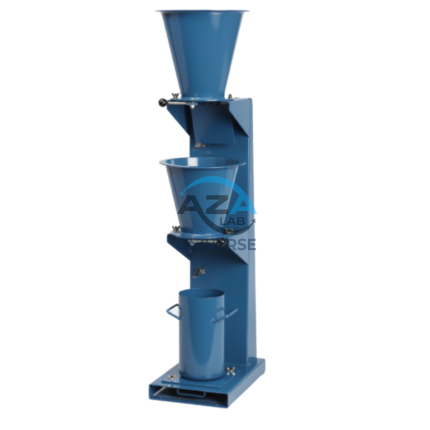
COMPACTION FACTOR APPARATUS AZA1107
- Precision measurement of compaction factor for dry and stiff concrete
- Double-hopper system with smooth trap release
- Conforms to IS 1199 and BS 1881 standards
- Suitable for precast plants, RMC units, and civil engineering labs
- Rugged, powder-coated mild-steel construction
- Cylindrical container included for final measurement

INITIAL SURFACE ABSORPTION TEST (ISAT) APPARATUS AZA1108
AZA1108 ISAT Apparatus is a precision-engineered testing instrument designed to measure the Initial Surface Absorption of hardened concrete. This test is essential for evaluating the durability of concrete by determining how quickly water penetrates the surface under controlled conditions. The apparatus is widely used in civil engineering laboratories and quality control departments to assess permeability and long-term performance of concrete structures exposed to moisture.
Built with a high-accuracy capillary tube system, the AZA1108 maintains a constant water head over a defined test area and records the volume of water absorbed over specific time intervals — typically at 10, 30, and 60 minutes. The readings obtained help engineers understand the surface porosity of concrete, which is a critical indicator of resistance against weathering, chloride ingress, corrosion of reinforcement, and environmental deterioration.
Designed in compliance with BS 1881-208, this apparatus ensures reliable, repeatable, and standard-compliant results. Its sturdy, rust-proof construction and easy-to-use configuration make it ideal for both routine testing and advanced durability studies in construction material laboratories.
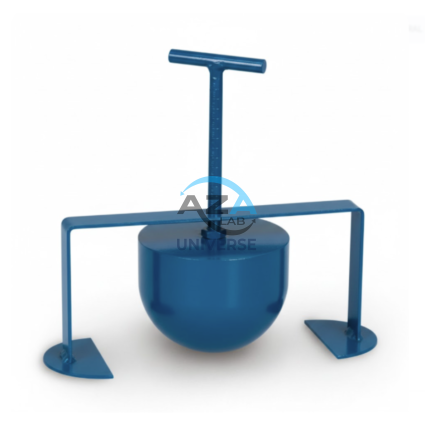
KELLEY BALL PENETRATION APPARATUS AZA1106
- Direct workability assessment using steel ball penetration
- Fully compliant with ASTM C360
- Portable and rugged for field and lab testing
- Heavy-duty steel/aluminum frame for long-term durability
- Built-in scale for accurate depth measurement
- Simple setup and low maintenance
- Provides a reliable alternative to the slump test
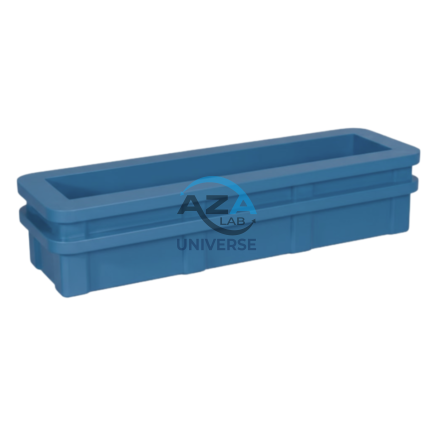
PLASTIC BEAM MOULD AZA1128
The Azalab AZA1128 Polyurethane Beam Mould Series is engineered for casting concrete beam specimens used in flexural strength tests. Built from high-impact, shock-absorbing polyurethane, these moulds deliver exceptional durability, dimensional accuracy, and ease of handling. Their lightweight yet robust design makes them suitable for both laboratory and field applications.
Polyurethane offers superior resilience compared to traditional metal or rigid plastic alternatives, enabling these moulds to withstand vibration, repeated use, and environmental exposure. The smooth internal finish ensures clean, damage-free demoulding, while the mould structure maintains consistency across multiple cycles.
Each AZA1128 mould complies with IS 516, ASTM C78, and BS 1881, ensuring reliable and standardized test preparation.
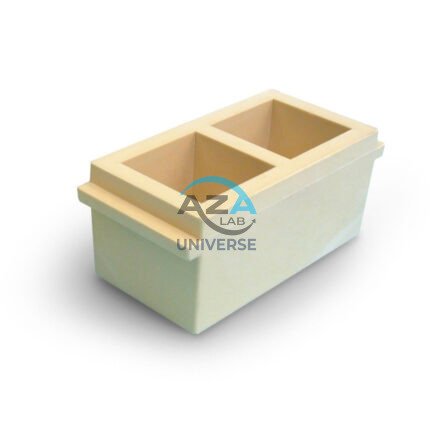
PLASTIC CUBE MOULD AZA1126
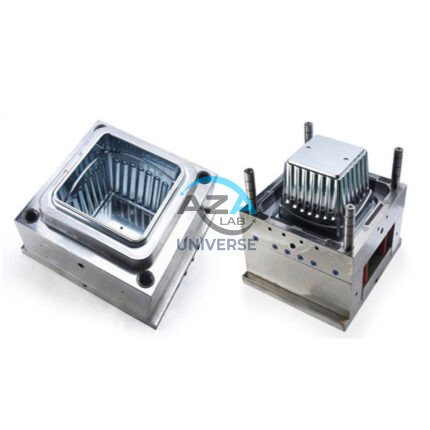
PLASTIC MOULDS AZA1125
The AZA1125 One-Piece Plastic Cube Mould (150 mm) from Azalab is a next-generation alternative to traditional metal cube moulds. Built from high-strength, non-deformable engineering plastic, this mould is designed to offer superior ease of use, long service life, and consistent dimensional accuracy for concrete compressive strength testing.
Its seamless, single-piece construction eliminates the need for bolts, screws, or external frames. Users simply apply demoulding oil, cast the concrete, and after curing, eject the cube using compressed air or water pressure, achieving clean and damage-free removal every time.
Compared to heavy metal moulds, the AZA1125 weighs nearly 90% less, providing clear advantages in portability, handling, and storage—making it ideal for both laboratory and on-site testing environments. Manufactured using an eco-friendly, non-polluting process, this mould supports sustainability goals in modern construction testing.
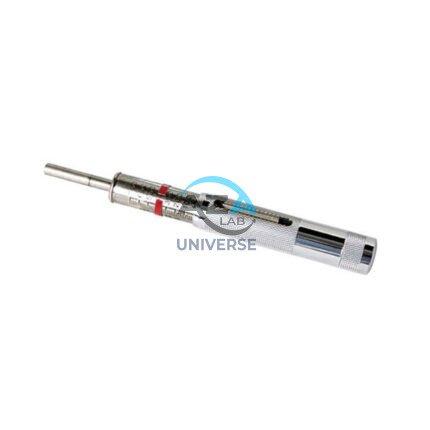
POCKET CONCRETE PENETROMETER AZA1114
- Measures Early Setting & Strength of concrete and mortar
- Direct Penetration Reading via spring-loaded plunger
- Dual Units: MPa or psi
- ASTM C403 & IS 8142 Compliant
- Compact, Portable & Field-Ready
- Includes Carrying Case & Calibration Chart

V FUNNEL AZA1111
AZA1111 V Funnel is a precision laboratory apparatus designed to measure the flow time and viscosity of Self-Compacting Concrete (SCC). It evaluates how quickly fresh SCC passes through a narrow, V-shaped section under the action of gravity, providing critical insight into the concrete’s workability, stability, and resistance to segregation.
The V Funnel test is essential when designing SCC mixes that must flow through heavily reinforced or congested formwork. By recording the time taken for concrete to completely discharge from the funnel, the apparatus allows engineers and technicians to quickly judge whether a mix is too stiff, too viscous, or optimally balanced.
Manufactured with a durable, corrosion-resistant metal body and a precise quick-release gate mechanism, AZA1111 ensures smooth, repeatable testing. Its rigid structure and stable stand make it suitable for both laboratory and site-based quality control environments.
The equipment is designed in compliance with EN 12350-9 and EFNARC guidelines, ensuring globally accepted and repeatable test results