
 Rock
Rock Aggregate
 Cement
 Concrete
 Soil
Soil Steel
Steel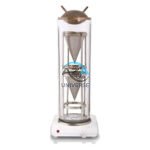 Bitumen/Asphalt
 Security Survey Equipment
 General Items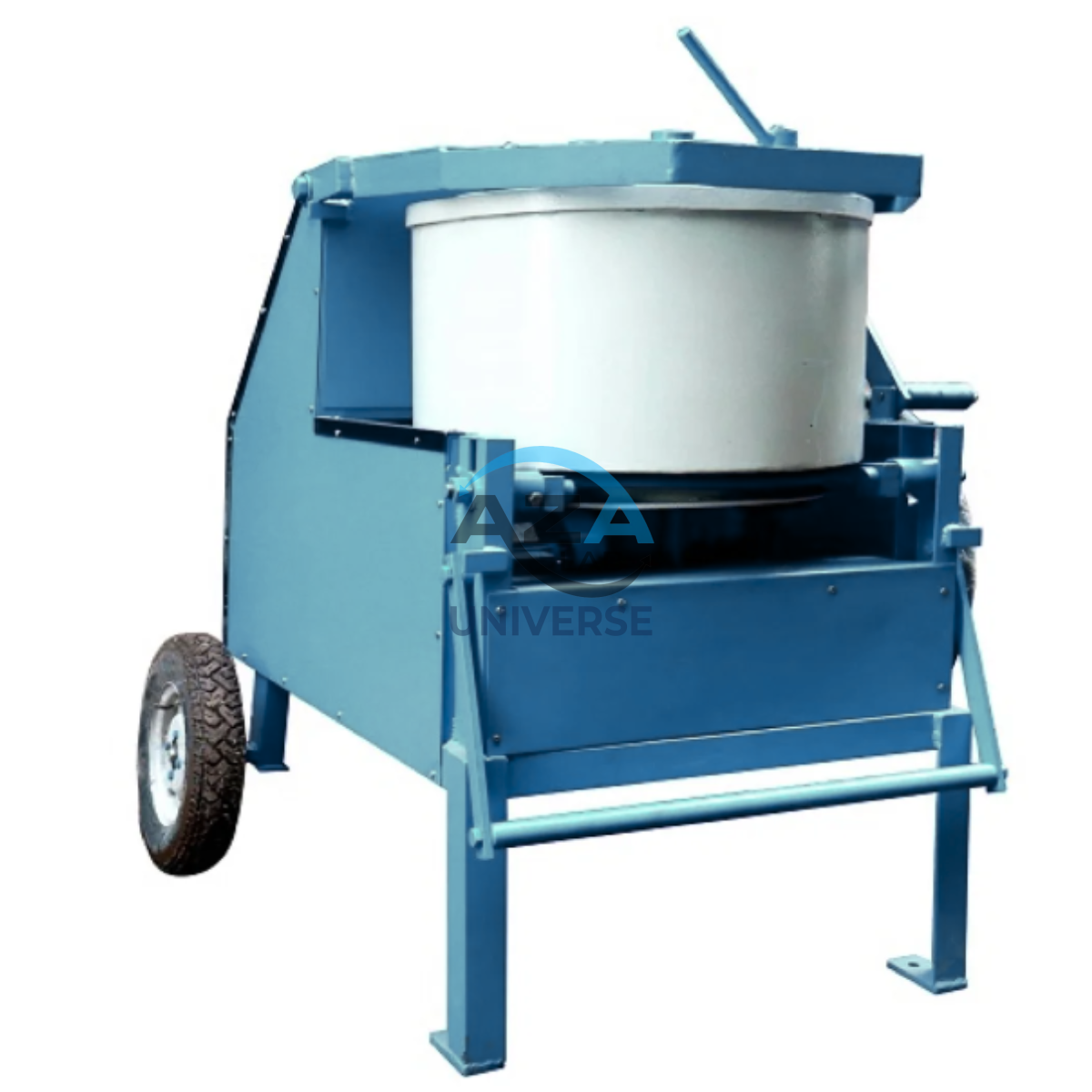
LABORATORY PAN MIXER (CAPACITY 40 LTRS) AZA1117
The AZA1117 Laboratory Pan Mixer (40 Litres) is engineered for precise, consistent, and repeatable mixing of concrete, mortar, and cement paste in controlled laboratory environments. Designed for durability and high-performance blending, this mixer supports material testing, R&D applications, and academic laboratory work where uniformity and accuracy are essential.
Built with a heavy-duty steel pan, gear-driven mixing mechanism, and adjustable blades, the AZA1117 ensures superior mix homogeneity even with coarse aggregates up to 20 mm. Its robust 2 HP motor and 3-phase drive deliver uninterrupted power for demanding laboratory workloads.
Key Features
- 40-litre mixing capacity ideal for cube specimen preparation
- Supports aggregate sizes up to 20 mm
- 2 HP motor, 960 RPM, 3-phase for heavy-duty mixing
- Adjustable steel blades for both dry and wet mix uniformity
- Portable design with wheels for easy movement
- Full-access drum lid for safe loading, pouring, and cleaning
- Gear-driven system for uniform, high-consistency mixing
- Easy maintenance and corrosion-resistant finish
Description
The AZA1117 is specifically designed for laboratories conducting concrete strength, workability, and performance evaluations. It delivers reliable, repeatable mixing cycles for:
- Concrete cube specimen preparation
- Mortar and cement paste blending
- QC batch mixing for RMC plants
- Academic research on concrete properties
- Trials for new admixtures, binders, and additives
The mixer’s ergonomic design ensures ease of use during continuous testing cycles, while its rugged construction guarantees long-term performance even under heavy operation.
Technical Specifications
| Feature | Details |
|---|---|
| Model | AZA1117 |
| Mixing Capacity | 40 Litres |
| Aggregate Handling | Up to 20 mm size |
| Motor Rating | 2 HP |
| Motor Speed | 960 RPM |
| Operation | 3-Phase |
| Mixing Type | Gear-driven planetary mixing |
| Pan Material | Powder-coated steel (optional stainless-steel inner lining) |
| Blades | Adjustable and replaceable steel blades |
| Discharge | Manual pan tilt / optional motorized tilt |
| Safety Features | Safety guard, emergency stop switch |
| Portability | Mounted on wheels |
| Power Supply | 440 V AC / 50 Hz (3-Phase) or optional single-phase variants |
Applications
- Concrete cube and cylinder sample preparation
- Material testing laboratories
- Civil engineering research institutions
- Construction quality control labs
- R&D testing for cement, admixtures, and aggregates
- Educational labs requiring repeatable mixing cycles
Frequently Asked Questions (FAQ)
Q1: What materials can the AZA1117 mix?
It can handle cement paste, mortar, sand, aggregates, and concrete mixes up to 20 mm aggregate size.
Q2: Is the pan fixed or removable?
The standard model features a fixed pan with manual tilt discharge. Custom removable pan options can be provided.
Q3: Are variable speeds available?
Standard units operate at fixed gear-driven speeds, but variable-speed options are available upon request.
Q4: Can the mixer run on 3-phase power?
Yes. The standard model is 3-phase, with optional single-phase variants available.
Q5: Does the mixer comply with IS/ASTM standards?
Yes. It supports mixing procedures as per IS 4031, ASTM C305, and similar testing standards.
Related products
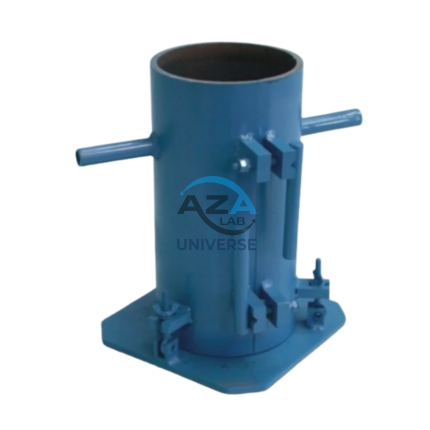
CYLINDRICAL MOULD AZA1123
Purpose & Function
The cylindrical mould is used to prepare concrete specimens of standard dimensions, typically:- 150 mm diameter × 300 mm height
- 100 mm diameter × 200 mm height
- Compressive strength tests
- Split tensile strength tests
- Elastic modulus evaluations
- Durability and material behavior studies
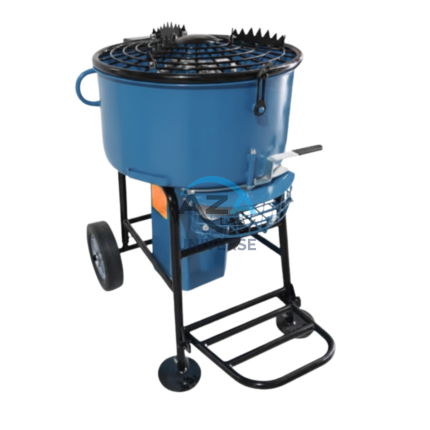
LABOMIX CONCRETE PAN MIXER AZA1118
The AZA1118 Labomix Concrete Pan Mixer is designed for demanding, high-volume mixing operations in construction laboratories, R&D facilities, and material testing centers. Built for durability and precision, it delivers consistent blends of concrete, mortar, grout, and aggregate mixes while supporting rigorous IS/ASTM test procedures.
Engineered with a high-efficiency gear-driven transmission, it provides stable torque, low maintenance requirements, and excellent mixing uniformity. The unit is available in multiple capacities from 90 litres to 300 litres, enabling users to select suitable volume for their operational needs.
The mixer features exchangeable mixing shovels, a safe-locking automatic discharge system, and large mobility wheels that allow a single operator to handle batching, mixing, and discharging efficiently.
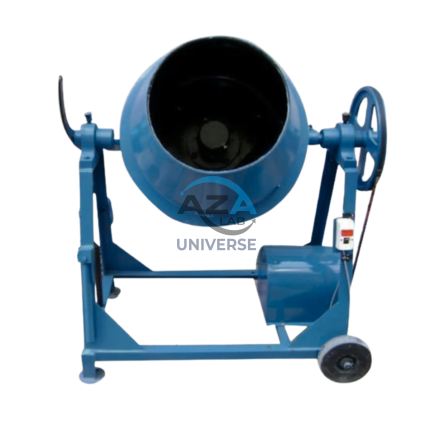
LABORATORY CONCRETE MIXER (MOTORISED) AZA1116
Key Features
- Motorised operation for consistent and uniform mixing
- Ideal for laboratory-scale concrete preparation
- Durable drum crafted from mild steel or stainless steel
- Heavy-duty induction motor for long, reliable service life
- Stable, rigid frame designed for lab environments
- User-friendly controls with built-in safety features
- Reduced manual effort and improved batch repeatability
- Suitable for QC labs, R&D facilities, and educational institutions
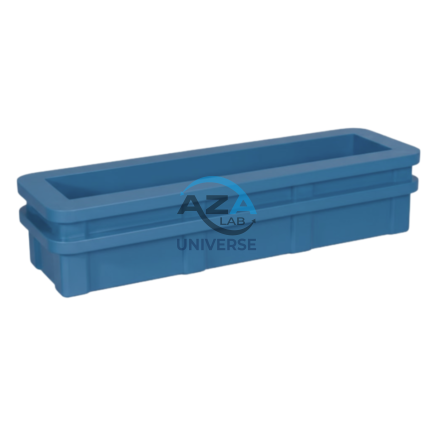
PLASTIC BEAM MOULD AZA1128
The Azalab AZA1128 Polyurethane Beam Mould Series is engineered for casting concrete beam specimens used in flexural strength tests. Built from high-impact, shock-absorbing polyurethane, these moulds deliver exceptional durability, dimensional accuracy, and ease of handling. Their lightweight yet robust design makes them suitable for both laboratory and field applications.
Polyurethane offers superior resilience compared to traditional metal or rigid plastic alternatives, enabling these moulds to withstand vibration, repeated use, and environmental exposure. The smooth internal finish ensures clean, damage-free demoulding, while the mould structure maintains consistency across multiple cycles.
Each AZA1128 mould complies with IS 516, ASTM C78, and BS 1881, ensuring reliable and standardized test preparation.
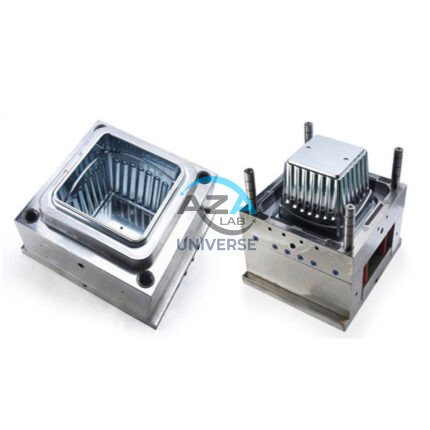
PLASTIC MOULDS AZA1125
The AZA1125 One-Piece Plastic Cube Mould (150 mm) from Azalab is a next-generation alternative to traditional metal cube moulds. Built from high-strength, non-deformable engineering plastic, this mould is designed to offer superior ease of use, long service life, and consistent dimensional accuracy for concrete compressive strength testing.
Its seamless, single-piece construction eliminates the need for bolts, screws, or external frames. Users simply apply demoulding oil, cast the concrete, and after curing, eject the cube using compressed air or water pressure, achieving clean and damage-free removal every time.
Compared to heavy metal moulds, the AZA1125 weighs nearly 90% less, providing clear advantages in portability, handling, and storage—making it ideal for both laboratory and on-site testing environments. Manufactured using an eco-friendly, non-polluting process, this mould supports sustainability goals in modern construction testing.

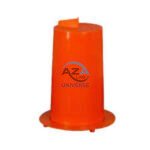
SLUMP CONE, PLASTIC AZA1103
AZA1103 Slump Cone (Plastic) is a durable and lightweight testing tool designed for accurate measurement of concrete workability and consistency. It is widely used in construction sites, civil engineering laboratories, and quality control departments for fast and reliable slump testing of fresh concrete mixes.
Unlike traditional metal cones, this model is manufactured from high-quality rigid plastic, making it corrosion-resistant, dent-proof, and highly suitable for repeated field and laboratory use. Its lightweight construction makes it easy to transport and ideal for site engineers and mobile testing teams.
The apparatus is manufactured to standard dimensions and fully complies with IS 1199 and ASTM C143, ensuring accurate and repeatable test results. The smooth internal surface minimizes friction, allowing easy release of concrete and improving measurement accuracy.
This slump cone helps engineers quickly determine if a concrete mix has the correct consistency for placement, compaction, and finishing. It is especially useful for quality checks before concrete pouring to avoid honeycombing, segregation, or improper flow.
AZA1103 is reusable, easy to clean, and requires minimal maintenance, making it a long-lasting and cost-effective solution for routine concrete testing.
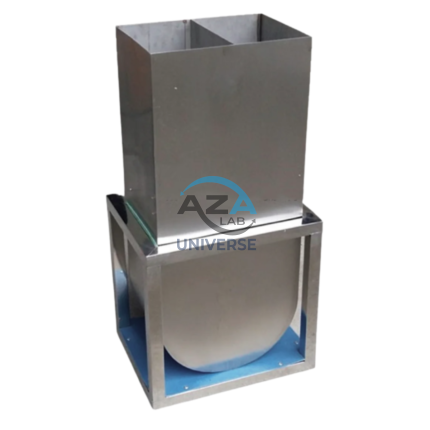
U SHAPE BOX APPARATUS AZA1113
- Measures SCC blocking resistance through simulated rebar congestion
- Accurately indicates flowability and passing ability of SCC mixes
- Robust U-shaped two-chamber design with sliding gate
- Conforms to international SCC testing standards
- Includes precision steel rod arrangement and measuring scale
- Durable, corrosion-resistant construction for field and lab use
- Ideal for SCC mix design, approval, and continuous quality control
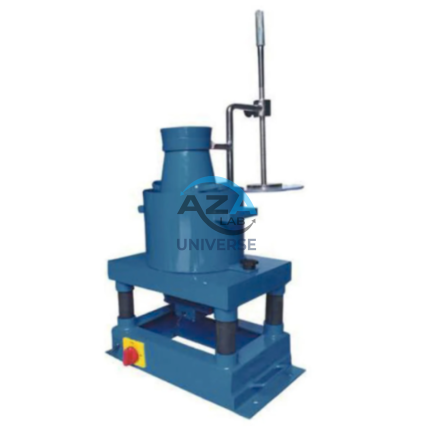
VEE BEE CONSISTOMETER AZA1101
AZA1101 Vee Bee Consistometer is a laboratory-grade concrete testing instrument designed for measuring the workability of stiff and low-slump concrete mixes with high accuracy. It is widely used in construction material testing laboratories, civil engineering institutes, infrastructure projects, and quality control departments.
This equipment performs both slump test and Vee Bee time test, providing dual accuracy in concrete consistency evaluation. It is especially ideal for testing dry, roller-compacted concrete and pavement concrete mixes, where traditional slump tests alone are not sufficient.
The unit is equipped with a precision vibrating table that ensures uniform vibration and repeatable testing results. It comes as a complete set including a standard slump cone, transparent cylindrical container, graduated rod with metal disc, and a powerful vibration unit.
Manufactured from heavy-duty, powder-coated steel, the AZA1101 offers excellent durability and stable performance even under continuous laboratory use. The apparatus is designed and built in compliance with IS 1199 and ASTM C1170 standards, ensuring reliable, repeatable, and internationally accepted test results.
Its easy-to-use design, low maintenance requirement, and robust construction make the AZA1101 a dependable solution for professionals involved in construction material testing and concrete quality control.