
 Rock
Rock Aggregate
 Cement
 Concrete
 Soil
Soil Steel
Steel Bitumen/Asphalt
 Security Survey Equipment
 General Items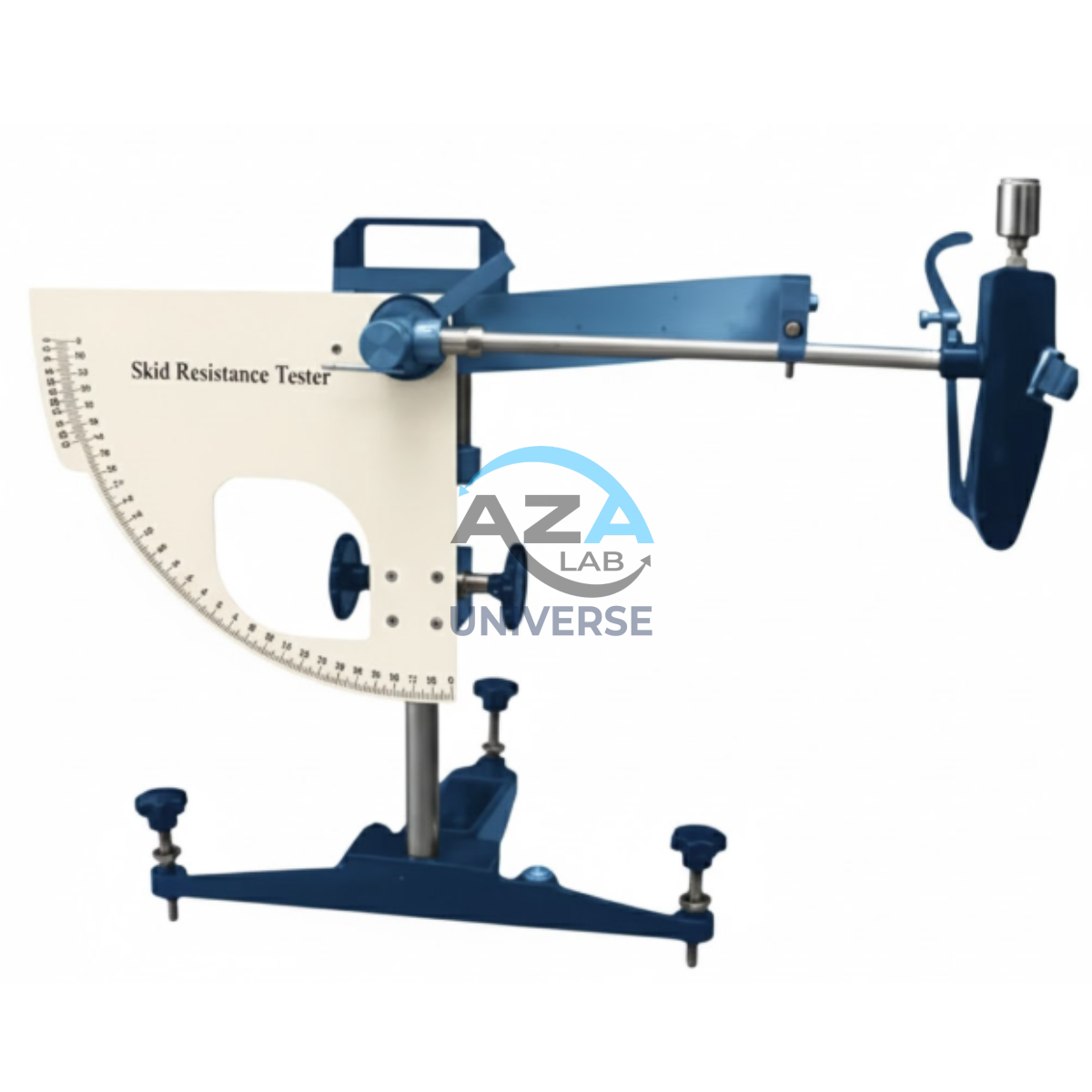
PENDULUM SKID RESISTANCE TESTER AZA1297
The AZA1297 Pendulum Skid Resistance Tester from AZA LAB is a precision-engineered, industry-recognized instrument designed for accurate measurement of slip and skid resistance of surfaces in accordance with internationally accepted testing standards.
Based on the proven pendulum energy loss principle, the AZA1297 provides reliable and repeatable evaluation of surface friction for roads, pedestrian walkways, ceramic tiles, industrial floors, ramps, sports surfaces, and transportation infrastructure.
The instrument measures surface friction as:
- Pendulum Test Value (PTV)
- Skid Resistance Value (SRV)
- British Pendulum Number (BPN)
making it an essential testing solution for engineers, consultants, quality control laboratories, safety inspectors, construction companies, and regulatory authorities.
Description
STANDARDS COMPLIANCE
The AZA1297 fully complies with internationally recognized skid resistance standards:
- ASTM E303
- BS EN 13036-4
- BS EN 1097-8
- TRRL Road Note 27
- ISO 13473-1
These standards are widely accepted for road construction, infrastructure safety, flooring evaluation, and public safety compliance projects.
TECHNICAL SPECIFICATIONS
GENERAL SPECIFICATIONS
| PARAMETER | SPECIFICATION |
|---|---|
| Model | AZA1297 |
| Product Type | Pendulum Skid Resistance Tester |
| Measuring Principle | Energy Loss from Swinging Pendulum |
| Measuring Range | 0–150 SRV (Approx.) |
| Display | Analog Scale (Digital Option Available) |
| Slider Material | Standardized TRRL-Certified Rubber |
| Adjustable Height | Yes |
| Suitable Surfaces | Wet & Dry, Flat or Inclined |
| Instrument Weight | Approx. 20 kg |
| Box Dimensions (L × W × H) | Approx. 29″ × 29″ × 13″ |
PENDULUM SYSTEM SPECIFICATIONS
| PARAMETER | SPECIFICATION |
|---|---|
| Shaking Moment of Force | 615,000 g·mm |
| Pendulum Bob Weight | 1500 g ± 30 g |
| Pendulum Arm Length (Center) | 410 mm ± 5 mm |
| Face-on Static Pressure | 22.2 ± 0.5 kN |
| Distance (Edge to Pendulum Center) | 508 mm |
SALIENT FEATURES
- Fully compliant with ASTM E303 & BS EN 1097-8
- Portable and rugged for field and laboratory use
- High mechanical precision with repeatable results
- Quick-release pendulum mechanism
- Adjustable leveling feet for precise alignment
- Built-in calibration markings
- Suitable for wet and dry testing
- No electronics required
- Reliable operation in harsh environments
- Fast setup and easy operation
SUPPLIED ACCESSORIES
- AZA1297 Pendulum Skid Resistance Tester
- Heavy-duty carrying case
- Certified rubber sliders
- Tool roll with essential tools
- Calibration and height adjustment tools
- Water spray bottle for wet-condition testing
- Calibration certificate
- User operation and instruction manual
OPTIONAL ACCESSORIES
- Digital display upgrade
- Additional rubber sliders
- Surface temperature measurement kit
- Portable calibration blocks
- Field transport trolley
- Spare pendulum components
ADVANTAGES
- Accurate and repeatable skid resistance testing
- Portable for on-site inspections
- Suitable for laboratory and field applications
- Rugged mechanical construction
- No dependency on electronic systems
- Cost-effective long-term operation
- Minimal maintenance requirements
- International standards compliance
- Reliable operation in extreme environments
COMPLIANCE & APPLICABILITY
The AZA1297 is designed for professional slip resistance and skid resistance evaluation according to ASTM, BS EN, ISO, and TRRL standards.
The instrument is suitable for regulatory compliance testing, public safety assessment, infrastructure inspection, flooring certification, material development, and industrial quality control applications.
Additional information
| Measuring Principle |
Energy loss from swinging pendulum |
|---|---|
| Display |
Analog scale (or digital option) |
| Slider Material |
Standardized rubber (TRRL-certified) |
| Adjustable Height |
Yes, for calibration |
You may also like…
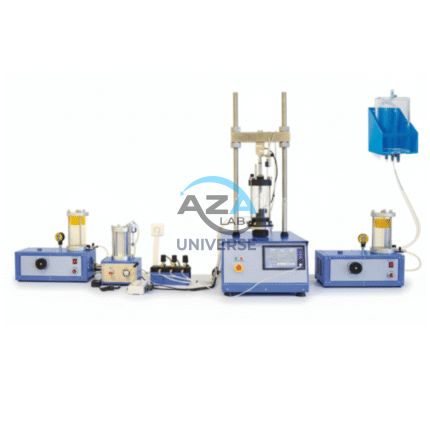
ADVANCED TRIAXIAL TEST SYSTEM (UU–CU–CD CAPABLE) AZA1296
The AZA LAB Advanced Triaxial Test System AZA1296 is a fully automated geotechnical laboratory testing system designed for accurate determination of soil shear strength and deformation characteristics under controlled stress and drainage conditions.
The system supports all major triaxial compression testing modes including:
- Unconsolidated Undrained (UU)
- Consolidated Undrained (CU)
- Consolidated Drained (CD)
Engineered for high-precision geotechnical analysis, the AZA1296 replicates in-situ soil stress conditions to evaluate soil stability, strength behavior, pore pressure response, and failure mechanisms under axial loading.
The system integrates servo-controlled loading, automatic pressure regulation, real-time pore pressure monitoring, automated data acquisition, and advanced software analysis, making it ideal for geotechnical laboratories, civil engineering projects, infrastructure development, research institutions, and academic applications.
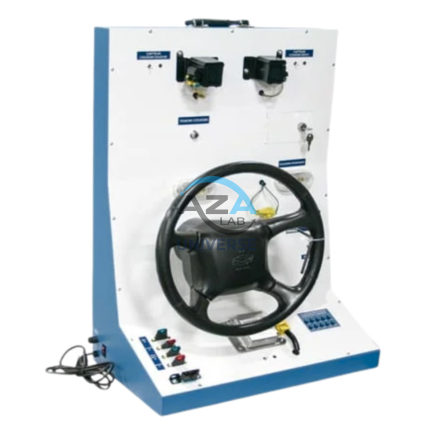
AIR BAG TRAINER AZA1246
The AZA1246 AZALAB Air Bag Trainer is a comprehensive educational training platform designed to demonstrate the structure, operation, diagnostics, and fault analysis of modern automotive airbag systems, also known as Supplemental Restraint Systems (SRS). Built using OEM automotive components, this trainer delivers a realistic learning experience while maintaining complete operational safety.
This system is ideally suited for automotive engineering colleges, ITIs, polytechnic institutes, vocational training centers, and service technician programs, enabling both theoretical instruction and hands-on diagnostics practice.
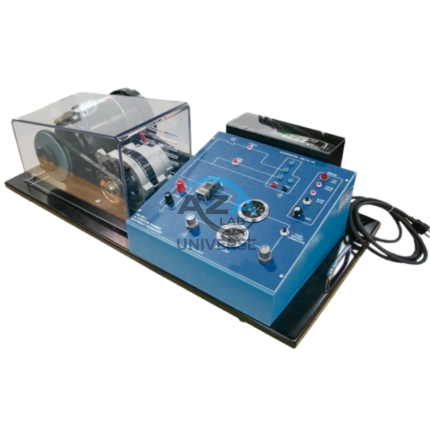
ALTERNATOR TRAINER AZA1247
The AZA1247 AZALAB Alternator Trainer is a hands-on automotive electrical training system designed to demonstrate the working principles, construction, and diagnostics of an automotive alternator with external voltage regulation. Built using OEM automotive components, this trainer provides a realistic and safe learning platform for students, technicians, and trainees to understand vehicle charging systems in depth.
This system is ideal for automotive engineering institutes, ITIs, polytechnics, vocational training centers, and service technician programs, supporting both theoretical instruction and practical experimentation.
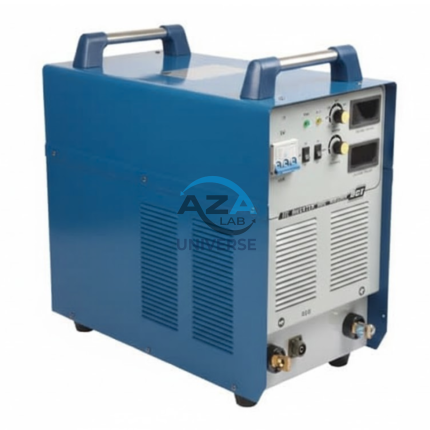
ARC WELDING MACHINE AZA1234
The AZA1234 Arc Welding Machine by A Z A Lab is a high-performance industrial welding solution engineered for demanding fabrication, maintenance, and structural welding applications. Designed using advanced inverter technology, this machine delivers superior arc stability, high efficiency, and reliable welding performance across a wide range of electrode types and materials.
With an inverter frequency of up to 20 kHz, the AZA1234 ensures fast dynamic response, reduced spatter, and excellent weld bead appearance. Its robust electrical design supports a high duty cycle, allowing continuous operation under heavy loads while maintaining consistent welding output—even with output cable lengths of up to 100 meters.
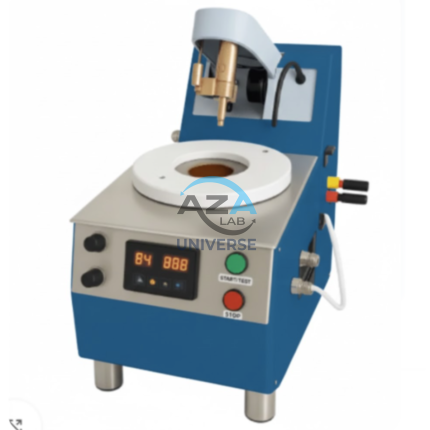
AUOTFLASH AUTOMATED ABEL FLASH POINT ANALYZER AZA1277
The AutoFlash-1277 (Model: AZA1277) from AZA Lab is a fully automated, microcontroller-based Abel Flash Point Analyzer designed for accurate, safe, and repeatable determination of flash points of combustible liquids. Engineered to meet stringent international testing requirements, this advanced instrument conforms to IP 170, ISO 13736, and IS 1448 (Part 20) standards.
Covering a standard temperature range of –30°C to 70°C, extendable up to 110°C, the AZA1277 is ideally suited for laboratories involved in petroleum testing, petrochemical quality control, fuels research, and regulatory compliance.
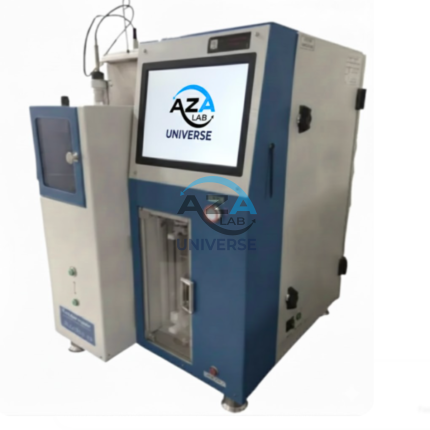
AUTODIST-86 GLASS DISTILLATION UNITAZA1282
The AutoDist-86 Glass Distillation Unit (Model AZA1282) is a high-performance laboratory water distiller designed for the continuous production of high-purity distilled water.
Constructed entirely from borosilicate glass 3.3, the unit ensures zero metallic contamination, excellent thermal resistance, and long operational life. It is ideal for laboratories requiring consistent, low-conductivity distilled water for analytical, pharmaceutical, and research applications.Distillation Performance
- Distillate Output: Up to 4 L/hour (±10%)
- Suitable for routine and medium-scale laboratory demand
- Efficient removal of:
- Dissolved salts
- Heavy metals
- Organic/inorganic impurities
- Microbial contaminants
Related products
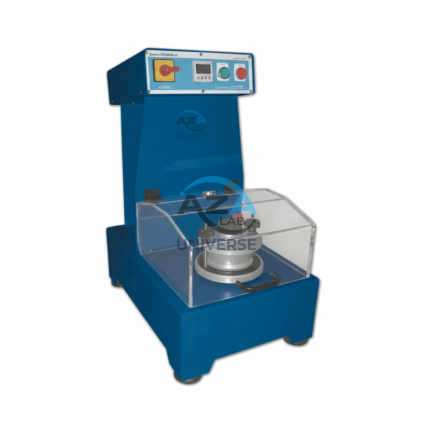
ABRASION TESTING MACHINE FOR GLAZED TILES AZA1261
The AZA LAB Abrasion Testing Machine for Glazed Tiles (AZA1261) is a precision-engineered laboratory instrument designed for the accurate determination of abrasion resistance in glazed ceramic tiles. Fully compliant with BIS 13630-11 and EN ISO 10545-7, this machine is essential for evaluating tile durability and surface wear performance in accordance with international quality standards.
The AZA1261 simulates real-world foot traffic and surface wear conditions, enabling manufacturers, testing laboratories, and quality control departments to verify that glazed tiles maintain their appearance, texture, and integrity even under high-traffic usage.
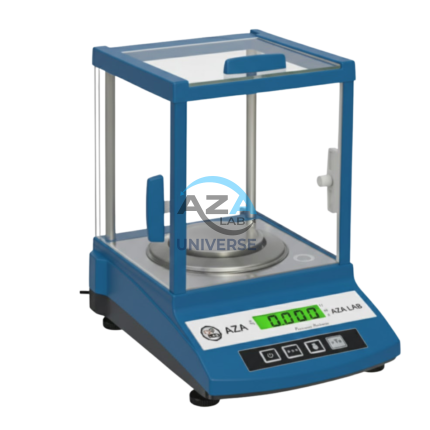
ELECTRONIC WEIGHING BALANCE AZA1267
The AZA LAB Electronic Weighing Balance – Model AZA1267 is a high-precision laboratory instrument engineered for accurate and reliable mass measurement across a wide range of analytical and quality control applications. With a readability of 0.001 g (1 mg) and external calibration, this balance delivers consistent results where precision is critical.
Designed for durability and ease of use, the AZA1267 features a stainless-steel weighing pan, anti-shock protection, and a clear LED digital display, all housed in a compact and robust body. Its dual power supply (AC adapter with in-built rechargeable battery) ensures uninterrupted operation in both laboratory and field environments
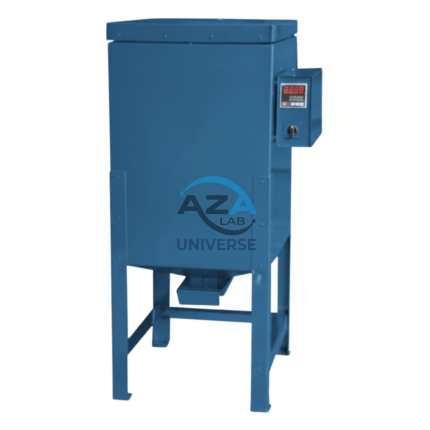
FLUX OVEN – 50 KG – STAINLESS STEEL AZA1273
The AZA LAB Flux Oven (Model AZA1273) is a high-performance drying and heating oven engineered for precise, uniform thermal processing of flux materials in laboratory and industrial environments. Designed with a robust double-walled construction and high-efficiency insulation, the oven delivers excellent thermal stability, energy efficiency, and long-term durability.
With a temperature range of 50°C to 400°C, forced air circulation, and a digital PID temperature controller with auto-tune, the AZA1273 ensures accurate temperature control and even heat distribution throughout the chamber. It is ideally suited for demanding applications in ceramics, metallurgy, materials testing, and quality control laboratories.
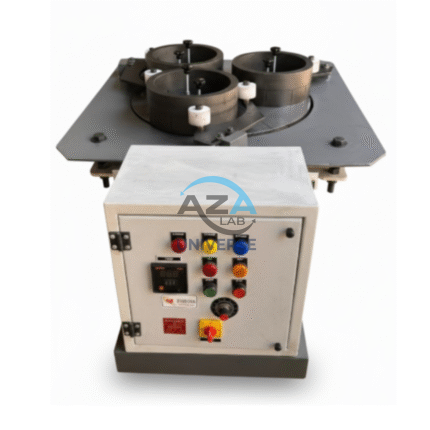
OPEN FACE LAPPING MACHINE AZA1311
Its rigid welded tubular steel frame supports the gearbox, drive motor, and worktable, ensuring vibration-free operation and long service life. This model includes:
- Diamond slurry dispensing system
- Integrated abrasive compound feed
- Waste collection tanks behind lift-off panels
- Cast iron lapping plate with serrated pattern
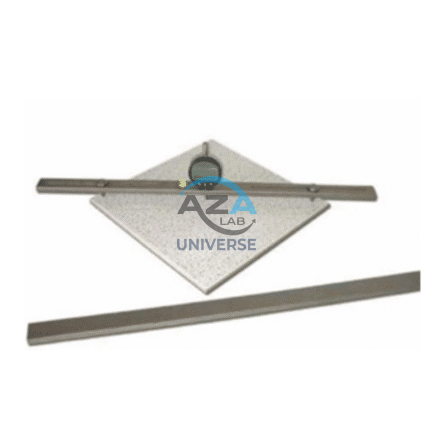
PORTABLE GAUGE / PLUCOMETER – WITH DIGITAL GAUGES AZA1271
The AZA LAB Portable Gauge – Model AZA1271 is a precision instrument designed for the measurement of surface flatness and warpage in ceramic tiles and related materials. Compliant with BIS 13630 (Part 1), this advanced Plucometer features a digital dial gauge system for highly accurate and user-friendly measurement.
Ideal for use in quality control laboratories and tile manufacturing environments, the system allows direct assessment of surface irregularities across various tile sizes.
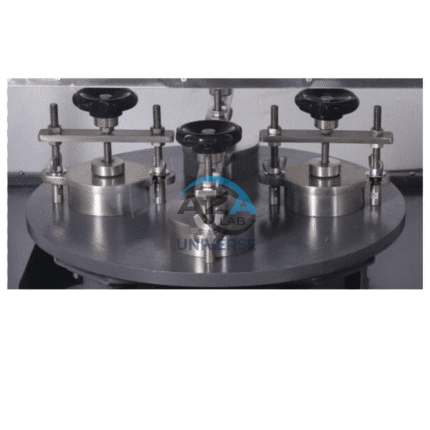
TEST SPECIMEN HOLDER FOR SURFACE ABRASION MACHINE (GLAZED TILES) AZA1264
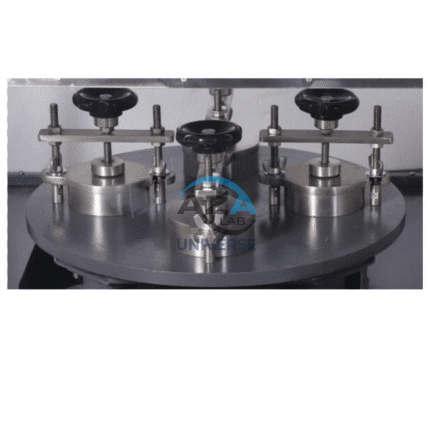
The AZA1264 Test Specimen Holder is a precision-engineered accessory designed specifically for surface abrasion testing of glazed ceramic tiles in accordance with BIS 13630 (Part-11) and EN ISO 10545-7. It ensures secure positioning of the test specimen and consistent containment of abrasive materials during the abrasion resistance test, contributing to accurate, repeatable, and standard-compliant results.
This holder is an essential component in ceramic tile testing laboratories, quality control departments, certification agencies, and research institutions, where standardized abrasion testing is mandatory for product validation and compliance.
TEST SPECIMEN HOLDER FOR SURFACE ABRASION MACHINE (GLAZED TILES) AZA1264A
The AZA1264A Test Specimen Holder is a precision-engineered laboratory accessory designed for surface abrasion resistance testing of glazed ceramic tiles in strict accordance with BIS 13630 (Part-11) and EN ISO 10545-7. It ensures stable specimen positioning and uniform containment of abrasive loads, which is essential for obtaining accurate, repeatable, and standard-compliant test results.
This holder is widely used in ceramic tile manufacturing laboratories, quality control departments, certification bodies, and research institutions, where conformity to national and international testing standards is mandatory.
WET TRANSVERSE STRENGTH TESTING MACHINE (AZA -1268)
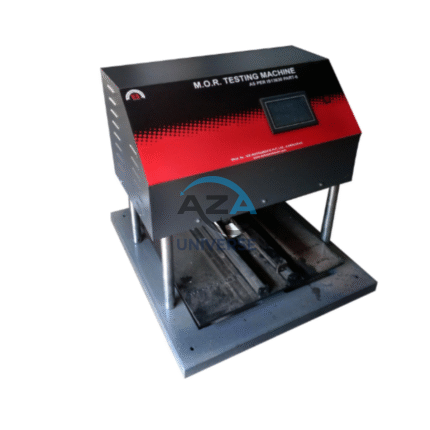
The Wet Transverse Strength Testing Machine is a rugged electro-mechanical system designed for quiet, vibration-free operation. It features a precision load control system driven by an integrated induction motor and drive, ensuring consistent and repeatable test results.
Suited for laboratories, R&D departments, and quality control units in cement tile manufacturing.