
 Rock
Rock Aggregate
 Cement
 Concrete
 Soil
Soil Steel
Steel Bitumen/Asphalt
 Security Survey Equipment
 General Items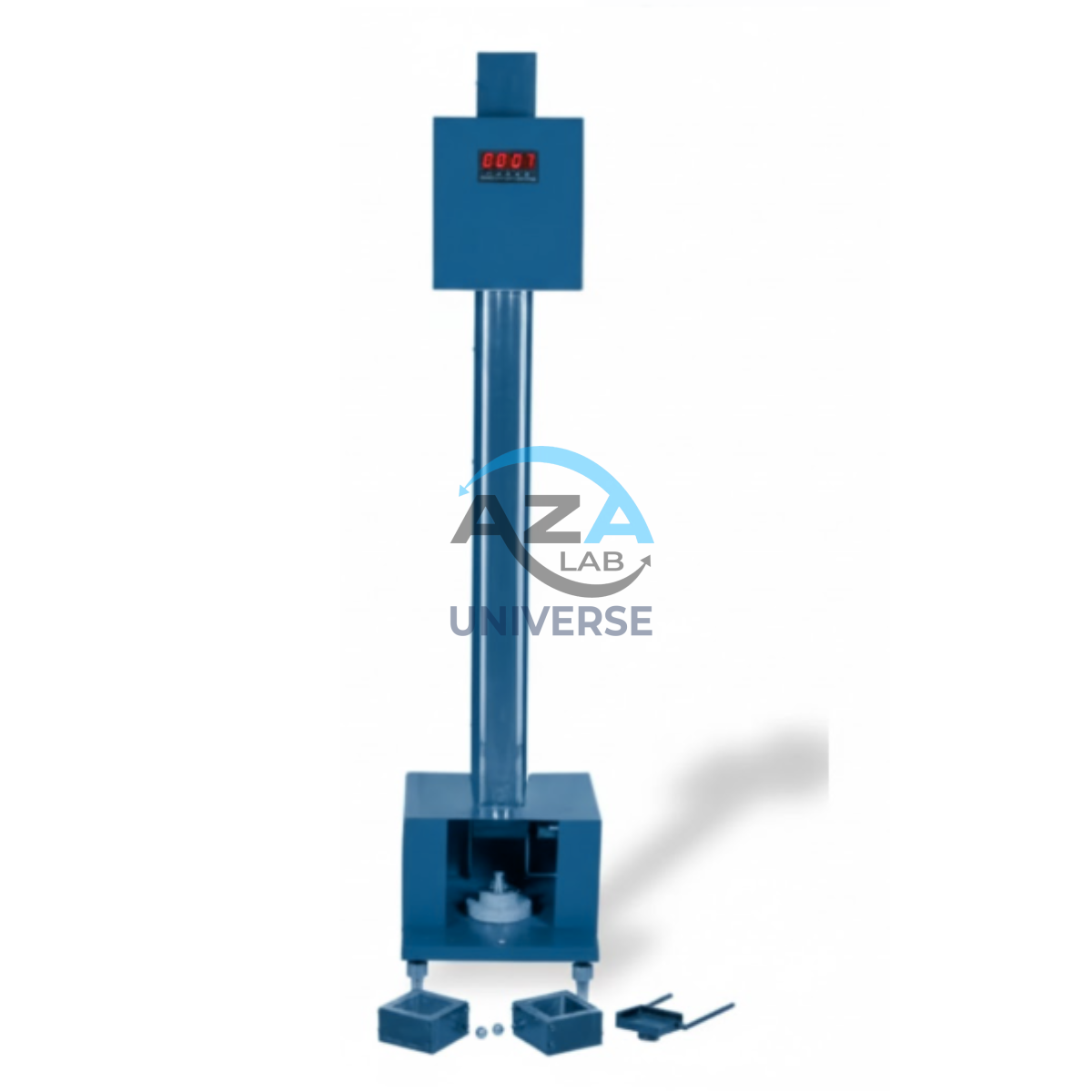
BALL RELEASE FOR IMPACT RESISTANCE TESTER AZA1295
The AZA LAB Ball Release for Impact Resistance Tester (AZA1295) is a precision-engineered laboratory accessory designed to deliver accurate, repeatable, and standardized ball drop impact testing for a wide range of materials. It is an essential component of drop weight impact testing systems used in research & development, quality control, compliance testing, and academic laboratories.
This device ensures controlled release of a weighted ball from a defined height, eliminating operator variability and guaranteeing consistent impact energy in every test. The AZA1295 is widely used to evaluate impact strength, puncture resistance, and breakage behavior of materials under sudden mechanical stress.
Description
Purpose & Working Principle
The AZA1295 functions by releasing a calibrated impact ball vertically from a preset height using either a manual trigger or magnetic release mechanism. Once activated, the ball is released without lateral movement, rotation, or drag, ensuring a true vertical drop that accurately simulates real-world impact conditions.
This controlled drop allows laboratories and manufacturers to assess whether materials can withstand sudden impact forces without cracking, shattering, denting, or permanent deformation—a critical requirement for product safety and durability certification.
Standards Compliance
The AZA1295 is designed to meet and support internationally recognized impact testing standards, including:
-
ASTM D5420 – Instrumented Impact Testing of Plastics
-
ISO 6603-2 – Plastics — Determination of puncture impact behavior
-
Compatible with other drop-weight and free-fall impact test methods
This makes the unit suitable for regulated industries and accredited laboratories worldwide.
What’s Included
-
Precision Ball Release Mechanism
-
Adjustable Universal Mounting Bracket
-
Choice of Impact Ball (Steel or Rubber – standard)
-
Setup, Alignment & Calibration Guide
Optional Accessories:
-
Tungsten carbide impact balls
-
Drop towers and support frames
-
High-speed camera integration
-
Digital impact sensors
-
Automated or solenoid-based release upgrade
Technical Specifications
| Feature | Specification |
|---|---|
| Model | AZA1295 |
| Release Mechanism | Manual trigger or magnetic drop |
| Construction Material | Stainless steel & aluminum |
| Ball Compatibility | 10 mm to 50 mm diameter |
| Ball Materials | Steel, Tungsten Carbide, Rubber |
| Maximum Drop Height | Up to 2000 mm |
| Mounting Compatibility | Universal vertical & custom frames |
| Compliance Standards | ASTM D5420, ISO 6603-2 |
| Calibration Interval | Every 6–12 months or 500 test cycles |
| Operating Environment | Laboratory, Industrial QA/QC |
Frequently Asked Questions (FAQ)
Q1: What is the main function of the AZA1295?
It provides controlled and repeatable ball drop testing to evaluate impact resistance and material durability.
Q2: Can different ball materials be used?
Yes. Steel, rubber, and tungsten carbide balls are supported in multiple sizes.
Q3: Is it compatible with existing drop towers?
Yes. The universal mounting system fits most vertical drop towers and lab frames.
Q4: How accurate is the release mechanism?
The system eliminates human error and ensures consistent drop velocity and alignment every time.
Q5: How often does it need calibration?
Routine calibration every 6–12 months is sufficient under normal laboratory use.
Why Choose AZA1295
-
Ensures highly repeatable and standardized impact testing
-
Reduces operator dependency and testing variability
-
Supports global ASTM and ISO impact test requirements
-
Durable, long-life construction for continuous lab use
-
Flexible configuration for manual or automated systems
AZA1295 – Precision Ball Release for Reliable Impact Resistance Testing
Additional information
| Material |
Stainless Steel / Hardened Aluminum |
|---|---|
| Compatible Ball Sizes |
10 mm to 50 mm |
| Drop Height Range |
Adjustable (up to 2000 mm) |
| Release Type |
Manual trigger / Magnetic (optional) |
- Automatic COR Calculation: Real-time coefficient computation based on rebound time or height.
- Precision Release Mechanism: Electromagnet-controlled ball drop ensures consistent center-hit.
- User-Friendly Interface: Digital indicator with backlit screen.
- Rigid Frame Construction: Prevents unwanted tile movement for repeatable testing.
- Test Mold Provided: Includes 75 x 75 mm mold cube for accurate tile placement.
Compliance:
- EN ISO 10545‑5 – Ceramic tiles: Determination of impact resistance by measurement of coefficient of restitution
- IS 13630 (Part‑14) – Indian Standard equivalent for tile impact resistance.
- Chrome-plated steel ball Ø 19 mm
- Electromagnetic drop device with guide tube
- Rigid concrete block support with tile holding system
- Digital indicator with COR calculator
- Tile mold cube – 75 mm x 75 mm
Optional Accessories (Available at Extra Cost):
- Environmental Conditioning Chamber: Temperature/humidity stabilization
- Drying Oven: For pre-test drying of tiles
- Magnifying Glass / Microscope: Post-impact inspection
- Compressed Air Blower / Brush: Cleaning tile surface prior to testing
You may also like…
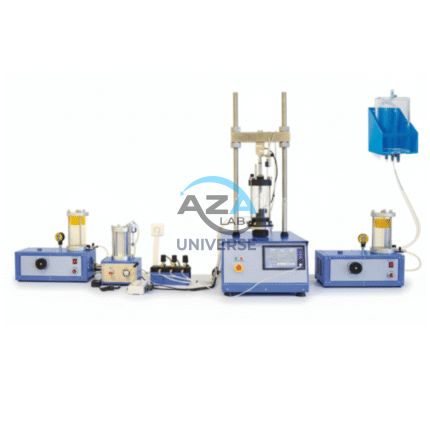
ADVANCED TRIAXIAL TEST SYSTEM (UU–CU–CD CAPABLE) AZA1296
The AZA LAB Advanced Triaxial Test System AZA1296 is a fully automated geotechnical laboratory testing system designed for accurate determination of soil shear strength and deformation characteristics under controlled stress and drainage conditions.
The system supports all major triaxial compression testing modes including:
- Unconsolidated Undrained (UU)
- Consolidated Undrained (CU)
- Consolidated Drained (CD)
Engineered for high-precision geotechnical analysis, the AZA1296 replicates in-situ soil stress conditions to evaluate soil stability, strength behavior, pore pressure response, and failure mechanisms under axial loading.
The system integrates servo-controlled loading, automatic pressure regulation, real-time pore pressure monitoring, automated data acquisition, and advanced software analysis, making it ideal for geotechnical laboratories, civil engineering projects, infrastructure development, research institutions, and academic applications.
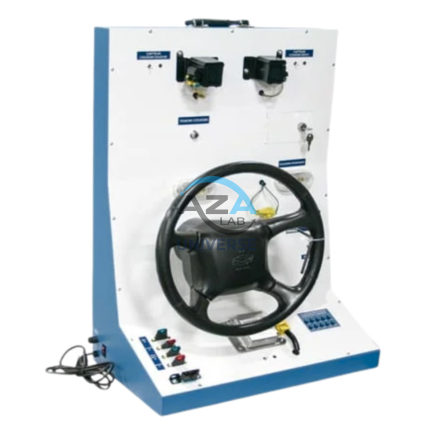
AIR BAG TRAINER AZA1246
The AZA1246 AZALAB Air Bag Trainer is a comprehensive educational training platform designed to demonstrate the structure, operation, diagnostics, and fault analysis of modern automotive airbag systems, also known as Supplemental Restraint Systems (SRS). Built using OEM automotive components, this trainer delivers a realistic learning experience while maintaining complete operational safety.
This system is ideally suited for automotive engineering colleges, ITIs, polytechnic institutes, vocational training centers, and service technician programs, enabling both theoretical instruction and hands-on diagnostics practice.
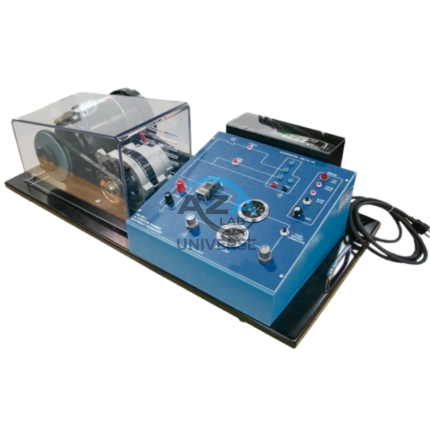
ALTERNATOR TRAINER AZA1247
The AZA1247 AZALAB Alternator Trainer is a hands-on automotive electrical training system designed to demonstrate the working principles, construction, and diagnostics of an automotive alternator with external voltage regulation. Built using OEM automotive components, this trainer provides a realistic and safe learning platform for students, technicians, and trainees to understand vehicle charging systems in depth.
This system is ideal for automotive engineering institutes, ITIs, polytechnics, vocational training centers, and service technician programs, supporting both theoretical instruction and practical experimentation.
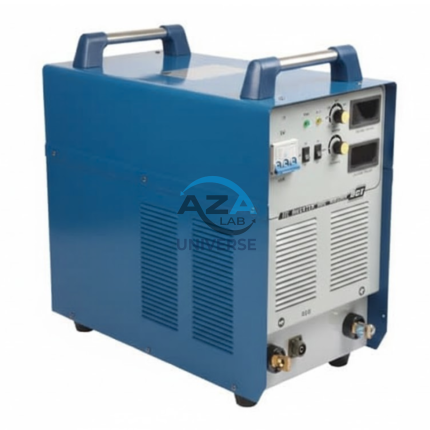
ARC WELDING MACHINE AZA1234
The AZA1234 Arc Welding Machine by A Z A Lab is a high-performance industrial welding solution engineered for demanding fabrication, maintenance, and structural welding applications. Designed using advanced inverter technology, this machine delivers superior arc stability, high efficiency, and reliable welding performance across a wide range of electrode types and materials.
With an inverter frequency of up to 20 kHz, the AZA1234 ensures fast dynamic response, reduced spatter, and excellent weld bead appearance. Its robust electrical design supports a high duty cycle, allowing continuous operation under heavy loads while maintaining consistent welding output—even with output cable lengths of up to 100 meters.
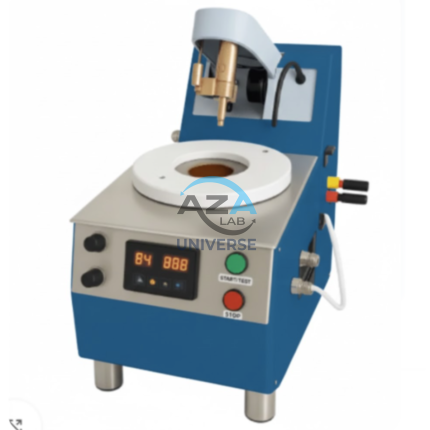
AUOTFLASH AUTOMATED ABEL FLASH POINT ANALYZER AZA1277
The AutoFlash-1277 (Model: AZA1277) from AZA Lab is a fully automated, microcontroller-based Abel Flash Point Analyzer designed for accurate, safe, and repeatable determination of flash points of combustible liquids. Engineered to meet stringent international testing requirements, this advanced instrument conforms to IP 170, ISO 13736, and IS 1448 (Part 20) standards.
Covering a standard temperature range of –30°C to 70°C, extendable up to 110°C, the AZA1277 is ideally suited for laboratories involved in petroleum testing, petrochemical quality control, fuels research, and regulatory compliance.
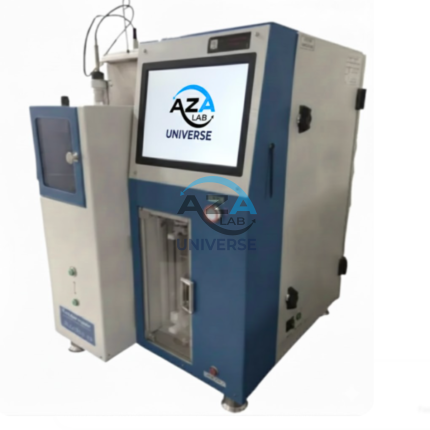
AUTODIST-86 GLASS DISTILLATION UNITAZA1282
The AutoDist-86 Glass Distillation Unit (Model AZA1282) is a high-performance laboratory water distiller designed for the continuous production of high-purity distilled water.
Constructed entirely from borosilicate glass 3.3, the unit ensures zero metallic contamination, excellent thermal resistance, and long operational life. It is ideal for laboratories requiring consistent, low-conductivity distilled water for analytical, pharmaceutical, and research applications.Distillation Performance
- Distillate Output: Up to 4 L/hour (±10%)
- Suitable for routine and medium-scale laboratory demand
- Efficient removal of:
- Dissolved salts
- Heavy metals
- Organic/inorganic impurities
- Microbial contaminants
Related products
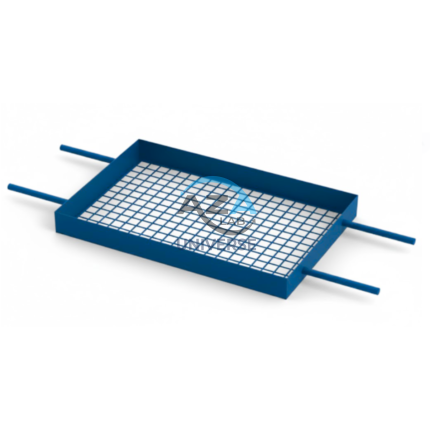
BALLAST SIEVE -100x70x10 cm – 65 mm AZA1299
The AZA1299 Ballast Sieve (65 mm) from AZA LAB is a heavy-duty, industrial-grade aggregate testing sieve designed for the separation, grading, and classification of coarse aggregates, railway ballast, crushed stone, and large construction materials.
Engineered for demanding laboratory and field applications, the AZA1299 features a reinforced large-area frame and precision 65 mm square aperture mesh, ensuring reliable and repeatable particle size analysis for infrastructure, railway, highway, mining, and civil engineering projects.
Its rugged construction, corrosion-resistant materials, and compatibility with both manual and mechanical sieving systems make it an essential tool for aggregate quality control and standards-compliant material testing.
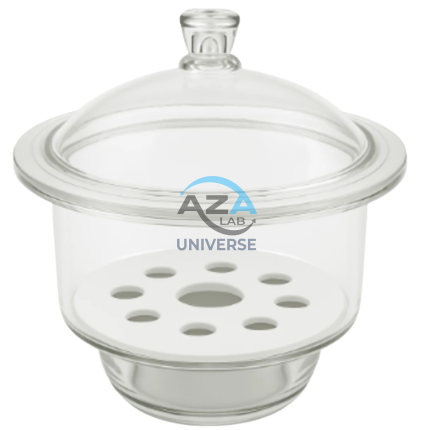
DESICCATORS AZA1266
A desiccator is an essential laboratory container used for dry storage and protection of hygroscopic materials from atmospheric moisture. Our desiccators are designed to offer airtight sealing, durability, and resistance to chemical reactions.
Whether you're storing anhydrous chemicals, moisture-sensitive reagents, or conducting vacuum drying, our desiccators are built for consistent, high-performance usage.
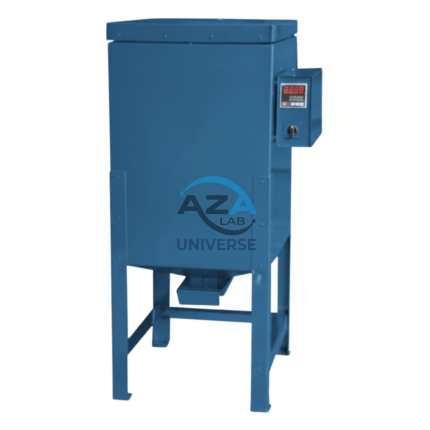
FLUX OVEN – 50 KG – STAINLESS STEEL AZA1273
The AZA LAB Flux Oven (Model AZA1273) is a high-performance drying and heating oven engineered for precise, uniform thermal processing of flux materials in laboratory and industrial environments. Designed with a robust double-walled construction and high-efficiency insulation, the oven delivers excellent thermal stability, energy efficiency, and long-term durability.
With a temperature range of 50°C to 400°C, forced air circulation, and a digital PID temperature controller with auto-tune, the AZA1273 ensures accurate temperature control and even heat distribution throughout the chamber. It is ideally suited for demanding applications in ceramics, metallurgy, materials testing, and quality control laboratories.
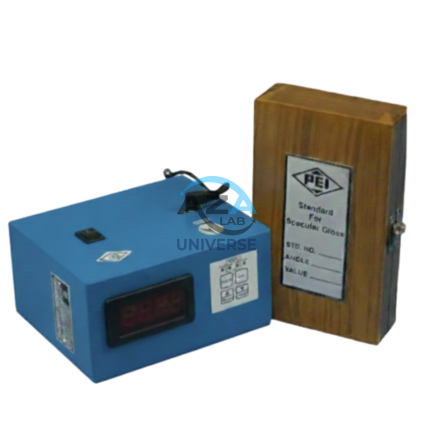
GLOSS METER – SINGLE ANGLE MODELS AZA1298
The AZA1298 Single Angle Gloss Meter from AZA LAB is a compact, high-precision surface gloss measurement instrument designed for accurate, repeatable, and standardized evaluation of surface reflectivity across laboratory, production, inspection, and field environments.
Using a fixed-angle optical geometry, the AZA1298 measures surface gloss in Gloss Units (GU) with excellent repeatability and optical accuracy, making it ideal for quality control, product development, coating verification, and surface finish inspection.
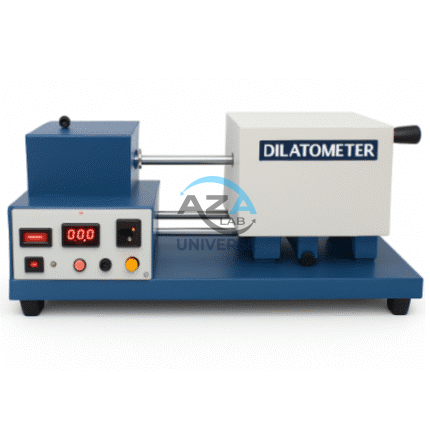
HIGH-PERFORMANCE DILATOMETER (THERMAL EXPANSION TESTING SYSTEM) AZA1269
The AZA1269 High-Performance Dilatometer is an advanced thermal analysis instrument engineered for precise measurement of linear thermal expansion and contraction of solid materials at temperatures up to 1400 °C. Designed for demanding laboratory and industrial environments, the system delivers high accuracy, repeatability, and long-term thermal stability, making it ideal for material characterization, research, and quality assurance.
This instrument is widely used in ceramics, refractories, advanced composites, polymers, and sintered materials, where understanding dimensional change under heat is critical to product performance and safety.
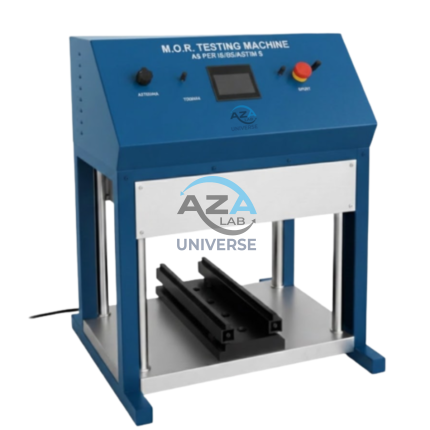
MOR TESTING MACHINE AZA1265
High-Precision Flexural Strength Testing System for Ceramic Tiles
The AZA1265 MOR Testing Machine is a heavy-duty, high-accuracy testing system engineered to determine the Modulus of Rupture (MOR) of ceramic tiles in strict accordance with ISO 10545-6. MOR testing is a critical quality parameter used to evaluate the bending strength and mechanical reliability of ceramic tiles when subjected to flexural loads.
Designed for continuous industrial use, the AZA1265 delivers precise, repeatable, and traceable test results, making it an indispensable tool for ceramic tile manufacturers, construction material laboratories, inspection agencies, and research institutions.
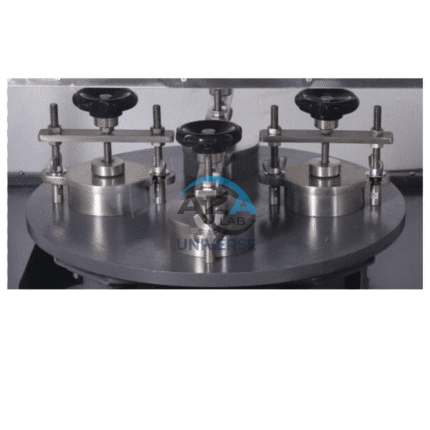
TEST SPECIMEN HOLDER FOR SURFACE ABRASION MACHINE (GLAZED TILES) AZA1264
The AZA1264 Test Specimen Holder is a precision-engineered accessory designed specifically for surface abrasion testing of glazed ceramic tiles in accordance with BIS 13630 (Part-11) and EN ISO 10545-7. It ensures secure positioning of the test specimen and consistent containment of abrasive materials during the abrasion resistance test, contributing to accurate, repeatable, and standard-compliant results.
This holder is an essential component in ceramic tile testing laboratories, quality control departments, certification agencies, and research institutions, where standardized abrasion testing is mandatory for product validation and compliance.
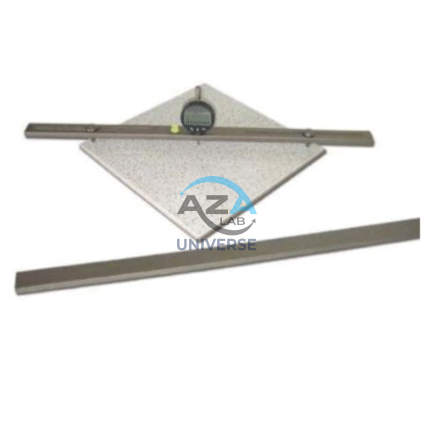
UNIVERSAL DIGITAL GAUGE – DIAGONAL LINEARITY PLUCOMETER AZA1272
The AZA LAB Universal Digital Gauge – AZA1272 is a compact and highly accurate plucometer designed for evaluating diagonal linearity and flatness of ceramic tiles. It complies fully with IS 13630 (Part-1) and EN ISO 10545 (Part-2), making it an essential tool in laboratories and tile manufacturing quality control.
Engineered for portability and precision, the device allows fast and direct measurement of dimensional deviations across the diagonal of the tile.
AVAILABLE PLUCOMETER SIZES
-
450 × 450 mm
-
600 × 600 mm
APPLICATIONS
-
Measurement of diagonal linearity
-
Evaluation of tile flatness
-
In-process and final quality control in ceramic tile production
-
Conformance testing as per national and international standards