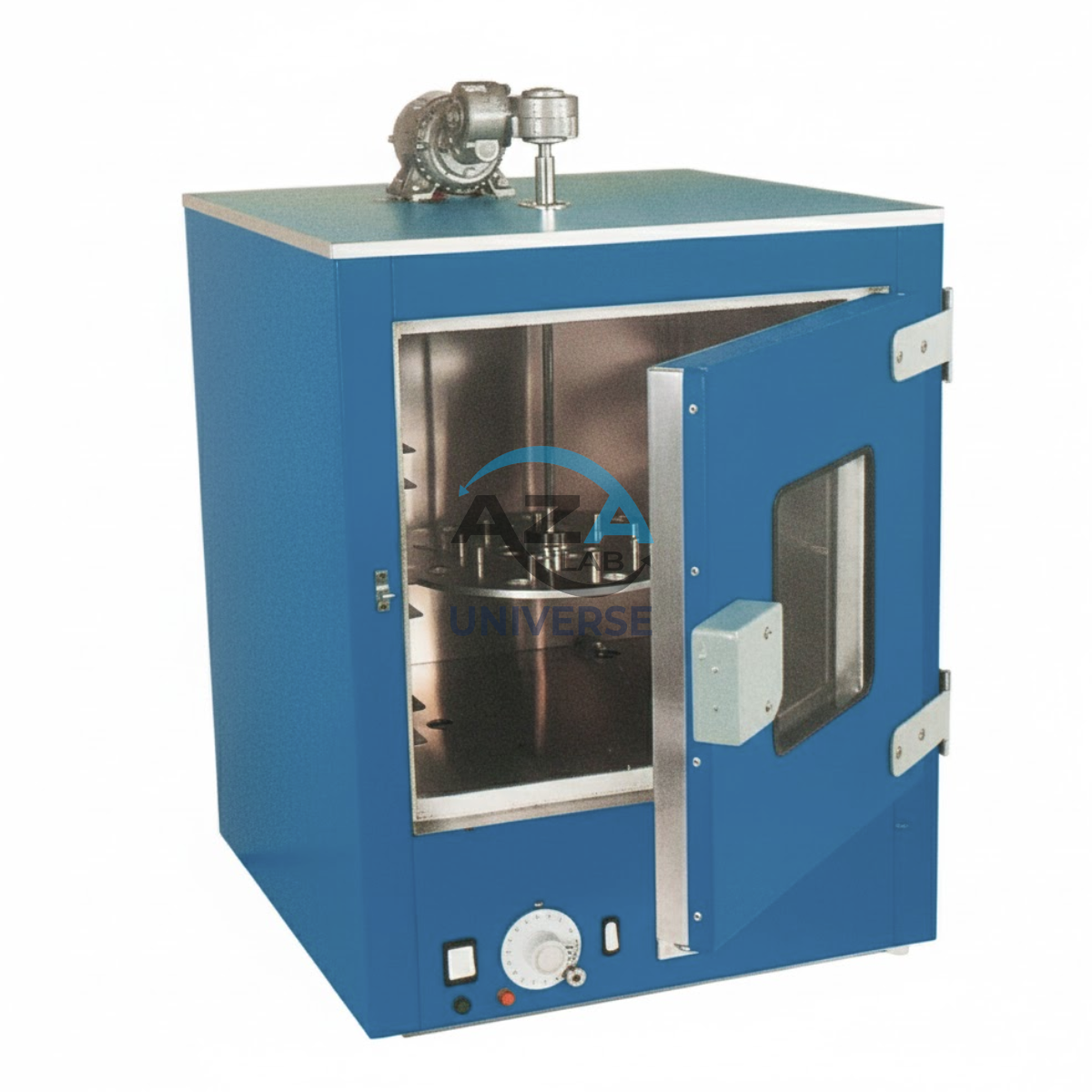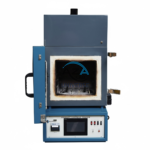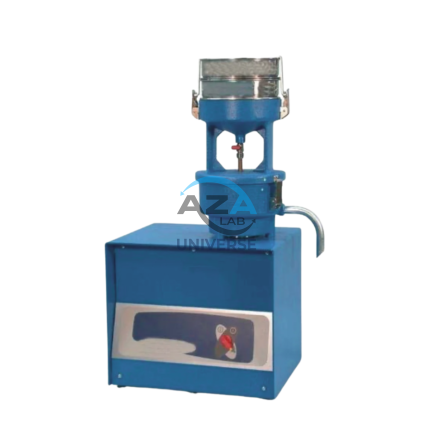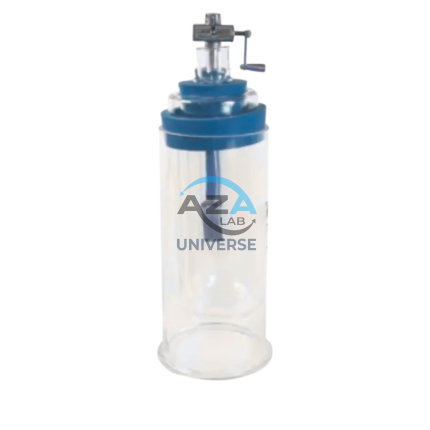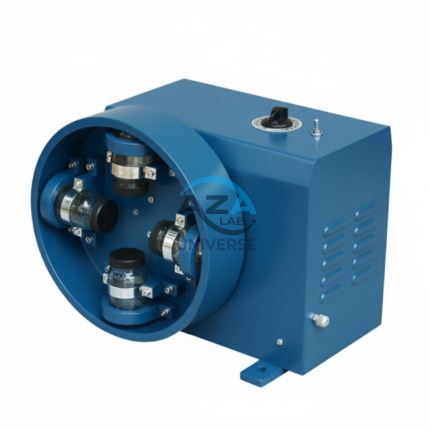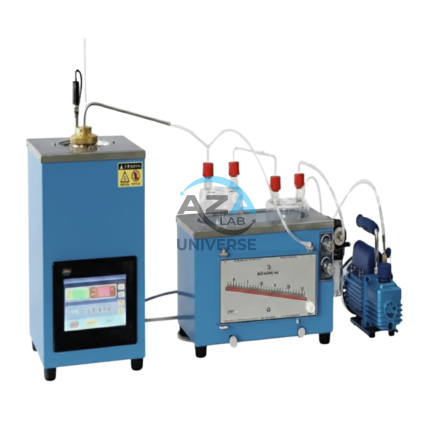
AZA 0966 LOSS ON HEATING THIN FILM OVEN
- Assesses Volatility: Measures weight loss and hardening of asphalt binders after heating.
- Precise Temperature Control: Ensures accurate and uniform thermal exposure.
- Standard Compliance: Designed to meet ASTM D6, D1754, and AASHTO T179.
- Robust Construction: Durable build for consistent performance in laboratory settings.
- Essential for QC: Critical for evaluating asphalt binder quality and predicting pavement performance
Description
The AZA 0966 Loss on Heating Thin Film Oven (LOH) from AZALAB is a specialized laboratory instrument crucial for assessing the aging characteristics and volatility of asphalt binders. This oven is specifically designed to determine the loss in mass (volatilization) and the hardening (stiffening) of asphaltic materials when subjected to heat and air under controlled conditions. This test simulates the effects of short-term aging that occur during the hot mixing process in an asphalt plant, providing vital information for pavement mix design, quality control, and ensuring the long-term durability of road surfaces.
At the core of the AZA 0966’s operation is its ability to maintain a precise and uniform temperature, typically $163^\\circ\\text{C}$ ($\\pm 0.5^\\circ\\text{C}$), for an extended period (usually 5 hours). Asphalt binder samples are placed in shallow, circular pans, which are then loaded onto a rotating shelf or carousel inside the oven. As the shelf rotates, a thin film of asphalt is continuously exposed to the controlled heat and static air within the chamber. This exposure causes certain volatile components to evaporate, leading to a loss in mass, and simultaneously promotes oxidation, resulting in hardening of the binder. The percentage of mass lost is measured, and the aged residue can then be used for further rheological testing (e.g., penetration, ductility, viscosity) to assess its change in properties. Adherence to standards like ASTM D6: Standard Test Method for Loss on Heating of Oil and Asphaltic Compounds or ASTM D1754: Standard Test Method for Effect of Heat and Air on Asphaltic Materials (Thin-Film Oven Test) is paramount for obtaining reliable and comparable results.
Key Features and Importance of the AZA 0966 LOH Thin Film Oven
The AZA 0966 Loss on Heating Thin Film Oven is meticulously constructed for durability, thermal efficiency, and precise control, which are essential for accurate and repeatable test results. The oven’s inner chamber is typically made from high-grade stainless steel, offering excellent resistance to corrosion and facilitating uniform heat distribution. High-efficiency thermal insulation minimizes heat loss, contributing to energy savings and maintaining stable internal temperatures. The rotating shelf mechanism is precision-engineered to ensure all samples receive consistent and even exposure to heat. An integrated temperature control system, often microprocessor-based with a digital display, allows for precise setting and monitoring of the oven’s temperature.
The data obtained from the AZA 0966 is critically important for:
- Asphalt Binder Quality Control: Directly measures the volatile components in an asphalt binder, helping to identify binders with excessive loss that could lead to premature hardening and reduced pavement life.
- Mix Design Verification: Provides aged binder properties that are crucial for predicting how the asphalt will perform after the initial mixing and laydown, contributing to the overall design of a durable pavement.
- Performance Prediction: The hardening measured helps engineers predict the binder’s susceptibility to cracking and rutting over time.
- Compliance & Specification: Ensures that asphalt binders meet specified limits for loss on heating, which is a common requirement in material specifications. For comprehensive guidance on asphalt testing and pavement engineering, valuable resources can be found from organizations like the Transportation Research Board (TRB) or the Indian Roads Congress (IRC), which publish extensive guidelines and research on highway materials and construction practices.
Operating the AZA 0966 involves placing pre-weighed asphalt samples in the special pans, loading them onto the rotating shelf, setting the temperature, and initiating the timed heating cycle. After the cycle, the pans are re-weighed to determine the mass loss. Regular maintenance includes keeping the oven chamber clean, inspecting the rotating mechanism, and periodically calibrating the temperature sensors to ensure continued accuracy. Proper ventilation of the laboratory is also important during operation.
In conclusion, the AZA 0966 Loss on Heating Thin Film Oven from AZALAB is an indispensable tool for civil engineers, asphalt producers, and material testing laboratories. Its ability to accurately assess the volatility and hardening characteristics of asphalt binders under controlled aging conditions makes it a central component in ensuring the quality, performance, and long-term durability of roads and other paved surfaces, contributing significantly to robust infrastructure development.
Specifications:
- Model Number: AZA 0966
- Oven Type: Loss on Heating Thin Film Oven (LOH / TFO)
- Standard Compliance: Designed to meet or exceed ASTM D6, ASTM D1754, AASHTO T179, and relevant IS standards (e.g., IS 9382 for bitumen testing).
- Temperature Range: Typically operates at a standard testing temperature of $163^\\circ\\text{C}$ (adjustable within a limited range).
- Temperature Control Accuracy: $\\pm 0.5^\\circ\\text{C}$ or better.
- Temperature Uniformity: Excellent uniformity within the test chamber.
- Chamber Material: High-grade Stainless Steel interior.
- Exterior Material: Powder-coated Mild Steel or Stainless Steel.
- Insulation: High-efficiency thermal insulation.
- Sample Capacity: Accommodates a specific number of standard thin film oven pans (usually 4 to 8 pans, depending on design). Pans are typically sold separately.
- Rotation Mechanism: Precision motorized rotating shelf or carousel, typically operating at 5.5 rpm.
FREQUENTLY ASKED QUESTIONS (FAQ)
Q1: What is the primary purpose of the AZA 0966 Loss on Heating Thin Film Oven? A1: The AZA 0966 Loss on Heating Thin Film Oven is used to determine the mass loss (volatilization) and the hardening (stiffening) of asphalt binders when exposed to heat and air, simulating short-term aging that occurs during asphalt mixing and production.
Q2: How does the AZA 0966 differ from a Rolling Thin Film Oven (RTFO)? A2: While both simulate short-term aging, the LOH oven (ASTM D6/D1754) uses a static air environment with a rotating shelf, and the primary measurement is mass loss. The RTFO (ASTM D2872) uses forced air blown through rolling bottles, which typically induces more severe aging due to greater air exposure. LOH is generally considered a less severe aging test.
Q3: What international standards does this LOH Thin Film Oven comply with? A3: The AZA 0966 is designed to meet or exceed the requirements of major international standards, including ASTM D6, ASTM D1754, and AASHTO T179, ensuring its suitability for globally recognized testing protocols.
Q4: What temperature is typically maintained in the AZA 0966 during testing? A4: The standard test temperature for the Loss on Heating Thin Film Oven test is $163^\\circ\\text{C}$, maintained with high precision by the AZA 0966’s control system.
Q5: What kind of maintenance does the AZA 0966 require? A5: Regular maintenance includes cleaning the oven chamber and pan surfaces, inspecting the rotating mechanism for smooth operation, and periodically calibrating the temperature controller. Always ensure proper ventilation in the laboratory during operation.
Q6: How are the results from the Loss on Heating test used in asphalt quality control? A6: The percentage of mass lost indicates the amount of volatile components that evaporate from the binder. The aged residue can then be tested for properties like penetration or viscosity. These results help ensure the asphalt binder meets specifications, indicating its resistance to hardening during the mixing process and predicting its long-term performance in the pavement.
Additional information
| Model Number |
AZA 0966 |
|---|---|
| Oven Type |
Loss on Heating Thin Film Oven (LOH / TFO) |
| Temperature Uniformity |
Excellent uniformity within the test chamber. |
| Chamber Material |
High-grade Stainless Steel interior. |
| Exterior Material |
Powder-coated Mild Steel or Stainless Steel. |
| Insulation |
High-efficiency thermal insulation. |
Related products
AZA 0932 RING AND BALL APPARATUS
- AZA 0932 Ring and Ball Apparatus: Manual softening point tester for bitumen.
- Robust steel construction with clear glass beaker.
- Includes standard brass rings, steel balls, and hand stirrer.
- Complies with IS 1205, ASTM D36, EN 1427, IP 58/63.
- Essential for quality control of bitumen in hot climates.
- Cost-effective solution for reliable softening point determination.
- Requires external heat source and thermometers (sold separately).
AZA 0935 FRAASS BREAKING POINT APPARATUS
- AZA 0935 Fraass Breaking Point Apparatus: Determines bitumen's brittle temperature.
- Critical for assessing low-temperature asphalt performance.
- Includes precise mechanical flexing device and cooling bath.
- Complies with EN 12593 international standard.
- Ensures selection of suitable bitumen for cold climates.
- Robust construction for reliable laboratory use.
- Measures temperature at which bitumen film cracks
AZA 0938 STANDARD PENETROMETER
- AZA 0938 Standard Penetrometer: Reliable manual bitumen testing.
- Dial gauge with 0.1 mm resolution.
- Robust cast iron construction for durability.
- Conforms to ASTM D5, EN 1426, and other standards.
- Ideal for basic and consistent asphalt quality control.
- Manual operation for straightforward testing.
- Cost-effective solution for consistency determination
AZA 0939 DIGITAL PENETROMETER
- AZA 0939 Digital Penetrometer: For precise bitumen consistency testing.
- High-resolution 0.01 mm digital display.
- Programmable electronic timer for automatic penetration.
- Complies with ASTM D5, EN 1426, and other global standards.
- Minimizes human error, ensuring accurate & repeatable results.
- Robust design with fine adjustment, illumination & magnifier.
- Essential for quality control in asphalt and petroleum industries
AZA 0947 FILTERLESS CENTIFUGE EXTRACTOR
- Filterless Operation: Determines bitumen content without the need for filter paper, simplifying the process.
- Rapid Analysis: Provides quick and efficient separation of binder from aggregate.
- High Efficiency: Utilizes centrifugal force for thorough washing and extraction.
- Safety Features: Equipped with a safety interlock and enclosed design for secure operation.
- Standard Compliant: Adheres to ASTM D2172, AASHTO T164, and IS 2720 (Part 4) guidelines.
AZA 0954 AUTOMATIC MARSHALL STABILITY TEST MACHINE
- Automated Testing: Provides precise, consistent measurement of Marshall stability and flow.
- Digital Data Acquisition: Captures and processes test results digitally for analysis.
- Enhanced Accuracy: Eliminates human error, ensuring highly reproducible results.
- Compliance: Meets ASTM D6927, AASHTO T283, and IS 2720 Part 10 standards.
- Crucial for Pavement Design: Essential for optimizing asphalt mix proportions and performance
AZA 0958 ELASTIC RECOVERY MOULD
- Conforms to bitumen ductility testing standards
- Used to evaluate elastic recovery of bituminous binders
- Precisely machined brass or stainless steel body
- Ideal for softening point and ductility assessment
- Compatible with standard ductility testing machines
- Essential for road construction and quality control labs
CENTRIFUGE EXTRACTOR (HAND OPERATED) AZA0944
Key Features
- Manual hand-crank operation (no external power required)
- Heavy-duty cast aluminum body for long life
- Removable aluminum extraction bowl for easy cleaning
- Smooth, vibration-free rotation mechanism
- Tight safety lid to prevent solvent loss
Rock
Aggregate
Cement
Concrete
Soil
Steel
Bitumen/Asphalt
Security Survey Equipment
General Items