
 Rock
Rock Aggregate
 Cement
 Concrete
 Soil
Soil Steel
Steel Bitumen/Asphalt
 Security Survey Equipment
 General Items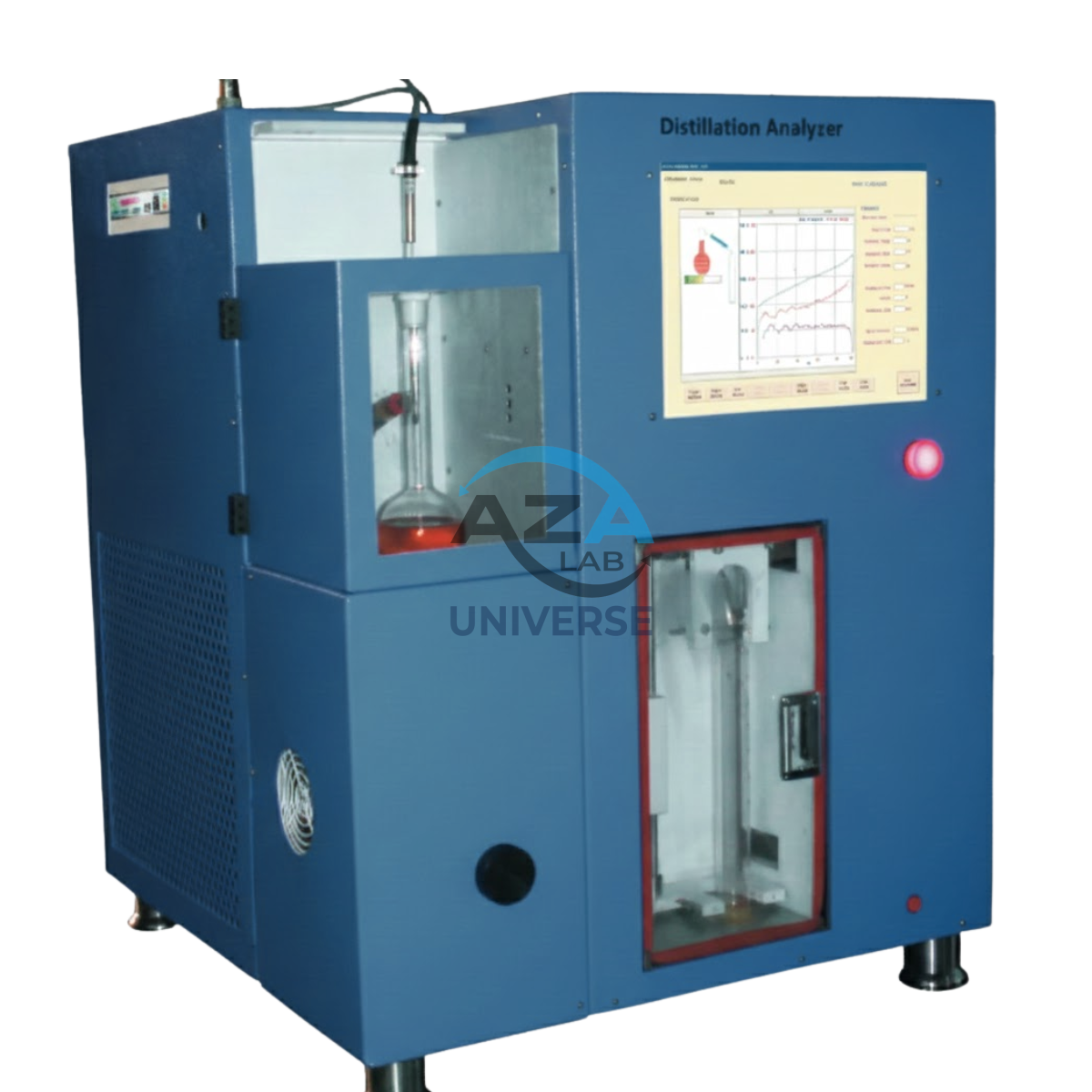
SEMI-AUTOMATED ATMOSPHERIC DISTILLATION ANALYZER AZA1285
The AZA1285 Semi-Automated Atmospheric Distillation Analyzer is a precision-engineered laboratory instrument designed for determining the distillation characteristics of petroleum products, fuels, solvents, and volatile organic liquids under atmospheric conditions. Developed for accurate boiling-range profiling and dependable laboratory performance, the AZA1285 combines manual operational flexibility with intelligent thermal regulation for highly repeatable and standards-compliant testing.
The system features a low-voltage manually adjustable heater integrated with PID-controlled condenser and receiver sections, ensuring stable distillation rates and accurate thermal management throughout the test cycle. A closed-loop, CFC-free refrigeration system provides efficient condensation without requiring external cooling water, while an integrated inert gas purge system enhances operator safety and minimizes oxidation risks during testing.
Description
Semi-Automated Precision Operation
The AZA1285 offers an optimal balance between manual operator control and automated thermal stabilization.
System Highlights
- Low-voltage 24 V heating system
- Precision ten-turn potentiometer for manual heat adjustment
- PID-controlled condenser temperature regulation
- PID-controlled receiver chamber temperature regulation
- Stable distillation rate control
- Improved repeatability and operator consistency
Advanced Cooling & Condensation System
A fully integrated refrigeration system ensures efficient condensation and uninterrupted operation.
Cooling Features
- Closed-loop cooling circuit
- CFC-free environmentally responsible refrigeration
- No external cooling water required
- Stainless steel condenser with coolant jacket
- Stable condenser temperature control from 0 °C to 80 °C
Receiver Temperature Control
The receiver chamber is engineered for stable sample collection and precise recovery measurement.
Receiver Features
- Closed non-corrosive chamber
- PID-controlled receiver temperature
- Operating range: 10 °C to 40 °C
- Improved condensate stability and measurement accuracy
Enhanced Laboratory Safety
The AZA1285 incorporates multiple safety mechanisms for safe operation in petroleum and solvent laboratories.
Safety Systems
- Emergency heater shutdown system
- Integrated nitrogen / inert gas purge compatibility
- CO₂ purge capability
- Manual fire-extinguisher access port
- Controlled low-voltage heating design
- Reduced oxidation and vapor ignition risk
Flexible & Upgradeable Configuration
The analyzer can be configured to meet different laboratory requirements and testing capacities.
Optional Enhancements
- Larger capacity 200 mL distillation flask
- Class A PT100 temperature sensor
- Digital data acquisition system
- Reporting and documentation software
- Customized laboratory integration solutions
Typical Applications
The AZA1285 is suitable for:
- Petroleum refinery laboratories
- Fuel blending and distribution terminals
- Petrochemical testing laboratories
- Aromatic hydrocarbon analysis
- Solvent distillation testing
- Government and regulatory laboratories
- Academic and industrial R&D facilities
- Quality control and compliance laboratories
Technical Specifications
| Parameter | Specification |
|---|---|
| Model | AZA1285 |
| Distillation Method | Atmospheric |
| Applicable Standards | ASTM D86, D850, D1078, ISO 3405, IP 123, IP 195 |
| Operation Mode | Semi-Automated |
| Heating System | 24 V low-voltage heater |
| Heater Control | Ten-turn precision potentiometer |
| Support Plate | Ceran support plate with flask lift |
| Cooling System | Closed-loop, CFC-free refrigeration |
| Condenser Type | Stainless steel condenser with coolant jacket |
| Condenser Temperature Range | 0 °C to 80 °C (PID controlled) |
| Receiver Chamber | Closed non-corrosive chamber |
| Receiver Temperature Range | 10 °C to 40 °C (PID controlled) |
| Safety Features | Emergency shutdown, N₂/CO₂ purge, fire-extinguisher port |
| Sample Types | Gasoline, naphtha, kerosene, diesel, solvents, aromatics |
| Power Supply | 230 VAC, 50 Hz |
| Power Consumption | 1.4 – 2.5 kW |
| Dimensions | 480/900 (W) × 590 (D) × 650–690 (H) mm |
| Weight | Approx. 80–120 kg |
| Installation Type | Desktop / Benchtop |
Standard Accessories Supplied
- ASTM-compliant 125 mL distillation flasks (2 / 4 pcs)
- Certified thermometers
- Heater plate assemblies
- Drop plates
- Condenser and receiver modules
- Cleaning swabs
- Safety tubing and fittings
- Calibration and operation manual
Optional Accessories & Upgrades
- 200 mL distillation flask
- Additional heater plates
- Class A PT100 temperature sensor
- Digital reporting software suite
- Data acquisition system
- Customized laboratory integration accessories
Related products
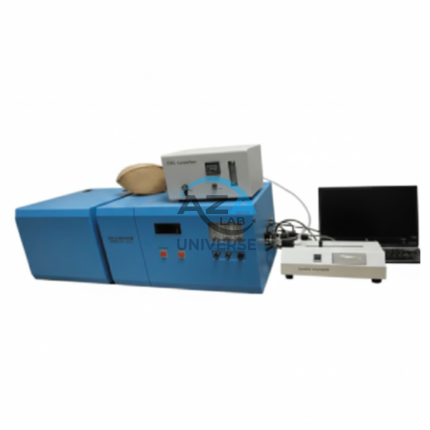
APPARATUS FOR SULFUR CONTENT IN LPG AZA1300A
Apparatus for Sulfur Content in LPG – AZA1300A
The AZA1300A Apparatus for Sulfur Content in LPG from Azalab is a high-performance analytical system designed for the accurate determination of total volatile sulfur in gaseous hydrocarbons and liquefied petroleum gases (LPG). Developed in strict accordance with ASTM D6667, this advanced instrument utilizes the Ultraviolet Fluorescence (UVF) detection method, delivering exceptional sensitivity, stability, and repeatability across a wide concentration range.
The AZA1300A is purpose-built for refineries, petrochemical plants, natural gas processing units, inspection laboratories, and quality assurance facilities, where precise sulfur measurement is critical for product quality, regulatory compliance, and environmental safety
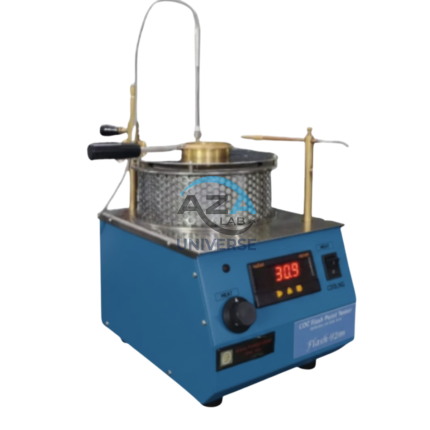
CLASSIC OPEN CUP FLASH POINT APPARATUS AZA1294
The AZA LAB Classic Open Cup Flash Point Apparatus AZA1294 is a reliable and cost-effective laboratory instrument designed for accurate determination of flash point temperature of petroleum products and combustible liquids using the Cleveland Open Cup (COC) method.
Manufactured in full compliance with ASTM D92 and ISO 2592 standards, the AZA1294 is ideally suited for petroleum laboratories, quality control facilities, educational institutions, refinery laboratories, and industrial safety testing environments where dependable flash point determination is essential.
The apparatus combines a classic manual testing approach with durable construction, stable heating performance, and straightforward operation, making it an excellent solution for routine laboratory testing, operator training, and quality assurance applications.
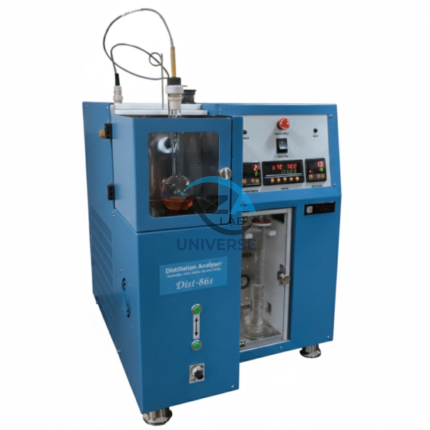
DIST-86S SEMI-AUTOMATED DISTILLATION ANALYZER AZA1283
Standards Compliance
- ASTM D86
- ISO 3405
- IP 123
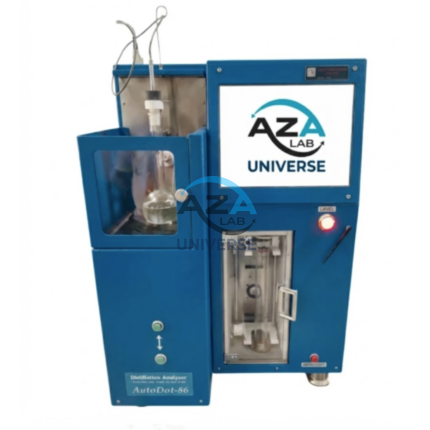
DIST-86S SEMI-AUTOMATED DISTILLATION TESTER AZA1288
The AZA Lab Dist-86S Semi-Automated Distillation Tester AZA1288 is a precision-engineered petroleum testing instrument designed for accurate determination of the distillation characteristics of petroleum products and volatile organic liquids in full accordance with ASTM D86 standards.
Built for laboratories requiring dependable performance, repeatability, and operational safety, the AZA1288 combines intelligent semi-automation with operator flexibility. The system is ideally suited for petroleum refineries, fuel inspection laboratories, aviation fuel testing facilities, research institutions, petrochemical plants, and educational laboratories.
The instrument utilizes PID-controlled heating technology, precision temperature monitoring, and an integrated condenser cooling system to ensure highly stable distillation conditions and accurate boiling point determination across a wide range of petroleum fractions.
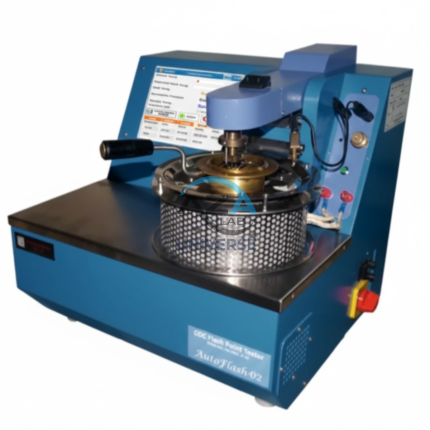
STAINLESS STEEL COC CLEVELAND OPEN CUP FLASH POINT ANALYZER AZA1293
The AZA1293 Flash Point Analyzer from AZA Lab is a precision-engineered instrument designed for accurate determination of the flash point of flammable and combustible liquids using the Cleveland Open Cup (COC) method. Manufactured with high-grade stainless steel construction, this analyzer ensures excellent thermal stability, long service life, and consistent test performance even under demanding laboratory conditions.
Fully compliant with ASTM D92, the AZA1293 is an essential laboratory tool for petrochemical laboratories, refineries, lubricant manufacturers, fuel testing facilities, and industrial R&D centers where reliable flash point determination is critical for safety classification and quality assurance.
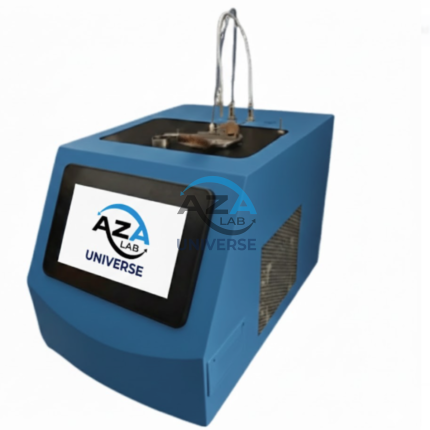
TAG CLOSED CUP FLASH POINT TESTER AZA1280
Standards Compliance
- ASTM D56 (Tag Closed Cup Method)
Measurement Capability
- Flash Point Range: –40°C to 70°C
- Suitable for liquids with flash points below 93°C
- Designed for low viscosity and highly volatile samples
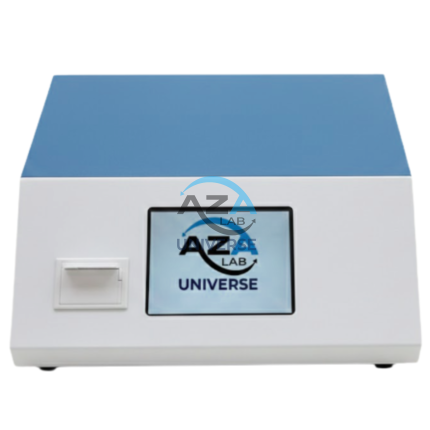
X-RAY SULFUR METER TESTER AZA1300B
The X-Ray Sulfur Meter (Model: AZA1300B) from AZA Lab is a highly efficient and precise instrument designed to measure sulfur content in petroleum and petrochemical products during production. It enables fast, non-destructive analysis, making it an essential tool for quality control, process optimization, and regulatory compliance.
Ideal for use in refineries, laboratories, and production sites, this instrument provides accurate, reliable results with minimal sample preparation, ensuring consistent performance and repeatability.
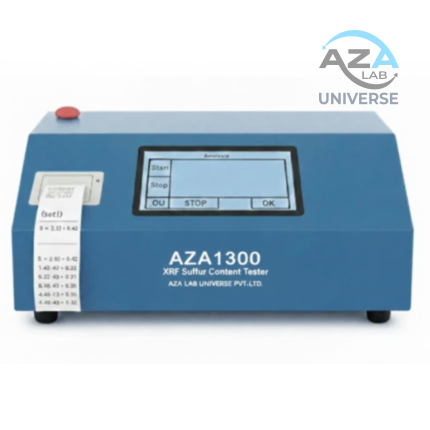
XRF SULFUR CONTENT TESTER AZA1300
The AZA Lab Sulfur Content Analyzer – AZA1300 is a state-of-the-art instrument designed for precise and rapid determination of sulfur content in petroleum, petrochemical, and coal chemical products. Based on the energy-dispersive X-ray fluorescence (EDXRF) principle, it integrates advanced electrical, mechanical, and microprocessor technologies to deliver high accuracy, reliability, and ease of operation.
Engineered to comply with ASTM D4294, GB/T 17040, SH/T0742, and GB/T11140 standards, the Model 1300 provides dependable measurement results with excellent repeatability and reproducibility. Its intelligent design ensures automatic corrections for environmental conditions such as temperature, pressure, and C/H ratio, making it a versatile solution for laboratories and production facilities alike.
Compact, user-friendly, and equipped with advanced safety features, the AZA1300 is an ideal tool for routine quality control, process monitoring, and research applications where sulfur determination is critical.