
 Rock
Rock Aggregate
 Cement
 Concrete
 Soil
Soil Steel
Steel Bitumen/Asphalt
 Security Survey Equipment
 General Items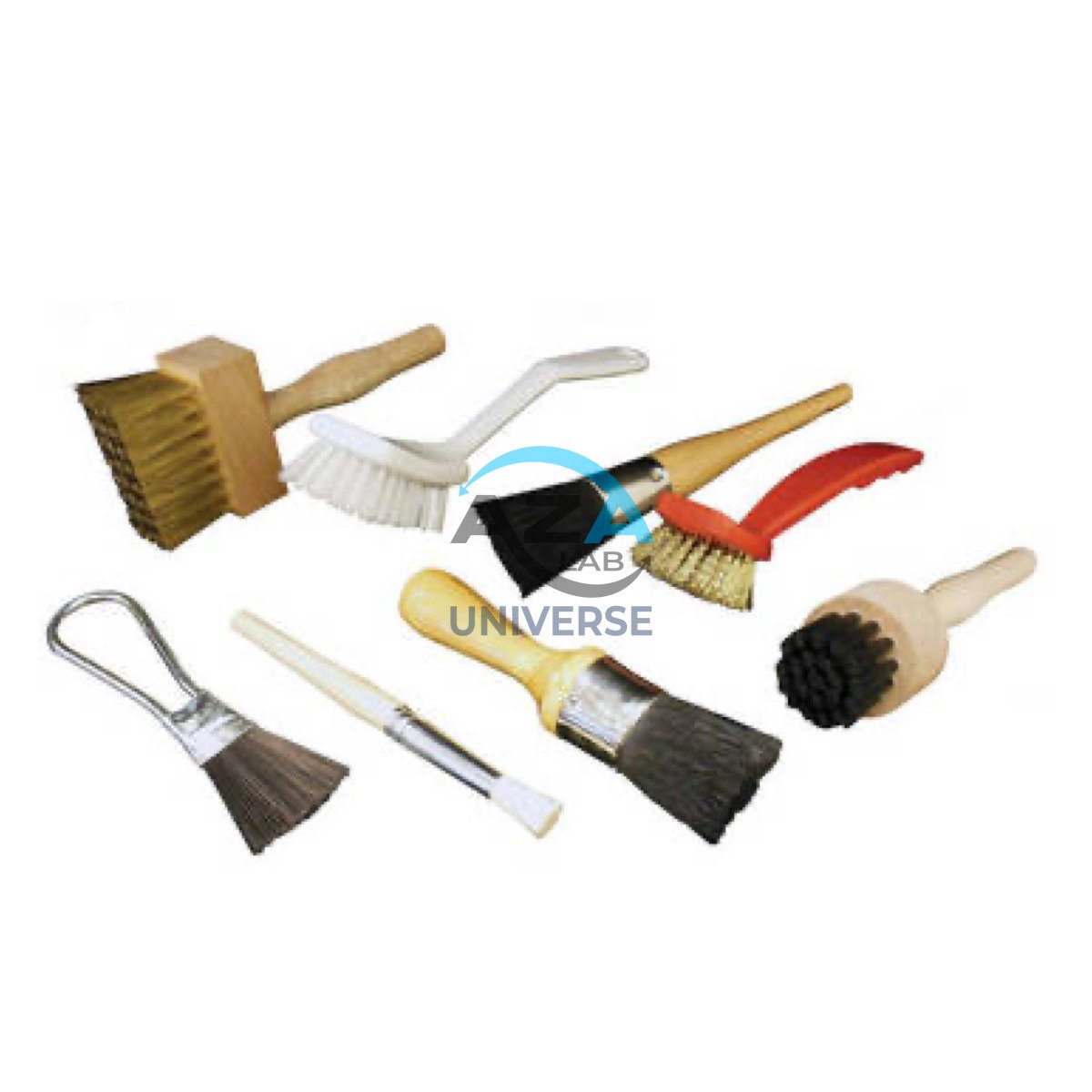
SIEVE BRUSHES AZA0928
AZA0928 Sieve Brushes are laboratory-grade cleaning tools designed specifically for the safe and effective cleaning of test sieves used in particle size and gradation analysis. Proper sieve maintenance is critical to ensuring accurate, repeatable test results and compliance with international standards such as ASTM and ISO.
Residue trapped in sieve mesh openings can lead to blocked apertures, inaccurate particle distribution, and premature sieve wear. The AZA0928 sieve brushes are engineered to remove retained particles without deforming or damaging the mesh, thereby preserving sieve calibration and extending service life
Description
Functional Importance in Laboratory Testing
Test sieve performance has a direct impact on material classification and gradation data. Improper cleaning practices or the use of unsuitable brushes can permanently distort mesh openings. AZA0928 sieve brushes are purpose-built to support correct laboratory practice and long-term sieve reliability.
Commonly used in:
-
Soil and aggregate testing laboratories
-
Cement and construction material testing
-
Mining and mineral processing labs
-
Pharmaceutical and chemical laboratories
-
Food and powder particle classification
Bristle Options and Application Guidance
To accommodate different sieve mesh sizes and material sensitivities, AZA0928 is available with two bristle types:
-
Brass Bristles
-
Recommended for coarse mesh sieves
-
Suitable for sand, gravel, and aggregates
-
Effective in removing stubborn lodged particles
-
-
Nylon Bristles
-
Ideal for fine mesh sieves
-
Suitable for powders, cement, pharma, and food samples
-
Gentle cleaning without risk of mesh deformation
-
Design and Build Features
-
Laboratory-grade brass or nylon bristles
-
Strong bristle anchoring to minimize shedding
-
Ergonomic handle for controlled brushing
-
Compatible with stainless steel sieve frames and meshes
-
Suitable for both dry and wet sieving cleanup
-
Lightweight, durable, and easy to store
Standards Reference
While ASTM E11 and ISO 3310 primarily define test sieve construction and tolerances, they emphasize the importance of regular cleaning and inspection as part of proper sieve maintenance protocols.
-
ASTM E11 – Specification for Woven Wire Test Sieves
-
ISO 3310 – Test Sieves and Test Sieving
Technical Specifications
| Parameter | Description |
|---|---|
| Model | AZA0928 |
| Product Type | Sieve Cleaning Brush |
| Bristle Material | Brass / Nylon |
| Handle Material | Wooden / Plastic |
| Handle Shape | Straight / Curved |
| Overall Length | Approx. 200–250 mm |
| Bristle Length | Approx. 25–40 mm |
| Mesh Compatibility | Brass: ≥ 1 mm mesh Nylon: ≤ 1 mm mesh |
| Application | Cleaning laboratory test sieves |
| Use Mode | Dry and wet sieving cleanup |
| Standards Reference | ASTM E11, ISO 3310 |
| Maintenance | Rinse after use; store dry |
Frequently Asked Questions (FAQ)
Q1. Why should sieve-specific brushes be used instead of regular brushes?
Regular brushes can damage sieve mesh or leave residues. AZA0928 sieve brushes are designed to clean effectively while protecting mesh accuracy.
Q2. Which bristle type should I select?
Use brass bristles for coarse sieves and nylon bristles for fine or delicate mesh sizes.
Q3. Can AZA0928 be used after wet sieving?
Yes. Both brass and nylon brushes are suitable, but they should be rinsed and dried after use.
Q4. Are these brushes compatible with stainless steel sieves?
Yes. They are fully compatible with stainless steel frames and meshes.
Q5. How frequently should sieves be cleaned?
Sieves should ideally be cleaned after every test to maintain accuracy and prevent cross-contamination.
Product Summary
-
Model: AZA0928
-
Durable sieve brushes with brass or nylon bristles
-
Designed for safe and effective sieve mesh cleaning
-
Maintains sieve accuracy and extends service life
-
Ergonomic design for laboratory use
-
Essential accessory for particle size and gradation testing
AZA0928 – Proper sieve care for reliable test results.
Additional information
| Focus Keyword |
Sieve brushes |
|---|---|
| Bristle Material |
Brass / Nylon |
| Handle Type |
Wooden / Plastic |
| Handle Shape |
Straight / Curved |
You may also like…
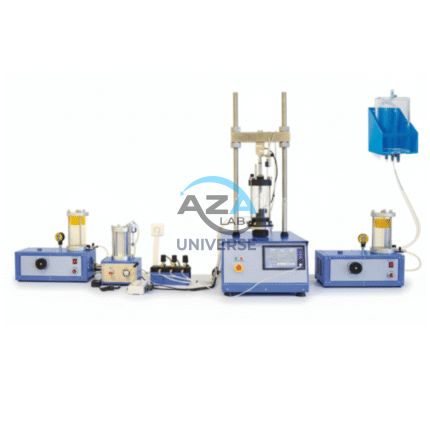
ADVANCED TRIAXIAL TEST SYSTEM (UU–CU–CD CAPABLE) AZA1296
The AZA LAB Advanced Triaxial Test System AZA1296 is a fully automated geotechnical laboratory testing system designed for accurate determination of soil shear strength and deformation characteristics under controlled stress and drainage conditions.
The system supports all major triaxial compression testing modes including:
- Unconsolidated Undrained (UU)
- Consolidated Undrained (CU)
- Consolidated Drained (CD)
Engineered for high-precision geotechnical analysis, the AZA1296 replicates in-situ soil stress conditions to evaluate soil stability, strength behavior, pore pressure response, and failure mechanisms under axial loading.
The system integrates servo-controlled loading, automatic pressure regulation, real-time pore pressure monitoring, automated data acquisition, and advanced software analysis, making it ideal for geotechnical laboratories, civil engineering projects, infrastructure development, research institutions, and academic applications.
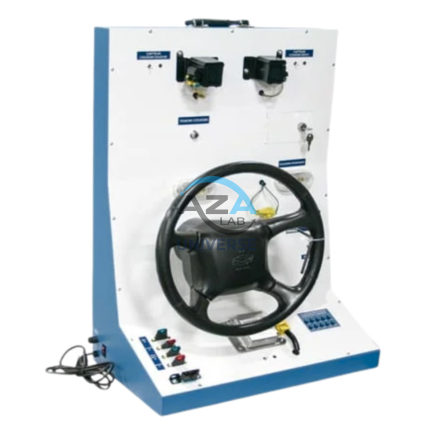
AIR BAG TRAINER AZA1246
The AZA1246 AZALAB Air Bag Trainer is a comprehensive educational training platform designed to demonstrate the structure, operation, diagnostics, and fault analysis of modern automotive airbag systems, also known as Supplemental Restraint Systems (SRS). Built using OEM automotive components, this trainer delivers a realistic learning experience while maintaining complete operational safety.
This system is ideally suited for automotive engineering colleges, ITIs, polytechnic institutes, vocational training centers, and service technician programs, enabling both theoretical instruction and hands-on diagnostics practice.
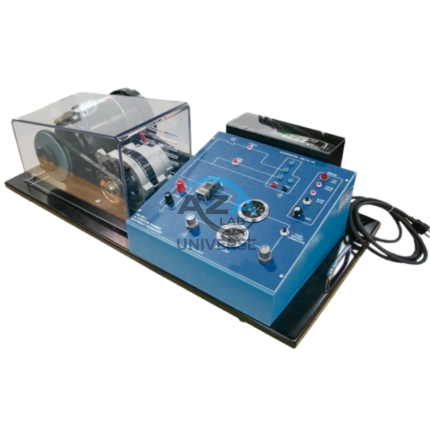
ALTERNATOR TRAINER AZA1247
The AZA1247 AZALAB Alternator Trainer is a hands-on automotive electrical training system designed to demonstrate the working principles, construction, and diagnostics of an automotive alternator with external voltage regulation. Built using OEM automotive components, this trainer provides a realistic and safe learning platform for students, technicians, and trainees to understand vehicle charging systems in depth.
This system is ideal for automotive engineering institutes, ITIs, polytechnics, vocational training centers, and service technician programs, supporting both theoretical instruction and practical experimentation.
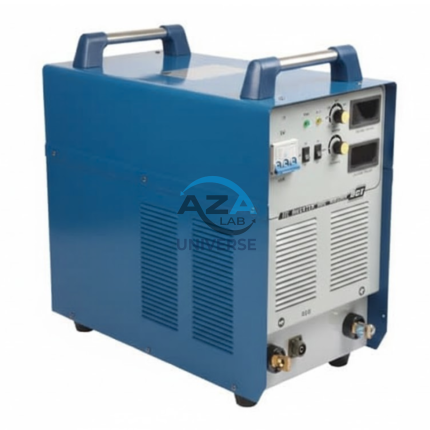
ARC WELDING MACHINE AZA1234
The AZA1234 Arc Welding Machine by A Z A Lab is a high-performance industrial welding solution engineered for demanding fabrication, maintenance, and structural welding applications. Designed using advanced inverter technology, this machine delivers superior arc stability, high efficiency, and reliable welding performance across a wide range of electrode types and materials.
With an inverter frequency of up to 20 kHz, the AZA1234 ensures fast dynamic response, reduced spatter, and excellent weld bead appearance. Its robust electrical design supports a high duty cycle, allowing continuous operation under heavy loads while maintaining consistent welding output—even with output cable lengths of up to 100 meters.
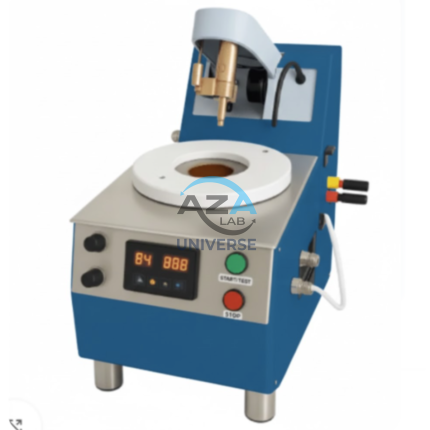
AUOTFLASH AUTOMATED ABEL FLASH POINT ANALYZER AZA1277
The AutoFlash-1277 (Model: AZA1277) from AZA Lab is a fully automated, microcontroller-based Abel Flash Point Analyzer designed for accurate, safe, and repeatable determination of flash points of combustible liquids. Engineered to meet stringent international testing requirements, this advanced instrument conforms to IP 170, ISO 13736, and IS 1448 (Part 20) standards.
Covering a standard temperature range of –30°C to 70°C, extendable up to 110°C, the AZA1277 is ideally suited for laboratories involved in petroleum testing, petrochemical quality control, fuels research, and regulatory compliance.
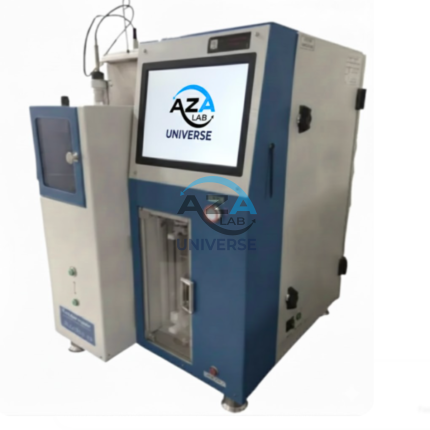
AUTODIST-86 GLASS DISTILLATION UNITAZA1282
The AutoDist-86 Glass Distillation Unit (Model AZA1282) is a high-performance laboratory water distiller designed for the continuous production of high-purity distilled water.
Constructed entirely from borosilicate glass 3.3, the unit ensures zero metallic contamination, excellent thermal resistance, and long operational life. It is ideal for laboratories requiring consistent, low-conductivity distilled water for analytical, pharmaceutical, and research applications.Distillation Performance
- Distillate Output: Up to 4 L/hour (±10%)
- Suitable for routine and medium-scale laboratory demand
- Efficient removal of:
- Dissolved salts
- Heavy metals
- Organic/inorganic impurities
- Microbial contaminants
Related products
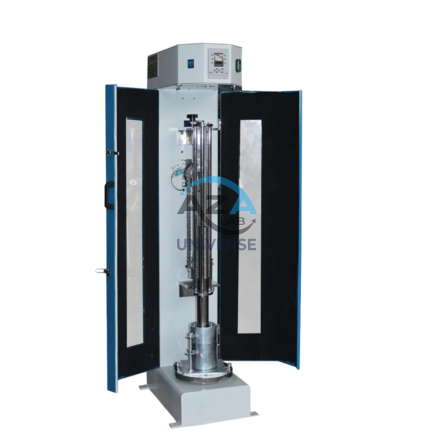
AUTOMATIC SOIL COMPACTOR AZA0867
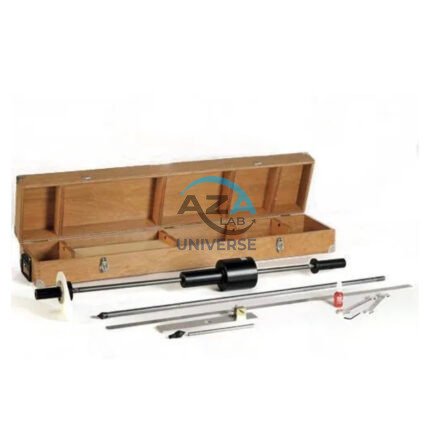
DYNAMIC CONE PENETROMETER AZA0872
The AZA0872 Dynamic Cone Penetrometer (DCP) from Azalab is a robust, field-proven instrument designed for rapid in-situ evaluation of soil strength, stiffness, and compaction. It is extensively used by civil engineers, geotechnical consultants, and construction teams for pavement design, quality control, and site investigation works.
The DCP test provides a fast and economical method to assess the strength of subgrades, sub-bases, and granular base course layers, with results that can be directly correlated to California Bearing Ratio (CBR) values. This eliminates the need for time-consuming laboratory testing or undisturbed soil sampling, enabling immediate decision-making at site.
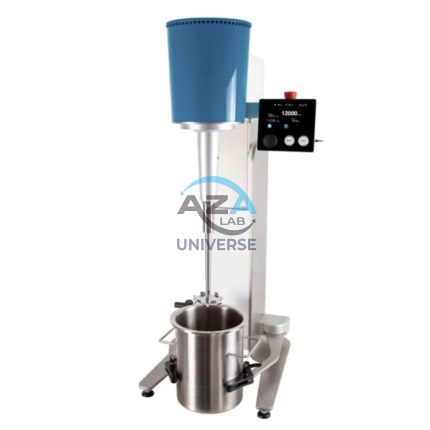
HIGH SPEED STIRRER AZA0855
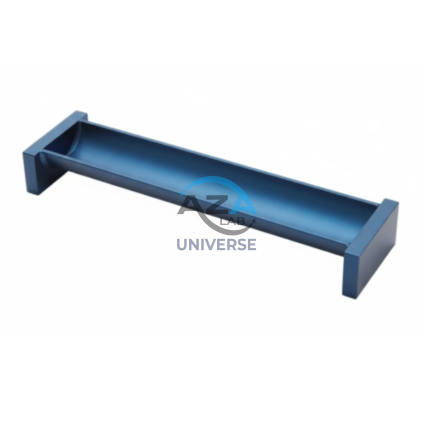
LINEAR SHRINKAGE MOULD AZA0850
The AZA0850 Precision Linear Shrinkage Mould from AZALAB is a compact and highly accurate laboratory instrument designed for determining the linear shrinkage of fine-grained cohesive soils in accordance with BS 1377-2. This test is a key component of soil classification and is especially important in identifying shrink–swell behavior of clays and expansive soils.
Linear shrinkage testing measures the reduction in length of a soil specimen upon drying, expressed as a percentage of its original length. The results provide valuable insight into soil expansiveness, volume stability, and suitability for foundations, pavements, and earthworks.
Manufactured from high-quality brass or stainless steel, the AZA0850 mould offers precise internal dimensions, excellent corrosion resistance, and a smooth polished finish for easy sample preparation and removal. Its robust construction ensures repeatable, reliable results even under high-frequency laboratory use.
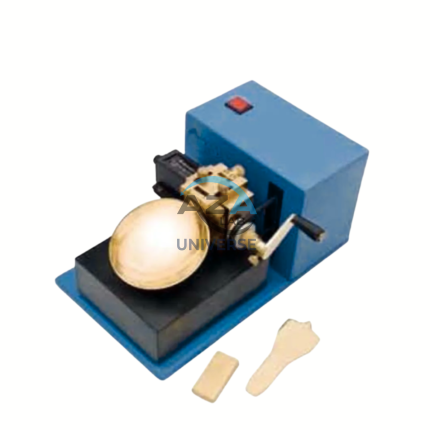
LIQUID LIMIT DEVICE (MOTORISED) AZA0854
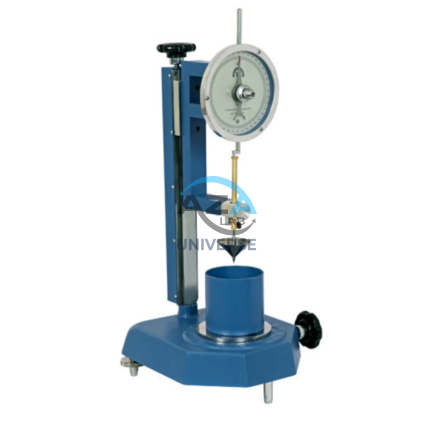
SEMI AUTOMATIC CONE PENETROMETER AZA0852
Principle of Operation
A soil paste prepared at known moisture content is placed in the sample cup. The standardized cone, attached to a calibrated weight, is released using the semi-automatic clutch mechanism, allowing free fall penetration into the soil. After the specified time (typically 5 seconds), the penetration depth is measured using a high-precision dial gauge. The moisture content corresponding to a penetration of 20 mm is considered the liquid limit of the soil, as defined in IS and BS standards.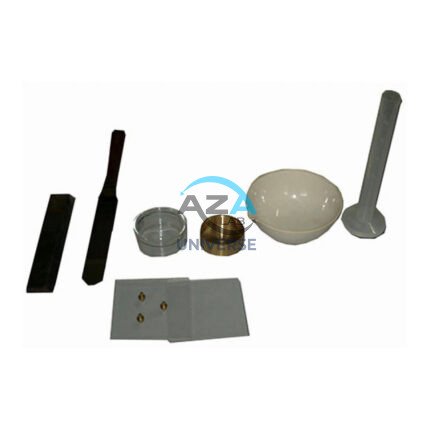
SHRINKAGE LIMIT SET AZA0849
Standards Compliance
The AZA0849 Shrinkage Limit Set conforms to major national and international testing standards, ensuring reliable and universally accepted test results:- IS 2720 (Part VII)
- ASTM D427
- BS 1377
- AASHTO T 92
STANDARD COMPACTION TEST AZA0864
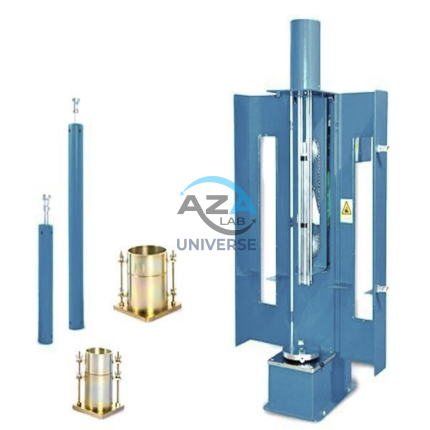
The AZA0864 Standard Compaction Test Apparatus from Azalab is precision-engineered to perform the British Standard Proctor (Light Compaction) Test, as specified in BS 1377-4 and BS 1924-2. This apparatus is used to determine the Maximum Dry Density (MDD) and Optimum Moisture Content (OMC) of soils subjected to light compactive effort.
The test simulates field compaction achieved by light rollers and rammers and is essential for quality control of subgrades, embankments, road bases, and foundation soils. The AZA0864 is widely used in geotechnical laboratories, site investigation works, and academic institutions following British Standards.