
 Rock
Rock Aggregate
 Cement
 Concrete
 Soil
Soil Steel
Steel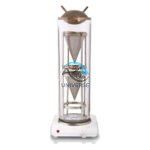 Bitumen/Asphalt
 Security Survey Equipment
 General Items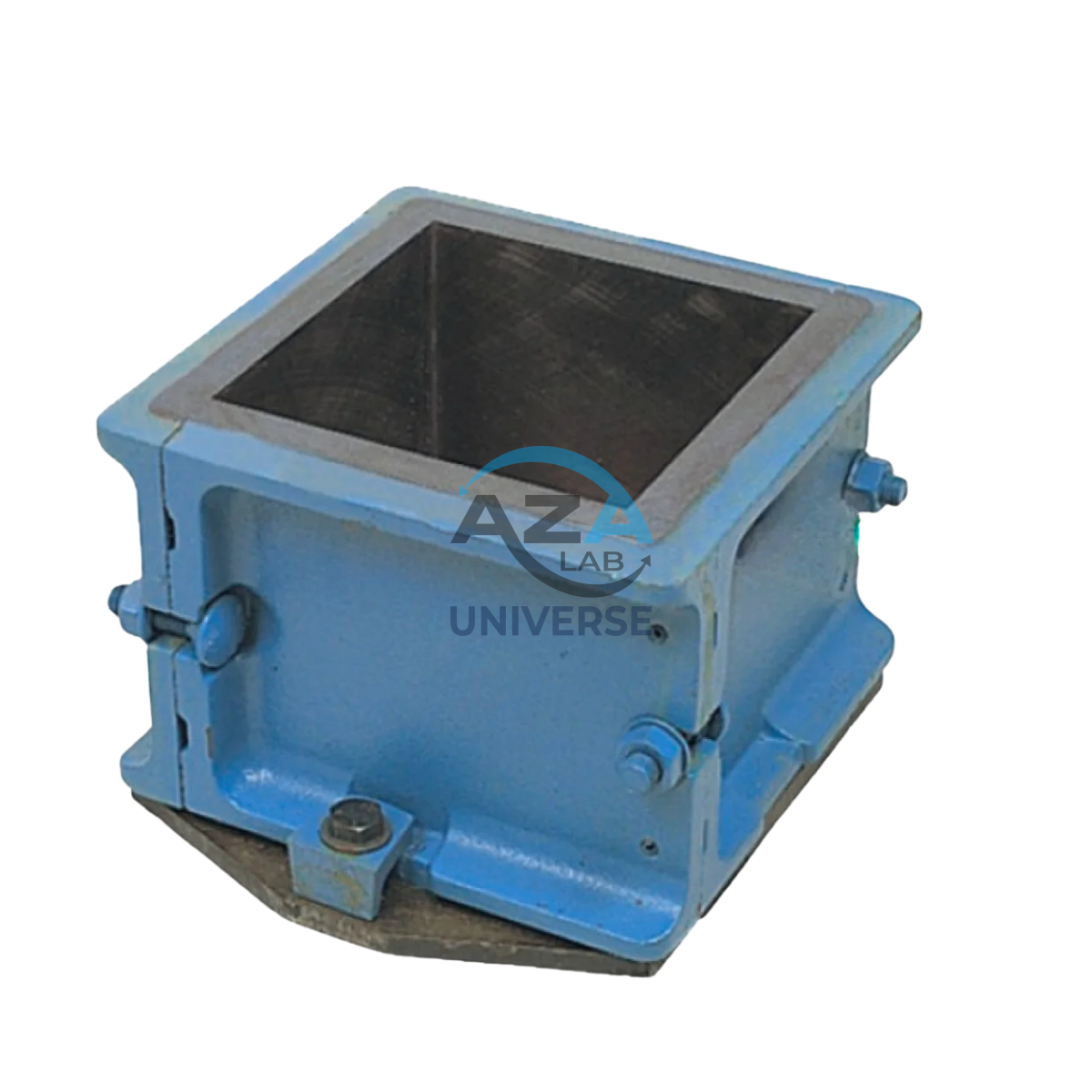
CUBE MOULD (METAL) AZA1122
The AZA1122 Cube Mould is a precision-engineered, heavy-duty metal mould designed for casting 150 mm × 150 mm × 150 mm concrete specimens for compressive strength testing. Built for durability and dimensional stability, this mould is ideal for material testing laboratories, construction quality control units, R&D facilities, and civil engineering institutions.
Manufactured in compliance with IS 10086 and BS 1881-108, the AZA1122 ensures uniform cube geometry, accurate volume, and repeatable test outcomes—critical for determining the compressive strength and performance characteristics of cement and concrete mixes.
Purpose & Function
This mould supports the preparation of standardized cube specimens that are used in:
- Compressive strength testing
- Batch-wise quality control in construction
- Concrete mix design validation
- Research on material performance and durability
Accurate mould geometry ensures uniform load distribution during testing, leading to reliable and compliant strength results.
Description
Construction & Durability
-
Manufactured from high-grade, heavy-duty metal engineered to withstand repetitive casting cycles.
-
Interior surfaces are machined smooth for easy demoulding and reduced surface imperfections.
-
Modular design with removable side plates and clamping bolts/latches for quick assembly and cleaning.
-
High-precision machining guarantees perfect right angles, flat surfaces, and dimensional stability.
-
Rust-resistant coating enhances service life even in harsh site and laboratory environments.
Standards Compliance
-
IS 10086 – Specification for Moulds for Use in Tests of Cement and Concrete
-
BS 1881-108 – Testing Concrete: Making Test Cubes in the Field
Internal dimensions strictly maintained at 150 × 150 × 150 mm, ensuring conformity to international testing protocols.
Applications
-
Construction QC Laboratories
-
Concrete Production Plants
-
Third-Party Material Testing Laboratories
-
Civil Engineering R&D Centres
-
Government Infrastructure Testing Agencies
-
Engineering Colleges and Technical Institutes
Key Features
-
Standard cube size: 150 mm × 150 mm × 150 mm
-
Durable metal construction for long service life
-
Smooth internal finish for clean demoulding
-
Tight clamping for leak-free casting
-
Designed for repeated, industrial-grade use
-
Conforms to IS 10086 & BS 1881-108
-
Ensures consistent, dimensionally accurate specimens
Specifications
| Feature | Specification |
|---|---|
| Model Number | AZA1122 |
| Cube Size | 150 mm × 150 mm × 150 mm |
| Material | High-grade metal |
| Standard Compliance | IS 10086, BS 1881-108 |
| Application | Concrete compressive strength testing |
| Usage Areas | Laboratories, construction sites, educational institutions |
FAQs
Q1: What is the primary use of the AZA1122 Cube Mould?
It is used to cast standard 150 mm concrete cubes for compressive strength testing of concrete mixes.
Q2: Which standards does it comply with?
It complies with IS 10086 and BS 1881-108.
Q3: Is it suitable for repeated long-term use?
Yes. Its heavy-duty metal construction ensures durability and stability over hundreds of test cycles.
Q4: Where can it be used effectively?
In laboratories, construction sites, educational and research institutions, and government testing facilities.
Q5: Does the mould ensure accurate dimensions?
Yes. Precision machining guarantees consistent cube geometry and accurate internal dimensions.
Related products
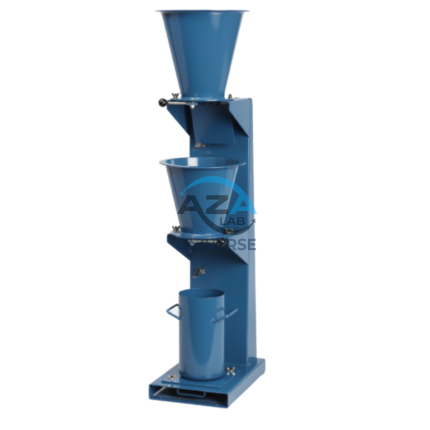
COMPACTION FACTOR APPARATUS AZA1107
- Precision measurement of compaction factor for dry and stiff concrete
- Double-hopper system with smooth trap release
- Conforms to IS 1199 and BS 1881 standards
- Suitable for precast plants, RMC units, and civil engineering labs
- Rugged, powder-coated mild-steel construction
- Cylindrical container included for final measurement
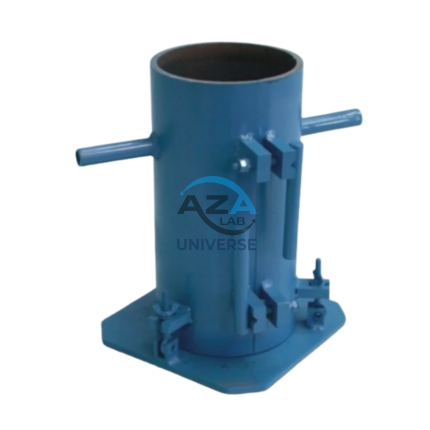
CYLINDRICAL MOULD AZA1123
Purpose & Function
The cylindrical mould is used to prepare concrete specimens of standard dimensions, typically:- 150 mm diameter × 300 mm height
- 100 mm diameter × 200 mm height
- Compressive strength tests
- Split tensile strength tests
- Elastic modulus evaluations
- Durability and material behavior studies
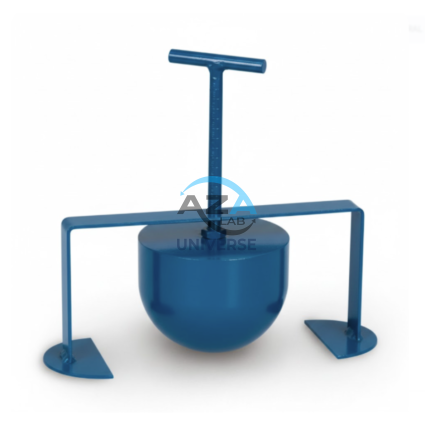
KELLEY BALL PENETRATION APPARATUS AZA1106
- Direct workability assessment using steel ball penetration
- Fully compliant with ASTM C360
- Portable and rugged for field and lab testing
- Heavy-duty steel/aluminum frame for long-term durability
- Built-in scale for accurate depth measurement
- Simple setup and low maintenance
- Provides a reliable alternative to the slump test

L SHAPE BOX APPARATUS AZA1112
AZA1112 L Shape Box Apparatus is a precision testing device designed to evaluate the passing ability and flow performance of Self-Compacting Concrete (SCC) in congested reinforcement conditions. This apparatus simulates real-world scenarios such as densely reinforced beams, columns, tunnels, and bridge segments, where concrete must flow freely without segregation or blockage.
The distinctive L-shaped design creates a controlled flow path where freshly mixed SCC moves from a vertical chamber into a horizontal channel containing reinforcement bars. By measuring the concrete heights at both ends (H1 and H2), the H2/H1 ratio is calculated, providing a direct, quantitative assessment of the concrete’s ability to pass through obstructions.
Manufactured from durable, corrosion-resistant steel, AZA1112 is built for long-term laboratory and site use. It conforms to EN 12350-10 and EFNARC guidelines, ensuring global acceptance of test results.
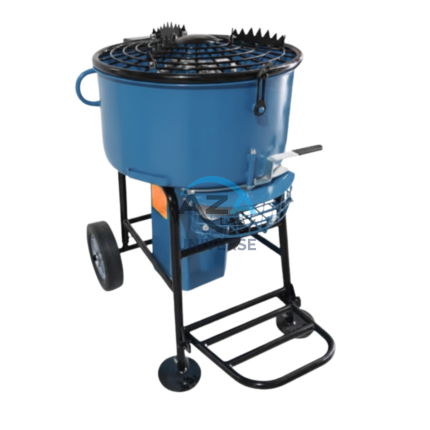
LABOMIX CONCRETE PAN MIXER AZA1118
The AZA1118 Labomix Concrete Pan Mixer is designed for demanding, high-volume mixing operations in construction laboratories, R&D facilities, and material testing centers. Built for durability and precision, it delivers consistent blends of concrete, mortar, grout, and aggregate mixes while supporting rigorous IS/ASTM test procedures.
Engineered with a high-efficiency gear-driven transmission, it provides stable torque, low maintenance requirements, and excellent mixing uniformity. The unit is available in multiple capacities from 90 litres to 300 litres, enabling users to select suitable volume for their operational needs.
The mixer features exchangeable mixing shovels, a safe-locking automatic discharge system, and large mobility wheels that allow a single operator to handle batching, mixing, and discharging efficiently.
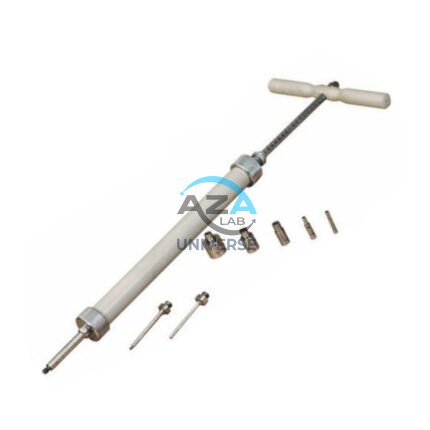
MORTAR PENETROMETER AZA1115
Key Features
- Complies with ASTM C403 Standard
- Used to determine mortar hardening rate
- Spring-loaded stem graduated 0–70 kg (1 kg divisions)
- Includes six interchangeable stainless steel needles
- Measures resistance at 25 mm penetration
- Shanks marked every 5 mm for depth guidance
- Supplied in a polished wooden carrying case
- Suitable for both laboratory and on-site QC
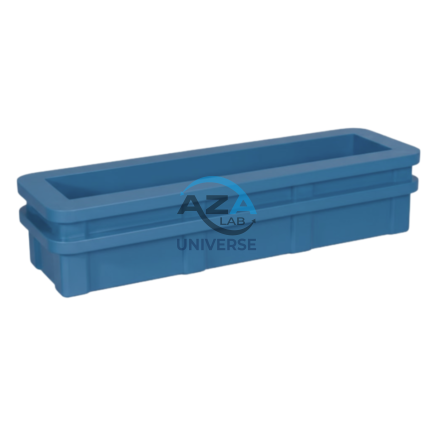
PLASTIC BEAM MOULD AZA1128
The Azalab AZA1128 Polyurethane Beam Mould Series is engineered for casting concrete beam specimens used in flexural strength tests. Built from high-impact, shock-absorbing polyurethane, these moulds deliver exceptional durability, dimensional accuracy, and ease of handling. Their lightweight yet robust design makes them suitable for both laboratory and field applications.
Polyurethane offers superior resilience compared to traditional metal or rigid plastic alternatives, enabling these moulds to withstand vibration, repeated use, and environmental exposure. The smooth internal finish ensures clean, damage-free demoulding, while the mould structure maintains consistency across multiple cycles.
Each AZA1128 mould complies with IS 516, ASTM C78, and BS 1881, ensuring reliable and standardized test preparation.

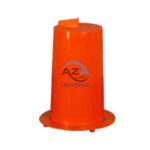
SLUMP CONE, PLASTIC AZA1103
AZA1103 Slump Cone (Plastic) is a durable and lightweight testing tool designed for accurate measurement of concrete workability and consistency. It is widely used in construction sites, civil engineering laboratories, and quality control departments for fast and reliable slump testing of fresh concrete mixes.
Unlike traditional metal cones, this model is manufactured from high-quality rigid plastic, making it corrosion-resistant, dent-proof, and highly suitable for repeated field and laboratory use. Its lightweight construction makes it easy to transport and ideal for site engineers and mobile testing teams.
The apparatus is manufactured to standard dimensions and fully complies with IS 1199 and ASTM C143, ensuring accurate and repeatable test results. The smooth internal surface minimizes friction, allowing easy release of concrete and improving measurement accuracy.
This slump cone helps engineers quickly determine if a concrete mix has the correct consistency for placement, compaction, and finishing. It is especially useful for quality checks before concrete pouring to avoid honeycombing, segregation, or improper flow.
AZA1103 is reusable, easy to clean, and requires minimal maintenance, making it a long-lasting and cost-effective solution for routine concrete testing.