
 Rock
Rock Aggregate
 Cement
 Concrete
 Soil
Soil Steel
Steel Bitumen/Asphalt
 Security Survey Equipment
 General Items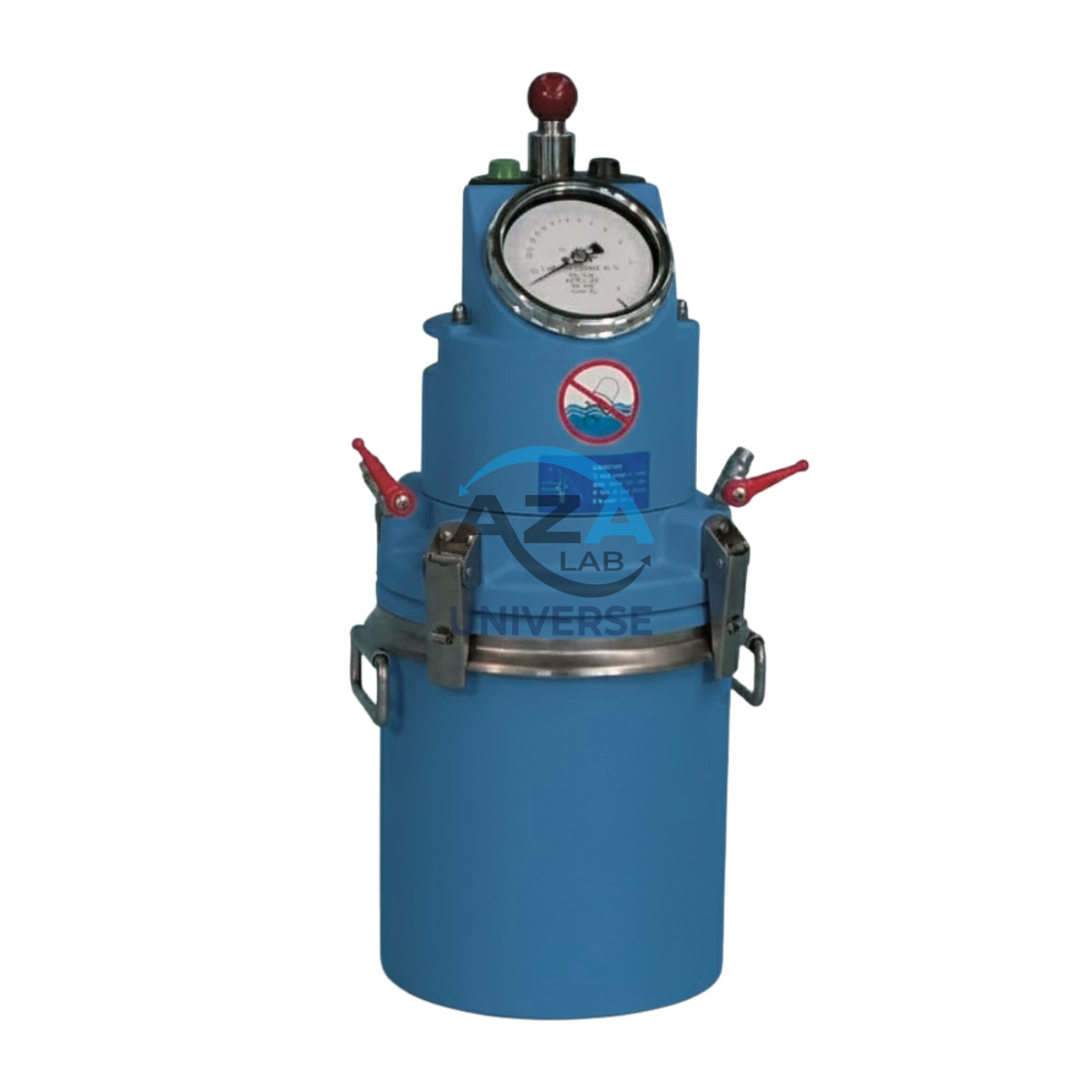
B TYPE AIR ENTRAINMENT METER AZA1145
For Accurate Air Content Measurement in Fresh Concrete
The AZA1145 B-Type Air Entrainment Meter is a durable, lab-grade instrument designed to determine the percentage of entrained air in freshly mixed concrete using the pressure method. Air entrainment is a critical parameter for ensuring workability, longevity, and freeze-thaw resistance of concrete—especially for structures exposed to harsh environmental conditions.
Applications
Widely used across the concrete testing sector, the AZA1145 is ideal for:
- Civil construction quality-control laboratories
- Cement and concrete R&D departments
- Ready-mix concrete testing facilities
- Engineering colleges and training institutes
- Material testing and QA/QC divisions
Why Air Entrainment Testing Is Important
Entrained air improves:
- Workability of fresh concrete
- Durability in freeze–thaw conditions
- Resistance to scaling, cracking, and surface deterioration
Accurate measurement ensures compliance with mix design specifications, verifies performance of air-entraining agents, and supports high-quality concrete production.
With AZA1145, labs can confidently:
- Confirm mix design compliance
- Validate field concrete quality
- Optimize concrete mixes for extreme environments
Description
Design & Construction
The AZA1145 is built for long-term, heavy-duty laboratory use. Its precision-engineered body ensures airtight operation and consistent readings.
Instrument Consists of:
-
Pressure chamber (high-strength aluminum or stainless steel)
-
Measuring bowl (~7 liters)
-
Calibrated precision pressure gauge
-
Manual air pump
-
Air-release valves and fittings
-
Airtight lid assembly
Key Features
-
Model: AZA1145
-
Type: B-Type Air Entrainment Meter (Pressure Method)
-
Capacity: Approx. 7 liters
-
Material: Cast aluminum / stainless steel
-
Gauge Range: 0–10% air content
-
Durability: Corrosion-resistant, robust construction
-
Operation: Manual pumping with precision seals
-
Accessories Included:
-
Tamping rod
-
Strike-off bar
-
Calibration vessel
-
Carrying case
-
Testing Procedure (Overview)
-
Fill the measuring bowl with fresh concrete in layers.
-
Compact using the tamping rod.
-
Seal the lid assembly securely.
-
Pump air to pressurize the chamber.
-
Observe gauge to determine air content percentage.
-
Release pressure and clean equipment for next use.
Standards Compliance
The AZA1145 meets major international testing standards:
-
IS 1199 – Methods of Sampling and Testing Concrete
-
ASTM C231 – Air Content of Freshly Mixed Concrete by Pressure Method
-
ACI 301 – Specifications for Structural Concrete
This ensures accurate and globally acceptable test results.
Technical Specifications
| Parameter | Specification |
|---|---|
| Model | AZA1145 |
| Product Name | B-Type Air Entrainment Meter |
| Capacity | ~7 Liters |
| Operation Method | Pressure (B-Type) |
| Material | Cast Aluminum / Stainless Steel |
| Gauge Range | 0–10% |
| Standards Followed | IS 1199, ASTM C231 |
| Accessories Included | Tamping Rod, Strike-Off Bar, Case |
| Application | Air content test in fresh concrete |
Frequently Asked Questions (FAQ)
Q1. What does a B-Type Air Entrainment Meter measure?
It measures entrained air percentage in freshly mixed concrete using the pressure method.
Q2. How accurate is the AZA1145?
It provides high-precision readings, calibrated as per ASTM C231 requirements.
Q3. What is the capacity of the bowl?
Approximately 7 liters, suitable for standard concrete testing.
Q4. Is the equipment durable?
Yes. It is built from corrosion-resistant metals, ensuring long service life.
Q5. Can this be used for academic training?
Yes. It is suitable for engineering labs and educational institutions.
Additional information
| Model |
AZA 1145 |
|---|---|
| Product Name |
B Type Air Entrainment Meter |
| Capacity |
7 Liters |
| Accessories Included |
Tamping rod, Strike-off bar, Carrying case |
| Application |
Air content test in freshly mixed concrete |
Related products

CHASE AIR INDICATOR AZA1105
AZA1105 Chase Air Indicator is a compact, lightweight, and highly practical field instrument designed to measure the air content in freshly mixed concrete. It is widely used in construction sites where rapid quality decisions are required and laboratory testing equipment is not readily available.
This device serves as a reliable field alternative to standard air content methods such as ASTM C231 (Pressure Method) and ASTM C173 (Volumetric Method). While it is not intended to replace laboratory-grade instruments, it provides fast, useful guidance that helps engineers and site supervisors maintain proper concrete mix quality.
Air entrainment plays a critical role in concrete durability, especially in regions exposed to freeze–thaw cycles, and contributes significantly to workability and pumpability of concrete. AZA1105 helps ensure that air content remains within the recommended range (typically 4%–7%), reducing the risk of weak or brittle concrete.
The working principle is based on fluid displacement and vacuum pressure balance. A representative mortar sample is collected and placed inside the testing chamber, where a controlled vacuum is applied. The internal pressure difference is translated directly to a calibrated dial gauge showing the approximate air content percentage.
With no electrical components, moving mechanical assemblies, or complex maintenance requirements, the AZA1105 is extremely reliable and built for tough field conditions. Its rugged body and easy-to-read dial make it suitable for continuous daily use in real-world jobsite environments.
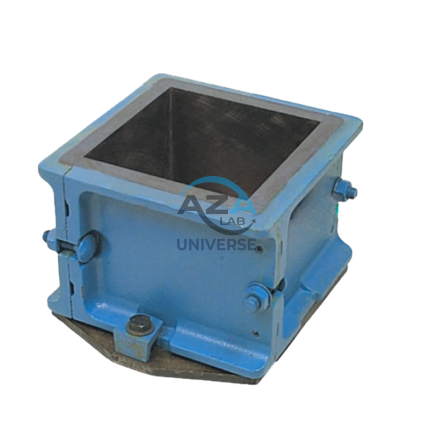
CUBE MOULD (METAL) AZA1122
Purpose & Function
This mould supports the preparation of standardized cube specimens that are used in:- Compressive strength testing
- Batch-wise quality control in construction
- Concrete mix design validation
- Research on material performance and durability

J-RING, NARROW GAP AZA1109
AZA1109 J-Ring – Narrow Gap is a precision testing apparatus designed to evaluate the passing ability of Self-Compacting Concrete (SCC) under highly restrictive conditions. This device simulates densely congested reinforcement zones by creating artificial obstructions that the fresh SCC must flow through without blocking or segregating. It is an essential tool for determining whether SCC mixes are suitable for heavily reinforced structural elements such as beams, columns, and shear walls.
The narrow gap design offers a more stringent test compared to standard J-Rings, allowing engineers and quality control professionals to accurately observe flow diameter, T50 flow time, and blocking behavior. When used in combination with a standard slump flow cone, AZA1109 provides reliable, repeatable results that help optimize mix designs and ensure consistent on-site performance.
Manufactured from durable, corrosion-resistant steel, the AZA1109 is built for repeated use in laboratory and field testing environments. The apparatus is fully compliant with ASTM C1621 and EFNARC guidelines, ensuring internationally accepted testing procedures.
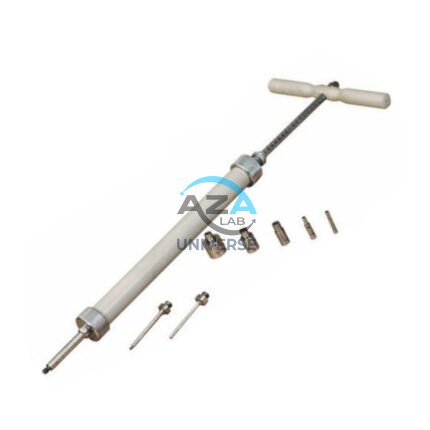
MORTAR PENETROMETER AZA1115
Key Features
- Complies with ASTM C403 Standard
- Used to determine mortar hardening rate
- Spring-loaded stem graduated 0–70 kg (1 kg divisions)
- Includes six interchangeable stainless steel needles
- Measures resistance at 25 mm penetration
- Shanks marked every 5 mm for depth guidance
- Supplied in a polished wooden carrying case
- Suitable for both laboratory and on-site QC
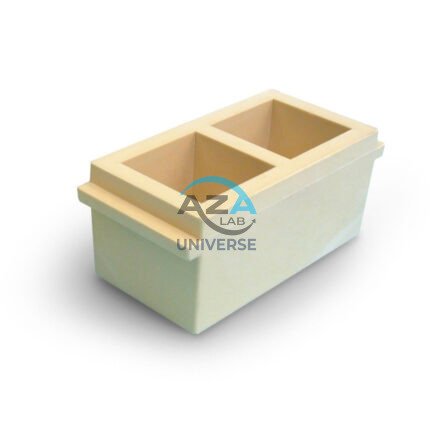
PLASTIC CUBE MOULD AZA1126
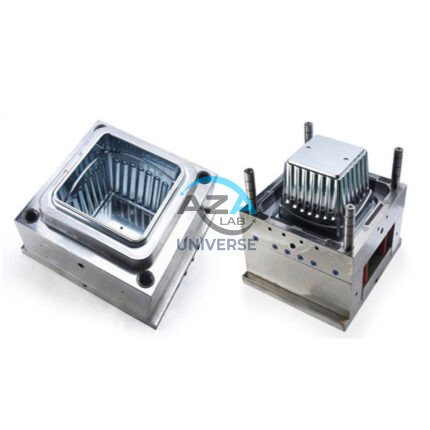
PLASTIC MOULDS AZA1125
The AZA1125 One-Piece Plastic Cube Mould (150 mm) from Azalab is a next-generation alternative to traditional metal cube moulds. Built from high-strength, non-deformable engineering plastic, this mould is designed to offer superior ease of use, long service life, and consistent dimensional accuracy for concrete compressive strength testing.
Its seamless, single-piece construction eliminates the need for bolts, screws, or external frames. Users simply apply demoulding oil, cast the concrete, and after curing, eject the cube using compressed air or water pressure, achieving clean and damage-free removal every time.
Compared to heavy metal moulds, the AZA1125 weighs nearly 90% less, providing clear advantages in portability, handling, and storage—making it ideal for both laboratory and on-site testing environments. Manufactured using an eco-friendly, non-polluting process, this mould supports sustainability goals in modern construction testing.
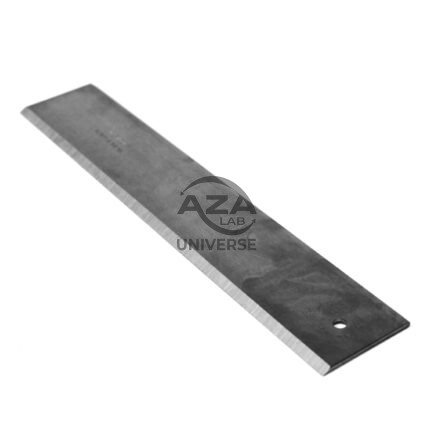
STRAIGHT EDGE AZA1120
The AZA1120 Precision Steel Straight Edge is a laboratory-grade tool engineered for leveling, scraping, and finishing concrete and soil specimens during testing procedures. Used extensively in concrete cube/cylinder preparation, slump cone tests, and air meter testing, this straight edge ensures flat, uniform specimen surfaces essential for accurate and repeatable results.
Manufactured from high-grade hardened steel, the AZA1120 offers superior rigidity, dimensional stability, and long-term durability. The flat, 1-inch wide, 12-inch long bar profile allows smooth handling and effortless removal of excess material from molds. A corrosion-resistant polished or matte finish further enhances longevity and reliability in both lab and field conditions.
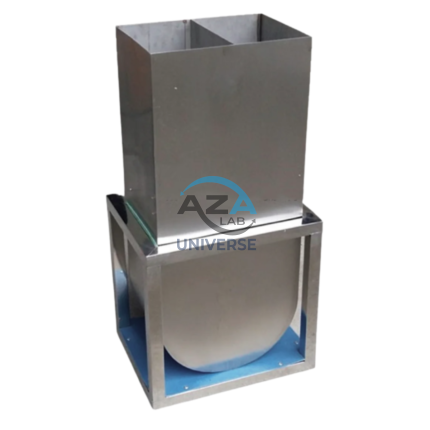
U SHAPE BOX APPARATUS AZA1113
- Measures SCC blocking resistance through simulated rebar congestion
- Accurately indicates flowability and passing ability of SCC mixes
- Robust U-shaped two-chamber design with sliding gate
- Conforms to international SCC testing standards
- Includes precision steel rod arrangement and measuring scale
- Durable, corrosion-resistant construction for field and lab use
- Ideal for SCC mix design, approval, and continuous quality control