
 Rock
Rock Aggregate
 Cement
 Concrete
 Soil
Soil Steel
Steel Bitumen/Asphalt
 Security Survey Equipment
 General Items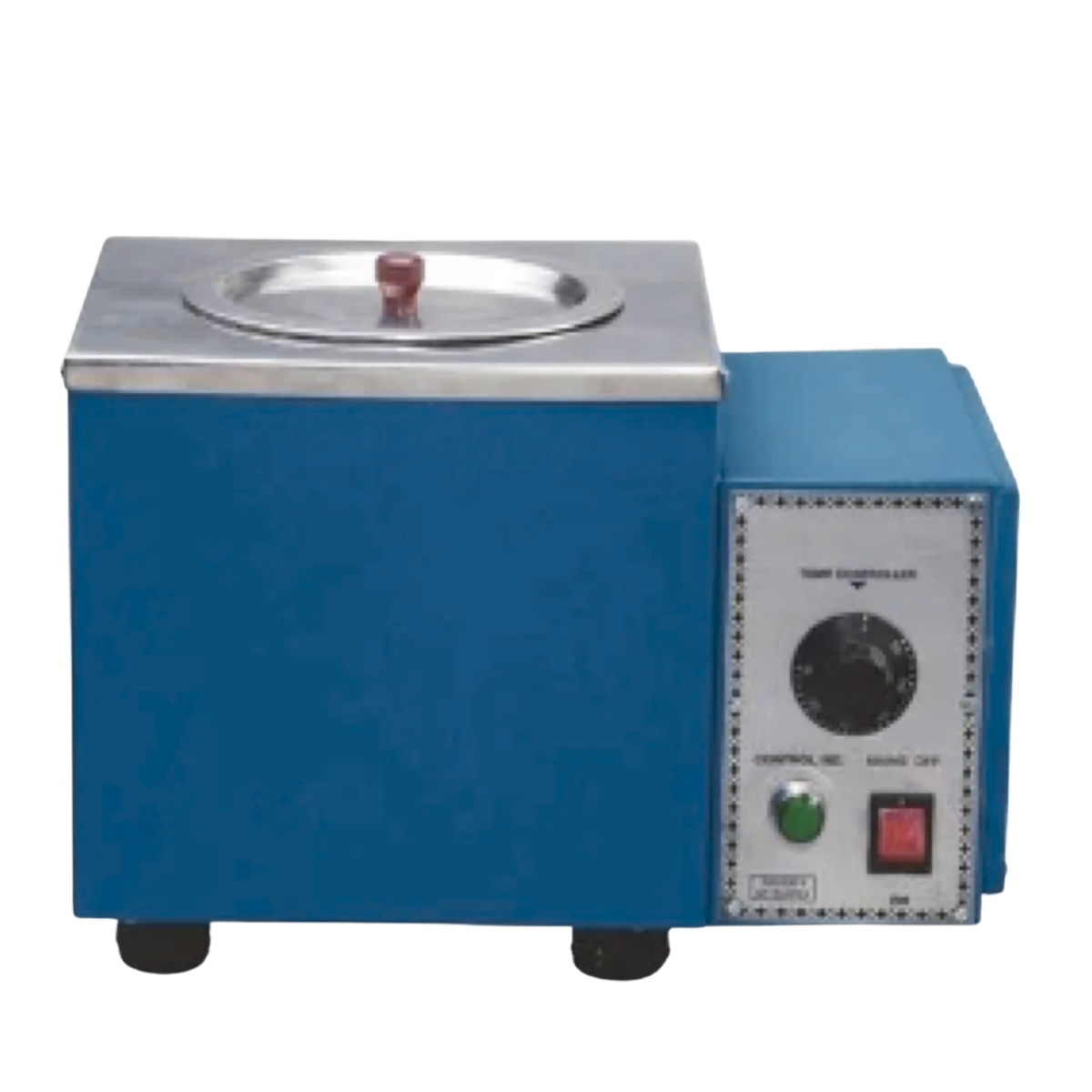
MELTING POT AZA1165
The AZA1165 Melting Pot is a laboratory-grade heating apparatus engineered for the controlled melting and conditioning of bitumen, wax, asphalt binders, and other semi-solid materials. Designed for reliability and precision, it is widely used in civil engineering laboratories, road construction sites, quality control facilities, and research institutions.
Built with durable materials and advanced temperature control, the AZA 1165 ensures uniform and safe heating, making it essential for asphalt binder tests such as penetration, ductility, viscosity, softening point preparation, and other conditioning procedures.
Key Features & Benefits
• Thermostatic Temperature Control
Provides adjustable and precise heating for stable and repeatable test results.
• Corrosion-Resistant Interior
Stainless steel or coated inner chamber designed to handle high temperatures and chemical exposure.
• Fast Heating Efficiency
High-performance heating elements reduce preparation time and boost lab throughput.
• Spill-Safe Construction
Includes a secure, spill-resistant lid and insulated body to prevent heat loss and improve safety.
• Laboratory-Grade Safety
Thermal cut-off protection, heat-resistant handles, and anti-slip feet ensure safe operation.
• Multi-Purpose Use
Suitable for melting bitumen, waxes, asphalt binders, and other semi-solid materials used in civil and pavement testing.
Description
Specifications
| Feature | Description |
|---|---|
| Model | AZA1165 |
| Heating Type | Electrical with thermostatic control |
| Temperature Range | Up to 250°C (adjustable) |
| Material Capacity | 5–10 liters (customizable) |
| Inner Pot Material | Stainless steel |
| Outer Body | Insulated, heat-resistant construction |
| Safety Features | Thermal cut-off, spill-proof lid, insulated housing |
| Power Supply | 230V AC, 50 Hz |
| Applications | Bitumen testing, wax heating, asphalt binder preparation |
Applications
• Bitumen Testing Laboratories
For penetration, ductility, viscosity, and other binder tests.
• Road Construction QC Facilities
For pre-heating, conditioning, and binder preparation.
• Material Testing Institutions
Widely used for wax heating or sample preparation.
• Research & Academic Labs
Ideal for pavement engineering and asphalt technology programs.
• R&D and Production Labs
Ensures controlled, consistent binder heating for quality assurance.
Frequently Asked Questions (FAQ)
Q1: What is the primary use of the AZA1165 Melting Pot?
It is used to melt and maintain bitumen, wax, asphalt, and similar materials at controlled temperatures.
Q2: Does the unit offer temperature control?
Yes. It features an adjustable thermostat for precise heating levels.
Q3: Is the melting pot safe to use?
Absolutely. It includes thermal cut-off protection, an insulated body, and a spill-proof lid.
Q4: Can it be used outside traditional labs?
While designed for labs, its portability allows use in mobile field units or site labs.
Q5: What materials is it constructed from?
The inner chamber is stainless steel or coated, with an insulated, heat-resistant outer shell.
Related products

CHASE AIR INDICATOR AZA1105
AZA1105 Chase Air Indicator is a compact, lightweight, and highly practical field instrument designed to measure the air content in freshly mixed concrete. It is widely used in construction sites where rapid quality decisions are required and laboratory testing equipment is not readily available.
This device serves as a reliable field alternative to standard air content methods such as ASTM C231 (Pressure Method) and ASTM C173 (Volumetric Method). While it is not intended to replace laboratory-grade instruments, it provides fast, useful guidance that helps engineers and site supervisors maintain proper concrete mix quality.
Air entrainment plays a critical role in concrete durability, especially in regions exposed to freeze–thaw cycles, and contributes significantly to workability and pumpability of concrete. AZA1105 helps ensure that air content remains within the recommended range (typically 4%–7%), reducing the risk of weak or brittle concrete.
The working principle is based on fluid displacement and vacuum pressure balance. A representative mortar sample is collected and placed inside the testing chamber, where a controlled vacuum is applied. The internal pressure difference is translated directly to a calibrated dial gauge showing the approximate air content percentage.
With no electrical components, moving mechanical assemblies, or complex maintenance requirements, the AZA1105 is extremely reliable and built for tough field conditions. Its rugged body and easy-to-read dial make it suitable for continuous daily use in real-world jobsite environments.
CONCRETE FLOW TABLE TEST SET AZA1110
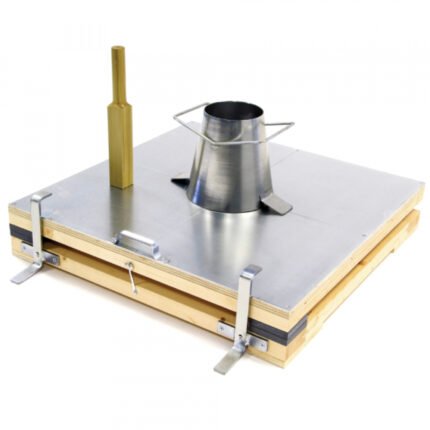
AZA1110 Concrete Flow Table Test Set is a precision-engineered laboratory apparatus designed to determine the workability, consistency, and flow characteristics of fresh concrete. It is especially suitable for Self-Compacting Concrete (SCC), precast concrete, and high-consistency mixes where the traditional slump test is not effective.
This test set works by allowing a freshly mixed concrete sample to spread under controlled, repeated vertical jolts of a mechanically calibrated table. The final spread diameter of the concrete is measured to assess its flowability and uniformity.
Built with a rigid, precisely machined table surface, the AZA1110 ensures repeatable and reliable results. Its heavy-duty construction allows long-term use in demanding laboratory environments while remaining easy to clean, store, and maintain.
The apparatus complies with major international standards including IS 1199, ASTM C1437, and BS EN 12350-5, making it suitable for both domestic and international testing requirements.
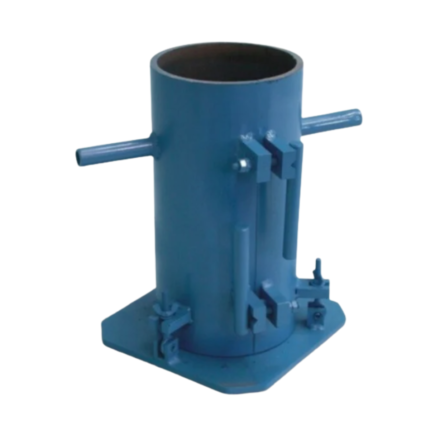
CYLINDRICAL MOULD AZA1123
Purpose & Function
The cylindrical mould is used to prepare concrete specimens of standard dimensions, typically:- 150 mm diameter × 300 mm height
- 100 mm diameter × 200 mm height
- Compressive strength tests
- Split tensile strength tests
- Elastic modulus evaluations
- Durability and material behavior studies
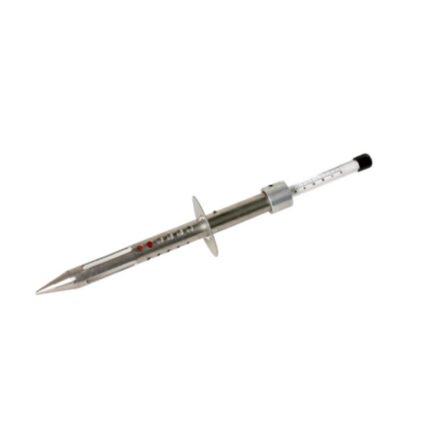
K-SLUMP TESTER AZA1104
AZA1104 K-Slump Tester is a fast, reliable, and non-destructive testing device designed to measure the workability and consistency of fresh concrete directly at construction sites or in laboratory environments. It provides instant slump approximation without the need for traditional slump cones, base plates, or tamping rods, making it an essential tool for modern concrete quality control.
This handheld instrument is widely used by civil engineers, site technicians, and quality inspectors who require quick, repeatable, and real-time results during concrete batching, transportation, and placement. Its simple design eliminates complicated setup, reducing testing time and operator fatigue.
Manufactured from high-grade stainless steel, the probe is corrosion-resistant and suitable for harsh site conditions. The etched scale markings provide direct readings in millimeters or inches, allowing accurate penetration depth measurement without additional instruments.
Unlike traditional slump testing methods, the AZA1104 enables non-destructive testing, meaning the concrete surface remains intact and usable after testing. This feature is especially useful when multiple checks are needed during large pours or continuous batching operation
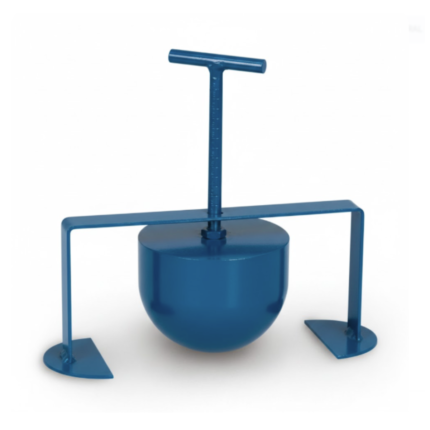
KELLEY BALL PENETRATION APPARATUS AZA1106
- Direct workability assessment using steel ball penetration
- Fully compliant with ASTM C360
- Portable and rugged for field and lab testing
- Heavy-duty steel/aluminum frame for long-term durability
- Built-in scale for accurate depth measurement
- Simple setup and low maintenance
- Provides a reliable alternative to the slump test
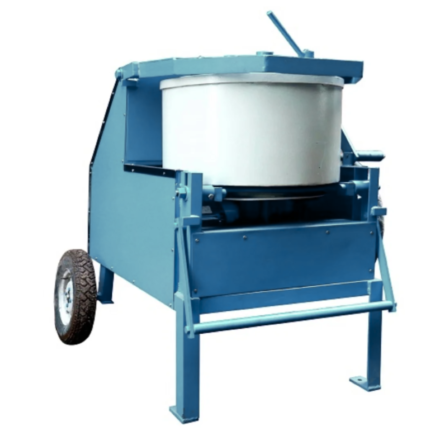
LABORATORY PAN MIXER (CAPACITY 40 LTRS) AZA1117
Key Features
- 40-litre mixing capacity ideal for cube specimen preparation
- Supports aggregate sizes up to 20 mm
- 2 HP motor, 960 RPM, 3-phase for heavy-duty mixing
- Adjustable steel blades for both dry and wet mix uniformity
- Portable design with wheels for easy movement
- Full-access drum lid for safe loading, pouring, and cleaning
- Gear-driven system for uniform, high-consistency mixing
- Easy maintenance and corrosion-resistant finish

POCKET CONCRETE PENETROMETER AZA1114
- Measures Early Setting & Strength of concrete and mortar
- Direct Penetration Reading via spring-loaded plunger
- Dual Units: MPa or psi
- ASTM C403 & IS 8142 Compliant
- Compact, Portable & Field-Ready
- Includes Carrying Case & Calibration Chart
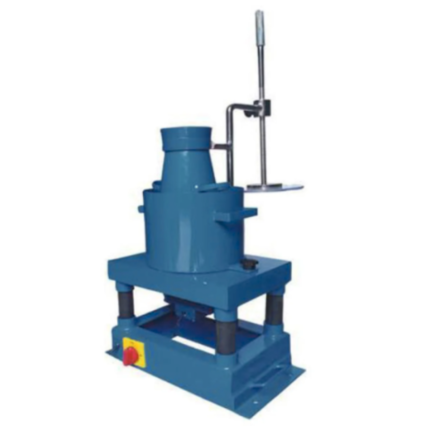
VEE BEE CONSISTOMETER AZA1101
AZA1101 Vee Bee Consistometer is a laboratory-grade concrete testing instrument designed for measuring the workability of stiff and low-slump concrete mixes with high accuracy. It is widely used in construction material testing laboratories, civil engineering institutes, infrastructure projects, and quality control departments.
This equipment performs both slump test and Vee Bee time test, providing dual accuracy in concrete consistency evaluation. It is especially ideal for testing dry, roller-compacted concrete and pavement concrete mixes, where traditional slump tests alone are not sufficient.
The unit is equipped with a precision vibrating table that ensures uniform vibration and repeatable testing results. It comes as a complete set including a standard slump cone, transparent cylindrical container, graduated rod with metal disc, and a powerful vibration unit.
Manufactured from heavy-duty, powder-coated steel, the AZA1101 offers excellent durability and stable performance even under continuous laboratory use. The apparatus is designed and built in compliance with IS 1199 and ASTM C1170 standards, ensuring reliable, repeatable, and internationally accepted test results.
Its easy-to-use design, low maintenance requirement, and robust construction make the AZA1101 a dependable solution for professionals involved in construction material testing and concrete quality control.