 Rock
Rock Aggregate
 Cement
 Concrete
 Soil
Soil Steel
Steel Bitumen/Asphalt
 Security Survey Equipment
 General Items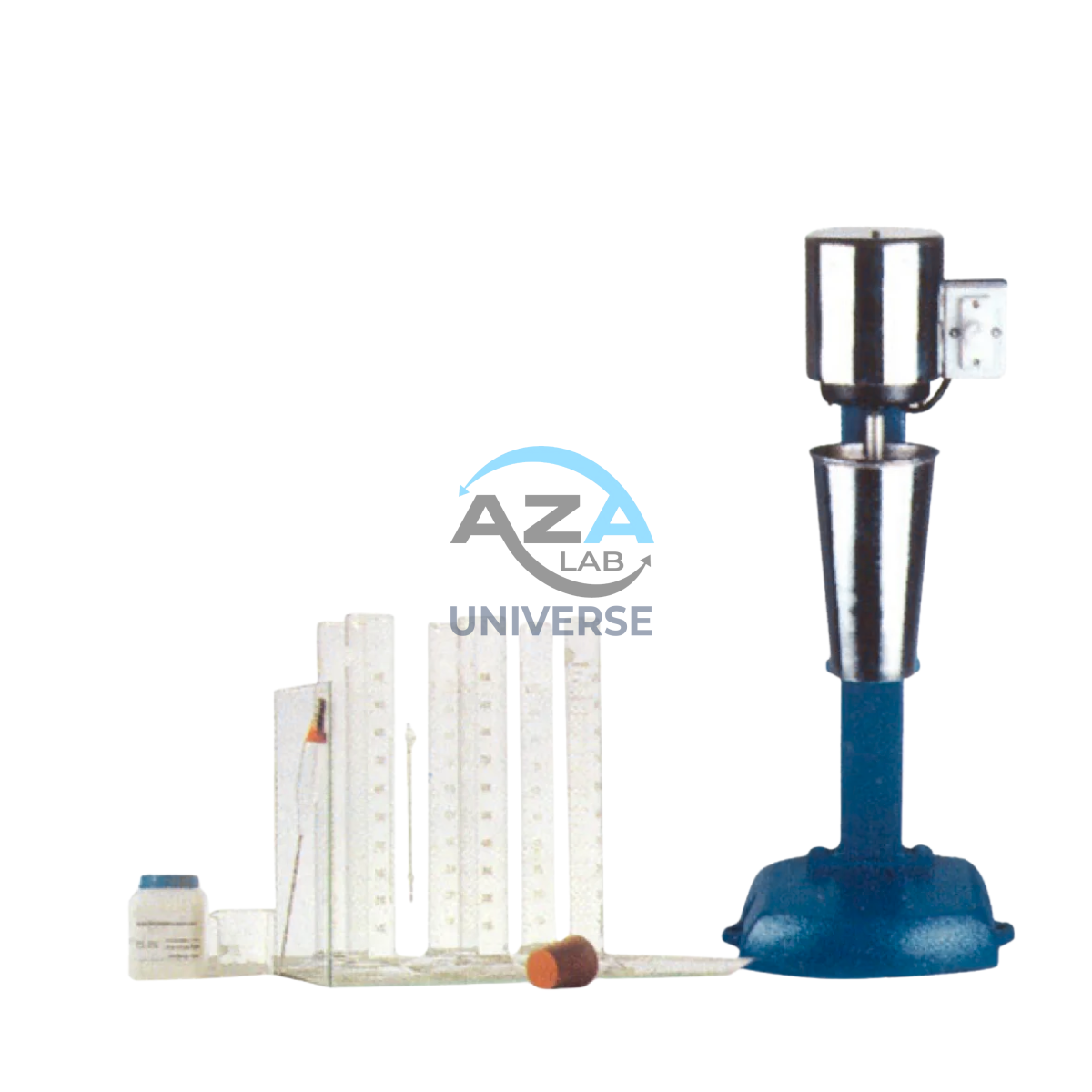
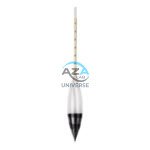
PARTICLE SIZE SEDIMENTATION (HYDROMETER METHOD) AZA0857
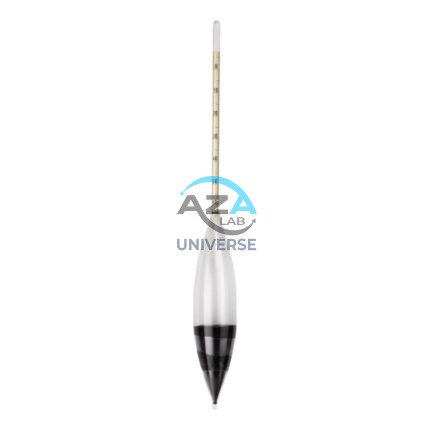
AZA0857 – Particle Size Sedimentation Apparatus (Hydrometer Method)
The AZA0857 Particle Size Sedimentation Apparatus (Hydrometer Method) from AZA Lab is designed for determining the particle size distribution of fine-grained soils, particularly silts and clays smaller than 75 microns. This method is widely adopted in soil mechanics, geotechnical engineering, civil construction quality control, and academic laboratories where accurate characterization of cohesive soils is essential.
The hydrometer method is based on the sedimentation principle governed by Stokes’ Law, measuring changes in the density of a soil–water suspension over time. By recording hydrometer readings at defined intervals, the percentage of soil particles remaining in suspension is calculated, enabling precise determination of grain size distribution for fine soils beyond the practical limits of sieve analysis.
Description
Working Principle
A representative soil sample is dispersed in water using a chemical dispersing agent, typically sodium hexametaphosphate, to prevent flocculation. The suspension is transferred into a graduated sedimentation cylinder. As particles settle under gravity, larger particles settle faster while finer particles remain in suspension for longer durations.
A soil hydrometer is inserted into the suspension at specified time intervals to measure the relative density of the suspension. Using standard calculations and temperature corrections, the percentage of particles finer than specific diameters is determined. This method is suitable for particle sizes generally below 0.075 mm.
Applications
- Geotechnical investigations and soil classification
- Foundation, embankment, and earthwork design
- Soil mechanics teaching and academic research
- Civil engineering laboratory testing
- Environmental and sediment analysis (lakes, rivers, wetlands)
Standards Compliance
- IS 2720 (Part IV) – Grain Size Analysis of Soils
- ASTM D422 – Particle-Size Analysis of Soils
- BS 1377 – Methods of Test for Soils for Civil Engineering Purposes
System Composition (Complete Set)
- Sedimentation Cylinders – 1000 ml capacity, borosilicate glass (6 nos.) with rubber bungs
- Soil Hydrometer – ASTM 151H, range 0.995 to 1.038 g/ml, least count 0.001
- Glass Tank – Approx. 600 × 300 × 380 mm
- Immersion Heater with Thermostat and Circulation Unit – 230V AC, Single Phase, 50 Hz, 1000 W
- Glass Thermometer – Range –10°C to 50°C, subdivision 0.5°C
- Beaker – Borosilicate glass, 250 ml capacity
- Dispersing Agent – Sodium Hexametaphosphate, 1000 g
- High Speed Stirrer – 4000 RPM, complete with dispersion / baffle cup for soil dispersion
Technical Specifications
| Component | Specification |
|---|---|
| Model | AZA0857 |
| Hydrometer Type | ASTM 151H / IS-compliant glass hydrometer |
| Measurement Range | 0.995 – 1.038 g/ml |
| Least Count | 0.001 |
| Sedimentation Cylinder | 1000 ml, borosilicate glass, graduated |
| Temperature Measurement | –10°C to 50°C thermometer included |
| Heating System | Immersion heater with thermostat, 1000 W |
| Stirrer Speed | Approx. 4000 RPM |
| Particle Size Range | < 0.075 mm |
| Power Supply | 230 V AC, 50 Hz |
What’s Included
- Complete Hydrometer Analysis Setup (AZA0857)
- Soil Hydrometer (151H)
- Sedimentation Cylinders with rubber bungs
- Immersion heater with circulation unit
- Glass thermometer
- High speed stirrer with baffle cup
- Beaker and accessories as listed
Frequently Asked Questions (FAQ)
Q1: What is the hydrometer method used for?
It is used to determine the grain size distribution of fine soils such as silts and clays through sedimentation analysis.
Q2: How accurate is the hydrometer method?
It provides high accuracy for particles smaller than 75 microns, which cannot be reliably analyzed using sieve methods.
Q3: Is this method suitable for sandy soils?
No. It is specifically intended for fine-grained soils. Coarse particles settle too rapidly for accurate hydrometer readings.
Q4: Which standards does AZA0857 comply with?
The apparatus conforms to IS 2720 (Part IV), ASTM D422, and BS 1377.
Q5: Is the dispersing agent included?
Yes. Sodium hexametaphosphate is supplied with the complete AZA0857 set.
Additional information
| Hydrometer Type |
ASTM 151H or IS-compliant Glass Hydrometer |
|---|---|
| Temperature Range |
0°C to 50°C (thermometer included) |
| Measurement Interval |
2 min to 24 hours (user-defined) |
You may also like…
Related products
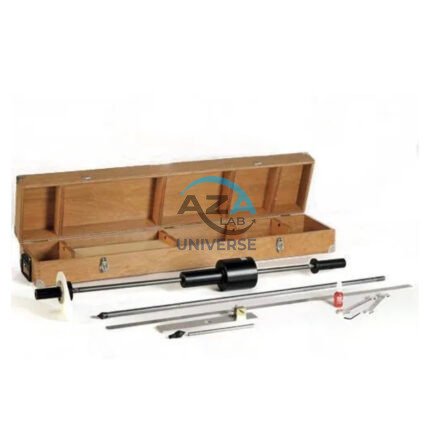
DYNAMIC CONE PENETROMETER AZA0872
The AZA0872 Dynamic Cone Penetrometer (DCP) from Azalab is a robust, field-proven instrument designed for rapid in-situ evaluation of soil strength, stiffness, and compaction. It is extensively used by civil engineers, geotechnical consultants, and construction teams for pavement design, quality control, and site investigation works.
The DCP test provides a fast and economical method to assess the strength of subgrades, sub-bases, and granular base course layers, with results that can be directly correlated to California Bearing Ratio (CBR) values. This eliminates the need for time-consuming laboratory testing or undisturbed soil sampling, enabling immediate decision-making at site.
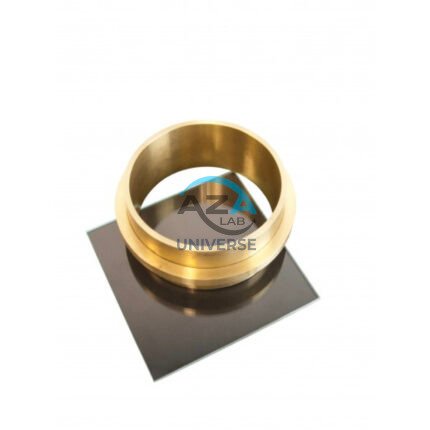
LINEAR SHRINKAGE MOULD AZA0850
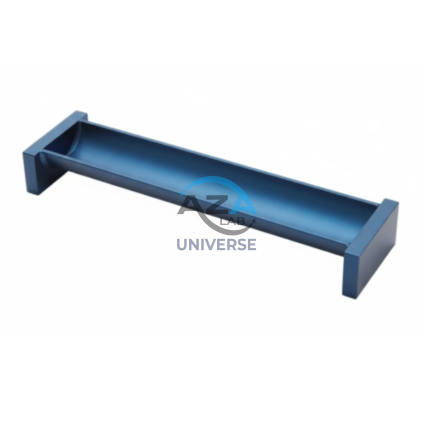
The AZA0850 Precision Linear Shrinkage Mould from AZALAB is a compact and highly accurate laboratory instrument designed for determining the linear shrinkage of fine-grained cohesive soils in accordance with BS 1377-2. This test is a key component of soil classification and is especially important in identifying shrink–swell behavior of clays and expansive soils.
Linear shrinkage testing measures the reduction in length of a soil specimen upon drying, expressed as a percentage of its original length. The results provide valuable insight into soil expansiveness, volume stability, and suitability for foundations, pavements, and earthworks.
Manufactured from high-quality brass or stainless steel, the AZA0850 mould offers precise internal dimensions, excellent corrosion resistance, and a smooth polished finish for easy sample preparation and removal. Its robust construction ensures repeatable, reliable results even under high-frequency laboratory use.
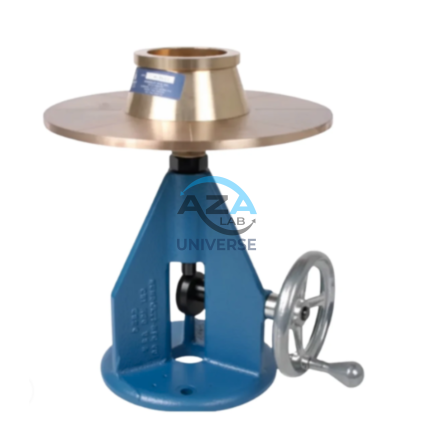
LIQUID LIMIT DEVICE WITH COUNTER AZA0853
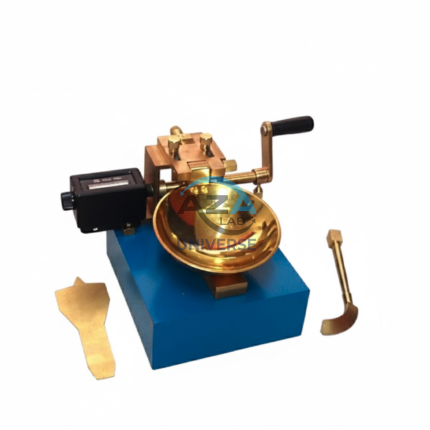
The AZA0853 Liquid Limit Device with Counter from AZALAB is a precision-engineered instrument used for determining the liquid limit of soils in accordance with the Casagrande method. This test is a fundamental component of soil classification and geotechnical investigation, providing critical insight into the plasticity, compressibility, and shear strength of fine-grained soils.
Designed for reliable, repeatable, and standardized testing, the AZA0853 is widely used in geotechnical laboratories, civil engineering departments, construction quality control labs, and academic institutions.
Principle of Liquid Limit Test (Casagrande Method)
The liquid limit is defined as the water content at which soil transitions from a plastic state to a liquid state. In practice, it is determined as the moisture content at which a standard groove cut in the soil sample closes over a length of 12.5 mm under 25 blows of the liquid limit apparatus.
The AZA0853 consists of a polished brass cup mounted on an adjustable bracket. The cup is repeatedly raised and dropped from a fixed height of 1 cm onto a hard rubber base by means of a manually operated cam mechanism. A built-in mechanical counter accurately records the number of blows, ensuring compliance with testing standards and reducing operator error.
PLASTIC LIMIT SET AZA0848
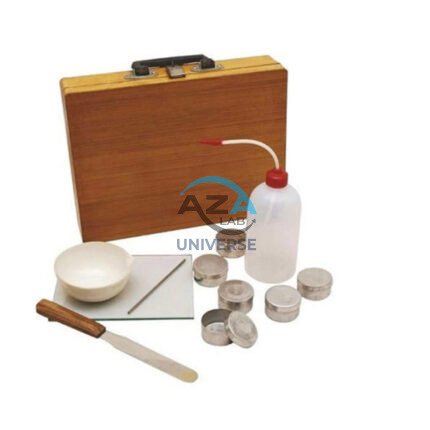
- Soil classification (Atterberg limits)
- Assessing workability and consistency
- Evaluating shrink–swell characteristics
- Supporting foundation, pavement, and earthwork design
POCKET PENTROMETER AZA0869
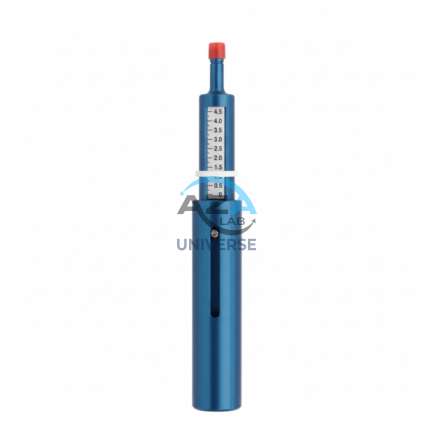
- Estimation of UCS and shear strength of soft to stiff cohesive soils
- Field classification of soil consistency
- Pre-construction soil stability checks
- Trench safety and shallow foundation planning
- Geotechnical education and field research
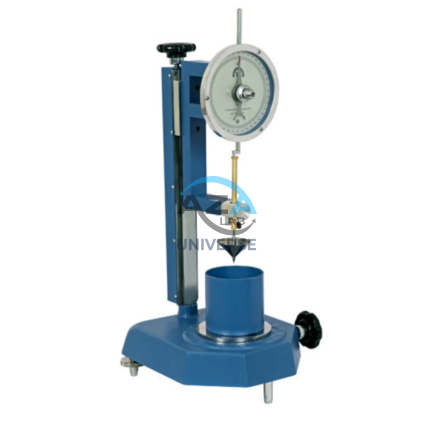
SEMI AUTOMATIC CONE PENETROMETER AZA0852
Principle of Operation
A soil paste prepared at known moisture content is placed in the sample cup. The standardized cone, attached to a calibrated weight, is released using the semi-automatic clutch mechanism, allowing free fall penetration into the soil. After the specified time (typically 5 seconds), the penetration depth is measured using a high-precision dial gauge. The moisture content corresponding to a penetration of 20 mm is considered the liquid limit of the soil, as defined in IS and BS standards.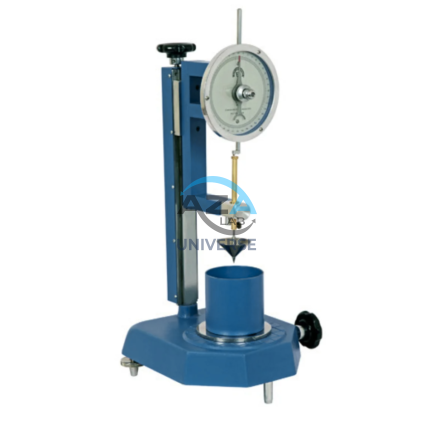
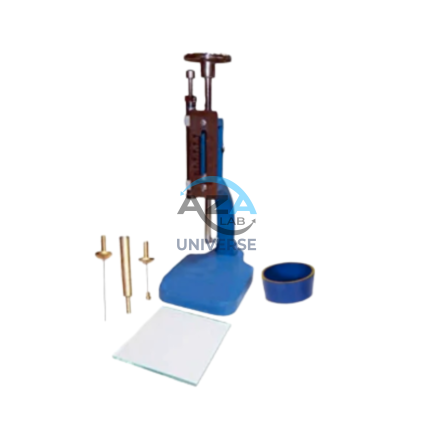
SOIL CONE PENETROMETER AZA0851
Principle of Operation
A soil paste prepared at a known moisture content is placed in the sample cup. The stainless steel cone, of specified mass and angle, is allowed to penetrate the soil freely for 5 seconds. The depth of penetration (up to 20 mm) is measured using a precision depth gauge. The moisture content corresponding to 20 mm penetration is defined as the liquid limit of the soil.Standards Compliance
- IS 2720 (Part 5) – Determination of liquid and plastic limits
- ASTM D4318 – Liquid Limit, Plastic Limit, and Plasticity Index of Soils