
 Rock
Rock Aggregate
 Cement
 Concrete
 Soil
Soil Steel
Steel Bitumen/Asphalt
 Security Survey Equipment
 General Items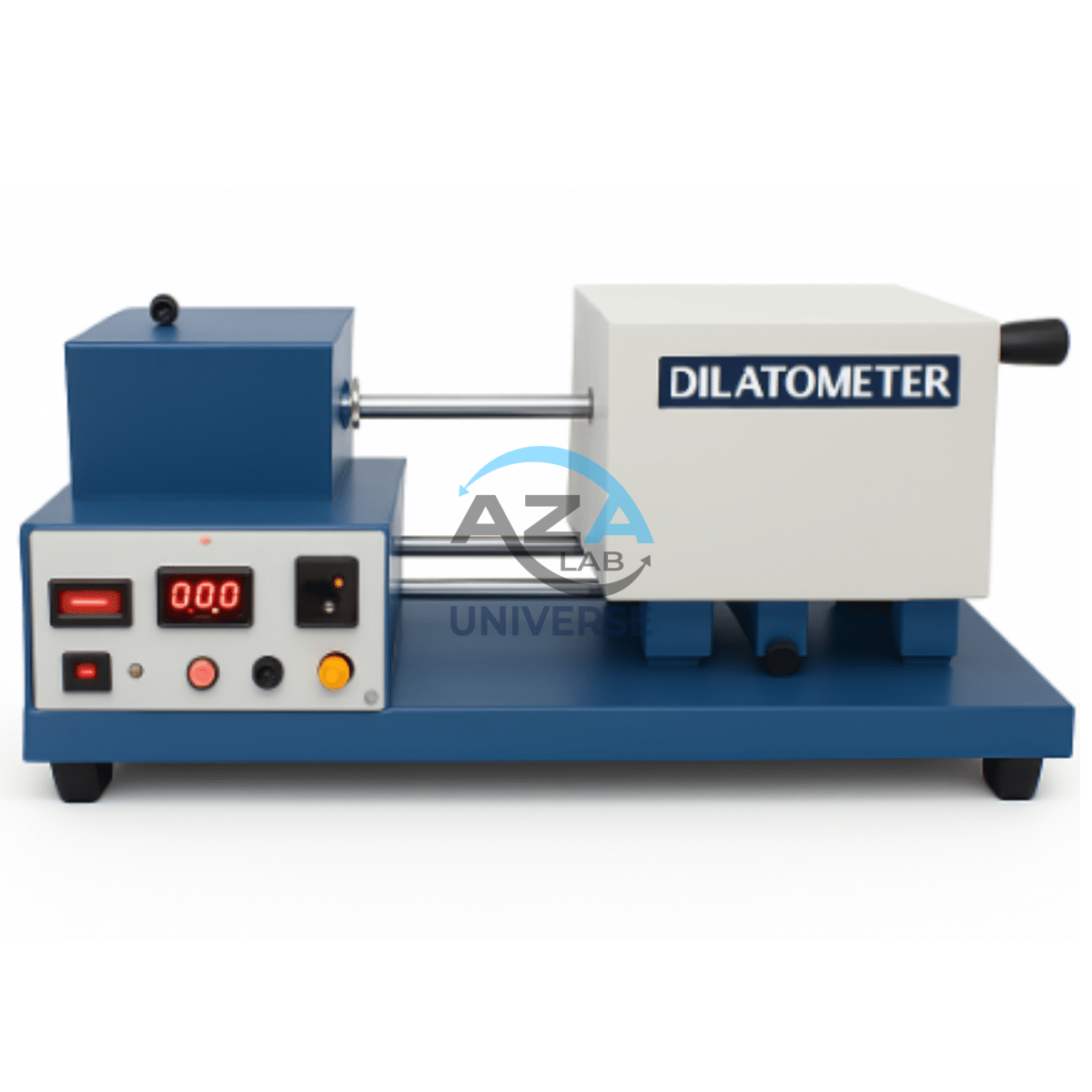
HIGH-PERFORMANCE DILATOMETER (THERMAL EXPANSION TESTING SYSTEM) AZA1269
The AZA1269 High-Performance Dilatometer is an advanced thermal analysis instrument engineered for precise measurement of linear thermal expansion and contraction of solid materials at temperatures up to 1400 °C. Designed for demanding laboratory and industrial environments, the system delivers high accuracy, repeatability, and long-term thermal stability, making it ideal for material characterization, research, and quality assurance.
This instrument is widely used in ceramics, refractories, advanced composites, polymers, and sintered materials, where understanding dimensional change under heat is critical to product performance and safety.
Description
Purpose of Linear Thermal Expansion Testing
Thermal expansion analysis is essential for evaluating how materials behave when exposed to elevated temperatures. Improper expansion characteristics can lead to cracking, warping, loss of mechanical integrity, or system failure in real-world applications.
The AZA1269 enables accurate determination of:
-
Linear thermal expansion coefficient
-
Expansion and contraction behavior over temperature
-
Phase transitions and structural changes
-
Material suitability for high-temperature applications
High-Temperature Furnace System
At the core of the AZA1269 is a robust silicon carbide heating furnace (I Squared R, USA), capable of continuous operation at 1400 °C. The furnace is mounted on a guided rail movement system, allowing smooth, controlled travel for easy specimen loading and unloading while maintaining precise alignment during measurement.
Furnace Design Highlights
-
Silicon carbide heating elements for uniform heat distribution
-
Continuous operation at maximum temperature
-
Guided rail mechanism for smooth and safe furnace travel
-
High thermal stability for repeatable test cycles
High-Precision Expansion Measurement
Linear displacement is measured using a high-sensitivity LVDT system (German make – MASSETRON), providing 1 micron resolution. This enables sub-micron detection of dimensional changes, even in materials with very low expansion coefficients.
Measurement System Features
-
LVDT-based displacement measurement
-
Measuring range: 0 to 2000 microns
-
High signal stability at elevated temperatures
-
Recrystallized alumina probe and tube for thermal compatibility
Advanced Control & Software Integration
The AZA1269 is supplied with LabVIEW-based custom software, offering full digital control, automation, and data logging. The intuitive interface allows users to define heating profiles, monitor expansion curves in real time, and export data for analysis and reporting.
Control & Software Capabilities
-
Closed-loop PID temperature control
-
Real-time expansion vs temperature graphing
-
Automated test sequencing
-
Digital data storage and export
-
USB PC interface
A dedicated PC with inkjet printer is included for complete standalone operation and report generation.
Industrial-Grade Safety & Temperature Regulation
Safety and reliability are integral to the AZA1269 design. The system incorporates industrial-grade electrical and thermal protection components to ensure safe long-term operation at high temperatures.
Safety & Control System
-
TAIE make PID programmable digital temperature controller
-
B-type thermocouple for high-temperature accuracy
-
Temperature accuracy: ±1 °C
-
Non-indicating safety controller with air-break magnetic contactor
-
Phase-angle controlled thyristor system with isolation transformer
-
Digital ammeter for power monitoring
Applications
-
Linear expansion analysis of ceramics and refractories
-
High-temperature material qualification in R&D and manufacturing
-
Quality assurance testing of thermal insulators, electrodes, and sintered parts
-
Educational use in material science and engineering laboratories
-
Development and validation of advanced materials
Key Advantages
-
High-temperature capability up to 1400 °C
-
1 micron resolution for precise expansion measurement
-
LVDT system from German make (MASSETRON)
-
Smooth, aligned furnace movement on guided rails
-
LabVIEW-based automation and data logging
-
Industrial-grade safety and temperature regulation
-
Suitable for continuous, long-duration testing
Technical Specifications
General Specifications
| Feature | Specification |
|---|---|
| Model | AZA1269 |
| Measurement Method | LVDT-based (German make – MASSETRON) |
| Measuring Accuracy | 1 micron |
| Measuring Range | 0 – 2000 microns |
| Maximum Temperature | 1400 °C |
| Continuous Operating Temperature | 1400 °C |
| Heating Element | Silicon Carbide (I Squared R, USA) |
| Furnace Movement | Guided rail system |
| Specimen Size | 10 × 10 × 45 mm ±2 mm |
| Probe & Tube | Recrystallized alumina |
| Output | Digital + PC interface |
| Software | LabVIEW-based custom software |
| Power Supply | 15A / 230V / AC |
Control System Specifications
| Feature | Specification |
|---|---|
| Temperature Controller | TAIE make PID programmable controller |
| Thermocouple | B-type |
| Temperature Accuracy | ±1 °C |
| Safety Control | Non-indicating controller with air-break magnetic contactor |
| Thyristor System | Phase-angle controlled with isolation transformer |
| Indicators | Digital Ammeter |
Standards Compliance
-
ASTM E228 – Linear thermal expansion of solid materials
-
ISO 11359 – Plastics and materials thermal expansion testing
What’s Included
-
1 × AZA1269 Dilatometer Unit
-
1 × LabVIEW-compatible software with USB interface
-
1 × Dedicated PC with inkjet printer
-
1 × Sample holder and jig set
-
1 × Power cable
-
1 × Calibration certificates (including LVDT calibration)
-
Compliance documentation
Optional: Extended temperature ranges, vacuum or controlled atmosphere compatibility
The AZA1269 High-Performance Dilatometer is a reliable, accurate, and industry-ready solution for linear thermal expansion measurement up to 1400 °C. With its precision LVDT system, advanced software control, and robust furnace design, it is an essential instrument for laboratories and industries where thermal behavior defines material performance.
Related products
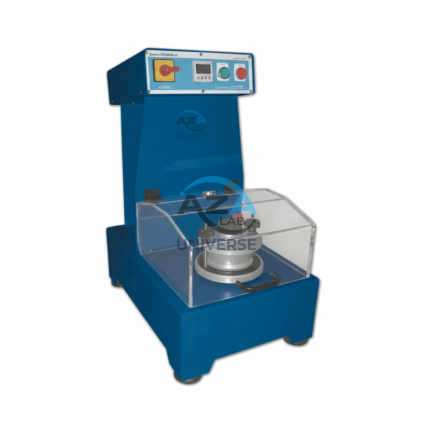
ABRASION TESTING MACHINE FOR GLAZED TILES AZA1261
The AZA LAB Abrasion Testing Machine for Glazed Tiles (AZA1261) is a precision-engineered laboratory instrument designed for the accurate determination of abrasion resistance in glazed ceramic tiles. Fully compliant with BIS 13630-11 and EN ISO 10545-7, this machine is essential for evaluating tile durability and surface wear performance in accordance with international quality standards.
The AZA1261 simulates real-world foot traffic and surface wear conditions, enabling manufacturers, testing laboratories, and quality control departments to verify that glazed tiles maintain their appearance, texture, and integrity even under high-traffic usage.
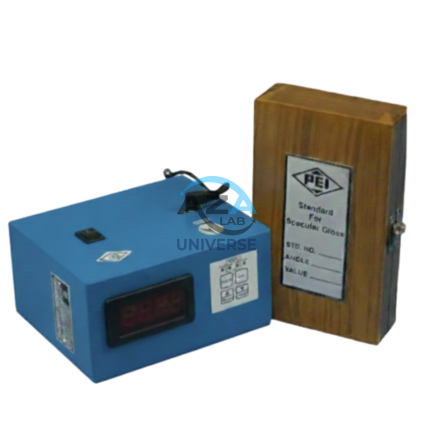
GLOSS METER – SINGLE ANGLE MODELS AZA1298
The AZA1298 Single Angle Gloss Meter from AZA LAB is a compact, high-precision surface gloss measurement instrument designed for accurate, repeatable, and standardized evaluation of surface reflectivity across laboratory, production, inspection, and field environments.
Using a fixed-angle optical geometry, the AZA1298 measures surface gloss in Gloss Units (GU) with excellent repeatability and optical accuracy, making it ideal for quality control, product development, coating verification, and surface finish inspection.
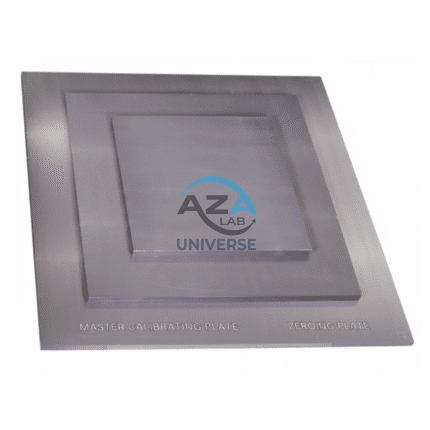
MASTER CALIBRATING PLATE / ZEROING PLATE AZA1270
AZA LAB's Master Calibrating Plate—also known as a Zeroing Plate—is a precision-engineered aluminum reference plate designed for accurate calibration of Universal Gauges and Plucometers. Manufactured in compliance with IS 13630 (Part-1) and EN ISO 10545 (Part-2) standards, it ensures reliable and repeatable zero-point reference during dimensional testing of ceramic tiles and similar materials.
The plate is available in a wide range of sizes to suit various laboratory and industrial applications. With a flatness accuracy of ±0.1 mm and a sturdy 12 mm thickness, it provides a stable and durable base for equipment calibration.
Whether in QC labs or production floors, the AZA LAB Zeroing Plate is an essential tool for maintaining measurement consistency and ensuring compliance with international tile testing standards.
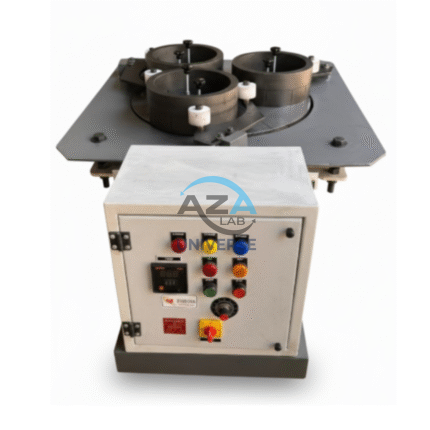
OPEN FACE LAPPING MACHINE AZA1311
Its rigid welded tubular steel frame supports the gearbox, drive motor, and worktable, ensuring vibration-free operation and long service life. This model includes:
- Diamond slurry dispensing system
- Integrated abrasive compound feed
- Waste collection tanks behind lift-off panels
- Cast iron lapping plate with serrated pattern
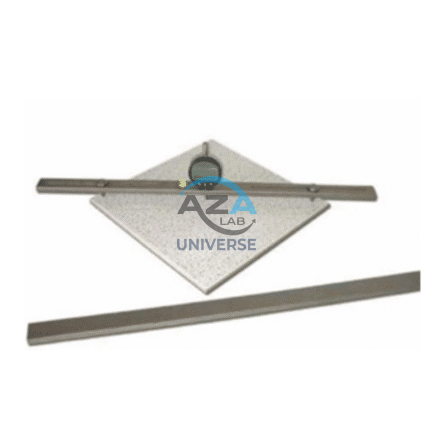
PORTABLE GAUGE / PLUCOMETER – WITH DIGITAL GAUGES AZA1271
The AZA LAB Portable Gauge – Model AZA1271 is a precision instrument designed for the measurement of surface flatness and warpage in ceramic tiles and related materials. Compliant with BIS 13630 (Part 1), this advanced Plucometer features a digital dial gauge system for highly accurate and user-friendly measurement.
Ideal for use in quality control laboratories and tile manufacturing environments, the system allows direct assessment of surface irregularities across various tile sizes.
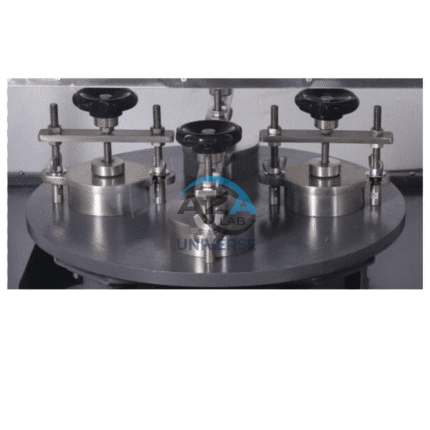
TEST SPECIMEN HOLDER FOR SURFACE ABRASION MACHINE (GLAZED TILES) AZA1264
The AZA1264 Test Specimen Holder is a precision-engineered accessory designed specifically for surface abrasion testing of glazed ceramic tiles in accordance with BIS 13630 (Part-11) and EN ISO 10545-7. It ensures secure positioning of the test specimen and consistent containment of abrasive materials during the abrasion resistance test, contributing to accurate, repeatable, and standard-compliant results.
This holder is an essential component in ceramic tile testing laboratories, quality control departments, certification agencies, and research institutions, where standardized abrasion testing is mandatory for product validation and compliance.
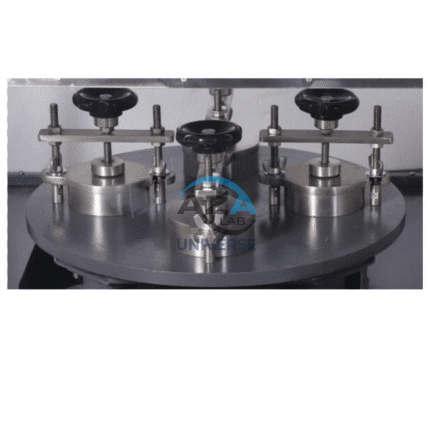
TEST SPECIMEN HOLDER FOR SURFACE ABRASION MACHINE (GLAZED TILES) AZA1264A
The AZA1264A Test Specimen Holder is a precision-engineered laboratory accessory designed for surface abrasion resistance testing of glazed ceramic tiles in strict accordance with BIS 13630 (Part-11) and EN ISO 10545-7. It ensures stable specimen positioning and uniform containment of abrasive loads, which is essential for obtaining accurate, repeatable, and standard-compliant test results.
This holder is widely used in ceramic tile manufacturing laboratories, quality control departments, certification bodies, and research institutions, where conformity to national and international testing standards is mandatory.
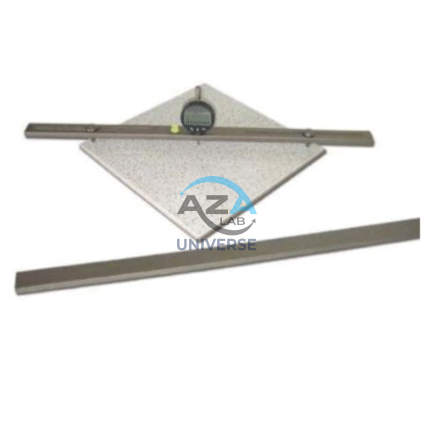
UNIVERSAL DIGITAL GAUGE – DIAGONAL LINEARITY PLUCOMETER AZA1272
The AZA LAB Universal Digital Gauge – AZA1272 is a compact and highly accurate plucometer designed for evaluating diagonal linearity and flatness of ceramic tiles. It complies fully with IS 13630 (Part-1) and EN ISO 10545 (Part-2), making it an essential tool in laboratories and tile manufacturing quality control.
Engineered for portability and precision, the device allows fast and direct measurement of dimensional deviations across the diagonal of the tile.
AVAILABLE PLUCOMETER SIZES
-
450 × 450 mm
-
600 × 600 mm
APPLICATIONS
-
Measurement of diagonal linearity
-
Evaluation of tile flatness
-
In-process and final quality control in ceramic tile production
-
Conformance testing as per national and international standards